Dhorpatan Hunting Reserve Trek

Dhorpatan Hunting Reserve Trek

Customize Trip
Trip at a Glance
Duration26 Days
Trip GradeModerate
CountryNepal
Maximum Altitude4535m
Group Size2-15
StartsKathmandu
EndsKathmandu
ActivitiesTrekking, camping and Hunting
Best TimeAutumn, spring

Quick answer: The Dhorpatan Hunting Reserve Trek is a 26-day camping trek through Nepal's only hunting reserve, in the Dhaulagiri Himal of western Nepal. Established in 1983 and gazetted in 1987, the 1,325 sq km reserve is managed by Nepal's DNPWC. Best seasons are spring (March–April) and autumn (September–November). Maximum altitude: 4,535 m.

Thinking about Nepal's only hunting reserve? Tell us your dates and we'll send a costed 26-day plan within 24 hours.

Plan your trip

Is hunting legal in Dhorpatan?

Yes — Dhorpatan is the only place in Nepal where licensed trophy hunting is permitted, under strict quotas set by the Department of National Parks and Wildlife Conservation (DNPWC). Only blue sheep (Bharal) and Himalayan tahr may be hunted, with permits issued through a limited annual quota and government auction. Snow leopard, red panda, musk deer and wolf are fully protected.

  • Established: 1983 (gazetted 1987)
  • Area: 1,325 sq km across Baglung, Myagdi & Rukum districts
  • Range: Dhaulagiri Himal, western Nepal (2,850 m–7,000 m+)
  • Managed by: Department of National Parks & Wildlife Conservation (DNPWC)
  • Legally huntable species: Blue sheep (Pseudois nayaur), Himalayan tahr (Hemitragus jemlahicus)
  • Bird species recorded: 137+
  • Trek duration: 26 days · Max altitude: 4,535 m · Grade: Moderate

Tour Overview

View Nepal Treks offers an exclusive adventure quite different to other mainstream trekking companies and agents, announcing Dhorpatan Hunting Reserve Trek, the one and only wild-life reserved for hunting within Nepal, as well depending upon the season for mountain wild-life that includes birds and pheasants.

Most of the wild animals in the mountainous areas of Nepal for hunting allowed is shooting Blue-Sheep, Himalayan Thar and Muntjac with other jungle fowls although we are committed to Eco-Tourism and conserving wildlife and green environment from destructions, where Dhorpatan Hunting Trek will be another chapter in our adventure list, as Nepal Government made this hunting reserve way back in the early 1970s, just to control the ecological balance of the nature.

As some wild-animals can create havoc among local villagers with overgrazing due to an increase of some mountain wild-life, so hunting is permitted to keep the fragile nature in perfect balance and harmony. Hunting in Nepal in early days was done by Raja-Maharaja (Kings and royal family members), due to the extension of National Parks to control and save wild animals only a few areas are reserved for hunting, where you can take the opportunity for keen hunters and interest in mountain wildlife.

For this Dhorpatan Hunting Trek, using normal flight and local drive as well flying in a chopper at the end of the trip to save time and providing you more aerial views of the country of hunting as well. Hunting in Dhorpatan is not easy, where much of animals are rare and elusive to locate as per the seasons requires much patience and skill to hunt around in the mountainous region of Nepal.

Planning a remote Himalayan adventure? Visit our Plan Your Trip guide for trekking tips, permits, transportation and travel advice.

Written & reviewed by: Bhupendra Adhikari, View Nepal Treks & Expedition (Thamel, Kathmandu) — a licensed, TAAN- and NTB-affiliated Nepali operator.

How we verify costs & permits: Reserve facts, permitted species and seasons are checked against the Department of National Parks & Wildlife Conservation (DNPWC). Permit fees are auction-based and confirmed in writing per departure before any commitment.

Last updated: June 2026 · Next review: December 2026

Dhorpatan Hunting Reserve Trek Route at a Glance

The trek starts and ends in Kathmandu, with road and air links through Pokhara and Beni before entering the reserve on foot. The core route runs:

  1. Kathmandu → Pokhara (drive 6 hrs / fly 30 min)
  2. Pokhara → Darbang via Beni (drive)
  3. Darbang → Sibang → Moreni → Jaljala Pass (3,400 m)
  4. Gurjaghat → Dhorpatan (2,870 m) — the reserve hub
  5. Phalunge Pass (3,915 m) → Thankur → Purbang base camp (4,065 m)
  6. Helicopter exit Purbang → Pokhara → Kathmandu

Total: 26 days, moderate grade, maximum altitude 4,535 m at Jangla Bhanjyang on the Dolpo frontier.

The reserve shares ecological and geographical connections with the Dolpo region , one of Nepal's most remote Himalayan landscapes.

Where Animals are Located?

Herds of wild-life like Bharal / Blue Sheep dwells and graze on high rocky cliffs and mountain slopes, Bharal or Himalayan Blue Sheep also known as Nayaur in Nepalese found in the high Himalayas of India, Nepal, Bhutan, Tibet, and Pakistan.

Common Name: Bharal or Blue Sheep

Scientific name: Pseudois Nayaur

Conservation status: Least Concern depending upon the area and countries.

Weighs: 52 kg (Adult)

Gestation period: 160 days

Bharal (Pseudois Nayaur) also known as blue sheep have short, dense hair. Distinctive physical features are labeled on the pictures below. Females can be half to two-thirds the size of males. Young bharals are smaller and browner.

Want this exact route on your own dates?

Customise the 26-day itinerary →

Which Animals Can Be Hunted at Dhorpatan — and Which Are Protected

Species Status at Dhorpatan Notes
Blue sheep / Bharal (Pseudois nayaur) Huntable (quota + permit) The primary trophy species; herds graze high patans above 4,000 m.
Himalayan tahr (Hemitragus jemlahicus) Huntable (quota + permit) Shaggy wild goat of steep temperate slopes.
Wild boar Limited, lower zones Occasionally available in temperate belts.
Snow leopard, red panda, musk deer, wolf, cheer pheasant, danphe Fully protected — no hunting Sightings only; strictly conserved under Nepali law.

If you are coming purely to trek and watch wildlife, no hunting permit is required — the same route works as a remote wilderness trek.

Dhorpatan Permits & Cost: What to Actually Expect

There are two cost layers, and it's important to separate them:

  • Trek package cost — guiding, camping, staff, permits handling, transport and the helicopter exit. Request a current quote for your dates and group size.
  • Trophy hunting permit (only if you intend to hunt) — issued by DNPWC through a limited annual quota and a government auction. Blue-sheep permit fees have recently ranged widely (reported figures of roughly USD 15,000–25,000), and vary by species, block and season. We confirm the live quota and exact permit fee in writing before you commit.

Trekkers and wildlife watchers who do not hunt pay only the trek package cost and standard area permits.

Best Time for the Dhorpatan Hunting Reserve Trek

Season Months Conditions
Spring March–April Best overall: clearing skies, active wildlife on the patans, rhododendron forests in bloom.
Autumn September–November Stable weather, sharp Dhaulagiri views, the other main hunting window.
Winter December–February Very cold, high passes snow-blocked; not recommended.
Monsoon June–August Wet, leeches, poor visibility; avoid.

Who the Dhorpatan Trek Is For

This is one of Nepal's most remote, least-trekked routes — there are no teahouse crowds and several full camping days. It suits travellers who want genuine wilderness, can handle 6–7 hour walking days and basic camp conditions, and are drawn to wildlife, the Dhaulagiri massif and the cultural mix of Magar and Tibetan-origin villages. It is not ideal for first-time trekkers wanting lodges, hot showers and short days.

Itinerary

Questions about permits, season or fitness? Talk to a Kathmandu-based expert — no obligation.

Contact us
Trip PlanExpand all

On arrival at Kathmandu Tribhuvan International Airport, meet our staff who will transfer you to respective hotels around Kathmandu city, after getting refreshed from jet lag, View Nepal guide / leader will brief on Hunting and trekking programs includes information of hotels, lodges on route with evening welcome dinner in a nice Nepalese environment.

Max Altitude: 1400 m Meals: DinnerAccommodation: Hotel

In Kathmandu free day with options for a sightseeing tour, on this day necessary to obtain hunting and other related permits for the safari in hunting around Dhorpatan, and checking your hunting equipment.

Max Altitude: 1,400 m Meals: B-L-DAccommodation: Hotel

Morning, we start this wonderful adventure Around Dhaulagiri trekking taking a scenic overland drive of near 6 hours to beautiful Pokhara city with its serene Phewa and Begnas Lakes where the high Annapurna Himalaya reflects on its calm lakes (Flying options of 30 mins panoramic flight to Pokhara).

Max Altitude: 1100 m Meals: B-L-DAccommodation: Hotel

From Pokhara, our journey continues on the drive to Beni town and beyond to a farming town at Darbang, the starting point of Dhaualgiri-Dhorpatan and Dolpo trekking. At Darbang time permitting we might walk for few hours to another overnight stop by the river to make the next day walk easier, or just stay at Darbang in a local lodge.

Max Altitude: 9,00 m Meals: B-L-DAccommodation: Tea House/Lodge

After overnight at Darbang, first day walk begins with a short climb to Dharapani and to another village called Muri near Takam, as walk leads into forest of oak, pines and rhododendron to reach at Muri village, one of the largest Magar tribe village near Takam where Dhaulagiri base camp and circuit route diverts, while our walk leads further North West to Sibang for overnight stop in a small farm village.

Max Altitude: 1,680 m Meals: B-L-DAccommodation: Tea House/Lodge

The Adventure begins heading past Pelma and Dhule with smaller villages and spread-out farm houses and animals shades, trek leads through gradual flat land with green hills on either sides. After few hours of good walk the trail climbs for long distance passing through several villages, and then eventually arriving at Moreni a small farm village for the overnight stop.

Max Altitude: 2,275 m Meals: B-L-DAccommodation: Tea House/Lodge

Morning walk leads through a forest of rhododendron, oaks and pines trees after passing farm village with exciting trekking along with fabulous scenery of landscapes and views of Gurja Himal and Mt. Dhaulagiri mountain range. The trek from here leads further northwest with a view of massif Dhaulagiri and Gurja Himal where the Sen Khola (stream) and Source Khola flows, and then climb above Jaljla pass top with fascinating views of surrounding landscapes and mountains and then following the downhill path to overnight camp at lower Jaljala.

Max Altitude: 3,400 m Meals: B-L-DAccommodation: Tea House/Lodge

Morning trek follows a green pasture land with chances of spotting some wild-life on route Gurjaghat, a nice walks with few short ups and downhill path that winds up and downhill to reach a small village at Gurjaghat for an overnight stop.

Max Altitude: 3,015 m Meals: B-L-DAccommodation: Tea House/Lodge

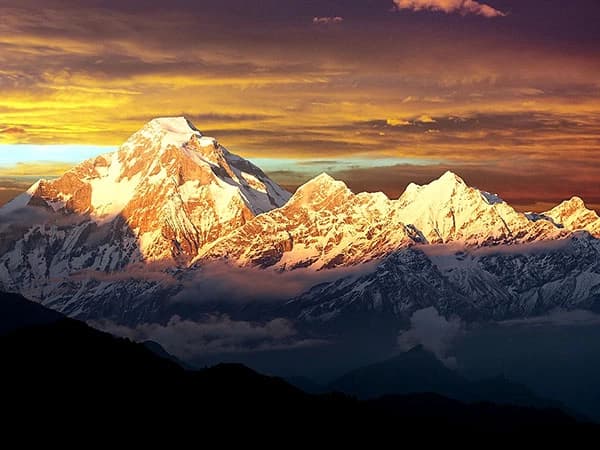
Trek follows on nice trail to village and a town at Dhorpatan, an interesting place that borders with several districts of Mid West Nepal, Mygdi-Dolpo-Gulmi-Agrkachi and Rukum a trade junction of many rural villages. Dhorpatan the first hunting and wild life reserve of Nepal declared in the end 1970s where you can find Himalayan Thar and Blue Sheep’s in large numbers, the region is controlled for hunting only some species are allowed. Covers an area of 1,325 sq. km., the reserve is situated on the southern side of Mt. Dhaulagiri I (8,167 m) touching the border districts of Rukum, Baglung & Mygdi of mid west Nepal.

Max Altitude: 2,870 m Meals: B-L-DAccommodation: Tea House/Lodge

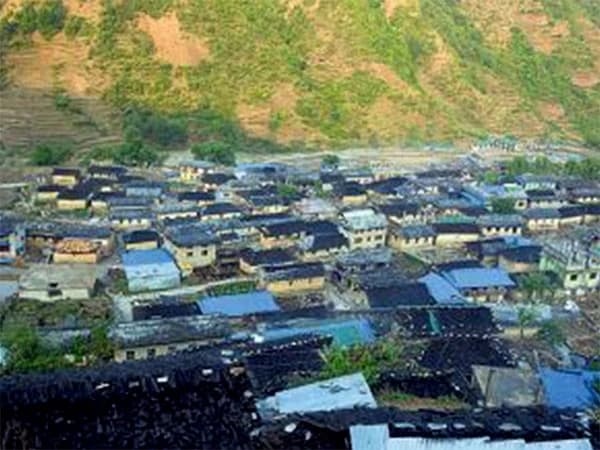
A pleasant and nice place for rest day for hike and exploration of this area, the vegetation around are mixed-hardwood forest at lower elevation with various plant species of drier climate in the north. The forest fed with fir, pine, birch, rhododendron, hemlock, oaks, junipers and spruce trees. This hunting and wildlife reserve includes number of rural farm villages with host of mid hills tribes and with Tibetan origin, besides hunting, Dhorpatan is also an attractive destination for the trekkers and wildlife enthusiasts as protection has enabled animal numbers to increase in this seldom visited zone.

Max Altitude: 2,870 m Meals: B-L-DAccommodation: Tea House/Lodge

The walk from here leads north towards the border rim of Dhorpatan region onto Dolpo route, walk leads to more ups and downs passing past several Sheppard’s summer pastures then reaching at a clearing in the midst of the rhododendrons forest for the overnight camp at Phalunge phedi before the pass.

Max Altitude: 3,850 m Meals: B-L-DAccommodation: Tea House/Lodge

Morning walk starts with a steep up-hill overlooking fabulous views of surrounding hills and high towering massif mountains then slowly reaching the top ridge with unbelievable scenery, then descending towards overnight camp at Thankur and our base camp for week duration.

Max Altitude: 3, 175 m Meals: B-L-DAccommodation: Tea House/Lodge

This region is completely isolated from villages passing often Sheppard’s shades, with an opportunity to see some wild life like snow leopards, musk deer’s and danfe ( National Bird of Nepal) pheasants the trekking today includes long climb and down-hill slopes till it reaches at Yamakar for an overnight stop.

Max Altitude: 2,750 m Meals: BreakfastAccommodation: Tea House/Lodge

After breakfast, the day starts with a strenuous climb in some sections through dense bushes and forest of oaks, hemlocks, and firs following the streams for few hours, and then reaching small cattle herder area called Dhule for the overnight camp.

Max Altitude: 3,410 m Meals: B-L-DAccommodation: Tea House/Lodge

A good walk starts on gradual trail into dense forest encountering streams along the walks with short ups and down-hill walk till Phupa phedi the overnight stop, a summer pasture.

Max Altitude: 3,940 m Meals: B-L-DAccommodation: Tea House/Lodge

Taking long trek for several days finally the trail reaches to the end of Dhorpatan area that touches the frontier of Dolpo, walk continues with ups and downs passing small spread out huts and Shepard’s shades then reaching village of Sumdeling for overnight camp on the meadow before Jangla Bhanjyang a pass of 4,535 m on route Tarakot, Dolpo.

Max Altitude: 4,065 m Meals: B-L-DAccommodation: Tea House/Lodge

These seven days allows you to stay and observe in one spot on the lookout for games with chances to hunt on the spot like Himalayan Blue Sheep / Bharal covering Kayam 3,000 m heights to reach Tatopani 2,360 m and Dhule 3,410 m including as far Phalledar Dhuri and Naudhare Danda. Spending a week around isolated and remote wide areas of Dhorpatan Hunting Reserve, Purbang will be our base camp for hunting Himalayan Blue Sheep or Bharal, first few days scouting the wild areas for traces and sign of wild-life and then heading higher around possible grazing areas of Bharal or Blue Sheep. If the wild is not abundant our walk leads further around Kayam-Tatopani (hot-spring), Dhule as far towards Phalledar Dhuri and Naudhara Danda ridges in search of Blue Sheep / Bharal. Hunting base camp set at Purbang, walk further with smaller team of camping and hunting staff heading towards isolated country near hills, ravine and valley stopping for few nights at each of the designated places, after a successful hunting trip return journey to base camp at Purbang, after fleecing the hunting prey as trophy of the wild hunt around Nepal Mid West Himalaya.

Max Altitude: 3,000 m Meals: B-L-DAccommodation: Camp

After an enjoyable and exciting adventurous hunting safari in the wild west of Nepal return journey taking a super scenic swirling flight on a helicopter to reach at picturesque Pokhara for an overnight stop in a nice hotel by the Lake Phewa.

Max Altitude: 1,400 m Meals: B-L-DAccommodation: Hotel

Morning a scenic overland drive back to Kathmandu with great experience and fond memories of Blue Sheep Hunting Safari & Adventure, an exciting six hour drive brings you at Kathmandu with afternoon free for individual activities or at leisure. (options by air of 30 minutes normal flight from Pokhara to Kathmandu)

Max Altitude: 1,400 m Meals: BAccommodation: Hotel

Last day in amazing Nepal and its massive Himalaya, after a memorable and fantastic adventure Hunting Himalayan Blue Sheep, Life Himalaya staff transfer you to Kathmandu international airport for your flight back home or to next respective countries.

Max Altitude: 1,400 m Meals: BreakfastAccommodation: Hotel
Unable to locate what you're seeking?Reach out to our travel experts.
Customize Trip
Cost Details
Includes
  • All arrival and departure transportation airport / hotel / airport.
  • Three Star (Tourist Standard) hotel in Kathmandu with bed / breakfast basis.
  • A guide who can speak English and government licensed.
  • Porter (2 clients: 1 porter).
  • Hunting Package including Guide, Camp, Porter, Tent and other Equipment
  • Food in Trekking (B-L-D).
  • Lodge accommodation during trekking.
  • Applicable TIMS (Trekking Information Management Systems) card.
  • Necessary permit for restricted area.
  • Private transportation before and after trek as per the itinerary.
  • All Transportation including Helicopter Flight above the itinerary.
  • Service of trekking guide and porter daily wages-medical insurance, meals, and transportation allowance.
  • Welcome or Farewell dinner in Kathmandu at authentic Nepalese restaurant with cultural programs.
  • Logistic support, service charge and taxes 
Excludes
  • Nepal Visa-International airfare-personal travel / medical insurance.
  • Emergency evacuation by any means of transportation including Heli services and personal medical kit.
  • Tips for guide and porter.
  • Early return from the trip due to personal / medical problem in this case clients should bear his / her own expenses on return from trek and in Kathmandu including expenses of accompanying guide / porters.
Route Map
Dhorpatan Hunting Reserve Trek
Altitude Chart
Dhorpatan Hunting Reserve Trek
Essential Information

Travelers looking for a shorter and less demanding trek may prefer the Khopra Ridge Trek , which offers spectacular mountain views with a shorter itinerary.

Who the Dhorpatan Trek Is For

Trekkers seeking a more demanding expedition in western Nepal may also consider the Dhaulagiri Circuit Trek , which explores the same massif region through remote valleys and high mountain passes.

This is one of Nepal's most remote, least-trekked routes — there are no teahouse crowds and several full camping days. It suits travellers who want genuine wilderness, can handle 6–7 hour walking days and basic camp conditions, and are drawn to wildlife, the Dhaulagiri massif and the cultural mix of Magar and Tibetan-origin villages. It is not ideal for first-time trekkers wanting lodges, hot showers and short days.
If you enjoy off-the-beaten-path adventures, the Guerrilla Trek offers another fascinating journey through remote western Nepal.

Most travellers ask us the same 8 questions first — here they are. Still unsure?

WhatsApp us

Dhorpatan Hunting Reserve Trek — FAQs

How long is the Dhorpatan Hunting Reserve Trek?

It is a 26-day trip from Kathmandu to Kathmandu, including travel days, acclimatisation, the reserve traverse and a helicopter exit from the Purbang base-camp area.

Is Dhorpatan the only hunting reserve in Nepal?

Yes. Dhorpatan, established in 1983 and gazetted in 1987, is Nepal's only designated hunting reserve, covering 1,325 sq km in the Dhaulagiri Himal and managed by the DNPWC.

Do I need a permit if I only want to trek, not hunt?

No trophy-hunting permit is required for trekking or wildlife watching. You only need the standard area permits, which we arrange. A hunting permit is needed solely if you intend to hunt blue sheep or Himalayan tahr.

What animals can legally be hunted at Dhorpatan?

Only blue sheep (Bharal) and Himalayan tahr, under strict DNPWC quotas and permits. Snow leopard, red panda, musk deer and wolf are fully protected and may never be hunted.

How difficult is the trek?

Moderate. Expect 5–7 hour days, multiple passes up to ~3,900 m and a maximum altitude of 4,535 m, with several nights in tented camps in remote terrain.

What is the best season to go?

Spring (March–April) and autumn (September–November). Spring is generally the most reliable for weather and wildlife activity.

How do I get out at the end?

The itinerary uses a scenic helicopter flight from the Purbang area to Pokhara, then onward to Kathmandu — saving days of backtracking through remote country.

How much does the trek cost?

Trek package cost depends on group size, dates and inclusions; request a current quote. If you intend to hunt, the DNPWC trophy-hunting permit is a separate, auction-based fee that we confirm in writing before booking.

Need help estimating your budget? Read our Plan Your Trip guide for permits, transportation, accommodation and seasonal costs.

Ready to lock a departure?

Get a written quote with permits confirmed.

Send Inquiry

Still Have Questions?

Need help with permits, costs, hunting regulations or transportation?

Contact our Nepal experts

Related Treks

Chat now on WhatsApp

Call to our expert 24/7
Bhupendra Adhikari
+977 9851029611
travelers choice
You May Also Like
Dhaulagiri Circuit Trek
Starting From
US$1900US$2100
Gorilla Trekking in Nepal
Starting From
US$1400US$1500
Need Help? Call Us.+977 9851029611