Upper Mustang Tour - 11 Days
Upper Mustang Trek – Journey to Nepal’s Forbidden Kingdom

Upper Mustang Tour - 11 Days

Customize Trip
Trip at a Glance
Duration11 Days
Trip GradeModerate
CountryNepal
Maximum Altitude4700m
Group Size2-15
StartsKathmandu
EndsKathmandu
ActivitiesAdventure Drive
Best TimeAll year

Overview of Upper Mustang Tour 11 Days

The Last Forbidden Kingdom Still Asks to Be Earned

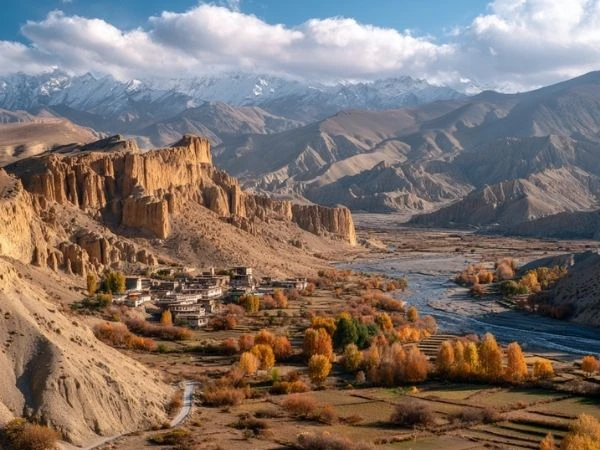
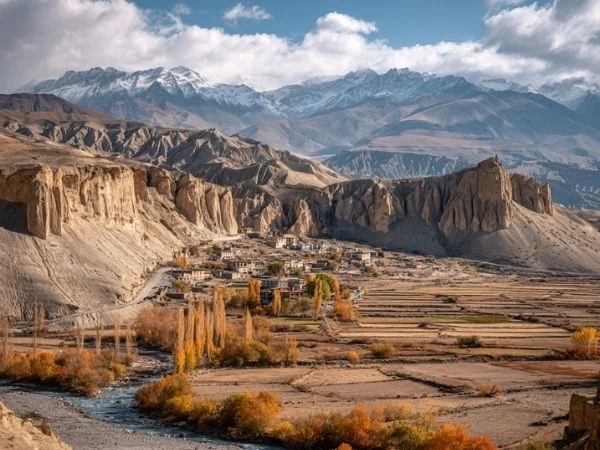
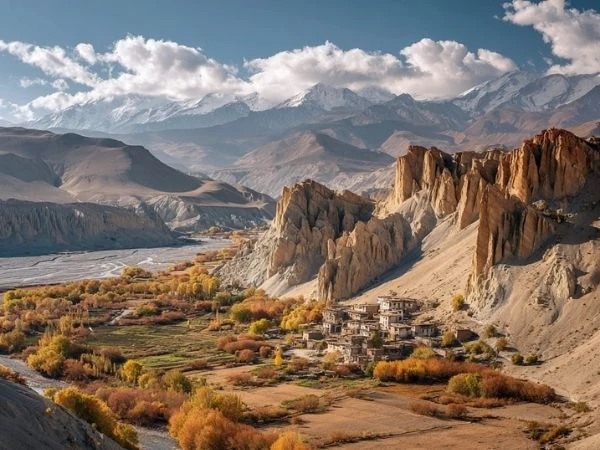
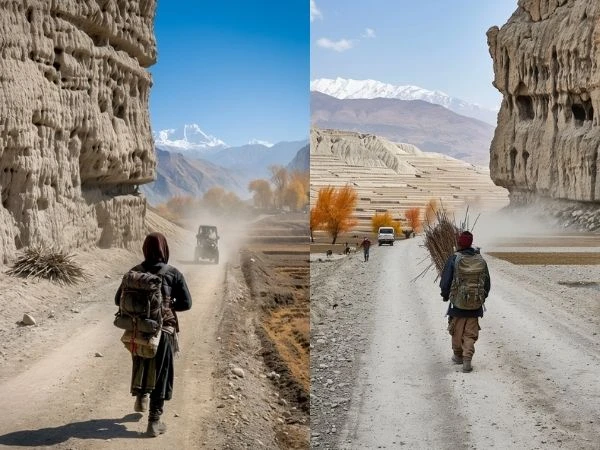
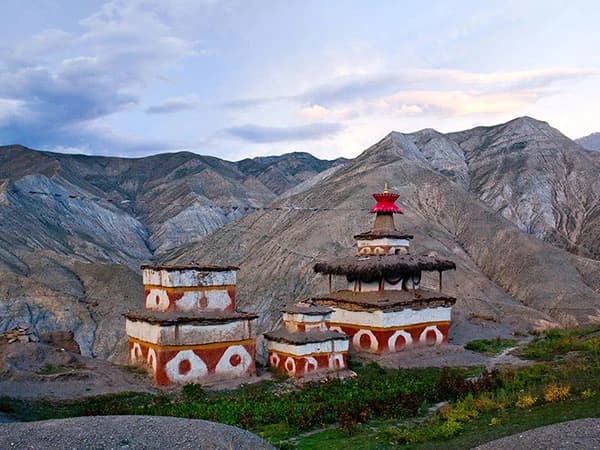
There are places on this earth that don't reveal themselves to the casual traveler. Upper Mustang is one of them. Tucked behind the Annapurna and Dhaulagiri ranges in the Himalayan rain shadow, this is a landscape that has barely changed since the 15th century — where Buddhist monks still chant in cave monasteries, where the wind carves canyons into terracotta earth, and where the walled city of Lo Manthang still holds the bones of a kingdom that once controlled the salt trade between Tibet and the Indian plains.

Upper Mustang Tour 11 Days — The Complete Expert Guide by View Nepal Treks & Expedition

The Upper Mustang tour is not a checklist destination. It is an immersion. And the 11-day format offered by View Nepal Treks & Expedition has been specifically engineered — after 20 years of running this exact route — to give travelers from the United States, United Kingdom, Australia, Canada, Germany, Switzerland, and across Europe and Asia the depth they came for, without the physical strain that a rushed itinerary creates at altitude.

This guide covers everything. The cost, the permits, the day-by-day itinerary, the altitude tables, what to pack, when to go, and the honest comparison with competing tours. By the end, you will know whether this Upper Mustang jeep tour is built for you — and how to book it properly.

Highlights Of Upper Mustang Tour

  • Expertly crafted Upper Mustang Tour 11 Days itinerary covering Lo Manthang, Tsarang, Ghiling, Kagbeni and the sacred Muktinath Temple in a single seamless Himalayan journey.
  • Authentic Upper Mustang jeep tour experience through the Trans-Himalayan desert landscapes of Mustang, one of Nepal’s most restricted and culturally preserved regions.
  • Exclusive exploration of Lo Manthang – the ancient walled capital of Upper Mustang, home to centuries-old Tibetan Buddhist monasteries and royal heritage sites.
  • Carefully designed Upper Mustang Nepal tour with gradual altitude gain reaching a maximum elevation of 3,840m, ensuring a safe and comfortable Himalayan travel experience.
  • Visit the legendary Chungsi Cave Monastery and Namgyal Gompa, sacred meditation sites connected to Tibetan Buddhist traditions and Himalayan spiritual history.
  • Scenic overland adventure along the Kali Gandaki valley route, the world’s deepest gorge surrounded by Annapurna and Dhaulagiri mountain ranges.
  • Experience traditional Mustang culture in historic villages like Chele, Samar, Ghiling and Tsarang, where Tibetan heritage and ancient lifestyles remain intact.
  • Discover the rarely visited Luri Gompa cave monastery near Yara village, a hidden cultural treasure not included in most standard Upper Mustang itineraries.
  • Comfortable 4WD jeep expedition across Upper Mustang, making the journey accessible for travelers who want the experience without demanding long treks.
  • Complete Upper Mustang permit arrangement including Restricted Area Permit (RAP) and ACAP, handled by a licensed Nepal trekking operator.
  • Perfect balance of Himalayan adventure, Tibetan culture and remote desert landscapes, offering a deeper experience than typical Nepal trekking routes.
  • Flexible departures for private Upper Mustang tours, couples and small groups, ensuring personalized service throughout the journey.
  • Excellent choice for Upper Mustang photography tours, featuring dramatic canyon formations, ancient monasteries and Himalayan plateau scenery.
  • Visit the sacred pilgrimage site of Muktinath Temple (3,710m), where natural flames and 108 holy water spouts attract pilgrims from across South Asia.
  • One of the best monsoon-friendly tours in Nepal, as Upper Mustang lies in the Himalayan rain shadow and remains largely dry during summer months.
  • Guided by experienced local Mustang specialists who understand the terrain, culture and high-altitude travel conditions of the region.
  • Ideal Himalayan journey for travelers seeking a unique alternative to Everest Base Camp or Annapurna Circuit trekking routes.
  • Experience the untouched beauty of Upper Mustang’s red cliffs, desert valleys and Tibetan plateau landscapes, a destination unlike anywhere else in Nepal.

View Nepal Treks & Expedition — 20+ Years in the Mustang Region

Founded by Himalayan veterans with boots-on-ground experience, View Nepal Treks & Expedition has been operating in the Mustang region since before the area was even accessible by road. Our team has guided travelers from over 40 countries through this restricted zone — government officials,photographers, documentary filmmakers, retired military professionals,honeymooners, and seasoned overlanders who've already done Patagonia and the Karakoram and still ranked Upper Mustang as something categorically different.

What does 20+ years buy you here?

It buys local knowledge that no itinerary can capture. It buys a network of guesthouse owners in Lo Manthang who will open a rooftop at sunrise for your group because they've trusted us for years. It buys permit officers who process our paperwork without delays. It buys drivers who know the exact sections of the Kali Gandaki route where the wind picks up and the jeep needs to be repositioned. It buys a safety protocol that has been refined through actual incidents — altitude events, vehicle breakdowns, monsoon flash floods — and improved every season.

When travelers from Singapore, the UAE, France, or Norway book an upper mustang tour through us, they are not booking a template. They are accessing a system built on iteration, relationship, and genuine terrain expertise.

Upper Mustang: A Destination Unlike Anything Else in Nepal

The Geography That Makes It Possible

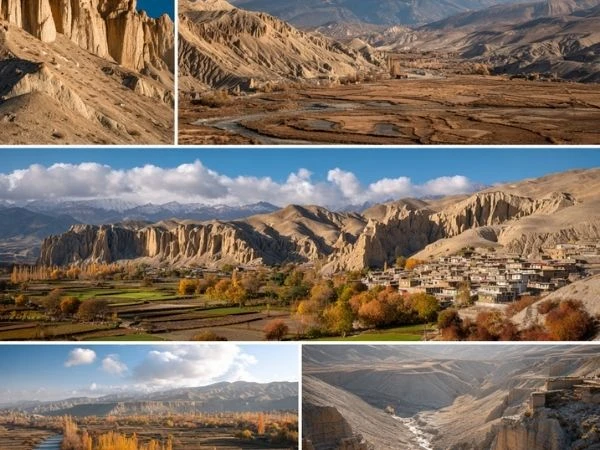
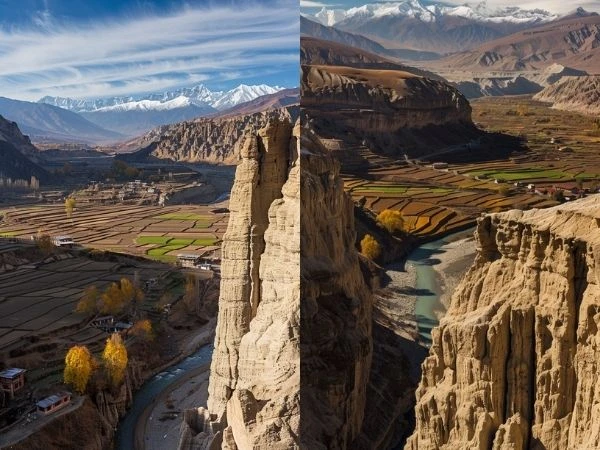
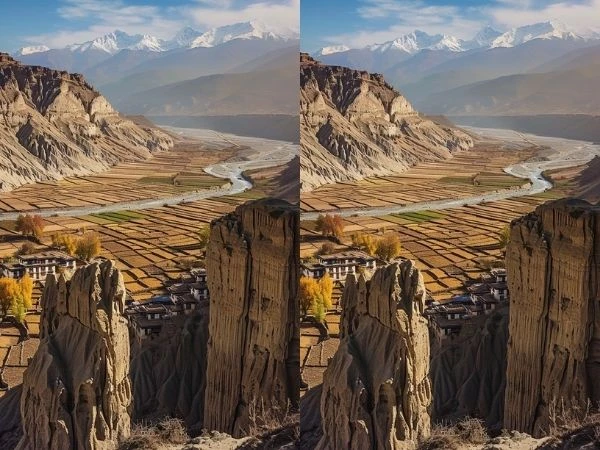
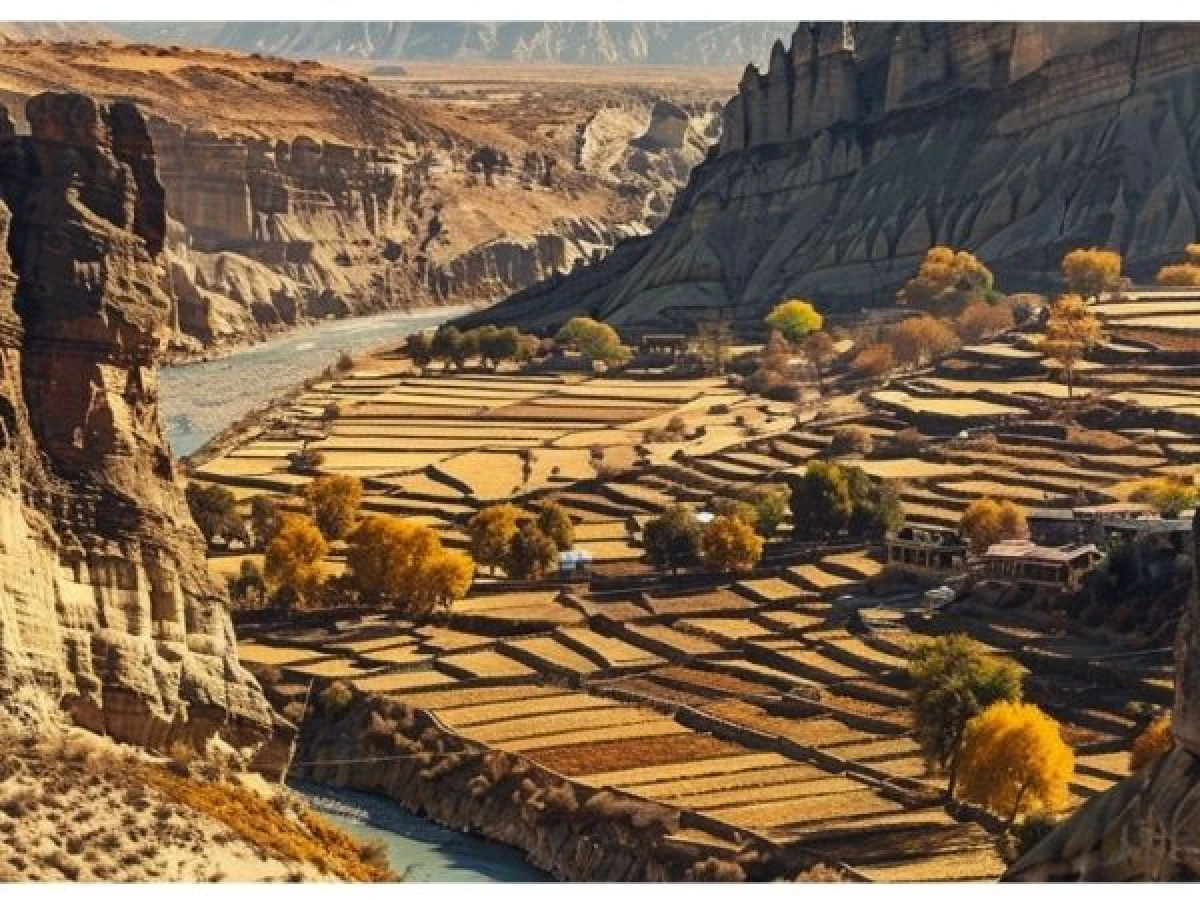
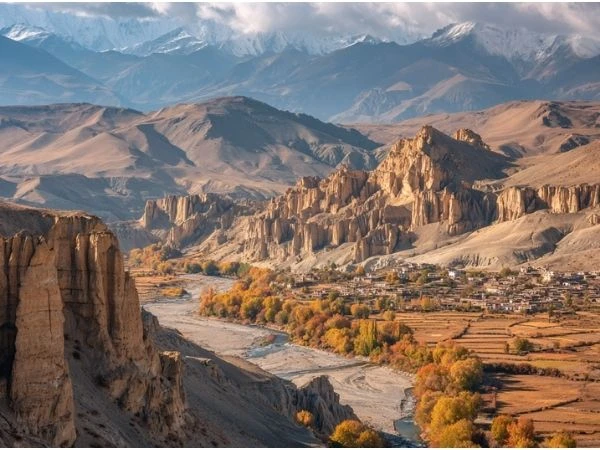
Upper Mustang sits at the northern end of the Kali Gandaki gorge — the deepest gorge in the world — and stretches to the Tibetan border. The Annapurna and Dhaulagiri massifs act as a meteorological wall, blocking monsoon moisture from reaching the valley. The result is a desert plateau at altitude: less than 300mm of annual rainfall, exposed rock formations in burgundy and ochre, flat-topped buttes rising from dry riverbeds, and skies so clear that the stars at night in Lo Manthang feel geologically close.

The terrain covers roughly 2,142 square kilometers, almost all of it above 3,000 meters. Lo Manthang, the walled capital, sits at approximately 3,840 meters. This is not extreme Himalayan altitude — you will not be pushing toward 5,000+ meters the way Everest Base Camp trekkers do — but the combination of altitude and aridity means physical acclimatization and hydration are non-negotiable.

The Culture That Makes It Irreplaceable

Upper Mustang was a sovereign kingdom — the Kingdom of Lo — until 2008, when Nepal formally absorbed it following the abolition of the monarchy. The last king, Jigme Dorje Palbar Bista, lived until 2016. His palace still stands in Lo Manthang. The people of Mustang, called Loba, speak a dialect closely related to Tibetan and practice Tibetan Buddhism in a form that predates the cultural upheaval that Tibet itself experienced under Chinese rule. This makes Upper Mustang, paradoxically, one of the best places on earth to experience living Tibetan culture — because it was never disrupted.

The cave monasteries here are some of the oldest in the Himalayan world.Chungsi Cave, where the sage Milarepa is said to have meditated, draws pilgrims. Thubchen Gompa in Lo Manthang contains murals that conservation teams from the United States andNepal spent years restoring. These are not reconstructions or museums — they are active places of worship.

The Restricted Area: Why the Permit Matters

Upper Mustang is a restricted area. Since 1992, when it was first opened to foreign visitors, the Nepali government has required all foreign nationals to hold a valid Restricted Area Permit (RAP) in addition to the standard Annapurna Conservation Area Permit (ACAP). This dual-permit system limits visitor numbers and funds conservation efforts. The RAP for Upper Mustang currently costs USD 500 per person for the first 10 days, with an additional USD 50 per day beyond that.

No solo travel is allowed in the restricted zone. All foreign visitors must be accompanied by a government-licensed guide — which is another reason the quality of your operator matters enormously. At View Nepal Treks & Expedition, our Upper Mustang guides are licensed, culturally trained, and fluent in the local dialect, which opens doors — literally and figuratively — that English-only communication cannot.

Day-by-Day Altitude Table

Day

Location

Approximate Altitude (m)

Altitude Change

1

Kathmandu

1,400

Arrival

2

Pokhara

820

-580m (descent)

3

Jomsom

2,720

+1,900m

4

Chele

3,050

+330m

5

Ghiling

3,570

+520m

6

Tsarang

3,760

+190m

7

Lo Manthang

3,840

+80m

8

Lo Manthang

3,840

Rest day

9

Ghami

3,520

-320m

10

Jomsom via Muktinath

2,720

-800m

11

Pokhara / Kathmandu

820 / 1,400

Descent

Seasonal Comparison Table — Best Time for Upper Mustang Tour

Season

Months

Weather

Crowd Level

Road Conditions

Recommended?

Spring

March – May

Warm days, cool nights, clear skies

Moderate

Good to excellent

✅ Best

Pre-Monsoon

June

Hot, increasing wind

Low

Good

✅ Good

Monsoon

July – August

Rain in lower zones, dry in Upper Mustang

Very low

Variable (flooding risk below Kagbeni)

⚠️ Possible but requires flexibility

Autumn

September – November

Crystal clear, ideal temperatures

High

Excellent

✅ Best

Winter

December – February

Very cold nights, some snow on passes

Very low

Can close

❌ Not recommended

Key Insight: Upper Mustang is one of the very few destinations in Nepal that can be visited during the monsoon months of July and August because the Himalayan rain shadow keeps the plateau dry. This makes it a preferred upper mustang tour option for travelers who cannot travel in peak spring or autumn seasons.

Who This Tour Is Perfect For

The upper mustang tour 11 days is designed for a specific kind of traveler. Not the resort vacationer. Not the peak-bagger. The cultural wanderer who has already done their primary adventure — whether that was trekking the Annapurna Circuit, touring Bhutan, exploring Ladakh, or overlanding through Central Asia — and who now wants something that goes deeper into history, art, and living Buddhist civilization.

It suits travelers aged 35–70, physically active but not necessarily elite athletes, who prioritize meaningful access over maximum mileage. It suits solo professionals from the UAE and Singapore who travel intensively but strategically and want to spend 11 days entirely off the Instagram-familiar trail. It suits couples from Germany and Switzerland who have done the Alps and the Dolomites and want their first Himalayan experience to be culturally substantive rather than purely physical. It suits small friend groups from the United Kingdom, Australia, and Canada celebrating milestone birthdays or retirements with a journey that has genuine narrative weight.

It also suits dedicated upper mustang photography tour travelers — landscape photographers and documentary-minded travel journalists who need a guide who understands composition time, not just logistics time.

What it does not suit: travelers who require consistent 4G connectivity, international hotel standards at every stop, rigid daily schedules, or who have significant altitude-related medical history without medical clearance.

Upper Mustang vs Annapurna Circuit — Which Should You Choose?

This is one of the most common questions from travelers weighing their Nepal options. Here is an direct answer.
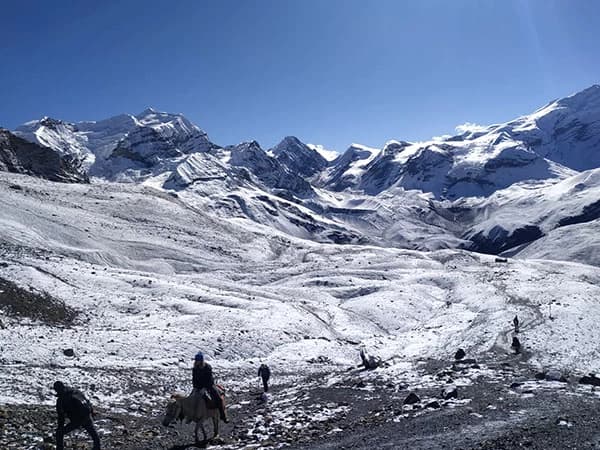
The Annapurna Circuit is primarily a trekking experience. It is about physical endurance, dramatic altitude gain (crossing Thorong La at 5,416m), and the biodiversity shift from subtropical to alpine zones. The cultural layer is genuine but secondary.

The Upper Mustang tour is primarily a cultural and geological experience. The physical demands are lower — you are in a jeep for the majority of travel. The altitude is meaningful but manageable. The payoff is human and historical: a living medieval city, cave monasteries, Tibetan cultural continuity, and desert landscapes that feel more Central Asian than South Asian.
If you have two weeks and only one Nepal visit, choose based on your primary driver: physical achievement vs cultural depth. If you have done the Annapurna region before, Upper Mustang is the natural complement.

Upper Mustang vs Tibet Tour: Many travelers from Europe and North America who considered a Tibet tour but were deterred by Chinese permit restrictions and political sensitivities find that Upper Mustang delivers much of what they wanted from Tibet — genuine Tibetan Buddhist culture, high-plateau desert landscapes, ancient monasteries — without the complications. It is not the same as Tibet, but it is closer in spirit than any other destination outside the Tibetan Plateau itself.

What is the Upper Mustang tour?

 The Upper Mustang tour is a guided overland journey into the restricted area of Upper Mustang, Nepal — a high-altitude desert plateau that borders Tibet and contains the walled medieval city of Lo Manthang. The tour covers Buddhist cave monasteries, Trans-Himalayan landscapes, andliving Tibetan culture within a region that has changed little in five centuries.

How much does the Upper Mustang tour cost?

 A comprehensive 11-day Upper Mustang tour from a reputable operator costs approximately USD 2,500–3,200 per person, including all permits (USD 500 RAP + USD 25 ACAP), domestic flights, licensed guide, accommodation, and meals. The Upper Mustang permit cost is the largest fixed expense and is non-negotiable — it is set by the Nepali government.

How many days for Upper Mustang?

The minimum recommended duration is 11 days for a balanced experience covering Jomsom, Ghiling, Tsarang, Lo Manthang, Luri Gompa, and Muktinath. The government Restricted Area Permit is valid for 10 days from entry at Kagbeni.

What permits are required Upper Mustang Tour ?

The Restricted Area Permit (RAP) at USD 500 per person for 10 days, and the Annapurna Conservation Area Permit (ACAP) at approximately USD 25. Both must be organized through a licensed Nepali trekking agency. Solo travel in the restricted zone is not permitted.

What is the altitude of Lo Manthang?

 Lo Manthang sits at approximately 3,840 meters (12,598 feet). The maximum altitude on the standard Upper Mustang jeep tour is approximately 3,840–3,900 meters.

How difficult is the Upper Mustang jeep tour?

 Rated 3/10 difficulty. Physical fitness requirements are moderate. The majority of travel is by 4WD jeep. Walking is limited to monastery visits and short village explorations. The primary challenge is altitude acclimatization.
 

Itinerary

Day-by-Day Itinerary: Upper Mustang Tour 11 Days

Trip PlanExpand all

Your journey begins at Tribhuvan International Airport in Kathmandu. Our airport representative will meet you and transfer you to your hotel in Thamel. The evening is yours to recover from long-haul travel — particularly relevant for travelers arriving from the United States, Canada, Australia, or Europe with significant time zone shifts. We recommend a brief orientation meeting at the hotel, where your lead guide reviews the upper mustang itinerary, permits, and safety protocols.

Max Altitude: 827 m Meals: Breakfast,lunch,DinnerAccommodation: HotelDuration: 6-7 hoursDistance: 200 km

Morning transfer to the domestic terminal for a 25-minute flight to Pokhara, the adventure capital of Nepal and gateway to the Annapurna region. If weather causes flight delays — common in Nepal's domestic sector — we have a ground transport option ready. Pokhara itself warrants a few hours: Phewa Lake, the World Peace Stupa, and views of Machhapuchhre (Fishtail Mountain) set the tone for what is coming. Evening gear check, jeep briefing, and departure preparation.

Max Altitude: 1190 m Meals: Breakfast,lunch,DinnerAccommodation: HotelDuration: 6-7 hoursDistance: 119 km

This is where the upper mustang road trip from Pokhara truly begins. We depart early in 4WD jeeps and follow the Kali Gandaki river valley through Baglung, Beni, and Tatopani. The landscape transitions rapidly from subtropical terracing to alpine scrubland. Tatopani — meaning "hot water" in Nepali — offers natural hot springs if time allows a 30-minute stop. We continue climbing through Ghasa, Lete, and Marpha — a village famous for its apple orchards and apple brandy — before reaching Jomsom, the administrative headquarters of Mustang district.

Max Altitude: 2804 m Meals: Breakfast,lunch,DinnerAccommodation: HotelDuration: 6-7 hoursDistance: 71 km

Kagbeni is the last village before the restricted zone begins. Here we complete final permit checks — our team handles all paperwork — and cross into Upper Mustang. The transformation is immediate and almost violent in its beauty: the green valley floor disappears and you enter a lunar landscape of eroded cliffs, wind-polished stone, and centuries-old chortens. Chele is a small village perched above a dramatic canyon with views that travelers from the Netherlands and Denmark — accustomed to flat horizons — consistently describe as genuinely disorienting.

Max Altitude: 3520 m Meals: Breakfast,lunch,DinnerAccommodation: LodgeDuration: 5-6 hours(drive)Distance: 32 km

The upper mustang route gains elevation today. We pass through Samar with its ancient juniper forests and cave dwellings, then cross the Samar La pass before descending into the Syangboche valley. This is prime upper mustang photography tour territory — the geological formations here shift from burgundy to lavender as clouds move across the plateau. Ghiling sits in a wide bowl surrounded by barley fields and prayer flag lines, still farmed using traditional methods.

Max Altitude: 3840 m Meals: Breakfast,lunch,DinnerAccommodation: LodgeDuration: 4-5 hours(drive)Distance: 22 km

Tsarang (also spelled Charang) is the second-largest settlement in Upper Mustang and home to a dzong — a traditional fortress — that overlooks the entire valley. The monastery here contains a three-story library of ancient Tibetan manuscripts and thangka paintings that have been partially restored. This is one of the most undervisited cultural sites in the Mustang region and gives our groups a genuine sense of archaeological discovery rather than curated tourism.

Drive from Lo Manthang to Ghiling. Lo Manthang to Ghiling involves traversing the rugged terrain of Upper Mustang and descending towards the more verdant and lower regions.Follow the trail that descends through diverse landscapes, from the arid Mustang region to more fertile areas around Ghiling. Lo Manthang to Ghiling offers a memorable experience of traveling through the diverse and rugged terrain of Mustang, transitioning from high-altitude desert landscapes to more verdant and hospitable regions.

Max Altitude: 3600 m Meals: Breakfast,lunch,DinnerAccommodation: LodgeDuration: 6-8 hours(drive)Distance: 40 km

A rest and exploration day in Lo Manthang serves two purposes: acclimatization and cultural depth. Morning excursion to Chungsi Cave monastery, carved into a cliff face above the valley — a sacred site connected to Milarepa, the beloved Tibetan Buddhist saint. Afternoon visit to Namgyal Gompa on the hill above Lo Manthang with panoramic views toward Tibet. Optional: evening audience with local monks at Thubchen — possible through our long-standing relationships with the monastery leadership.

Max Altitude: 2980 m Meals: Breakfast,lunch,DinnerAccommodation: LodgeDuration: 4-5 hours(drive)Distance: 20 km

An alternative return route through Yara — a remote village rarely visited by standard tours — and up to Luri Gompa, a cave gompa that contains some of the finest Newar-influenced Buddhist art in the Trans-Himalaya. The drive involves rough tracks that require our experienced drivers, but the payoff is a landscape and cultural experience that separates our upper mustang tour package from operators who simply retrace the same road. Descent to Ghami for the night.

Max Altitude: 2980 m Meals: Breakfast,lunch,DinnerAccommodation: LodgeDuration: 6-8 hours(drive)Distance: 70-80 km

Muktinath is one of the most sacred sites in Hinduism and Buddhism — a temple complex at 3,710 meters where 108 water spouts and two natural gas flames burn alongside ancient shrines. Pilgrims from across South Asia, including large groups from India, arrive here year-round. For our groups, Muktinath offers a profound contrast: after days in the culturally Buddhist zone of Upper Mustang, this is a syncretic spiritual site that draws both traditions together. We descend to Jomsom for the night.

Max Altitude: 827 m Meals: Breakfast,lunch,DinnerAccommodation: HotelDuration: 4-6 hours(drive)Distance: 90-100 km

Morning flight from Jomsom to Pokhara (20 minutes, weather permitting). Transfer to hotel for freshening up. Afternoon connection flight to Kathmandu or direct international departure depending on your routing. For travelers flying home to the United States,United Kingdom, Germany, Switzerland, or Australia, your international departure is typically the same evening or following morning. Our team assists with airport transfers and any final logistics.

Max Altitude: 1400 m Meals: Breakfast,DinnerAccommodation: HotelDuration: 6-8 hours(drive)Distance: 200 km
Unable to locate what you're seeking?Reach out to our travel experts.
Customize Trip
Cost Details
Includes
  • Jeep rental and fuel
  • Driver’s accommodation, meals, and wages
  • Road permits for the vehicle
  • Restricted area permit (RAP) for Upper Mustang
  • Annapurna Conservation Area Project (ACAP) entry fee
  • Lodging in Lodges along the route
  • Breakfast, lunch, and dinner along the route
  • Guide’s accommodation, meals, and wages
  • First aid kit
  • Basic amenities (depending on the package)
Excludes
  • Travel insurance
  • Personal trekking equipment (jackets, boots, etc.)
  • Snacks and beverages beyond what is provided
  • Souvenirs and personal shopping
  • Tips for the driver, guide, and other service providers
  • Any additional activities or excursions not included in the itinerary
  • Extra days in Kathmandu or Pokhara before or after the tour
  • Costs associated with delays due to weather, strikes, or other unforeseen events
  • Meals not covered in the package (e.g., meals in Kathmandu or Pokhara)
  • Nepal entry visa fees
Essential Information

Accommodation & Quality Standards

The Upper Mustang region operates on a guesthouse model — there are no international hotel chains here, and that is entirely by design. The guesthouses we use have been vetted by our team on every recce trip since our first seasons operating in the region. They are family-run, clean, with proper bedding and — critically — adequate heating, which matters significantly above 3,500 meters.

In Lo Manthang specifically, we use the best available accommodations in the walled city. Hot showers are available at most stops (solar-heated), and charging facilities for cameras, phones, and battery packs are standard. We always carry a satellite communication device for emergencies.

Travelers booking the upper mustang private tour option receive priority room selection at each stop, and we can arrange for single-occupancy rooms throughout for a supplement fee.

In Kathmandu and Pokhara, we use comfortable 3-star hotels in central locations. Upgrade to 4-star available on request.

Unique Experiences Included in This Package

The upper mustang jeep tour is already remarkable. What makes View Nepal Treks & Expedition's version distinct is the access layer that 20 years of local relationships unlocks.

Monastery Access Beyond the Standard: Our long-standing relationship with the monks of Thubchen and Jampa Gompas means our groups often receive guided monastery tours that explain the iconography, the restoration history, and the living religious practice — not just the architecture.

Luri Gompa Side Route: The alternative return via Yara and Luri Gompa is not on most operator itineraries. We added this route after years of identifying what our most experienced travelers consistently rated as the highlight they didn't expect. The cave art at Luri Gompa represents a fusion of Newar and Tibetan artistic traditions from roughly the 14th century.

Muktinath at Depth: Most tours give Muktinath 45 minutes. We give it two to three hours. The difference is encountering the site as a spiritual destination rather than a logistics waypoint.

Cultural Interactions: In Ghiling and Tsarang, we have arranged informal home visits in past seasons — subject to the community's comfort and timing — where travelers from Sweden, Norway, Singapore, and the UAE have described the experience as the most humanly meaningful part of their trip.

Photography Composition Support: For travelers joining with serious camera equipment, our guides understand light quality at altitude, know the hour when the Lo Manthang walls turn gold, and can position jeeps appropriately for landscape framing sessions. The upper mustang photography tour dimension is woven into the itinerary rather than treated as an afterthought.

Tour Pricing Breakdown

Upper Mustang Tour Cost — 11 Days (2026 / 2027 Pricing)

Cost Component

Per Person (USD)

Notes

Upper Mustang Restricted Area Permit (RAP)

500

Government rate, 10 days

Annapurna Conservation Area Permit (ACAP)

30

Standard fee

Ground transportation (4WD jeep)

250

Pokhara–Jomsom–Pokhara overland

Domestic flights (KTM–PKR–KTM)

180

Approximate, subject to airline rate

Jomsom–Pokhara flight

120

Weather dependent; road backup included

English-speaking licensed guide (7 field days)

280

Government-licensed, culturally trained

Accommodation (10 nights)

380

Mix of Kathmandu/Pokhara hotels + guesthouses

All meals (10 breakfasts, 9 lunches, 9 dinners)

220

Local cuisine, filtered water

Entrance fees & monastery donations

40

Muktinath, Luri Gompa, etc.

First aid kit, oximeter, emergency protocol

30

Included

Company operations, logistics, profit margin

490

Covers 20+ year expertise layer

TOTAL (Group of 2-4 pax)

~2,520 USD

Per person

TOTAL (Solo / Private)

~3,200 USD

Single supplement applies

Prices are indicative for 2026/2027 seasons. Exact pricing is issued in your formal quotation after destination, group size, and dates are confirmed. All government-regulated permit fees are passed at cost.

Difficulty Comparison Table

Activity

Physical Demand

Altitude Challenge

Technical Skill Required

Overall Rating

Upper Mustang Jeep Tour (this package)

Low–Moderate

Moderate (max 3,840m)

None

3/10

Upper Mustang Trek (walking version)

High

Moderate–High

Basic trekking fitness

7/10

Annapurna Circuit Trek

High

High (Thorong La 5,416m)

Good trekking fitness

8/10

Everest Base Camp Trek

Very High

Very High (5,364m)

Strong fitness

9/10

Upper Mustang Motorcycle Tour

Moderate

Moderate

Riding experience required

5/10

The upper mustang jeep tour difficulty rating of 3/10 reflects the fact that you are riding in a 4WD vehicle for the majority of the journey. Walking is limited to monastery visits, short village explorations, and the Chungsi and Luri Gompa excursions, which involve some uneven terrain and modest elevation gain. Travelers with standard physical fitness in their 40s, 50s, and 60s regularly complete this tour without difficulty.

Inclusions and Exclusions

Included

Excluded

All Upper Mustang permits (RAP + ACAP)

International airfare

Airport transfers in Kathmandu

Nepal visa fee

10 nights accommodation

Travel insurance (required)

All domestic flights listed in itinerary

Personal expenses, tips

All ground transportation by 4WD jeep

Alcoholic beverages

English-speaking licensed guide

Extra nights due to weather delays

All meals as per itinerary

Optional single supplement

Entrance and monastery fees

Personal medication

Filtered / bottled water in field

Satellite phone calls

Pulse oximeter monitoring

Camera equipment

Emergency first aid kit

Laundry services

24/7 support from View Nepal office

International SIM card

Competitor Comparison Table For Upper Mustang Tour

Feature

View Nepal Treks & Expedition

Budget Operators

Large Group Tour Operators

Years of Mustang experience

20+ years

2–5 years

Variable

Group size

Max 8 pax

10–20 pax

15–25 pax

Luri Gompa alternative route

✅ Included

❌ Not included

❌ Rarely included

Monastery deep-access relationships

✅ Yes

❌ No

❌ No

Solo / private tour option

✅ Yes

❌ Rarely

✅ Sometimes

24/7 Kathmandu office support

✅ Yes

❌ Limited

✅ Yes

Government-licensed guide

✅ Always

⚠️ Sometimes

✅ Usually

Photography-aware guiding

✅ Integrated

❌ No

❌ No

Acclimatization planning

✅ Structured

⚠️ Basic

⚠️ Standard

Price transparency

✅ Full breakdown

⚠️ Hidden fees common

✅ Usually clear

Competitor Comparison Table

Feature

View Nepal Treks & Expedition

Budget Operators

Large Group Tour Operators

Years of Mustang experience

20+ years

2–5 years

Variable

Group size

Max 8 pax

10–20 pax

15–25 pax

Luri Gompa alternative route

✅ Included

❌ Not included

❌ Rarely included

Monastery deep-access relationships

✅ Yes

❌ No

❌ No

Solo / private tour option

✅ Yes

❌ Rarely

✅ Sometimes

24/7 Kathmandu office support

✅ Yes

❌ Limited

✅ Yes

Government-licensed guide

✅ Always

⚠️ Sometimes

✅ Usually

Photography-aware guiding

✅ Integrated

❌ No

❌ No

Acclimatization planning

✅ Structured

⚠️ Basic

⚠️ Standard

Price transparency

✅ Full breakdown

⚠️ Hidden fees common

✅ Usually clear

Packing List Table — Upper Mustang Jeep Tour

Category

Item

Notes

Clothing

Moisture-wicking base layers (2–3 sets)

Merino wool preferred

Clothing

Insulating mid-layer (fleece or down jacket)

Essential above 3,500m

Clothing

Waterproof outer shell

Wind is the primary challenge

Clothing

Warm hat and gloves

Even in spring/autumn

Clothing

Sun hat or cap

UV intensity at altitude is severe

Clothing

Comfortable trekking trousers

Quick-dry fabric

Clothing

Warm socks (4–5 pairs, wool)

Cold nights in guesthouses

Footwear

Trekking shoes or boots (broken in)

Required for monastery visits

Footwear

Camp sandals or flip-flops

Evening use

Health

Personal prescription medications

Bring extra supply

Health

Acetazolamide (Diamox)

Consult your doctor before travel

Health

Ibuprofen / paracetamol

For headache management

Health

Rehydration sachets

Altitude dehydration prevention

Health

Sunscreen SPF 50+

Critical at this elevation

Health

Lip balm with SPF

Wind and UV combine aggressively

Gear

Daypack (20–30L)

For village explorations

Gear

Duffel bag or rolling luggage

For jeep storage

Gear

Sleeping bag liner

Guesthouse bedding is adequate but liner adds comfort

Gear

Headlamp + spare batteries

Power cuts are common

Gear

Portable power bank

Solar charging inconsistent

Documents

Passport (original)

Required for all permits

Documents

Passport photos (4 copies)

For permits on arrival

Documents

Travel insurance details

Emergency evacuation coverage required

Photography

Camera body + lenses

Wide and telephoto both useful

Photography

Dust-proof camera bag

Essential — fine dust is relentless

Photography

Extra memory cards

Connectivity for uploading is minimal

Permits, Visa & Safety

Nepal Visa

Citizens of most countries — including the United States, United Kingdom, Canada, Australia, Germany, France, Switzerland, Netherlands, Sweden, Norway, Denmark, Ireland, New Zealand, Austria, Belgium, Luxembourg, Finland, Italy, Spain, Singapore, South Korea, and Japan — can obtain a Nepal tourist visa on arrival at Tribhuvan International Airport. The standard tourist visa is USD 30 for 15 days or USD 50 for 30 days. UAE nationals should verify current requirements, as visa rules can change seasonally.

Upper Mustang Permit Requirements

Restricted Area Permit (RAP): USD 500 per person for 10 days. This must be organized through a licensed Nepali trekking agency. Individual travelers cannot obtain this permit directly. View Nepal Treks & Expedition handles all RAP paperwork as part of the package.

Annapurna Conservation Area Permit (ACAP): NPR 3,000 (approximately USD 22–25) per person. Required for the entire Annapurna region including the approach to Jomsom and Kagbeni.

TIMS Card: In certain periods, a Trekkers Information Management System card may also be required. We monitor current government requirements and handle accordingly.
No solo trekking or travel is permitted in the Upper Mustang restricted zone. The requirement for a licensed guide is both legal and practical — the terrain and cultural context genuinely benefit from expert navigation.

Upper Mustang Altitude Sickness

The maximum altitude on this tour is approximately 3,840 meters at Lo Manthang. The risk of acute mountain sickness (AMS) is present but moderate at this elevation. Our itinerary is designed with gradual altitude gain — we gain no more than 500–600 meters per day in the critical acclimatization window.

Signs of AMS include persistent headache, nausea, fatigue, and loss of appetite. Our guides carry pulse oximeters and monitor blood oxygen levels daily. We do not carry supplemental oxygen on this route as a standard provision — because at these altitudes, the correct response to AMS is descent and rest, not oxygen dependency.

Travelers with pre-existing cardiac or respiratory conditions should consult their physician before booking. Acetazolamide (Diamox) is commonly used as a prophylactic — discuss this with your doctor before travel.

Upper Mustang Tour Safety

After 20 years operating in the Mustang region, our safety protocol covers: vehicle maintenance (all jeeps serviced before each season), driver vetting (minimum 5 years Mustang-specific driving experience), emergency evacuation routes and contacts, satellite communication devices carried on all field days, and real-time liaison with our Kathmandu operations team.
The roads between Jomsom and Lo Manthang are unpaved and rough in sections — this is part of the experience — but they have been progressively improved over the past decade. Flash floods below Kagbeni during monsoon season are the primary weather risk; we monitor forecasts and have flexible itinerary protocols. 

Travel Insurance

Travel insurance is not optional. We require every traveler to carry valid comprehensive travel insurance that includes emergency medical evacuation from remote areas. Helicopter evacuations in the Mustang region can cost between USD 3,000–8,000 and are not covered by standard budget travel policies. Ensure your policy explicitly covers high-altitude trekking and helicopter evacuation.

Expert Travel Tips from 20 Years of Mustang Guiding

Arrive in Kathmandu at least one day before the tour begins. Long-haul travelers arriving from North America, Europe, or Australia with 10+ hour flights plus layovers routinely underestimate jet lag at altitude. A day in Kathmandu at 1,400m before ascending helps.

Carry cash in Nepalese rupees from Pokhara onward. ATMs exist in Jomsom but are unreliable. Above Jomsom, there are none. USD cash is increasingly accepted at guesthouses in Lo Manthang but at unfavorable exchange rates. Budget approximately NPR 15,000–20,000 in personal spending cash for the field portion.

Drink more water than you think you need. At 3,500+ meters in a desert environment with significant wind, you can lose 3–4 liters of water daily through respiration and perspiration without feeling thirsty. Dehydration is the most common cause of headaches on the upper mustang route.

Respect the photography culture. In Lo Manthang and Tsarang, always ask permission before photographing individuals. Many Loba people are comfortable with it; some are not. Our guides facilitate these interactions naturally. Never photograph inside a monastery without explicit permission.

Dress conservatively inside religious sites. Remove hats and shoes at monastery entrances. Dress modestly — shoulders and knees covered. This applies to all genders.

Manage expectations for connectivity. Mobile data in Upper Mustang is intermittent at best. You will have extended periods — sometimes 2–3 days — with no connectivity. Many of our travelers from Singapore, the UAE, and tech-sector professionals from the United States report that this enforced digital detox is one of the most unexpectedly valuable aspects of the trip.

Booking Process

Step 1 — Inquiry: Email or contact our Kathmandu office with your preferred dates, group size, and nationality. We typically respond within 24 hours.
Step 2 — Proposal: We issue a detailed quotation specific to your group and dates, including all permit fees, domestic flight estimates, and any customization.
Step 3 — Confirmation & Deposit: A 30% deposit confirms your booking and initiates permit applications. Permits for Upper Mustang require advance processing — we recommend booking at least 4–6 weeks before your intended departure date, and 8–12 weeks for peak spring and autumn season dates.
Step 4 — Pre-Trip Pack: We send a comprehensive pre-trip information pack covering packing, health prep, Nepal visa, insurance requirements, and local contact numbers.
Step 5 — Arrival & Tour: Our representative meets you at the airport. The itinerary begins.
Step 6 — Feedback & Alumni Network: After your return, we invite you into our alumni traveler network — a community of past travelers who receive early access to new routes, special pricing, and invitations to private expedition previews.

Reserve Your Place in the Last Forbidden Kingdom

The number of travelers permitted to enter Upper Mustang each year is, by design, small. The restricted area permit system limits visitor volume. That is exactly what makes the experience worth having — and exactly why permit allocations for peak spring and autumn seasons fill months in advance.
If Upper Mustang has been in your mind for a year, or five years, or appeared in a travel documentary you watched in a moment of quiet longing for something genuinely different — this is the window.
View Nepal Treks & Expedition has guided over two decades of travelers through this route. We have the permits, the relationships, the drivers, and the deep knowledge of what makes the difference between a trip you document and a journey that documents you.
Contact us with your travel window and group size. We will issue a formal quotation within 24 hours and begin permit processing upon deposit confirmation. Our team is based in Kathmandu and responds during Nepal Standard Time (UTC+5:45), which means travelers from the United States and Canada typically receive responses overnight, and travelers from Europe, Singapore, and the UAE receive same-day responses.
The walled city of Lo Manthang has stood for six hundred years. It will wait a few more months. But the permit slots for your preferred season will not.
 

FAQs

Upper Mustang is a restricted region in Nepal, known for its remote, starkly beautiful landscapes and rich Tibetan culture. It was a former kingdom with Lo Manthang as its capital, and it remains one of the last places in the world to witness traditional Tibetan culture.

Starting Point: Most trips begin from Pokhara, a city in central Nepal.

Route:

  • Pokhara to Jomsom (via Beni)
  • Jomsom to Kagbeni
  • Kagbeni to Lo Manthang (Upper Mustang)

Restricted Area Permit (RAP): $500 per person for 10 days. Annapurna Conservation Area Permit (ACAP): $30 per person. TIMS (Trekkers’ Information Management System): May be required by some operators.

Total Duration: Typically, a trip to Upper Mustang and back takes about 8-12 days.

Driving Time:

  • Pokhara to Jomsom: 8-10 hours
  • Jomsom to Lo Manthang: 6-8 hours

Best Seasons:

  • Spring (March to May): Clear skies, blooming flora.
  • Autumn (September to November): Stable weather, ideal for travel.

Off Seasons:

  • Monsoon (June to August): Roads can be challenging due to rain.
  • Winter (December to February): Cold temperatures, some places might be inaccessible due to snow.

Types of Vehicles:

  • 4x4 jeeps like Mahindra Scorpio, Toyota Land Cruiser, or similar.
  • Well-maintained and equipped for rugged terrain.
  • Private Bus

Road Condition:

  • Mixed terrain with paved and off-road sections.
  • Dusty, rocky, and potentially muddy depending on the season.
  • River crossings and steep inclines in some areas.

Safety:

  • Generally safe with experienced drivers.
  • Proper preparation and acclimatization are necessary.
  • Be aware of altitude sickness.

Accommodation:

  • Lodges,Guesthouses and tea houses along the route.
  • Basic facilities in remote areas, more comfortable in larger villages like Lo Manthang.

Packing List:

  • Warm clothing (layers, jackets, thermal wear).
  • Comfortable trekking shoes.
  • Personal medications and a first aid kit.
  • Snacks, water purification tablets.
  • Sun protection (sunscreen, sunglasses, hat).
  • Camera, power banks, and extra batteries.
  • Cash (ATMs are scarce).

Cultural Etiquette:

  • Respect local customs and traditions.
  • Always ask before taking photos of people.
  • Dress modestly, especially in religious sites.
  • Be mindful of your environmental impact (e.g., avoid littering).
  • Risk of altitude sickness; acclimatize properly.
  • Carry personal medications and basic first aid.
  • Drink plenty of water and maintain good hygiene.
  • Simple, hearty meals (dal bhat, noodles, momos).
  • Limited menu in remote areas.
  • Vegetarian options are usually available.

Guides:

  • Highly recommended for navigation, cultural insights, and handling permits.
  • Some areas require a guide as per government regulations.

Communication:

  • Limited mobile network coverage.

Satellite phones and Wi-Fi in some guesthouses (usually paid).

Strongly recommended. Should cover high-altitude trekking, medical emergencies, and evacuation.

  • Lo Manthang: Ancient walled city, monasteries, royal palace.
  • Chhoser Cave: Ancient cave dwellings.
  • Tsarang: Red gompa, white dzong, and expansive views.
  • Muktinath: Sacred pilgrimage site.

Booking a Trip:

  • Through a reputable tour operator in Nepal like ours.
  • Research and compare packages for best value and services.
Call to our expert 24/7
Bhupendra Adhikari
+977 9851029611
travelers choice
You May Also Like
Annapurna Circuit Trek
Starting From
US$900US$1050
Langtang Gosainkunda Trek
Starting From
US$830US$950
Upper Dolpo Trek - 21 Days
Starting From
US$2700US$2900
Need Help? Call Us.+977 9851029611