The Real Traveler Concerns: Honest Answers to the Questions Guides Hear Most
Is Nepal actually safe? I'm seeing news about...
Yes, Nepal is safe for tourists. Crime against travelers is genuinely rare. The overwhelming majority of tourists visit without incident. Petty theft exists in crowded markets (as in any major city), but violent crime is not a concern for organized tours.
Political demonstrations occasionally occur in Kathmandu, but they're typically organized and avoid tourist areas. We monitor situations and adjust routes if needed (this rarely happens). You're statistically safer in Kathmandu than many major Western cities.
Your biggest real risks are:
- Altitude sickness (minimal on this tour; below 2,400m)
- Stomach issues from unfamiliar food (we manage this; many travelers have zero issues)
- Minor dehydration (easily prevented with our guidance)
What actually happens: You arrive, settle in, and within two days you're wondering why you were nervous.
How do the flights between cities work? Are they reliable?
Kathmandu to Pokhara is a 22-minute flight on commercial aircraft. These flights operate daily and are extremely reliable (the route is heavily traveled by locals, not just tourists). You'll share flights with families, business travelers, school groups.
Occasionally (1-2 times per year), flights are delayed 2-4 hours due to weather. If this happens, we provide meals and arrange ground transportation. Cancellations are exceptionally rare. In 25+ years operating this route, weather cancellations that completely derailed tours are nearly non-existent.
Alternative: Overland via scenic mountain highway takes 5-6 hours and costs $20. Many travelers choose this to see rural Nepal. We offer both options.
What if I get sick during the tour?
Nepal has quality medical facilities in Kathmandu and Pokhara. Kathmandu has multiple hospitals with English-speaking doctors. We have relationships with local clinics and can arrange immediate care if needed.
Realistic scenarios:
- Mild stomach upset: Happens to ~30% of travelers; usually resolves in 24 hours
- Cold or minor infection: Easily managed with local doctors
- Serious incident: You're 30 minutes from a major hospital in Kathmandu
Recommendation: Carry travel insurance ($50-100 for the trip). It covers medical costs and provides peace of mind. We can recommend providers.
Do the guides really speak English, or will I struggle communicating?
All guides are English-speaking with tourism board certification. Most are fluent; a few have strong accents but clear communication. They know how to explain complex historical and cultural concepts.
What guides can't always do: Translate casual conversations with locals, resolve complex logistical issues requiring official communication. What guides can absolutely do: Make sure you understand what you're seeing, answer questions, navigate cultural differences, ensure your safety.
How much time do we spend in vehicles? Will I go stir-crazy?
Daily travel breakdown:
- Kathmandu (3 days): Walking tours, minimal vehicle time
- Kathmandu to Pokhara: 22 minutes by flight, or 5-6 hours by road (scenic, not tedious)
- Pokhara (2 days): Boating, walking tours, minimal vehicle time
- Pokhara to Chitwan: 4-5 hours of driving through rural Nepal (scenic, not boring)
- Chitwan (2 days): Jeep safaris (exciting, not tedious)
Longest single drive is 5-6 hours (Kathmandu to Pokhara overland). Comfortable vehicle, regular stops, experienced driver who knows scenic photography points.
Frequently Asked Questions — Nepal 8 Day Tour
How much does an 8-day Nepal tour cost?
The 8-day Nepal Golden Triangle tour costs US $680 per person for a group of 2–5 travellers, US $640 for 6–12 people, and US $600 for groups of 13–20. Solo travellers pay US $1,080 due to single-room and private vehicle costs. The price includes 3-star hotels, private transport, English-speaking guide, all entrance fees, daily breakfast, and Chitwan jungle activities. International flights, Nepal visa (US $30–50), tips, and lunch/dinner in cities are extra.
Is 8 days enough to see Nepal?
Yes — 8 days covers Nepal's Golden Triangle (Kathmandu, Pokhara, Chitwan) plus a Nagarkot sunrise stop. You'll see 4 UNESCO sites, the Annapurna sunrise, Phewa Lake, and Chitwan's wildlife. To add Lumbini (Buddha's birthplace) or a short Annapurna trek, you'd need 10–14 days. For Everest Base Camp Trek, 14–16 days minimum.
What is the best month to visit Nepal?
October and November are the best months — clear skies, comfortable 18–25°C temperatures, and the highest probability (around 70%) of clear Himalayan views at Sarangkot. March and April are the second-best window with warmer temperatures and rhododendron blooms but more haze. June–August (monsoon) and December–February (cold mornings) are both possible but less ideal for mountain views.
Do I need a visa for Nepal?
Most nationalities can get a tourist visa on arrival at Kathmandu airport. Cost: US $30 (15 days), US $50 (30 days), or US $125 (90 days). You'll need a passport valid for 6+ months, one passport photo, and cash in USD, EUR, GBP, or AUD. Indian nationals don't need a visa. Citizens of around 12 countries (mostly in Africa and the Middle East) must apply in advance.
Is Nepal safe for tourists?
Yes. Violent crime against tourists is rare. Petty theft exists in crowded markets but is uncommon. Political demonstrations occasionally happen in Kathmandu but typically avoid tourist areas. The biggest real risks are mild stomach upset (around 30% of travellers, 24–48 hours), traffic (use seatbelts in vehicles), and minor altitude effects at Nagarkot (2,195m). Solo female travellers report feeling safe.
What's the difference between this tour and a Nepal trekking package?
This is a tour — you're in vehicles or walking 2–4 hours per day at low altitude (max 2,400m), staying in hotels with private bathrooms and hot showers. A trekking package (Everest Base Camp, Annapurna Circuit) involves 5–8 hours of daily hiking, altitudes of 4,000–5,500m, teahouse accommodation, and 12–18 days. They're different products for different travellers.
Can I customise this 8-day Nepal itinerary?
Yes. Common changes we make: swap Chitwan for Lumbini, add Bhaktapur as a half-day, replace the Nagarkot stop with Dhulikhel, add a heli flight, extend Pokhara to 3 nights, downgrade or upgrade hotels. Send us what you want changed and we'll send a revised quote within 24 hours.
How far in advance should I book?
For October–November (peak season): 2–3 months ahead. For March–May: 6–8 weeks ahead. For other months: 2–4 weeks is fine. Last-minute bookings (under 1 week) are possible — we keep some availability for this — but flight prices to Nepal rise sharply if you're not already booked.
What's the deposit and cancellation policy?
We require 20% deposit to confirm your booking. The balance is paid on arrival in Kathmandu (cash USD, card, or bank transfer). Cancellation 30+ days before arrival: full refund minus US $50 processing. 15–29 days: 50% refund. 7–14 days: 25% refund. Under 7 days: no refund (but deposit transferable to a future booking within 24 months).
Will I see Mount Everest on this tour?
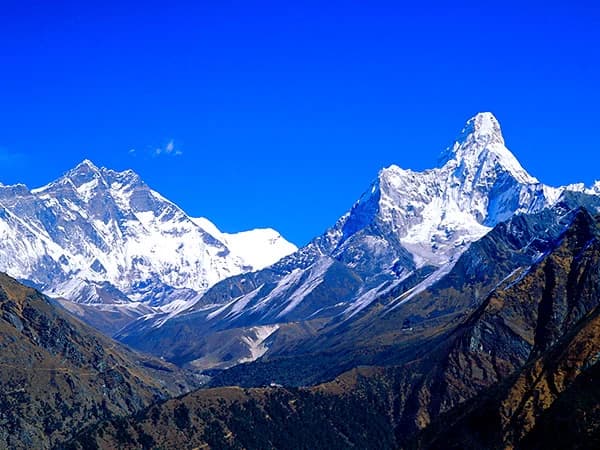
From Nagarkot, on a clear morning, Mount Everest is visible as a small but distinct peak in the distance — roughly 160 km away. You'll see five 8,000m peaks more clearly than Everest itself. For a closer view, add an Everest Mountain Flight (1 hour, US $235) on Day 1 or Day 8 — this gets you within 30 km of the summit. The flight has windows on both sides and your seat rotates so everyone gets the view.
Is the food safe? What if I'm vegetarian or have allergies?
The food we direct you to is safe — we use vetted restaurants and hotels. Nepal is one of the easiest countries in Asia for vegetarians (Hindu majority means most restaurants have extensive veg menus). Vegan, gluten-free, nut allergies, and halal/kosher requirements are all manageable — tell us when booking and we'll brief your guide. The Chitwan jungle lodge is fully buffet so dietary needs are simple to manage there.
Booking This Tour — Step by Step
-
Step 1: Send us your dates
WhatsApp +977 9851029611 or fill the inquiry form on this page with your arrival date, group size, and any preferences (honeymoon, vegetarian, hotel upgrade, etc.). We reply within 4 hours on weekdays, 12 hours on weekends.
-
Step 2: Confirm your customised itinerary
We send a personalised itinerary PDF within 24 hours. You can request unlimited revisions before booking — no pressure, no obligation.
-
Step 3: Pay 20% deposit
Once you're ready, pay 20% via:
- Online card payment (Visa, Mastercard) on our secure payment page
- Bank transfer to our verified Nepal Tourism Board–registered account
- Western Union or Wise
You'll receive a booking confirmation with your guide's name and contact within 1 working day.
-
Step 4: Pre-arrival briefing
7 days before your trip, we send: arrival instructions, guide contact, weather forecast, packing reminder, and Nepal visa walkthrough.
-
Step 5: Arrival & balance payment
We pick you up at Kathmandu airport (look for the "View Nepal Treks" sign holding your name). The 80% balance is paid before you start Day 2 — cash USD, card, or bank transfer. No hidden fees added later.
Why book direct with us vs an aggregator (Viator, GetYourGuide)?
- No platform commission — you save 15–25% on the same tour
- Direct line to your operator — our owner Bhupendra answers his own WhatsApp
- Free customisation — aggregators charge for any change
- Lower deposit — 20% vs the platform's typical 100% upfront
- No language relay — you talk to the people running your trip
What Makes View Nepal Treks Different (And Why It Matters)
Every travel company claims to be "local experts with quality service." We'll tell you what's actually different:
Our guides are local, not imported expats
Most guides come from Kathmandu Valley families who've lived here for generations. They know the story of each temple because their own families worship there. They understand Nepali culture because it's their culture. This sounds obvious; many competitors hire guides from anywhere.
We don't force tourist restaurant contracts
Some tour operators have deals with specific restaurants and pressure tourists into them. We tell you where to eat, but you choose. This is why lunch and dinner are unguided in cities—you're free to try a teahouse in Thamel or a fancy restaurant. You'll eat better food for less money this way.
We run fixed group sizes, not overflow tours
We cap groups at 12-15 people. Larger groups mean guides can't hear everyone, buses get uncomfortable, and that "personal service" disappears. Every person in your group will be known by your guide, not a face in a crowd.
We price transparently because we have nothing to hide
Competitors often quote low prices, then add "local taxes," "fuel surcharges," "permit fees" later. We quote the actual price. If it's $680, it's $680.
We've weathered two decades and 5,000+ travelers
Since 2004, we've learned what works and what doesn't. We know which hotels changed management and lost quality. We know which routes develop problems during monsoon. We know which guides to trust with your experience. That experience matters.
What to Wear in Nepal — Cultural Dress Code for Temple Visits
Most travellers don't think about this and then feel awkward at the first temple. Here's what actually matters:
At Hindu and Buddhist temples
Applies to Pashupatinath, Boudhanath, Swayambhunath, and similar sites.
- Shoulders covered for women and men (no tank tops or sleeveless shirts inside temple grounds)
- Knees covered (no shorts; ¾ pants are fine, full trousers or long skirt is best)
- Shoes off before entering temple buildings (not just the courtyard — the inner shrine)
- Leather items off at some Hindu temples (belts, wallets, jackets) — your guide will tell you when
- No photography inside the main shrine at Pashupatinath (the courtyard is fine)
- Non-Hindus cannot enter the inner sanctum at Pashupatinath — this is policy, not personal
Day-to-day in cities
Casual Western clothing is normal in Kathmandu, Pokhara, and Chitwan. Nepalis are conservative but not strict — shorts and t-shirts are fine on the street, in restaurants, and at hotels. The temple dress code only applies when you're actually visiting religious sites.
What we suggest packing for cultural days
One pair of light long trousers, one shirt with sleeves, and slip-on shoes (saves time at every temple). That's it.
Accommodation and Food Options for an 8-Day Nepal Tour
Accommodation Options
Kathmandu:
- Luxury: Hyatt Regency, Aloft Kathmandu Thamel, Soaltee Crown Plaza
- Mid-Range: Hotel Yatri Suites & Spa, Kantipur Temple House.
- Budget: The Address ktm, Hotel Kailash, Hotel Arts Kathmandu
Pokhara:
- Luxury: The Pavilions Himalayas, Temple Tree Resort.
- Mid-Range: Mount Kailash Resort, Hotel Middle Path.
- Budget: Zostel Pokhara, Hotel Asia.
Chitwan:
- Luxury: Meghauli Serai, Barahi Jungle Lodge.
- Mid-Range: Green Park Chitwan, Hotel Parkland.
- Budget: Jungle Sunset Camp, Sauraha Resort.
Nagarkot:
- Luxury: Club Himalaya, Hotel Mystic Mountain.
- Mid-Range: Hotel Country Villa, Peaceful Cottage.
- Budget: Hotel At The End of the Universe, Stupa Resort.
Food Options
- Dal Bhat (rice, lentils, and curry)
- Momos (dumplings)
- Newari dishes like Bara and yomari.
- Kathmandu and Pokhara offer Indian, Continental, Italian, and Chinese cuisines.
- Organic meals are available in luxury resorts and eco-friendly lodges.
Permits for 8 Days Nepal tours
- Kathmandu: No special permits for sightseeing.
- Pokhara: No permits are needed for general sightseeing. For trekking, you'll need a TIMS Card and ACAP (Annapurna Conservation Area Permit).
- Chitwan: Chitwan National Park Entry Permit is required for wildlife safaris and park activities.
- Nagarkot: No special permits are needed for sightseeing or hiking in and around the area.
Altitude Sickness in 8 Days Nepal Tour?
Altitude sickness is generally not a concern in Pokhara, Chitwan, and Nagarkot since they are located at relatively low elevations.
- Pokhara: 827 meters (2,713 feet) – Safe from altitude sickness.
- Chitwan: 150 meters (492 feet) – No risk of altitude sickness.
- Nagarkot: 2,195 meters (7,201 feet) – Slight risk of mild altitude sickness, but it's usually not severe.
- Travelers are encouraged to stay hydrated and take it easy, especially when visiting Nagarkot.
Nepal Festival Calendar — Plan Around or Plan Into
Festivals are some of the most powerful experiences in Nepal, but some affect tour logistics. Quick reference:
Festivals worth timing your tour around
- Dashain (late September / early October) — Nepal's biggest festival, 15 days. Streets are festive but hotels fill fast and some shops close. Book 3 months ahead if you want this window.
- Tihar (October / November) — Festival of Lights, similar to Diwali. Five days of decorated houses, oil lamps, and the dog/cow worship days. Beautiful for photographers.
- Holi (March) — Festival of Colours, one full day. Tourists are welcomed to join the celebration in Thamel.
- Buddha Jayanti (May) — Buddha's birthday. Boudhanath Stupa is at peak activity.
- Indra Jatra (September) — 8-day festival in Kathmandu Durbar Square with masked dances and the chariot procession of the living goddess Kumari.
Festivals that may affect logistics
- Dashain (Day 8–10): Some restaurants and shops close, banks limited hours
- Tihar (Day 3): Brothers and sisters celebrate at home; some staff take leave
- Saturday: Government offices and many private offices closed (this is Nepal's weekend day)
We'll tell you which festivals overlap your travel dates when you enquire.
Best season for 8-day Nepal Tours
The best seasons for an 8-day Nepal tour are Autumn (September to November) and Spring (March to May). Both offer clear skies, mild temperatures, and ideal conditions for sightseeing and outdoor activities. But the tour can be done in all seasons by applying preventive measures.
Difficulty Level
The Sightseeing in Kathmandu, Pokhara, Chitwan, and Nagarkot (suitable for all fitness levels). so 8 8-day Nepal tour is easy.
Honest Safety Information: What Could Go Wrong (And Why It Rarely Does)
Safety is the first thing nervous travelers ask about. Here's the actual risk assessment:
Real risks that exist:
1. Stomach upset
Probability: ~30% | Severity: Low | Duration: 24-48 hours | Impact: Recovers quickly, mild discomfort
- Why: Unfamiliar food, spices, and bacteria your gut hasn't encountered
- Prevention: Eat cooked food, avoid raw vegetables, stick to bottled/filtered water
- If it happens: Guides provide remedies; you rest 1-2 days if needed
2. Mild altitude adjustment
Probability: ~15% | Severity: Low | Duration: First night only | Impact: Sleep disruption, mild headache
- Why: Nagarkot is 2,195m; some people feel it
- Prevention: Hydrate heavily before arrival, ascend gradually (we do)
- If it happens: Sleep in, take paracetamol, it resolves by morning
3. Monsoon weather disruption
Probability: 5% June-Aug | Severity: Low-Moderate | Duration: 1-3 days | Impact: Activity rescheduling
- Why: Heavy rain occasionally makes roads temporarily unsafe
- Prevention: We avoid monsoon season for critical safaris; reschedule activities
- If it happens: Alternative indoor activities, no refund needed (rescheduled into nearby days)
4. Minor health issues
Colds, minor infections, skin issues: Probability: ~5-10% | Severity: Low | Duration: Few days | Impact: Treated with local doctors
- Why: Travel exposes you to new environments
- Prevention: Sleep well, hydrate, wash hands, take vitamins
- If it happens: Guides know excellent English-speaking doctors; visit arranged same-day if needed
Risks that are essentially zero:
- Violent crime against tourists
- Vehicle accidents (experienced drivers, well-maintained vehicles)
- Animal attacks (wildlife are shy; you're in a jeep)
- Serious food poisoning (rare at hotels we use; restaurants are vetted)
- Scams (guides prevent these before they happen; stick with your guide)
What happens in a real emergency:
You're never more than 45 minutes from Kathmandu Hospital (modern, English-speaking doctors). Pokhara Regional Hospital is excellent. We carry first aid kits on all activities. Guides are trained in basic emergency response. We maintain relationships with local doctors. Your travel insurance covers medical costs (we recommend it).
In 20 years and 5,000+ travelers, serious medical emergencies on this specific tour have been exceptionally rare. When they do occur, they're handled efficiently with modern medical care.
Best Time to Visit Each Location (What Competitors Don't Tell You)
You can visit year-round, but timing matters dramatically for each location.
Kathmandu: Any season works, but...
- Autumn (September-November): Clear skies, comfortable temperatures, festivals happening. Definitely the best for temple photography.
- Spring (March-May): Warm days, occasional haze (mountain visibility reduced). Still excellent; slightly dusty.
- Monsoon (June-August): Lush, fewer tourists, occasional muddy trails. Temples still accessible. OK for cultural tourism, less ideal for mountain views.
- Winter (December-February): Cold mornings, clear days. Sweaters needed. Beautiful light for photography.
Pokhara: Sunrise is everything here
- Autumn (September-November): 70% chance of clear sunrise views at Sarangkot. Cold mornings, visible breath. Bring a jacket.
- Spring (March-May): 50% chance of clear sunrise (haze from agricultural burning). Warmer mornings.
- Monsoon (June-August): 20% chance of clear sunrise. Mountains hidden. Least ideal.
- Winter (December-February): 65% chance of clear sunrise. Very cold (5-10°C), stunning light.
Realistic expectation: We can't guarantee sunrise views. Weather is weather. Even in perfect season, clouds happen. That said, you'll still see something beautiful, and guides plan alternative viewpoints.
Chitwan: Wildlife activity varies dramatically
- Autumn (September-November): High wildlife activity, cooler temperatures, best safari season. Animals are active.
- Spring (March-May): Moderate activity, increasingly warm. Acceptable safaris.
- Monsoon (June-August): Grass grows tall; animal sightings less certain. Jeep safaris sometimes limited. Less ideal but still possible.
- Winter (December-February): Animals visible but less active (cold affects them too). Comfortable temperatures for walking.
Real talk: You'll see wildlife in all seasons. In autumn/winter you'll see more. In monsoon you might see less, but the jungle is gorgeously green and fewer tourists are around.
Fitness Level Reality Check: What "Easy" Actually Means
This tour is rated "Easy" and here's exactly what that means:
Walking on Day 2 (Kathmandu Cultural Tour):
4-5 hours total, with breaks. You're walking through temple complexes, Durbar Square, and monument courtyards. Mostly flat. 365 stairs to Swayambhunath top are optional. You could do this on a leisurely city vacation, or you couldn't, and either way you see the sites.
Walking on Day 3 (Kathmandu Valley Expansion):
3-4 hours with breaks. Same type of walking. Some sites involve modest uphill walking (5-10 minute climbs), nothing strenuous.
Nagarkot (Day 3 evening):
You arrive by vehicle. No walking required beyond checking into hotel. Optional sunrise walk next morning is 10-15 minutes uphill if you want a better viewing spot; mostly flat otherwise.
Nagarkot Sunrise Viewing & Weather Reality:
We attempt sunrise at Nagarkot on Day 3. Sunrise time varies seasonally (5:45am summer, 6:45am winter). We leave hotel 30 minutes before sunrise.
What we can control:
Getting you there on time, selecting the best viewpoint, providing hot tea while you wait
What we can't control:
Whether the sun is visible through clouds/haze. Some mornings, clouds obscure the sun completely. Some mornings, you see a perfect golden sunrise. Most mornings, you see something in between.
Probability of clear sunrise:
- Autumn: 70%
- Spring: 50%
- Monsoon: 20%
- Winter: 65%
Worst case: You arrive at a viewpoint, sky is hazy/cloudy, you can barely see mountains. Still beautiful, genuinely. Clouds at sunrise have their own color. You're on a hilltop watching Nepal wake up—even if it's cloudy, it's remarkable.
Pokhara Days 4-5:
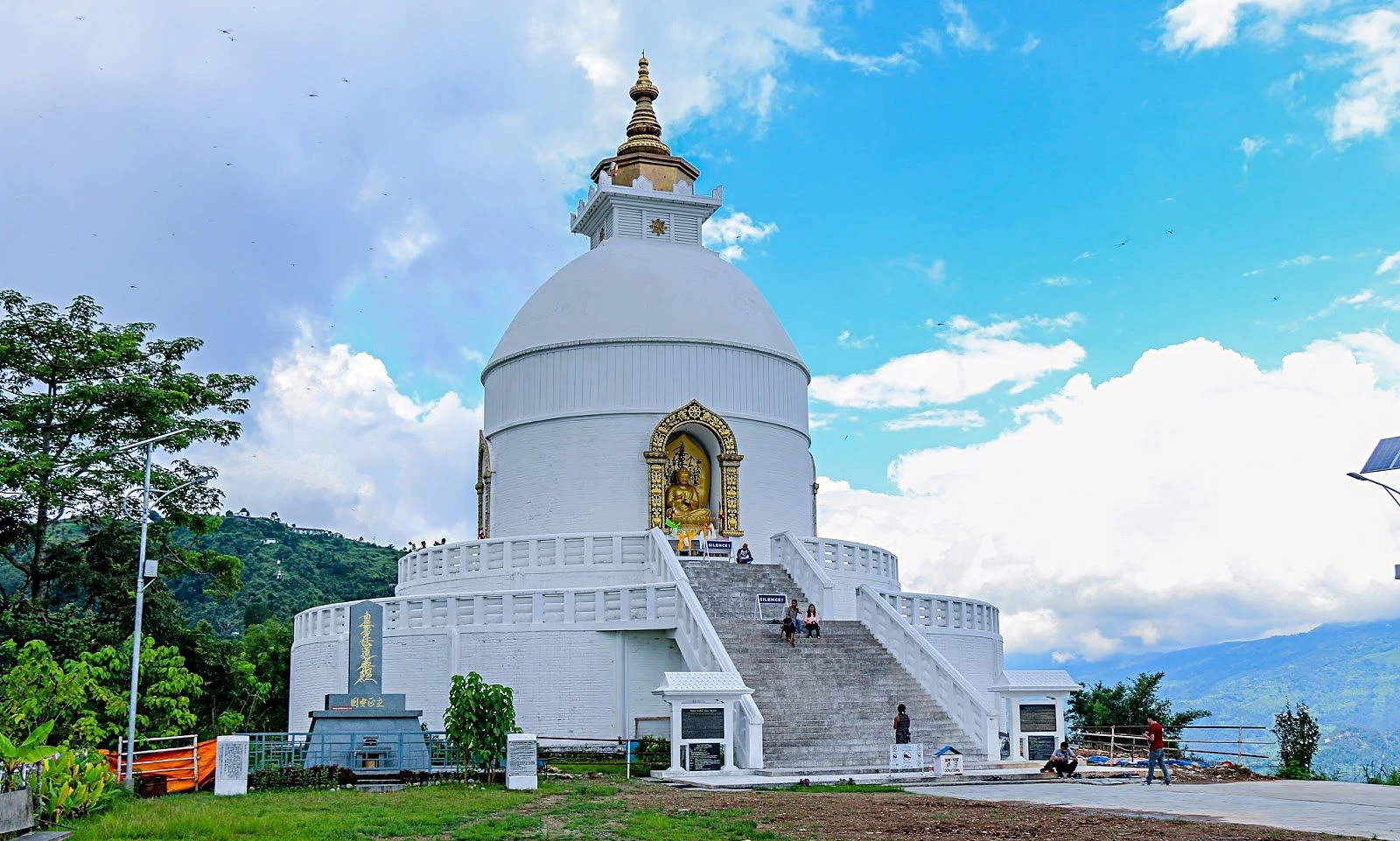
Boating on Phewa Lake (sitting), walking around Pokhara's old town and lakeside (easy, flat), optional short trek to World Peace Pagoda (20 minutes uphill, easy slope, totally optional).
Chitwan:
Jeep safaris have you sitting in a vehicle. Optional walking safari is 2-3 hours on jungle trails (flat, naturalist-paced, not rushed). Walking is gentle—you're looking for animals, not hitting cardio.
The actual challenge:
Altitude adjustment the first day (mild, manageable), heat in Chitwan (just hydration), and early mornings for sunrise (6:30am wake-up times). Not physically demanding.
Verdict:
If you can walk for 30-45 minutes without discomfort, you can do this tour. If you have joint pain, mobility limitations, or significant cardiovascular issues, discuss with guides when booking—modifications exist.
Guide for 8 days Nepal tour
For an 8-day Nepal tour, a guide and porter can be hired depending on the activities:
- Guide: Knowledgeable about local culture, history, and geography, a guide is highly recommended for sightseeing and trekking to enhance your experience.
- In cities like Kathmandu, Pokhara, and Chitwan, a guide is enough.
Honest Review of the Specific Hotels You'll Stay In
We use three hotels on this tour. Here's what you're actually getting:
Kathmandu (3 nights): 3-star hotel in Thamel district
- Room quality: Private bathroom, consistent hot water, comfortable bed (not luxury, but genuinely comfortable)
- Noise level: Thamel is lively; street noise from traffic/restaurants until midnight. Earplugs recommended.
- Amenities: Restaurant downstairs, WiFi (decent speeds), possibly gym access
- Reality: You'll be out exploring all day; the hotel is where you sleep and eat breakfast. It's good enough for this purpose.
- What's notably absent: Room service quality of luxury hotels, premium toiletries, soundproofing
- Why we use this location: Walking distance to all major sites, restaurants everywhere, WiFi is reliable
Pokhara (2 nights): 3-star lakeside hotel
- Room quality: Lake views or courtyard views, private bathroom, moderate comfort
- Noise level: Pokhara is quiet; you'll hear birds, water, not traffic
- Amenities: Lake-view restaurant, peaceful grounds, locals come for evening drinks here
- Reality: Best sunset views of your tour. You'll want to sit on the hotel's terrace with coffee/tea and just breathe.
- What's notably absent: Spa services, gourmet dining, activities within the hotel
- Why we use this location: Direct lake access, centralized for city activities, peaceful atmosphere
Chitwan (2 nights): Jungle lodge
- Room quality: Basic but clean, attached bathroom, ceiling fan, mosquito netting
- Noise level: Jungle sounds at night (insects, birds, occasional wildlife calls). It's genuinely beautiful, not scary.
- Amenities: Restaurant, some lodges have small pools, naturalist-led activities
- Reality: You're in the jungle. Comfort is secondary to experience. Room is a place to sleep; activities are outside.
- What's notably absent: Luxury finishing, noise insulation, extensive dining options
- Why we use this location: Direct access to park for early morning safaris, authentic jungle experience, naturalist guides
Honest bottom line:
These hotels are genuinely good for the price and tour type. They're not 5-star; they're clean, comfortable, and in the right locations. You're not paying for luxury; you're paying for access and experience. Travelers consistently rate accommodations highly.
Upgrade option: Want luxury hotels instead? We offer a premium 8-day version with 4-star properties everywhere. Costs $1,200-1,500 per person instead of $680-$750.
Internet/Wifi Availability
Wi-Fi is widely available in hotels and restaurants in Kathmandu, Pokhara, Chitwan, and Nagarkot, though speeds may vary. For reliable access, use a local SIM with 4G data.
Atms Availability
ATMs are widely available in Kathmandu and Pokhara, with limited access in Chitwan and Nagarkot. Carry some cash for remote areas or smaller expenses.
Mobile Network, SIM Cards & Staying Connected
Two main carriers operate in Nepal:
- NCell — better coverage in tourist areas and Pokhara, slightly faster 4G
- NTC (Nepal Telecom) — better coverage in remote areas and Chitwan
How to get a SIM card
Buy at the SIM counter inside Tribhuvan International Airport (right after baggage claim) or in Thamel within walking distance of your hotel. You'll need your passport and one passport photo. Cost: NPR 100 for the SIM, plus NPR 200–500 for a data package (around US $2–5 for 5–10 GB valid 28 days). The whole process takes 15 minutes.
eSIM option
If your phone supports eSIM, providers like Airalo and Holafly sell Nepal eSIMs for US $9–20. Activate before you arrive — saves the airport queue. Speeds and coverage match local SIMs.
WhatsApp is essential
Most Nepali businesses, guides, and hotels use WhatsApp instead of phone calls. Our 24/7 emergency number (+977 9851029611) is on WhatsApp.
Travel Insurance
Travel insurance is essential for a Nepal tour. Ensure it covers medical emergencies, trip cancellations, and adventure activities like trekking or safaris, if applicable.
Solo Female Travellers — What You Should Know Before Booking
We get this question several times a week. Direct answers:
Is Nepal safe for women travelling alone?
Yes, genuinely yes. Nepal consistently ranks among the safer countries in South Asia for solo female travellers. Most of our solo female guests tell us — usually around Day 4 — that they were nervous before arriving and relaxed within 48 hours.
What's the actual risk profile?
- Violent crime against tourists: Very rare
- Sexual harassment: Uncommon in tourist zones; staring happens (cultural curiosity, not threat) and occasional unwanted comments from young men in crowded markets
- Petty theft: Possible in Thamel night markets — keep your bag in front of you, that's it
- Scams: Mostly fake "trekking guides" approaching you in Thamel; you have a guide, so this isn't an issue for you
What we do for solo female guests
- Female solo travellers can request a female guide (we have three on the team — let us know when booking)
- Hotel rooms are on upper floors and away from staircases
- Driver and guide stay in contact via WhatsApp from arrival to departure
- We share an emergency number that works 24/7 (mine — answered by the company owner)
What women travellers tell us afterwards
"I felt more comfortable walking around Pokhara at night than I do in my own city."
We hear that one a lot.
Family Travel: Is This Tour Good for Kids?
Honest answer: yes, for kids 8 and older. Below that, it works but needs modifications.
For kids aged 8–12
- The Chitwan jungle safari is the highlight — rhinos and elephants up close
- Phewa Lake boating in Pokhara is calm and fun
- Pashupatinath cremation ghats may be too intense for sensitive kids — we route around if needed
- We carry games and activities for the longer drive days
- Most hotels have triple rooms or connecting doubles (no extra cost for kids under 12 sharing parents' bed)
For kids aged 13–17
- This tour is excellent for teenagers — the variety keeps them engaged
- Pokhara has paragliding (minimum age 14 at most operators), zip-lining, and ultra-light flights
- Sarangkot sunrise is the part teens remember; the temples are the part they tolerate
For kids under 8
- Doable but slower-paced
- The 5–6 hour drive from Pokhara to Kathmandu is the hardest part with small kids
- We strongly suggest taking the 25-minute flight one way to break this up
- Skip the longer temple walks; we tailor a child-friendly version
Family pricing
Kids under 5 are typically free (no separate seat/bed). Kids 5–11 receive a 25% discount on the per-person price. Kids 12+ pay the adult rate. Tell us your kids' ages when enquiring and we'll send the exact family quote.
Senior Travellers (60+): Is This Tour Right for You?
We've taken travellers up to age 84 on this exact itinerary. It works because:
- Maximum altitude is 2,400m (Nagarkot) — well below the 3,000m+ threshold where altitude becomes a concern
- No trekking — all sightseeing is walking and driving
- Daily walking is 2–4 hours, broken into segments of 30–60 minutes with seated rest stops
- Private vehicle means you stop whenever you want
- Hotels have elevators in Kathmandu and Pokhara (Chitwan jungle lodge is single-storey)
Modifications we offer for older guests
- Skip the 365 stairs at Swayambhunath — drive to the upper parking lot, 20 stairs only
- Replace the 5-hour drive to Pokhara with a 25-minute flight (recommended)
- Replace elephant-back safari with jeep safari (more comfortable on the back)
- Earlier dinners (Nepalis eat late; we'll arrange 7 pm dinners)
- Slower pace on cultural days
Health considerations
Bring all regular medications in carry-on with original prescription labels. Kathmandu's CIWEC Clinic and Norvic Hospital both have English-speaking doctors and international-standard care. Travel insurance with medical evacuation cover is strongly recommended — we can share three providers our guests have used without issues.
Honeymoon & Anniversary Couples — What We Do Differently
About 30 honeymoon couples book this tour with us each year. Here's what comes with the honeymoon version (no extra charge if you tell us when booking):
- Room upgrade wherever possible at no cost — usually a lake-view or garden-view room
- Welcome flowers in your Kathmandu hotel room on arrival
- Candlelit dinner one night in Pokhara on the hotel terrace overlooking Phewa Lake
- Private boat on Phewa Lake (instead of shared) for sunset
- Private sunrise viewpoint at Sarangkot — we send you earlier and to a less crowded spot
- Couple photoshoot with a local photographer (optional add-on, US $80 for 1 hour)
- Bandipur lunch at a heritage Newari restaurant with terrace seating
If you want to upgrade hotels to 4-star or 5-star (Hyatt Regency Kathmandu, The Pavilions Pokhara, Meghauli Serai by Taj in Chitwan), the total comes to roughly US $1,400–1,700 per person. Ask for the "Premium Honeymoon" quote and we'll send the breakdown.
Optional Add-Ons & Extensions for the 8-Day Nepal Tour
The base tour covers the core circuit. These are the most-requested additions:
Same-day add-ons (no extra day required)
| Add-on |
Where |
Cost per person |
Best for |
| Paragliding from Sarangkot |
Pokhara |
US $120 |
Anyone 14+, mild fear of heights OK |
| Zip-lining (one of the longest in the world) |
Pokhara |
US $80 |
Adventure-curious travellers |
| Ultra-light mountain flight |
Pokhara |
US $150 (15 min) – $350 (60 min) |
Photographers, anniversary couples |
| Everest Mountain Flight (1 hour) |
Kathmandu |
US $235 |
Anyone wanting an Everest view without trekking |
| Annapurna Helicopter Tour |
Pokhara |
US $400 (group of 5) |
Time-poor travellers, seniors who can't trek |
| Bungee jumping |
Bhote Koshi River |
US $115 |
Real adrenaline seekers |
| Cooking class (Newari cuisine) |
Kathmandu |
US $35 |
Food-curious travellers |
Extension day options (add 1–3 days)
- +1 day Lumbini (Buddha's birthplace, UNESCO site) — US $185 per person
- +1 day Bhaktapur deep dive with local family lunch — US $95 per person
- +2 day Annapurna Base Camp helicopter day trip — US $1,200 per person (worth it once)
- +3 day Poon Hill trek (easy trek, Annapurna views) — US $380 per person
All add-ons can be booked before or during your tour. Some (heli flights, mountain flights) need weather windows so book early in your trip when possible.
Flight vs Road: Kathmandu to Pokhara Decision Guide
This is the one logistics question we answer most often. Here's the straight comparison:
| Factor |
Flight |
Road (private vehicle) |
| Time |
25 minutes |
5–7 hours |
| Cost |
US $90 per person |
Included in tour |
| Scenery |
Aerial Himalayan views (window seat) |
River gorges, terraced fields, villages |
| Reliability |
95% on-time; rare weather delays |
99% on-time; occasional traffic |
| Best for |
Time-poor travellers, seniors, families with small kids |
Travellers who want to see rural Nepal |
| Carrier |
Buddha Air, Yeti Airlines, Saurya Airlines |
Toyota Hiace, Land Cruiser, or AC tourist bus |
| Luggage |
15 kg checked + 5 kg carry-on |
Unlimited |
Our honest recommendation: Take the road one way (Kathmandu to Pokhara, downhill, more scenic) and fly the other way (Pokhara to Kathmandu, save time on departure day). This is what about 60% of our guests choose.
Packing List for an 8-Day Nepal Tour
- Comfortable clothes for sightseeing (light layers).
- Warm jacket (for cooler mornings/evenings, especially in Nagarkot).
- Lightweight raincoat or windbreaker (spring and monsoon seasons).
- Sturdy walking shoes or sneakers.
- Casual evening wear for dining.
- Hat, sunglasses, and scarf (for sun and dust protection).
- Passport and travel documents.
- Travel insurance details.
- Reusable water bottle.
- Sunscreen and lip balm (with SPF).
- Toiletries (toothbrush, toothpaste, wet wipes, hand sanitizer).
- Camera or smartphone with charger and power bank.
- Travel adapter (Nepal uses Type C, D, and M plugs).
- Basic first-aid kit (medicines for headaches, stomach issues, etc.).
- Insect repellent (for Chitwan).
- Masks (for dust in cities).
- Small backpack for day trips.
- Local currency (Nepalese Rupees) for small expenses.
- Snacks (energy bars, nuts).
- Guidebook or map (optional).
Packing Reality Check: What Actually Matters
The packing list above is comprehensive, but honestly, here's what travelers actually need:
Absolutely essential (you'll regret forgetting these):
- Passport and copies
- Medications you depend on
- Comfortable walking shoes (non-negotiable)
- Lightweight rain jacket
- Sunscreen
- Insect repellent (for Chitwan)
- Chargers for phone/camera
Very useful (you'll use multiple times daily):
- Reusable water bottle
- Hat/sunglasses
- Comfortable clothes for warm days
- One warmer layer for cool evenings
- Good socks (prevents blisters; so important)
Nice to have (useful, not essential):
- Binoculars (for wildlife spotting)
- Extra camera batteries
- Microfiber travel towel
- Notebook (guides share information; you'll want to write it down)
Don't bother with:
- Heavy luggage (buses are tight)
- Formal wear (Nepal is casual; guides dress casually too)
- Guidebooks (guides are better than books)
- Multiple pairs of shoes (one good walking shoe + sandals for hotel is enough)
- Extensive first-aid kit (we have everything needed)
- Excessive layers (you'll be warm during the day; just bring one sweater)
Real talk:
You can wear the same clothes 2-3 times during this tour (hotels have laundry service). Pack light. You'll have time for laundry. You don't need 8 different outfits.
Complete Nepal Tour Transparency: Pricing, Value & What Others Don't Tell You
The pricing for your tour breaks down as follows, and we'll tell you exactly why each element costs what it does (competitors usually keep this vague).
Your Cost Breakdown for 2 People (Mid-Range Standard):
- Accommodation (7 nights): $210 total (~$15/night per person). You're in quality 3-star hotels in central Kathmandu (Thamel), lakeside Pokhara, and jungle lodges in Chitwan. Not luxury, not dorm rooms—genuine mid-range comfort with private bathrooms and reliable hot water.
- Meals (Breakfast daily, lunch/dinner partially): $140 total (~$10/person/day). Breakfast is included; many lunches and dinners are on your own in Kathmandu/Pokhara (you'll want to explore local restaurants). Chitwan's jungle lodge meals are included. The reason we don't include all meals: most travelers prefer choosing their own restaurants in cities.
- Transportation (Private vehicle, not tourist buses): $180 total. Private vehicle with experienced driver for all transfers, city tours, and travel between cities. No waiting for other groups, no stopping at tourist trap shops. Direct routes.
- Permits & Entrance Fees: $60 total. Chitwan National Park entry, Kathmandu UNESCO sites, other protected areas. We handle all permit logistics.
- Professional English-Speaking Guides: $100 total ($50/day for city guides). These guides have tourism board certification and an average of 8+ years experience. They know the stories behind sites, not just the facts.
- Domestic Flights (Kathmandu to Pokhara): $90 per person if you choose flights. Overland journey is 5-6 hours and costs $20 but adds a full day to your itinerary.
TOTAL: $680-$750 per person for 8 days
How this compares:
- Budget tours ($120-150/day): Basic teahouses, shared transportation, less experienced guides, rushed itineraries
- Luxury tours ($250+/day): 5-star hotels, private jeeps only, premium experiences
- DIY independent travel ($30-50/day): Self-guided, basic accommodations, no safety net if transport fails
Your tour sits in the sweet spot: experienced guides + quality accommodations + comfortable pace + transparent costs.
What "All-Inclusive" Actually Means (And Doesn't):
✓ Included:
- All ground transportation in private vehicles
- Professional English-speaking guides
- 7 nights accommodation (3-star hotels/lodges)
- Daily breakfast
- All entrance fees and permits
- Airport pickup and drop-off
- Jungle safari activities in Chitwan
- Boating on Phewa Lake
✗ NOT Included (And why this matters):
- Flights to/from Nepal ($400-800 depending on origin)
- Lunch and dinner in Kathmandu/Pokhara (intentional—most travelers want restaurant choice)
- Nepal visa ($30-50, obtained on arrival)
- Travel insurance (we recommend; not mandatory but smart)
- Tips for guides/drivers (standard practice; approximately $5-10/day per person)
- Optional adventure activities (paragliding $120-150, zip-lining $80)
- Personal expenses (souvenirs, extra drinks, laundry, SIM cards)
We list what's excluded because hidden costs destroy trust. You'll know your actual spend before booking.
Best Time to Visit Each Location (What Competitors Don't Tell You)
You can visit year-round, but timing matters dramatically for each location.
Kathmandu: Any season works, but...
- Autumn (September-November): Clear skies, comfortable temperatures, festivals happening. Definitely the best for temple photography.
- Spring (March-May): Warm days, occasional haze (mountain visibility reduced). Still excellent; slightly dusty.
- Monsoon (June-August): Lush, fewer tourists, occasional muddy trails. Temples still accessible. OK for cultural tourism, less ideal for mountain views.
- Winter (December-February): Cold mornings, clear days. Sweaters needed. Beautiful light for photography.
Pokhara: Sunrise is everything here
- Autumn (September-November): 70% chance of clear sunrise views at Sarangkot. Cold mornings, visible breath. Bring a jacket.
- Spring (March-May): 50% chance of clear sunrise (haze from agricultural burning). Warmer mornings.
- Monsoon (June-August): 20% chance of clear sunrise. Mountains hidden. Least ideal.
- Winter (December-February): 65% chance of clear sunrise. Very cold (5-10°C), stunning light.
Realistic expectation: We can't guarantee sunrise views. Weather is weather. Even in perfect season, clouds happen. That said, you'll still see something beautiful, and guides plan alternative viewpoints.
Chitwan: Wildlife activity varies dramatically
- Autumn (September-November): High wildlife activity, cooler temperatures, best safari season. Animals are active.
- Spring (March-May): Moderate activity, increasingly warm. Acceptable safaris.
- Monsoon (June-August): Grass grows tall; animal sightings less certain. Jeep safaris sometimes limited. Less ideal but still possible.
- Winter (December-February): Animals visible but less active (cold affects them too). Comfortable temperatures for walking.
Real talk: You'll see wildlife in all seasons. In autumn/winter you'll see more. In monsoon you might see less, but the jungle is gorgeously green and fewer tourists are around.
Before You Book: Critical Practical Information Nobody Mentions
About the Flights:
If you book flights between Kathmandu and Pokhara, you'll take Buddha Air, Yeti Airlines, or similar. All are reliable. Flights depart Kathmandu's Tribhuvan International Airport (KTM). Pokhara Airport is small but handled thousands of flights annually.
Security screening is basic: standard metal detector, bag check. Arrive 1.5 hours early for domestic flights. Boarding is relaxed compared to Western airports—lots of casual socializing, then everyone boards.
Baggage: 15kg limit on most carriers. You'll have a checked bag and carry-on. We'll brief you on this; most travelers are fine.
In-flight: 22 minutes. Aircraft is small (60-70 seats) but stable. Window seats offer Himalayan views on clear days (breathtaking, genuinely). Middle/aisle seats offer similar experience to any short flight.
About Internet & Communication:
Nepal has 4G in all major cities. Bring an international phone or buy a local SIM ($5) with data package ($2-3 for 2GB). WhatsApp, email, social media all work. Speeds are reasonable but not blazing fast—plan for 3-4 Mbps average.
In rural areas and Chitwan, connectivity drops. You'll have limited data. This is intentional—part of the travel experience is being less connected.
About Money & Currency:
Nepal uses Nepalese Rupees (NPR, ~130 to 1 USD). ATMs are everywhere in major cities. Withdraw cash in Kathmandu and Pokhara (Chitwan ATMs are less reliable). Credit cards work in tourist restaurants and hotels but not local shops.
Bring small USD bills ($1, $5, $10) for emergencies and tipping. Many accommodations accept USD directly.
Daily cash needs: $20-30/day for meals you're buying, souvenirs, tips. We handle all major costs.
About Water & Health:
Tap water is not safe to drink in Nepal. You'll have bottled water in hotels and during tours. Bring a reusable water bottle; we refill it during the day. Himalayan water (from mountains) is pure and delicious.
Stomach issues affect ~30% of tourists. Usually mild, 24-hour duration. Bring standard remedies (Imodium, Pepto-Bismol) in your kit. Guides always have these available.
Altitude sickness is extremely unlikely on this tour (max 2,400m, gradual ascent). If you experience headache, shortness of breath, or nausea at Nagarkot, guides have oxygen and know exactly what to do.
Mosquitoes exist in Chitwan. We provide insect repellent and netting. Dengue is not a realistic concern for tourists; guides manage this proactively.
About Tipping:
Tips are not mandatory but expected. Local guides and drivers depend on tips. Standard practice:
- Guides: $5-10/day per person (if satisfied; $10 means exceptional)
- Drivers: $3-5/day per person (less visible, but appreciated)
- Hotel staff: Optional, $1-2 if helpful
Total expected tips: $50-100 per person for 8 days. Budget this separately.
Tours Similar to This 8-Day Nepal Itinerary
If you're not sure this is the right package, here's how it compares to our other Nepal tours:
Not sure? Send us a message with what you most want to see and we'll tell you honestly which package fits — even if it's not this one.