Difficulty & Fitness Requirement Everest base camp trek
The difficulty of the EBC trek is mostly due to altitude, not technical hiking or unusually high daily mileage. The more you know about what you're getting into, the better prepared you can be and the more realistic your expectations will be.
Physical Demand Reality
The trek to Everest Base Camp does not require mountaineering skills. The routes are recognised paths that thousands of people walk every year without technical gear. But you'll hike 5-7 hours a day, for 9-10 days straight on rough and undulating terrain. You have to be able to endure an extended workout with a fully loaded day pack and operating from 40-50% of the oxygen at sea level.
Cardiovascular endurance counts more than the ability to lift the maximum. The move is all about steady work, not explosive power. If you can walk uphill with a small pack for around 5-6 hours at low altitude, then you attest to the basic level of fitness required. But altitude intensifies everything. A gentle rise at sea level seems steep at 5,000 meters, and stairs that would be a breeze at zero feet leave you winded with the body-numbing Everest Base Camp elevation.
Specific Physical Preparation
- Begin training at least 2-3 months before departure. Focus on developing cardiovascular stamina with things that emulate trek requirements:
- Long Hikes (2-3 times weekly): Work up to carrying 5-7 kg on 5-6 hour hikes. Add a lot of elevation (600-1,000 meters) to mimic steady uphill walking. If mountains are not available, climb stairs in office buildings, stadiums or hiking trail stairs over and over again.
- Cardiovascular Fitness (3-4 days per week): 45-60 minutes of running, cycling, swimming, or rowing at moderate intensity. Run at a pace where you're winded but can still say one- or two-word sentences. This ten-minute training session mirrors the sustained effort of high-altitude trekking.
- Leg-Strengthening (2- 3 times weekly) Squats, lunges and step-ups forge the quads, hamstrings and calf power to manage steep descents (which generally leave runners more sore than climbs will). Weak knees, in particular, have difficulty with the trek's prolonged downhill sections.
- Core Stability (2-3 days/week) Planks, side planks and other related exercises help with balance on undulating ground as well as decrease back fatigue due to pack load.
- Full Gear Practice Hikes: Do at least a few training hikes in your actual trekking boots and break them in well. Blisters from a new pair of boots can ruin a trek. Testing your trekking clothes, pack, and equipment for any problems before reaching Nepal.
Mental Preparation Equally Matters
The Everest Base Camp trek difficulty also involves a lot of mental toughness. The physical facet Discontinuous long walking days in variable weather; basic accommodation with simple facilities; little or no contact with home and daily experience of altitude symptoms challenge psychological strength. Those who flourish in such conditions tend to accept a little discomfort as part of the adventure, rather than focusing on what they are missing from "real" life.
Altitude affects mood and cognition. You could have a few days where you feel irritable, anxious or perhaps a little depressed at the highest altitudes. These are normal, and they will pass. Sleep is hard to come by at higher than 4,000 meters because of periodic breathing (your body switches between quickly breathing and stopping). Knowing this can be a normal response helps you to keep things in perspective if you ARE feeling them.
Age and Health Considerations
The EBC trek has received trekkers from 10 years old to as vulnerable as 80+. Age, by itself, doesn't mean capability; fitness level, acclimatisation response and mental approach count far more than birth year. That's not to say, however, that anyone over 60 or under 16 shouldn't take especially good care of their preparation and maybe even plan for additional acclimatisation days.
You needed to harbour a specific pre-existing medical condition with a shrivelled reservation. Talk to your doctor about high-altitude trekking if you:
- Heart or lung disease: These organs bear the brunt of a lack of oxygen. Certain medical conditions definitely prohibit high-altitude travel; others necessitate extra precautions and slower ascent.
- High blood pressure: Normally controlled with medication, but doctor permission is required, and the trek leader should monitor your condition.
- Asthma: The altitude can help mild asthmatics due to cleaner air, but it may worsen severe asthma. Be sure to stock plenty of medication and have clear emergency plans.
- Diabetes: It can be watched closely but requires frequent measurement of blood sugar, enough food and adjustment for insulin needs at altitude.
- This tendency toward altitude sickness in one person doesn't mean you'll have a similar problem, especially with the new generation of gentler acclimatisation programs. But talk to altitude medicine experts beforehand.
- Pregnancy contradicts high-altitude trekking. Decreased levels of oxygen may be harmful to foetal development, and evacuations are complicated under emergency conditions. Definitely plan your Mount Everest base camp trek at a time when you are not pregnant.
Realistic EBC Hike Difficulty Assessment
On such a scale, where 1 is walking in the park, and 10 is technical mountaineering, the Everest Base Camp trek would come in at around 6. You have real challenges ahead, and you need to be prepared, but the trail is open to anyone who has the resolve to get on it. The challenge would be akin to multi-day backcountry hiking trips at altitude or hard hut-to-hut alpine walking in Europe or North America.
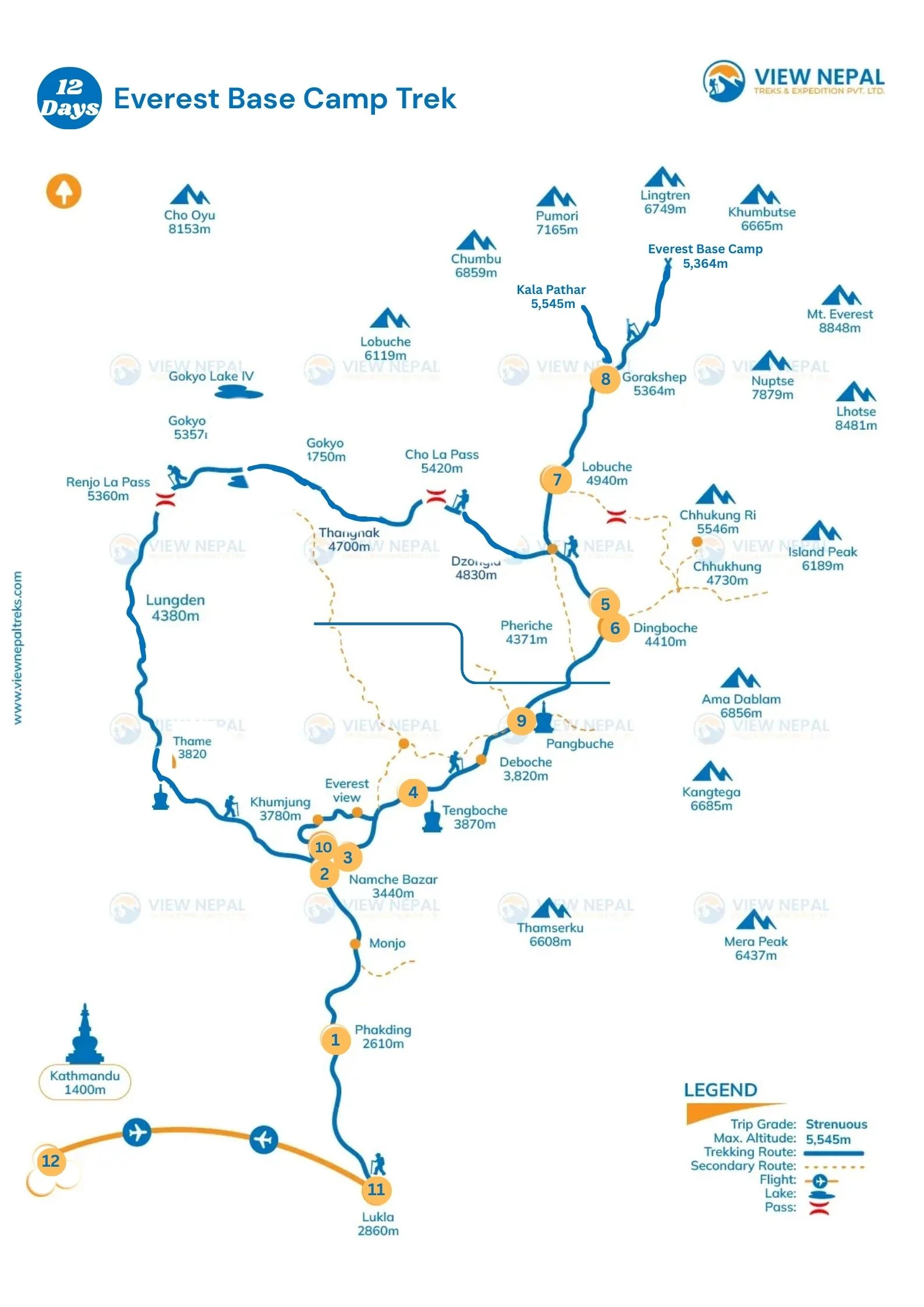
The most difficult single day is Day 8, reaching Gorakshep, moving on to base camp and returning. That's almost 7-8 hours in the "death zone" where there is very little O2. The second-toughest is Day 9, a pre-dawn wake-up to climb Kala Patthar at 5,555m and then all the way down to Pheriche. Both days will push you beyond your limit, but thousands of people successfully nail them each season.
12 Days Everest Base Camp Trekking Success Rates
Around 90% of well-acclimatised trekkers make it to Everest base camp. Moraine failures are mostly due to insufficient acclimatisation (speeding up the itinerary), overrating of personal fitness, or weather problems dictating an early retreat. Our 12-day itinerary with proper acclimatisation days maximises your success probability for base camp trekking in Nepal.
Best Time To Do Everest Base Camp Trek
Choosing the right season for your Everest Base Camp trek dramatically impacts your experience, visibility, and success rate. Here's what each season offers:
Spring Season (March - May) - Peak Trekking Period
The best time to trek Everest Base Camp is spring.
Lowland temperatures in the day can range from 10-15°C and at night as low as -5 to -10 °C. At Everest Base Camp altitude (5,364m), temperatures could be anywhere between 0-5°C during the day and as low as -10 to -15 °C at night.
- Pros: With morning skies usually clear, the views of Mount Everest in the day's early hours are simply stunning, but clouds roll in during the afternoon. In the final weeks of March and through April, the rhododendrons bloom in shades of reds, pinks and whites. The trails are clearly marked, even with the light snow at less than 4,500m. April to May falls within the Everest climbing season, adding excitement as expedition teams prepare for summit bids.
- Considerations: Spring is the busiest season, especially in April. Teahouses book up fast, so make early reservations. Despite crowds, the magnificent weather and blooming flowers make it worthwhile for the Everest Base Camp trekking.
Autumn Season (September - November) - Premium Conditions
A lot of people believe Autumn is the very best time to do the Everest Base Camp trek. The post-monsoon weather provides incredible clarity and stability.
- Pros: September has the warmest temps (15-20°C at mid-levels), and October is the most likely to have stable weather and clear mountain views. The Nepal Everest Base Camp trek in October has deep blue skies and great photography ops. Very little rain after mid-September keeps trails in excellent condition. We get to November, where the temperatures are much cooler (5-10°C days), but still not too bad.
Crowdwise, October is competitive with spring; therefore, arrange your Everest Base Camp trek package nice and early. Nepali festivals (Dashain and Tihar) occur in late October-early November - bringing cultural richness but potentially causing teahouse staff and Lukla flights to be harder to access. By the second half of November, it has snowed above 4500m.
Winter months (December to February): Solitude and some challenges.
Winter provides the most peaceful trek to Everest Base Camp, with the best chance of clear skies for experienced trekkers.
- Pros: On clear days, there is a magnificent view of the sky. Fewer crowds translate into personalised experiences and more competitive Everest Base Camp trek cost pricing. The weather is pretty reliable but bitterly cold from December to early January.
- Obstacles: Extreme cold with daytime temperatures that will hover around -10 degrees and nights dropping to -20 to -25 on the higher slopes at Everest Base Camp height. Microspikes may be used if snow accumulation is above 4,000m. Many teahouses aren't operating, especially above Namche. The Everest Base Camp trek difficulty just got steeper.
Best for: Old-pro cold-weather trekkers who want solitude and unbroken snow. Not for first-timers or those who can't handle a brutal cold.
Monsoon Season (June - August) - Off-Season Adventure
Monsoon season has warm weather (15-20°C), occasional afternoon rain, and gloomy days with persistent clouds.
- Cons: Mountain visibility is poor as peaks remain wrapped in clouds. Mudslides on slippery mud paths, and leeches under 3000m. Lukla flights are often cancelled and can have several-day delays.
- Pros: Silenced trails, gardens awash with wildflowers and a substantial price reduction on the Everest Base Camp trek price. Warmer nights reduce heating costs.
- Best for: The flexible hiker who places solitude over the nicest weather and can bear unresolved questions.
Recommended Best Time for 12 Days EBC Trekking
October or April is the best choice for most trekkers because these two months give you a good balance in terms of the stability of weather, temperature comfort, visibility, and crowd on your Everest base camp trek. These are the months with the highest chances of success and the most enjoyable experience.
If you are flexible and ok with crowds, then late September through early November is the perfect time. If you'd prefer slightly warmer weather as well as some spring blooms, late March through mid-May is your best bet.
If solace and budget are your primary concerns rather than comfort, then winter trekking in December/January rewards greatly. Monsoon (June-Aug) should be attempted only by those who consider themselves very experienced trekkers and have a large window of time.
Altitude Sickness and Safety Guide
Altitude sickness (AMS - Acute Mountain Sickness) is the most significant health risk on an Everest Base Camp trek. Learn prevention, recognition and response, and it can save your life.
Understanding Altitude Physiology
There is around 21% oxygen in the air at sea level. Even then, at the altitude of Everest Base Camp (5,364 meters), the air contains a 21% oxygen concentration but barely half the pressure of that at sea level. With each breath, you take in only half as many molecules of oxygen as your body is accustomed to. Your cells can't produce energy in an efficient way, and that lack of efficiency brings with it many physical symptoms.
Your body adjusts by doing a few things: Your breathing rate jumps, your heart rate picks up pace and production of red blood cells increases. But these changes are not instantaneous; it takes 24-48 hours for the body to "initially" adjust at every new altitude, and several weeks or months to fully acclimate.
The Everest Base Camp trek difficulty is mainly due to climbing too high, too fast and not getting the required time for acclimatisation. The 12-day trek features critical rest and acclimatisation days in Namche (Day 3) and Dingboche (Day 6). Skipping these rest days or hiking the schedule can significantly increase altitude sickness risk.
Recognizing AMS Symptoms
Mild AMS (frequent, 50-75% of trekkers experience this):
- Headache (the hallmark symptom)
- Mild nausea or reduced appetite
- Dizziness or lightheadedness
- Fatigue beyond normal tiredness
- Difficulty sleeping
- Shortness of breath with exertion
Small aches are standard and doable. Treatment is rest, fluid and pain relievers. If your symptoms don't improve significantly, you can keep going up at a slow pace the next day.
Moderate AMS (worrysome, get down now):
- A sudden, persistent headache that is not relieved by painkillers
- Nausea, (vomiting/oral intolerance)
- Worsening symptoms despite rest
- Significant fatigue is making walking difficult
- Mild confusion or coordination problems
Moderate AMS requires immediate descent. Lose at least 300-500 metres of altitude. Symptom resolution is usually prompt with descent. Never keep hiking when you have mild symptoms.
Life-threatening emergencies - Severe AMS: HACE and HAPE:
HACE symptoms:
- Severe confusion and irrational behavior
- Lack of coordination in walking (ataxia)
- Severe lethargy progressing to unconsciousness
- Vision changes
HAPE symptoms:
- Severe breathlessness even at rest
- Cough producing pink, frothy sputum
- Chest constriction and sound bubbles in the lungs
- Rapid heart rate and breathlessness
- Blue-tinged lips and fingernails (cyanosis)
HACE and HAPE are both medical emergencies, necessitating immediate descent and extraction. Without treatment, the diseases are usually fatal within hours. Get out of there, man, chopper retrieval ASAP.
Prevention Strategies
- Follow a Gradual Ascent Schedule: Our 12-day itinerary offers sufficient time for acclimatisation for most. Don't skip rest days. Don't press on to higher camps feeling unwell. So-called "climb high, sleep low," meaning you hike to higher altitudes during the day and sleep at lower ones at night, can speed up adaptation.
- Stay Hydrated: Have at least 3-4 litres of water every day. Dehydration exacerbates and simulated symptoms of altitude sickness. Urine ought to be clear or light yellow in colour. Dark urine indicates insufficient hydration.
- Eat Adequately: Keep calories up during diminished appetite at altitude. Carbing: The most efficient energy source at elevation comes from carbohydrates (rice, pasta and bread). Skip that beer: It dehydrates and exacerbates the effects of altitude.
- Ascend Slowly: "Pole pole" (Swahili for "slowly, slowly) is your high altitude trekking mantra. Walk comfortably so that you can talk. You're going too hard if you can't talk because you're breathing so heavily.
- Consider Diamox (Acetazolamide): Diamox speeds up acclimatisation by increasing breathing and blood acidity. The usual dose is 125mg twice daily, beginning about 1-2 days before ascending. Ask your doctor--Diamox (acetazolamide causes frequent urination & tingling in fingers/toes, but reduces AMS. Others would rather not pop pills, which is also fine as long as you are healthy and following good acclimatisation protocols.
- Listen to Your Body: Don't ignore symptoms or "just tough it out." Both fit and unfit people are at equal risk; your marathon running prowess isn't going to save you. Be sure to tell your guide the truth about what symptoms you've been experiencing.
- Sleep Lower When Possible: For those of you who hike to Everest Base Camp from Gorakshep (Day 8), try to sleep in Gorakshep upon your return instead of Lobuche. Sleeping at a lower, reasonable altitude is one basic recovery.
Emergency Response and Evacuation
All guided trips will have full first aid kits, which will be used in case of an injury.
- Pulse oximeters: These measure the oxygen saturation of your blood. At extreme altitude, readings of less than 75-80% signal trouble.
- Diamox: For the prevention and treatment of AMS
- Dexamethasone: A high-powered emergency steroid for the treatment of HACE
- Nifedipine: For HAPE treatment
- Portable Hyperbaric Chambers (Gamow bags) are Inflatable chambers that reproduce the descent by creating pressure around the patient.
- Supplemental oxygen: For emergency use
If severe symptoms develop, evacuation is gradual :
- Immediate ground descent: Get down between 300-500+ meters as quick as you can safely manage, even at night if need be
- Call for help (rescue coordination). Use radios or telephones to guide helicopters to evacuate casualties.
- Gamow bag or oxygen: Significantly decreases time to helicopter in severe cases
- Evacuation by helicopter: Normally, Pheriche (4,240m) or Namche Bazaar (3,440 m) to hospitals in Kathmandu
Helicopter rescue from the Everest Base Camp costs $3,000-5,000. Evacuation insurance is required; without it, you have to pay by credit card before the helicopter leaves. The majority of severe cases with altitude evacuate in a healthy condition, yet if evacuations are delayed, irreversible injury or death may occur.
Insurance Requirements
Purchase travel insurance specifically covering:
- Evacuation 6,000-meter altitudes and below
- Helicopter rescue: $5,000-10,000 and up
- Medical treatment in Nepal
- Repatriation to your home country if required
- Most standard travel insurance policies exclude high-altitude trekking altogether. Now read the policy in detail and ensure coverage specifically says Nepal trekking over 5,000 meters.
Nepal Travel Insurance and Rescue Services With View Nepal Treks.
We provide specialty travel insurance & emergency assistance services that are designed to meet the needs of adventure travellers with peace of mind while travelling the world. Our services include:
Key Features
Insurance + Rescue: All in one, simple service.
Altitude-Based Plans:
- CTG-Basic: Coverage available to 3500m, up to $15,000.
- CTG-Plus: 3500 - 6000m, sum insured to $35,000.
- CTG-Pro: 5000- 6000m, $75k coverage.
Rescue Support: Live satellite tracking support, SOS device response & emergency helicopter and ambulance evacuation.
- 24/7 Tri-language Assist: Assistance in English, Nepali and Hindi.
- Privacy: Dual encryption/payment at rest and in motion.
- Customised Plans: Customised plans as per the traveller’s demands.
Global Partnerships
- Co-insurance with top international providers.
- Western Tech tech support, Beidou Communication technology and SAT.
Nepal-Based Service Option
These Insurance services can be facilitated directly from Nepal, and they are not included in the trip cost; however, we can help you to make the necessary arrangements at an additional cost alongside your trek.
Other Health Considerations During EBC Trek
- Traveller’s Diarrhea: Despite precautions, you often get it in Nepal. Take along Imodium for symptom blockade and antibiotics (Ciprofloxacin or Azithromycin) for treatment if symptoms last for more than 24 hours. Keep well-hydrated with oral rehydration salts.
- Sunburn and Snow Blindness: High UV levels burn exposed skin quickly at elevation. Cover exposed skin, especially your lips, with at least SPF 50 sunscreen. Use glacier glasses or good sunglasses that block 99-100% UV. But snow blindness (sunburn of the corneas) is agonizingly painful and easily preventable with glasses.
- Blisters: Comforter boots a lot for weeks before you start. Use sheets of mole skin or blister plasters as soon as you notice hot spots. Blisters can also end treks when they become infected.
- Dental Problems: Altitude is not always conducive to the care of teeth. Finish any necessary dental work before you leave for your trip. Take back-up filling material and potent analgesics.
Packing List for Everest Base Camp Trek
The right gear makes you feel comfortable and protected during your Everest Base Camp Trek. Pack smart with these essentials:
Clothing Essentials
- Base layer :3-4 wool or synthetic shirts, 2-3 trekking pants, Tharmal leggings (never cotton inner.
- Insulation: Fleece jacket and down feather jacket (800+ fill power for above 5000m)
- Outer defence: Rain gear, waterproof Gore-Tex jacket and rain pants, a warm hat, sun hat, gloves, a buff or a scarf
Footwear
- Walking boots: Good, worn-in walking/hiking boots, Waterproof and with good ankle support (Must be used to walk more than 50 kilometres before departure )
- Camp shoes: Sneakers or sandals to wear at tea houses at night.
- Gaiters - optional but nice above Dingboche.
Trekking Gear
- Backpack: 40-50L Daypack and 60-80L Duffle for porters
- Trekking poles: Knee protection for the downhill.
- Sleeping bag: -10°C to -15°C with liner
- Headlamp: LED with extra batteries
- Water system: Two 1-litre bottles with insulation covers
- Water clean: LifeStraw, SteriPen or tablets
- Sunglasses: Category 3-4 UV protection
Essential Supplies
- Blister treatment, Pain relief, Diamox, Antibiotics, Sun block, SPF 50+
- Personal items (biodegradable soap, TP, hand sanitiser, wet wipes)
- Documents (passport, permits, insurance, cash)
- Electronics (phone, power bank 10,000+ mAh, camera, charging cables)
- Earplugs, a book, playing cards, or ziplock bags.
What Not to Bring
- Cotton clothing: Wetness: Stays wet, causes hypothermia, never suitable for trekking
- Too many changes of clothes: You will be repeating clothes—three outfits is all you need
- Heavy books: Kindle or single paperback, not three hardcovers
- Precious jewellery: Weight and risk of losing it
- Driers or the like: unreliable power at altitude.
- Perfumes, cologne: Strong sweet/sour/chemical odours are bad for you and bugs in Buddhist areas
Packing Strategy for Mount Everest Base Camp 12 Days Trek
- Use the layer everything principle. Pack items in stuff sacks or dry bags, and then pack these into your duffel in well-organised layers. Pack a day's worth of clothing and essentials in your carry-on for Lukla departure day; luggage sometimes detaches from owners.
- Duffel bag that the porters will carry (max 10-12 kg per trekker, combined from both pax and sharing with your trekking partner into one porter load). Your daypack usually weighs 5-7 kilos due to water, camera, extra layers and snacks. Total equipment load for the entire trek should not be more than 15-20 kgs.
- Quality is more important than the logo. Quality no-name equipment is better than improperly maintained top-name brand. Test everything before you go and find out that zippers fail at home, not 5,000 meters.
Gear Rental in Kathmandu
Rent the best trekking gear in Thamel, Kathmandu. Sleeping bags ($1-2 a day), down jackets ($1-2 a day), trekking poles ($0.50-1 a day), etc, can also be hired if required. But sizing and quality differ basket essentials like boots should come from home.
Trekking Gear Quality rental gear in Thamel, Soanmarga, Kathmandu. Sleeping and down jacket ($1 - 2/day), trekking poles ($.50 - $1/day), etc. But sizes and quality differ boots, for instance, should be brought from home.
Weight Limits
For flights to Lukla, permitted luggage is 15kg checked with 5kg carry-on. Max weight for the porter to carry your duffel is 15kg (all inclusive with sleeping bag). Keep your daypack around 6-8kg. You can leave your heavy bags in the Kathmandu hotel room during the trek to Everest base camp.
Why Choose Us for 12 days Everest Base Camp Hiking?
Experience and Expertise
For 15 years, we've been leading Everest Base Camp Trek groupssafely, with more than 2,500 trekkers guided to the base camp. All of our head guides have government licenses, and many have summited Mount Everest or other 8,000-meter peaks. We have a 99.2% success rate with no severe injuries or fatalities on our watch.
Comprehensive Support Systems
- Head Office in Kathmandu: Our main office has a radio link with all trekking groups. In case of emergencies, our office organises helicopter evacuations, local hospital care and family notifications. You're never actually alone, even on the most isolated sections of the base camp trekking route.
- Medical: All guides carry complete first aid kits, pulse oximeters and oxygen. We've also purchased portable hyperbaric chambers, one for each group of clients, expensive gear that many budget companies forego. Our guides have up-to-date first aid training with altitude medicine updates every season.
- Quality of Gear: We supply high-quality 15°C sleeping bags (free of charge) if you don't have your own. The down jackets we rent are premium 800-fill down. We never cut corners on life-saving safety equipment to save money.
- Small Group Size: We limit groups to 8-10 trekkers maximum with 1 lead guide, 1 assistant guide and the correct number of porters. This ratio enables facilitators to give each participant attention and go with the flow in terms of pace by group capacity. Low-priced trekkers often lead groups of 15-20 and provide little individual attention.
- Guide-to-Trekker Ratio: 1 guide for 4-5 trekkers. Larger groups have assistant guides, so there is always someone close by to answer questions, snap a photo or, if need be, care for the ill.
Ethical Operations and Fair Treatment
- Porter Welfare: We follow the International Porter Protection Group (IPPG) protocol. Our porters are well equipped and paid, we will provide them with appropriate (boots, jackets, sunglasses), food and shelter is also arranged, as it’s restricted carriage 25 kg per porter max.
- All of our staff are fully insured. Cheap companies often exploit porters, compensating them poorly, overburdening them and issuing insufficient gear. We have witnessed porters from other companies walking in sandals at -10°C with 40kg packs on their backs. This is not okay, and we will not be a part of this.
- Fair Wages: Our rates paid to guides and porters are high compared to the national average. It draws the best staff and assures that they’ll be motivated to deliver excellent service. Our head guides earn 2-3x what budget companies pay because of experience and responsibility.
- Green: We adhere to Leave No Trace guidelines. All rubbish returns to Kathmandu for appropriate disposal. We try as much as possible to make our clients not entrants of bottled water, so we offer them purification tablets. 50% of the trek fee helps to support conservation projects in Sagarmatha National Park and our local schools.
- Cultural Sensitiveness: Our guides will brief you on Buddhist customs, monasteries, etiquette and local traditions. We organise optional monastery visits with appropriate protocols. Such immersion in a culture adds another dimension to your trip than mere walking back to base camp.
Honest, Up-Front Pricing with No Surprises
All that you see in the "What's Included" section is what you get; our pricing is all-inclusive. Other advertise offer good deals and then tack on mandatory costs for “guide tips,” “government taxes,” “fuel surcharges,” and other hidden charges. We believe in upfront pricing, what we say is what you pay.
We give a detailed pre-departure info packet stating exactly what costs you may incur at the other end (showers, charging, drinks), so you can budget accordingly. We will not force you to buy things you don't need, equipment, or services.
Flexibility and Personalization
Even though we offer tried-and-tested routes, we’ll customize to suit your squad. If somebody does need another acclimatization day, we modify. Should the route need to change due to weather, we have alternatives. If your pack admires some of the cultural stops or jaunts off into side hikes, there are options as long as they can be done safely.
We do private treks for those who like personalized adventures. Private treks are more expensive but allow complete control over the pace, rest days and special requests.
Post-Trek Support
This relationship doesn’t stop when you reach Kathmandu. We assist with:
- Book a hotel for extra nights as may be required
- Onward travel bookings
- Bag storage for what you don't need on the trek
- Sightseeing tours in KTM as per the above program.
- Next time you’re bitten by the mountain bug and planning a trek.
Many clients return for Annapurna Circuit, Manaslu Circuit or another adventure in Nepal. We provide discounts to returning customers, and we treat repeater trekkers as family.
Testimonials and Verification
Please take the time to check out our TripAdvisor, Google and Facebook reviews. We maintain 5-star ratings from hundreds of verified reviews! We would be glad to put you through the past clients for references.
Our government licences, insurance and company registration are fully audited and open to scrutiny. We are the Nepal Tourism Board and Trekking Agencies' Association of Nepal (TAAN) we ensure to meet all legal and moral obligations.
Contact & Booking Information for EBC Trek Bookings
Wanting to immediately register for your trip to the EBC? Contact us to discuss your requirements and start planning this incredible experience.
Booking Process
- Inquiries: Please contact us with your dates and group size, any specific requirements, etc.
- Consultation: Review the itinerary, costs, what to bring and answer any questions
- Confirmation: Secure your space with a 25% deposit
- Pre-Departure Packet: Get information packets including gear, training, permits, and logistics.
- Final Payment: Pay the balance 30 days before departure
- Arrival day in Kathmandu: Airport pick up and meet your guide, final preparation for the trek
Why Book Now?
- Early Booking Discounts: Book more than 4 months in advance for 10% off
- Peak Season Availability: October - November and April - May book 6 months(+) in advance
- Lukla Flight Guarantee: Lukla flight gets full for its peak time periods
- Tea House Reservations: The best lodges deserve reservations
- Comprehensive Preparation Time: Allow enough time to train and procure gear
More Information Related to Everest Base Camp Trek