Overview of Everest Pikey Peak Trek
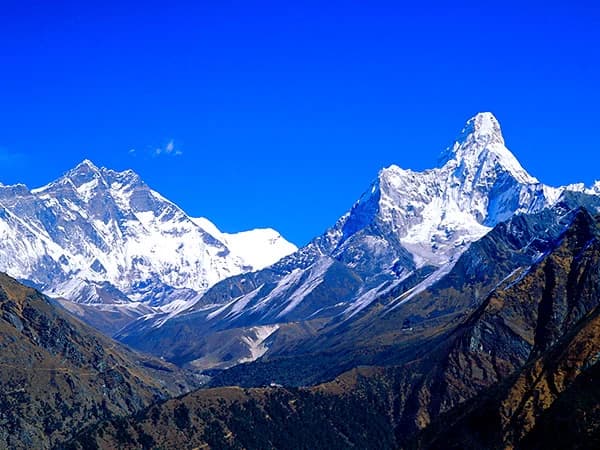
There is a viewpoint in the lower Everest region that stops seasoned mountaineers mid-step. It sits at 4,065 metres, above a ridgeline carpeted in rhododendron and pine, and from it you can count eight of the world's fourteen 8,000-metre peaks in a single slow sweep of the horizon. Everest. Lhotse. Makalu. Cho Oyu. Kanchenjunga on the far eastern horizon. Numbur. Gaurishankar. The full amphitheatre of the Himalayan range laid open before you like something from a dream you haven't had yet.
This is the Pikey Peak trek — and most trekkers walking the well-worn trail to Everest Base Camp have never heard of it.
The pikey peak everest view trek sits in Solukhumbu, the same district that hosts the famous EBC route, yet it occupies an entirely different world: quieter teahouses, older Sherpa villages, monasteries where butter lamps have burned for centuries, and trails where you are more likely to encounter a yak herder than a crowd of two hundred trekkers from seventeen countries. In seven days from Kathmandu you gain the summit, watch the sunrise paint Everest orange and gold, and return with something that takes longer to process than a single flight home.
At View Nepal Treks and Expedition, we have been running treks in Nepal for more than two decades. We know this route better than most, and in this guide we have put together everything a serious trekker needs to decide whether the Pikey Peak Trek 6 days is the right Himalayan journey for them.
About View Nepal Treks & Expedition — 20+ Years in the Himalaya
When we say twenty years, we mean something specific. We mean we were guiding on Solukhumbu trails before GPS tracking apps existed, before Instagram changed the language of mountain travel, before most of today's trekking operators had registered their companies. Our guides were born in these hills. Our senior staff has summited peaks in five Himalayan ranges. We have evacuated trekkers safely in genuine emergencies, navigated route closures during monsoon, and rebuilt relationships with teahouse owners through three earthquakerecovery cycles.
We are not an aggregator. We are not a booking platform that outsources your safety to a subcontracted crew. Every trek we run is staffed by our own guides, every itinerary is planned by people who walk these trails regularly, and every piece of equipment we provide has been tested in the conditions you will actually encounter.
For the Everest Pikey Peak trek, that means we can tell you exactly where the trail gets steep above Dhap, exactly how cold the nights get at the summit camp in October versus December, and exactly how to manage the altitude gain in a way that keeps your body performing rather than fighting you.
That knowledge is the product. The trek is the delivery.
Highlights
- Offers one of the best views of Everest.
- Includes views of Kanchenjunga, Makalu, Lhotse, and more.
- Pikey Peak is renowned for its spectacular sunrise and sunset views over the Himalayas.
- Experience the rich Sherpa culture and traditions.
- Visit ancient monasteries, including Thupten Choling Monastery.
- Explore traditional Sherpa villages like Junbesi and Ringmo.
- Fewer trekkers compared to the more popular Everest Base Camp route.
- Enjoy untouched natural beauty and tranquility.
- Walk through lush forests of rhododendron, pine, and oak.
- Spot various bird species and possibly some wildlife.
- Ideal for trekkers with limited time (typically 6-9 days).
- Suitable for most trekkers with average fitness levels.
- Can be reached by a short drive from Kathmandu, avoiding the need for a flight.
- If timed right, experience local festivals that offer insight into the local traditions and rituals.
- Walk through terraced fields and scenic landscapes.
- Continual panoramic views of the Himalayan range throughout the trek.
Deep Destination Guide — Pikey Peak and the Lower Everest Region
The Geography of Solukhumbu
The Solukhumbu district is Nepal's gateway to the highest peaks on earth. When most people think of this region they picture the upper Khumbu — Namche Bazaar, Tengboche, the glaciated world above 5,000 metres. But the lower Solukhumbu is a different landscape entirely. Here the hillsides are dense with oak and rhododendron. The villages are older, the economy more agricultural, and the pace of life slower than anything you find on the heavily trafficked upper trails.
The pikey peak trek route moves through this lower region, passing through Sherpa settlements that have existed for centuries without modification for touristcomfort. Junbesi, one of the overnight stops on the route, is among the oldest continuously inhabited Sherpa villages in Nepal.Thupten Choling Monastery, which sits above the Junbesi valley, is one of the largest Tibetan Buddhist monasteries outside Tibet itself, home to hundreds of monks and nuns and a library of irreplaceable texts.
This is the cultural trekking Nepal experience that gets overshadowed by the more famous northern trail, and it is something our team considers genuinely important. Not as a box to check, but as a reason to come.
Pikey Peak Altitude — The Full Elevation Picture
Pikey Peak altitude sits at 4,065 metres (13,336 feet) above sea level. This is significant for several reasons. First, it is accessible to a much wider range of fitness levels than the 5,500-metre viewpoints on the EBC route. Second, it is high enough to provide a truly commanding panoramic view of the Himalayan range. Third, it sits below the critical 5,000-metre threshold where altitude sickness risk increases dramatically for most unacclimatised trekkers.
The maximum altitude gain per day on this trek is carefully managed in our 6-day itinerary. We never gain more than 900 metres in a single walking day, and we build in recovery time at Junbesi before the final push to the summit camp. This pacing makes the Pikey Peak trek accessible to first-time Himalayan trekkers while remaining genuinely rewarding for experienced hikers.
Why Pikey Peak Has Better Everest Views Than Kala Patthar
This claim deserves explanation because it is not universally acknowledged — but it is something our guides have been saying for years and something that panoramic photography now proves unambiguously.
Kala Patthar (5,545m) on the EBC route is famous for its Everest views. It sits close to Everest's southwest face and gives a powerful, direct perspective on the mountain. But its field of view is relatively narrow. From Kala Patthar you see Everest clearly, you see the Khumbu Icefall, you see Nuptse to your right — but the wider Himalayan panorama is partially blocked by the surrounding ridges.
Pikey Peak, by contrast, sits at a lower elevation but at a wider vantage point. Because you are positioned further south, the entire eastern Himalayan arc opens up before you. You can see Everest, yes, at 8,848 metres, dominating the skyline — but alongside it you have a clear sightline to Kanchenjunga (8,586m) on the eastern horizon, Makalu (8,485m), Lhotse (8,516m), Cho Oyu (8,188m), and multiple peaks in the 6,000 and 7,000-metre ranges. On a clear day, the panorama visible from Pikey Peak is simply wider and more complete than what you see from Kala Patthar.
Sir Edmund Hillary reportedly said that Pikey Peak offered one of the finest Himalayan panoramas he had ever seen. Whether or not that quote is precisely attributed, the view itself makes the case without celebrity endorsement.
Sunrise vs Sunset Photography from Pikey Peak
The summit is a photographer's location in both directions of light.
Sunrise from Pikey Peak is the more famous of the two. The standard practice is to begin the summit climb at around 3:30 to 4:00 AM, reaching the peak before first light. As the sun rises over the eastern ridge, it lights Everest's summit pyramid first — a deep orange that transitions to gold before the surrounding snow fields catch the light. The process takes about forty minutes from first colour to full illumination, and it is one of those natural sequences that makes people stop talking entirely.
Sunset is less frequently experienced because most itineraries descend after sunrise. But for photographers with specific goals, the late afternoon light from the summit provides a completely different tonal quality — warmer, more diffuse, with the peaks casting long shadows across the glaciers below. If your focus is photography, tell us when you book and we will adjust the schedule to give you both shooting windows.
Day-by-Day Itinerary — Pikey Peak Trek 6 Days
Overview Before We Begin
The 6-day pikey peak trek itinerary runs from Kathmandu to the Pikey Peak summit and back to Kathmandu. The route begins with a flight or drive to Phaplu, the regional airport and road head for this trek. From Phaplu the trail moves through Salleri, Dhap, Pikey Peak Base Camp, Pikey Peak Summit, Junbesi, and returns via vehicle to Phaplu and then Kathmandu. Total trekking distance is approximately 50 to 55 kilometres depending on route variations.
Day-by-Day Altitude Table
|
Day |
Route |
Start Elevation |
End Elevation |
Altitude Gain |
Walking Time |
|
1 |
Kathmandu to Phaplu (fly or drive) |
1,400m |
2,413m |
+1,013m |
Travel day |
|
2 |
Phaplu / Salleri to Dhap |
2,413m |
3,100m |
+687m |
5–6 hrs |
|
3 |
Dhap to Pikey Peak Base Camp |
3,100m |
3,640m |
+540m |
4–5 hrs |
|
4 |
Base Camp to Pikey Peak Summit, descend to Junbesi |
3,640m |
4,065m then 2,675m |
+425m / -1,390m |
7–8 hrs |
|
5 |
Junbesi to Phaplu / Salleri |
2,675m |
2,413m |
-262m |
5–6 hrs |
|
6 |
Phaplu to Kathmandu (fly or drive) |
2,413m |
1,400m |
Descent |
Travel day |
Who This Trek Is Perfect For
The pikey peak trek is the right choice for:
Trekkers from the United States, UK, Canada, Australia, Germany, Switzerland, France, Netherlands, Sweden, Norway, Denmark, Singapore, and UAE who have limited holiday time (seven days from Kathmandu is a realistic total trip of ten to twelve days including travel) but want a genuine Himalayan experience rather than a packaged viewpoint visit.
First-time Himalayan trekkers who want a route that builds confidence and delivers real mountain experience without requiring the fitness level or time commitment of EBC.
Families with older children or teenagers who want a shared adventure that is challenging enough to feel real but safe enough to be genuinely accessible.
Travelers with a specific interest in Tibetan Buddhist culture, Sherpa communities, or Himalayan natural history who want a route that makes space for that interest rather than treating culture as backdrop.
Photographers who want both the iconic Everest sunrise panorama and the softer visual world of lower Solukhumbu — forest, village, monastery, meadow — in a single journey.
Experienced trekkers who have done EBC or Annapurna and want to see a side of the Himalayan trekking world that doesn't show up on most people's shortlists.
Why This Package Beats Competitors — Honest Assessment
The nepal short trek package market has grown significantly in recent years and there are now many operators offering versions of the Pikey Peak route. Here is what differentiates our offering:
Competitor Comparison Table
|
Feature |
View Nepal Treks |
Budget Operators |
Large Online Platforms |
|
Company experience |
20+ years |
Varies (many <5 years) |
Variable (outsourced) |
|
Guide quality |
Own licensed senior guides |
Often subcontracted |
Usually subcontracted |
|
Emergency equipment |
Satellite communicator, pulse oximeter |
Varies |
Rarely specified |
|
Itinerary pacing |
Conservative, acclimatisation-focused |
Often rushed |
Standard |
|
Cultural access |
Guide introductions, monastery visits |
Generic |
Generic |
|
Flexibility |
High — private treks |
Low — fixed groups |
Low |
|
Post-booking support |
Direct contact, local expertise |
Variable |
Usually email only |
|
TIMS / permit handling |
Included, handled before departure |
Often extra charge |
Often extra charge |
|
Insurance requirement |
Mandatory, verified |
Often not verified |
Often not required |
|
Transparency on costs |
Full breakdown provided |
Often hidden fees |
Often hidden fees |
We are not the cheapest option. We are the option that delivers the most reliably, with the quality assurance that comes from twenty years of doing this work at the standard we set for ourselves.
Expert Trekking Tips from 20+ Years in the Field
Wear in your boots before you come. This sounds obvious and is frequently ignored. New boots on Day 1 of a Himalayan trek guarantee blisters that affect every subsequent day.
Bring a headlamp with fresh batteries and carry spares. Summit morning at 3:00 AM in the dark is not the time to discover your headlamp is running low.
Don't underestimate the cold at summit camp. Even in October, nighttime temperatures at 3,640 metres drop to -5°C to -10°C. A sleeping bag rated to at least -10°C is appropriate.
Eat at every meal even when you don't feel hungry. Altitude suppresses appetite, and insufficient caloric intake compounds altitude fatigue significantly. Teahouse dal bhat — the traditional rice and lentil meal — is one of the most nutritionally complete trekking foods in the world. Eat it.
Drink before you're thirsty. Dehydration at altitude accelerates every negative symptom. Three litres per day is the minimum target.
Leave your assumptions about schedule at home. Himalayan weather, trail conditions, and body responses do not respect itinerary timelines. Our guides pace the trek correctly. Trust them.