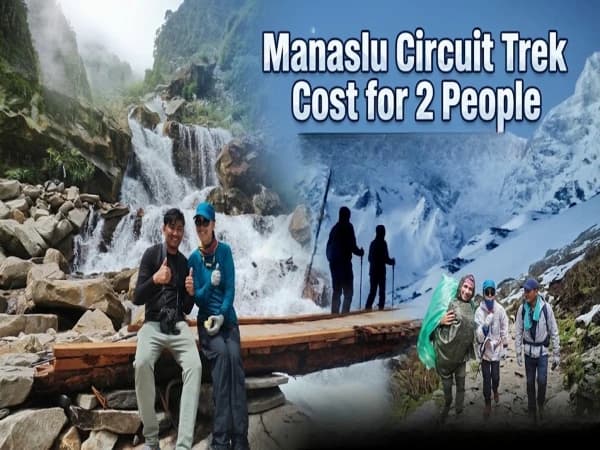
When you’re planning a trek in Nepal, mainly in the Annapurna Circuit area, you must decide between the Tilicho Lake Trek and the Annapurna Circuit. Both these treks lie within the amazing Annapurna Region in Nepal, offering beautiful views of the Annapurna, Dhaulagiri, and Machapuchhare Mountains, and offer a stunning array of landscapes, ranging from tropical rainforests to high deserts. Regardless of the landscape offered by both treks, however, the experiences will be very different.
Typically, the Annapurna Circuit is a popular long-distance trekking route that goes around the Annapurna Massif. The Annapurna Circuit is known for its wide cultural variety, good trail conditions on the classic Annapurna Circuit, and gradual acclimatization to elevation along the entire trek. The Tilicho Lake Trek is the continuation of the Annapurna Circuit, which includes a short, very remote detour to the highest lake in the World, and offers an opportunity for solitude and a setting of overwhelming alpine beauty.
So, which one of these amazing treks would you like to do? If you are having trouble deciding, please read on and let this guide show you their differences and help you feel confident making a decision.
Tilicho Lake Trek vs Annapurna Circuit
Tilicho Lake vs Annapurna Circuit Comparision
Feature
Tilicho Lake Trek
Annapurna Circuit Trek
Duration
18- 22 days
14- 20 days
Total Distance
190- 210 km
160- 230 km
Maximum Altitude
5,416 m (Thorong La) + 4,919 m (Tilicho Lake)
5,416 m (Thorong La Pass)
Difficulty Level
Challenging (steep, remote sections)
Moderate to Challenging
Route Type
Circuit + high-altitude side trip
Full loop around Annapurna massif
Scenery
Alpine wilderness + high-altitude lake
Diverse landscapes (forests, valleys, deserts)
Crowds
Less crowded (especially Tilicho section)
More popular and busier
Cultural Experience
More remote villages, deeper immersion
Rich cultural diversity (Gurung, Thakali, Tibetan influence)
The Annapurna Circuit Trek is known for its incredible diversity. The trek passes through subtropical lower valleys, terraced agriculture, forests of pine trees, and villages strongly influenced by Tibetan culture before ending up at the dry Mustang landscape and the very dramatic crossing of Thorong La Pass. It has also been recognized as one of the best long treks in Nepal due to its complete mountain journey aspect, rather than one specific destination.
The Tilicho Lake Trek is defined purely because of the trek to Tilicho Lake, a lake located at high elevation and surrounded by steep mountains and barren alpine terrain. The trek to the lake and Tilicho Base Camp feels much more rugged in certain areas and is quite often considered to be more physically demanding and exposed compared to the standard circuit trail. Thus, if the Annapurna Circuit is about variety and balance, then Tilicho is about an added adventure and drama.
Overview of the Annapurna Circuit Trek
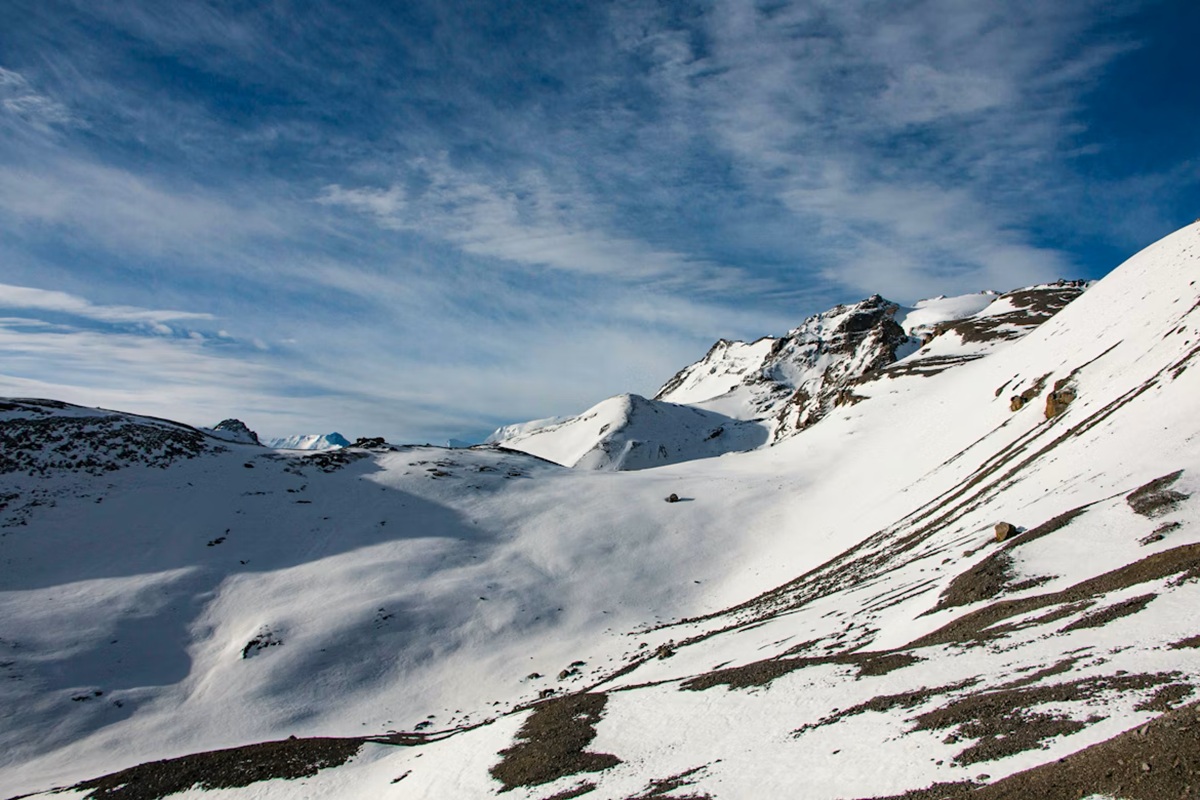
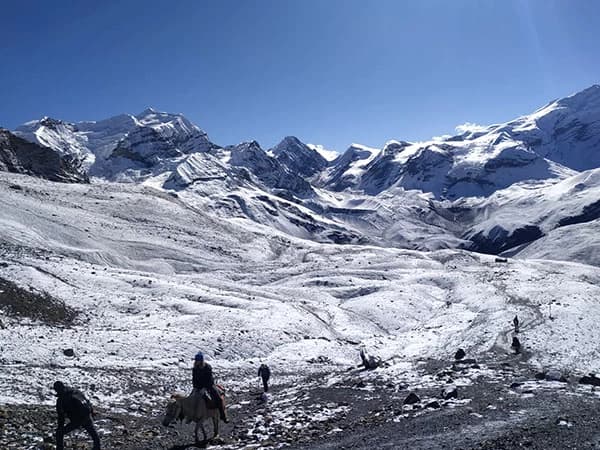
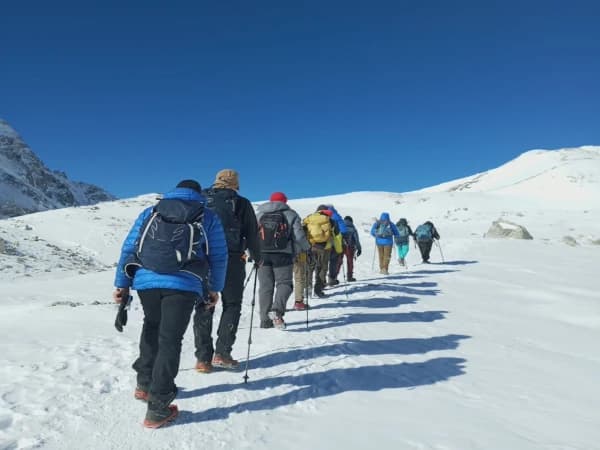
Steep final ascent to Thorong La Pass, Annapurna Circuit highlight
One of the best-known long-distance trails in the world is the Annapurna Circuit trek. Located in central Nepal, this trail circles the vast Annapurna Mountain range. The entire circuit is approximately 160–230 kilometers long, and depending upon which route you take, it will take you 14–20 days to complete your trek, culminating at the highest point of the circuit: Thorong La Pass (5,416m).
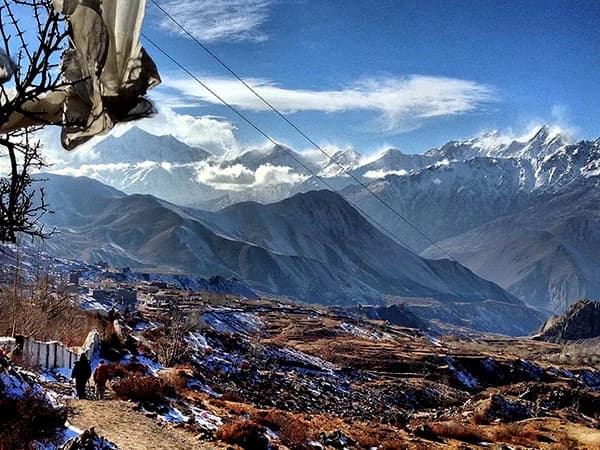
The unique character of this trekking route is derived from the dramatic variation in scenery and culture throughout its entire length. You will begin in lush, subtropical forest and terraced farmland, gradually ascending to alpine plant communities, and moving into the dry, desert-type landscape (located near the Tibetan plateau).
Along your trek, you will pass through culturally rich communities of Gurung, Thakali, and Tibetan descent.
The Annapurna Circuit is often cited as the "complete Himalayan experience" due to the combination of breathtaking scenic views of mountains and surrounding areas, the opportunity to immerse yourself in a culturally rich local society, and an excellent trekking infrastructure that accommodates both novice and more experienced adventurers.
Overview of the Tilicho Lake Trek
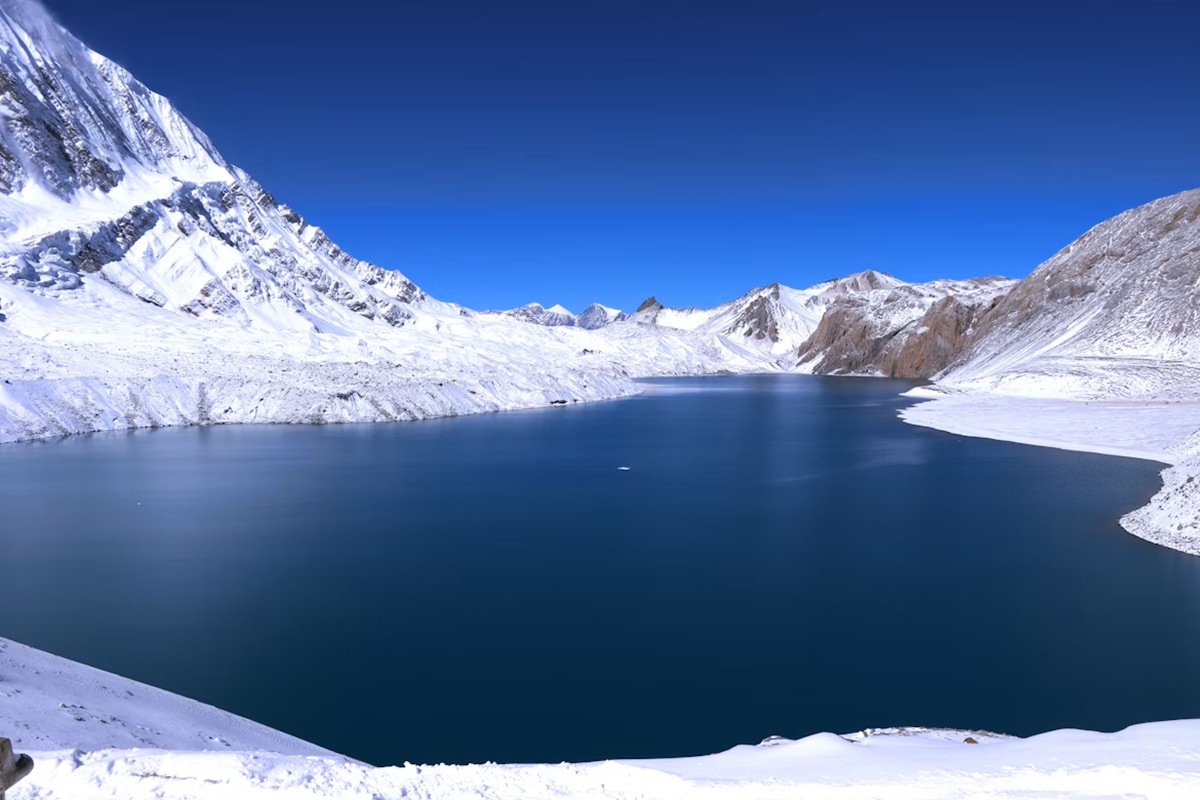
Turquoise Tilicho Lake glows at dawn, Tilicho Lake Trek
Annapurna Circuit has an adventurous extension called Tilicho Lake Trek (4,919m), which is one of the highest lakes on earth. This trail is different from the traditional circuit by going into a much quieter and remote valley outside of Manang than other trails that go through it; therefore, providing you with an opportunity to have an exclusively quiet and remote trek.
The Tilicho Lake Trek will also take 3-5 additional days than the Annapurna Circuit, requires a lot of uphill hiking, and has an increased risk of landslides as well as fewer tea houses after the Tilicho Base Camp. On the brighter side of this hike, once you arrive at the lake, there are the most beautiful blue lakes in conjunction with the awesome mountains and an unspoiled alpine atmosphere.
The Tilicho Lake Trek is a wonderful choice if adventure at its full measure in the lofty heights of wilderness suits your adventurous spirit. It requires a higher level of fitness than the Annapurna Circuit, but the benefits of having such a remote and exclusive experience are worth it.
Highlights of the Annapurna Circuit Trek vs Tilicho Lake Trek
Key highlights of the Annapurna Circuit vs Tilicho Lake side trek
Annapurna Circuit Trek Highlights
Tilicho Lake Trek Highlights
Trek between two high mountains, through Thorong La Pass 5,416m to the Himalayas, will surely win incomparable panoramic views.
Explore Tilicho Lake, which is at 4,919m above sea level and is one of the highest alpine lakes in the world, with incredible turquoise water.
Explore incredible land diversity from sub-tropical forests to alpine deserts.
The trek to Tilicho is very remote and offers a rare opportunity to enjoy mountain solitude due to the lack of other trekkers in the area.
Commendable mountain views, with peaks ranging from Annapurna to Dhaulagiri and Machapuchhre.
There are dramatic landscapes at high altitudes, including majestic cliffs, enormous glaciers, and incredible rugged terrain.
Experience the rich culture and tradition of Gurung, Thakali, and Tibetan in villages.
The trek has sections that are steep and have very loose ground that could slide and cause serious injury to individuals trekking in the area.
Muktinath temple is a popular site for Hindu and Buddhist pilgrimages.
A side trip to Tilicho from Manang is an excellent option for those interested in more days of exploring outside the regular circuit of the Annapurna region.
Trek through the Kali Gandaki Gorge, which is the biggest gorge on this planet.
The area surrounding Tilicho Lake has a calm and peaceful atmosphere and is deemed sacred by Hindus.
Enjoy a developed teahouse trekking network, meaning you'll have comfortable accommodation and facilities throughout the trek.
The opportunity to connect with raw nature in the Himalaya is different from that of most other commercialized and developed tourist areas.
Acclimatize to high altitude in Manang Valley while you experience this scenic village.
A longer trip can be experienced by traveling to Tilicho Lake and then using the Thorong La Pass to travel across the Himalaya while trekking between the two lakes.
Route and Itinerary Differences
Annapuma's commonly accepted route starts in the valleys of lower Annapurna, traveling through places like Chame, Pisang, Manang, Yak Kharka, Thorong Phedi, crossing Thorong La, and descending to Mukthinath. Variations of this path exist, but they all generally follow the same general flow.
The Tilicho variation departs from the main route before reaching Manang or Khangsar and ends at Tilicho Base Camp/Tilicho Lake before returning to the main route. Adding an additional destination, the Tilicho variation will also require additional ascents, additional distance to walk, and greater complexity in logistics.
A simple way to think about it is:
Annapurna Circuit = Classic Way
Tilicho Lake Trek = Classic Way + More Difficult Scenic Extension
Duration and Distance Comparison
The duration and distance between trekking the Annapurna Circuit and Tilicho Lake are two of the largest factors in determining which trek to take. In most cases, the standard Annapurna Circuit provides a shorter duration for all trekkers who wish to experience the whole of the Himalayas in one trip.
The Annapurna Circuit has an average time range between 14 and 17 days, depending upon the origin point, pace of movement, any acclimatization days, and means of transportation between the starting point(s) and their travel destination(s). On the other hand, due to the fact that the Tilicho Lake Trek also includes a side trip to Tilicho Lake before continuing back to the mainstream Annapurna region network of treks, the Tilicho Lake Trek generally takes longer than the Annapurna Circuit.
The additional section adds additional days of walking and overall distance to the Treks. Most itineraries on the Tilicho Lake Trek typically take 17–23 days on average, making them more appropriate for trekkers who have more flexible schedules and/or are looking for adventure. If you are working with a limited time frame, the Annapurna Circuit is much easier to accommodate. However, if you would like to have a longer and more substantial high-altitude trekking experience, then the Tilicho Lake Trek may be a better fit.
Trek Duration
Typical trek durations for Annapurna Circuit vs Tilicho Lake
Trek Route
Typical Duration
Annapurna Circuit Trek
14 - 17 days
Tilicho Lake Trek / Annapurna Circuit with Tilicho
17 - 23 days
Walking Distance
trekking distance for Annapurna Circuit vs Tilicho Lake extension
Trek Route
Approximate Distance
Annapurna Circuit Trek
160 km
Tilicho Lake Trek / Annapurna Circuit with Tilicho
190 - 210 km
Trek Duration
Duration, distance, and route style for Annapurna Circuit vs Tilicho Lake extension
Factor
Annapurna Circuit Trek
Tilicho Lake Trek
Minimum Duration
14 days
17 days
Maximum Duration
17 days
23 days
Approximate Distance
160 km
190 - 210 km
Extra Days Compared to Circuit
-
3 - 6+ days
Route Style
Main trail
Main trail plus side trip
Difficulty and Physical Demands of Each Trek
Both the Annapurna Circuit Trek & Tilicho Lake Trek are physically demanding treks in the Himalayas. However, Tilicho is often seen as the more challenging trek because it contains steeper trails, longer walking days, and more exposed terrain than the Annapurna Circuit. Annapurna Circuit is still regarded as a very strenuous hike, but it is much more balanced in comparison to Tilicho Lake; therefore, Tilicho seems much more rugged & physically demanding.
Overall Difficulty
Annapurna Circuit has an overall rating of Moderate to Challenging, therefore making it suitable for Trekkers who are fit & well prepared. On the other hand, due to the additional section on the Tilicho Lake trek, it has an overall rating of much more challenging in terms of physical demand due to the additional effort, pressure due to high altitude & rougher terrain than the Annapurna Circuit.
Trail Type
Annapurna Circuit is primarily a well-marked, gradual ascent trail with a consistent trekking pace. The Tilicho Lake trail consists of greater elevation changes and more rocks, making it much steeper than the Annapurna Circuit. The uneven trails to Tilicho will require more attention and physical energy.
Technical Sections
There are minimal technical sections on the Annapurna Circuit, as this is primarily a long-distance trek. However, the Tilicho Lake trail has technical sections that may include: narrow paths; loose trails and in some instances, scree sections and rock scrambles up to 4,919 m (the highest point on the trail).
Highest Point
For the Annapurna Circuit, the highest point on the trail is Thorong La at 5,416 m. The Tilicho trail also crosses Thorong Pass but has the side trail to Tilicho at an elevation of 4,919 m.
Terrain Exposure
The Annapurna Circuit has a moderate level of exposure and is typically manageable with relative ease of use; however, the Tilicho section is comparatively exposed and can have trails vulnerable to landslides or on narrow mountain ridges.
Elevation Gain and Descent Stress
After completing several days of continuous elevation gain along the Annapurna Circuit, trekkers will have to deal with an extended descent from the Thorong La Pass. Conversely, the Tilicho Lake Route features increased up and down elevations during the trek, which will result in greater stress on your legs as a result of the increased elevation gain and loss, and could contribute to fatigue.
Steepness of the Trail
Overall, the elevation increase along the Annapurna Circuit is more gradual than during the trek of the Tilicho route, although there are still portions of the trail near the pass that will demand a significant effort to ascend. In contrast, it can feel as though the Tilicho route is simply not as gradual due to its steepness throughout the entire trek, with the exception of the portion leading into the Tilicho Base Camp and the return portion off the back.
Trail Surface and Footing Conditions
Most of the trails on The Annapurna Circuit follow established trails that are easy to walk on, whereas the routes along the Tilicho section require more work to negotiate due to their rough terrain, with loose rocks, uneven surfaces, and narrow pathways requiring greater caution and attention to foot placement.
Altitude, Acclimatization, and Energy Levels Comparison
High altitude is arguably the single most important variable in determining the difficulty of these two trails. Due to the fact that both trails cross over countless high altitudes, the Tilicho Lake Trek is typically able to keep the same level of intensity found in the Annapurna Circuit, but it is able to cause an even greater amount of energy loss over greater amounts of time spent at high altitude.
High-Altitude Days
While walking on the Annapurna Circuit, trekkers will spend a number of consecutive days walking at higher elevations until ultimately crossing the mountain pass. In contrast, the Tilicho Lake Trek has longer stretches of walking over 4,000 meters, causing the body to experience increased fatigue levels over an extended period of time.
Acclimatization Time
Using the Annapurna Circuit as an example, the circuit is paced in such a way as to provide proper acclimatization prior to crossing the mountain pass. As for the Tilicho Lake Trek, the additional side trip increases the need for extensive acclimatization to help relieve the additional physical exertion placed on the body.
Risk of AMS
Both trekking routes have the risk of developing acute mountain sickness (AMS), but due to spending more total time at altitude, with additional physical exertion, as compared to the Annapurna Circuit, the risk of developing AMS is typically higher on the Tilicho Lake Trek.
Oxygen Levels
Due to very low levels of oxygen around the Thorong La Pass, crossing the Thorong La Pass while following the Annapurna Circuit Trek will require extreme physical exertion. The lack of oxygen available around the Tilicho Lake Trek causes trekkers to become fatigued for a longer period while trekking towards Tilicho Lake.
Required Fitness Level for Tilicho Lake Trek vs Annapurna Circuit
While both the Annapurna Circuit Trek and the Tilicho Lake Trek require excellent physical fitness, the overall level of preparation for each trek is different.
The Annapurna Circuit can be completed by fitness-oriented/motivated individuals as long as they are able to spend multiple consecutive days traveling with prolonged periods of climbing and descending at a high altitude. Many first-time highly fit individuals who complete the Annapurna Circuit use good acclimatization and moderate pacing to succeed. On the other hand, the Tilicho Lake Trek requires an advanced level of fitness due to an increasing number of hours being spent per day hiking, as well as more challenging terrain and an increasing degree of physical exertion at a high altitude.
Those considering a trek to Tilicho must be prepared to hike for a number of hours over difficult ground, and must also be able to manage the fatigue associated with decreased oxygen in high altitude areas. In general, the Annapurna Circuit will suit trekkers who have adequate overall physical fitness, whereas Tilicho Lake will cater to the abilities of trekkers with exceptional levels of endurance or previously developed fitness due to prior experience in trekking or training for uphill slopes. In both cases: cardio-vascular fitness, muscular strength in the legs, endurance hikes, and mental toughness should be developed by each trekker prior to embarking on the trek.
The Annapurna Circuit is one of the most popular trekking routes in the world, but it also has some of the highest altitude risks. There are many portions above 2,500m where the amount of oxygen will drop dramatically. Symptoms of altitude sickness, including headache, nausea, dizziness, and fatigue, can occur at elevations as low as Manang at 3,540m or anywhere above it. Most people experience mild to moderate AMS when climbing towards Thorong La Pass at 5,416m.
But the risk is assessed as moderate, as there are many opportunities to acclimatize due to rest days and gradual changes in altitude. If altitude-related symptoms go unreported, conditions can worsen and lead to HAPE or HACE. So with a little planning, such as pacing, drinking plenty of water, and taking rest days, you should be able to complete the Annapurna trek even if you're not at peak physical fitness.
Tilicho Lake Trek
Tilicho Lake trek has an increased altitude sickness risk because most of the trek is above 4,000m and includes significant elevation gain while climbing to Tilicho Lake at 4,919m. The terrain is also more strenuous than the Annapurna Circuit, so your body will burn more oxygen while having less of it available. As a result, common symptoms such as headaches, breathlessness, and lack of appetite will appear more rapidly and feel more severe than on the standard circuit.
The additional steep climbs plus fewer recovery days compared to the Annapurna Circuit will also increase the chance of developing severe altitude sickness if you don't properly acclimatize through pacing, hydration, and frequent monitoring.
Acclimatization Days Required
Both treks require acclimatisation. But acclimatisation days are more critical on the Tilicho Lake Trek since it involves more time spent above 4,000 metres and places higher levels of physical stress on the body than the Annapurna Circuit. The Annapurna Circuit typically requires one well-planned acclimatisation day. The Tilicho route may need one or more additional rest days depending on your pace and individual level of fitness.
Acclimatization profile for Annapurna Circuit vs Tilicho Lake
Annapurna Circuit Trek
Tilicho Lake Trek
Recommended acclimatization days
1 day
1 - 2 days
Common acclimatization stop
Manang
Manang / Tilicho section
Days above 4,000m
2 - 3 days
3 - 5 days
Highest sleeping area before major push
Around 4,450–4,900m
Around 4,150 - 4,900m
Maximum altitude reached
5,416m
5,416m + 4,919m
Acclimatization importance
High
Very high
Ideal pace
Gradual ascent
Slower and more careful ascent
Tilicho Lake Trek vs Annapurna Circuit: Backpack Weight and Porter Need
Annapurna Circuit Trek
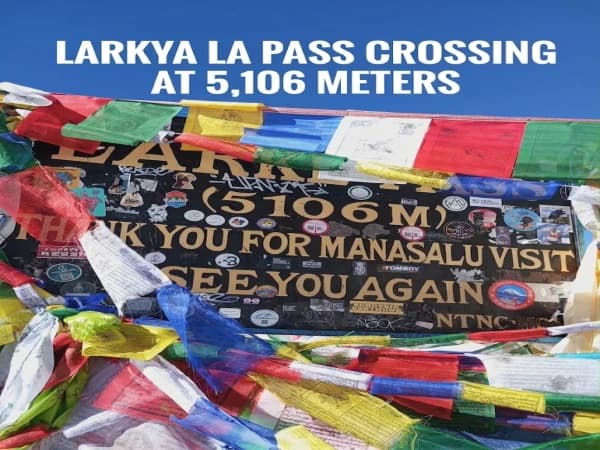
Thorong La Pass 5416m crossing Annapurna Circuit Trek Nepal Views
Tilicho Lake Trek. For those who don't use a porter, we recommend a backpack weight of 8 to 12kg. Anything over that will increase fatigue on 5 to 7-hour trekking days, plus on climbs at higher elevations. Those who use a porter typically carry only a daypack of 4 to 6kg with water, snacks, and essentials. The porter's bag usually weighs 10 to 12kg per person. So while a porter is optional, it should be strongly considered for increased endurance, particularly during long climbs such as Thorong La Pass, where energy use will be a critical factor.
Tilicho Lake Trek
For trekking to Tilicho Lake, you can not carry heavy weights as you have to walk in awfully steep terrain, altitude stress, and long hours of walking. A recommended backpack weight without a porter is around 7 to 10kg. Even a small amount of extra weight feels heavier at altitude. When using a porter, you'd only carry 4 to 5kg in a daypack. This helps with balance while hiking on narrow trails near the lake at 4,919m above sea level, where rockfall and landslides are a real possibility. Porters typically carry 10 to 12kg of gear per hiker. It's highly recommended to hire a porter because less weight in your pack increases safety, endurance, and overall trek performance.
Pack weight and porter needs on Annapurna Circuit vs Tilicho Lake’s steeper terrain
Factor
Annapurna Circuit Trek
Tilicho Lake Trek
Backpack (No Porter)
8–12 kg
7–10 kg
Daypack (With Porter)
4–6 kg
4–5 kg
Duffel Bag Weight (Per Person)
10–12 kg
8–12 kg
Porter Carry Limit
20–25 kg (shared)
20–25 kg (shared)
Daily Walking Hours
5–7 hrs
6–8+ hrs
Pack % of Body Weight
10–15%
8–12%
Water Carry Weight
1–2 kg
1–2 kg
Terrain Impact on Load
Moderate strain
High strain (steep/rocky)
Efficiency with Light Pack
Improves endurance
Essential for safety
Need for Porter
Optional
Strongly recommended
Effect of Overpacking
Fatigue over time
Rapid exhaustion + instability
Cost Comparison: Tilicho Lake Trek vs Annapurna Circuit (2026)
Both trails will use teahouses, which are small, family-run lodges that are warm and fairly simple.
What's Included: both routes, teahouses
A small room with one or two basic and poorly made mattresses and pillows.
A common dining area with either a yak dung or wood stove.
A common toilet and hot shower usually costs extra (usually $2-$5).
Wifi is occasionally available at lower elevations; however, any Wifi that is located at higher elevations (above 3500m) is slow and unreliable.
Teahouse Quality by Location
Teahouse comfort along the Annapurna Circuit and Tilicho trip
Location
Teahouse Quality
Lower circuit (Chamje to Chame)
Good, many options
Manang
Very good, best food and comfort on the route
Thorong High Camp
Basic but adequate
Tilicho Base Camp
Very basic, limited menu, few options
Muktinath and below
Good to very good
If you're heading to the Tilicho Base Camp, you'll find 1-2 small Teahouses. If you don't get there early, there will most likely be no space available. You should always get up early and reserve a Teahouse ahead of time. Please have your guide check and make the call for you if possible.
Nepal Tourism Board office in Kathmandu or Pokhara
TIMS Card (Trekkers' Information Management System)
$20
Same offices above
Total: $50 USD for both permits.
What's New in 2026 For Both Treks
If you plan to trek alone in certain areas of Nepal after October 2025, you'll be required to have a licensed guide. Check the Nepal Tourism Board website for the latest regulations before you go, so there are no surprises.
The cost of the ACAP permit has gone up recently, and there's a possibility it'll go up again. Always check the Nepal Tourism Board's official website for the current cost before obtaining your permit.
Some trailheads near Besisahar have also changed due to new roads being built in the area. Your guide will know exactly where the trailheads are located at the time of your trek.
Final Verdict: Which Should You Choose in 2026?
The Annapurna Circuit Trek is probably the best choice for a well-rounded, and complete trekking experience within the Annapurna region, providing diversity, infrastructure, and a good duration, along with spectacular scenery of towering peaks all combined into one trek.
The Tilicho Lake Trek is a better selection for trekkers seeking more of a challenge beyond their comfort zone, or for those wishing to experience the most spectacular high-altitude lake in the whole of the Himalaya.
In simple words:
For classic experience: Annapurna Circuit.
If you want to double the spirits of adventure: Tilicho Lake Trek
Annapurna Circuit. If you are a first-time trekker who has never attempted a high altitude trek,
For the better trekkers, thousands of Trekkers: Tilicho Lake Trek
Tilicho Lake Thorong La pass trek 14 days with best cost of 980 Usd per person