The Everest Base Camp trek is one of the most iconic experiences on Earth. Hiking through the stunning Khumbu region, crossing suspension bridges over rushing rivers, and standing in front of the highest peak on Earth make it a once-in-a-lifetime experience.
However, deciding on the best time to go on the Everest Base Camp trek can make all the difference between a wonderful experience and a hard-hitting disappointment.
The best time to go on the Everest Base Camp trek is in autumn (September to November) and spring (March to May). These two periods provide the most stable weather and the best views of Mount Everest.
Autumn offers clear blue skies and the most stable weather of the year. In spring, it offers warmer weather and stunning rhododendron flowers. Winter offers solitude and clear views but includes extreme weather. However, the monsoon season should be avoided as it rains heavily.
Understanding the different types of weather, temperature, and seasonal characteristics will enable you to select the most appropriate time to undertake your adventure. Each month has its own unique characteristics. Your ideal time will depend on what you value most.
This comprehensive guide will give you an overview of all the seasons and months to undertake your EBC adventure.
Best Season for Everest Base Camp Trek
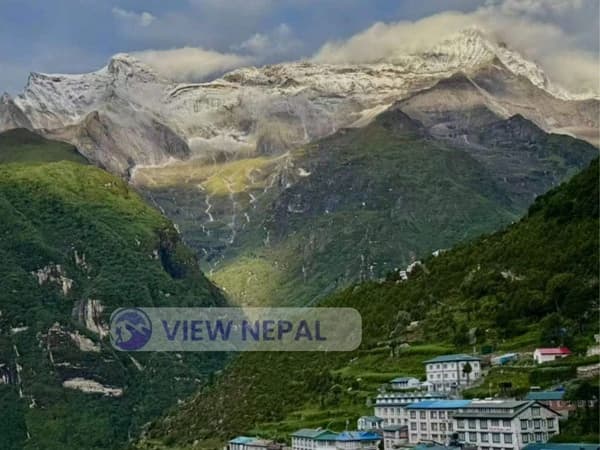
Massive Himalayan valleys experienced during the Everest Base Camp Trek
Season
Months
Weather
Temperature
Visibility
Crowds
Best For
Autumn
Sep-Nov
Excellent
Cool to Cold
Outstanding
High
First-timers, photographers
Spring
Mar-May
Very Good
Mild to Warm
Very Good
High
Flower lovers, warmer weather
Winter
Dec-Feb
Clear but Cold
Very Cold
Excellent
Low
Experienced trekkers, solitude
Monsoon
Jun-Aug
Rainy
Warm
Poor
Very Low
Budget travelers, risk-takers
Everest has four different seasons, which present unique characteristics to the region. Each season brings unique characteristics, which can be both positive and negative.
Peak Trekking Seasons
Autumn Season (September to November)
Autumn is the most popular season for those who love to trek in the Everest region. Late August brings rains, which clear the skies, turning them into brilliant blue canvases filled with mountain peaks.
This season brings the most favorable and stable weather conditions of the whole year. Skies are clear, rain is scarce, and the mountain views are at their absolute best.
After the monsoon, there is a fresh and dust-free environment. You’ll have the chance to take in some of the most breathtaking mountain views, including giants such as Everest, Lhotse, Nuptse, Ama Dablam and dozens of other Himalayan peaks.
Why Autumn is Ideal:
Crystal clear views of the mountains, Stable weather conditions, Minimal rainfall, Comfortable temperatures Dry and well-maintained trails, all teahouses/lodges are operational, festive and cultural events in the Sherpa villages
Autumn Challenges:
Crowded trails during peak season. Higher accommodation costs. Bookings for flights to Lukla may not be available. Bookings at popular lodges may not be available.
The best two months to visit the mountains during the autumn season are October and November. Late September may experience occasional rainfall due to the monsoon season, whereas late November may experience a drop in temperatures due to the approaching winter season.
Spring Season (March to May)
Spring is the second major trekking season. This season is as popular as autumn, especially among the mountain climbers of Everest.
As winter thaws out its icy hold on the country, temperatures begin to rise gradually. The hills come alive with colors as Nepal's national flower, rhododendron, blooms in shades of red, pink, and white.
Spring days usually promise clear views. However, clouds start to roll in on the afternoon around the mountain summits, especially towards the end of the season, heading towards the monsoon season.
Why Spring is Special:
Temperatures are warmer compared to autumn
Spectacular rhododendron forests in bloom
Increased daylight hours
The Everest climbing season falls in Base Camp
Good weather conditions are prevalent in spring.
Spring Challenges:
Cloudy weather in the afternoons makes it difficult to see the mountains
Dust on the trails due to the increasing number of trekkers
Rise in temperature due to the approaching monsoon
Similar crowds to those seen in autumn
April is the best time to visit in the spring season. It is still cold in March, especially at higher elevations. May is warm but gets increasingly cloudy with pre-monsoon rain.
Off-Season Trekking
Winter Season (December to February)
Winter is the off-season on the EBC trek. It is extremely cold, and few dare to trek.
Temperatures drop considerably. It is -20°C or even colder at night at higher elevations.
There is snow at the higher elevations.
There are fewer teahouses available, especially at elevations above Namche Bazaar.
Despite the cold weather, there are some advantages to trekking in the winter season. The views are absolutely spectacular. It is extremely clear. The trails are empty.
Winter Advantages:
Spectacular clarity and views of the mountains, quiet trails and atmosphere. Lower prices at the operating teahouses. Genuine local culture experience Clean snow-covered landscapes
Winter Difficulties:
Extreme cold weather gear is needed. Teahouses are not open. Flight schedules to Lukla are limited due to fewer daylight hours. Frostbite risk increased
Everest Base Camp trek in the winter requires careful preparation. You will need a sleeping bag rated to at least -20 degrees Celsius, a heavy-duty down jacket, and the best cold-weather gear available.
Everest Base Camp trek in the winter should only be done by experienced trekkers.
Monsoon Season (June to August)
Monsoon is the worst season to attempt the Everest Base Camp trek. The monsoon season brings rain, especially to lower elevations.
The clouds persist around the mountains. Rainfall occurs every day, especially in the afternoons and evenings. The trails become muddy and slippery. Leeches are also present on the trails.
Flight delays and cancellations to Lukla become common because of the weather conditions.
Monsoon Positives:
Very few trekkers on the trails
Prices are significantly low
Lush green surroundings
Wildflowers are in bloom
Lodge owners are glad to see trekkers
Monsoon Negatives:
Heavy rainfall
Mountains are covered with clouds most of the days
Trails are muddy and slippery
Flight delays to Lukla are common
Leeches are present on the trails below 3,000 meters
Landslides may occur on the trails
Interestingly, the Khumbu region is located in a rain shadow area. It receives less monsoon rain compared to other areas of Nepal, such as the Annapurna region. Nevertheless, you will still face a lot of challenges when you trek in this season.
If you are forced to trek in the summer season, it is recommended to trek either at the end of June or early September.
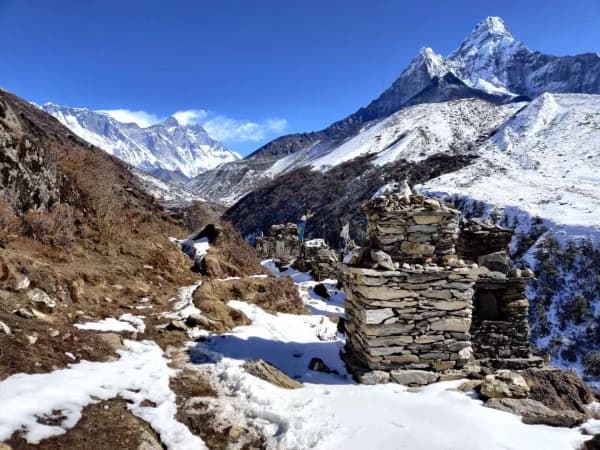
Dramatic snowy ridges along the Everest Base Camp Trek route
Month
Max Temp (Namche)
Min Temp (Namche)
Rainfall
Visibility
Crowd Level
Difficulty
January
5°C
-8°C
Low
Excellent
Very Low
Very Hard
February
6°C
-6°C
Low
Excellent
Low
Very Hard
March
8°C
-4°C
Low
Very Good
Moderate
Moderate
April
12°C
0°C
Low-Medium
Very Good
High
Moderate
May
15°C
3°C
Medium
Good
High
Moderate
June
18°C
7°C
High
Poor
Low
Moderate
July
19°C
9°C
Very High
Very Poor
Very Low
Moderate
August
18°C
9°C
Very High
Poor
Very Low
Moderate
September
16°C
6°C
Medium
Good
Moderate
Moderate
October
12°C
1°C
Very Low
Excellent
Very High
Easy-Moderate
November
8°C
-3°C
Very Low
Excellent
High
Moderate
December
6°C
-7°C
Low
Excellent
Low
Hard
January - Deep Winter
January signifies the coldest month in the Everest region. Winter is at its strongest in the Himalayas.
Temperature: During the daytime, the temperature at Gorak Shep and Base Camp will not rise above 0°C. At night, the temperature will drop below -20°C.
Weather Conditions: Expect clear skies. It will be extremely dry, with little rainfall. But the cold wind will make it even harsher.
Trail Conditions: Expect snow on the trails after Tengboche. Some parts will be tricky, while the climb to Kala Patthar will be especially demanding.
Services: Most teahouses after Namche will be closed. The ones that are open will have minimal offerings.
Crowds: Expect almost no people on the trail. It is not unusual for a person to go a whole day without spotting anyone.
Best For: Experienced winter mountaineers who want solitude and want to enjoy nature at its best.
February - Late Winter
In February, the winter conditions continue, and the signs of the approach of spring are evident towards the end of the month.
Temperature: Slightly warmer than January. The temperature may rise to -5°C to 0°C during the day in the higher regions. The nights are still brutally cold, dipping to -15°C to -20°C.
Weather Conditions: The clear sky continues. There may be snowfall, but it is not common. The sunny days are surprisingly warm, even if the temperatures are still low.
Trail Conditions: The snow still persists in the higher regions. The trail from Dingboche to Lobuche has to be navigated with care.
Services: The services are better than in January.
Crowds: The crowds are still very quiet. Late February sees the first spring trekkers arriving.
Best For: The conditions are best for those who want to experience the winter conditions with a hint of warmer temperatures and better services.
March - Early Spring
March is a transitional month from winter to spring. It is a month of gradual change.
Temperature: Early March is like winter, while late March is like spring. At Gorak Shep, the temperature will range from -5°C to 2°C during the day and from -10°C to -5°C at night.
Weather Conditions: Stable, with clear mornings. Snow showers are possible, especially in early March.
Trail Conditions: Snow melting begins at lower altitudes, while the higher altitudes are covered with snow until mid-March. Late March sees a clear trail.
Services: All teahouses are open, with a full menu available. Services are available at near-capacity levels.
Crowds: Increasing steadily throughout the month, especially in late March, with a high number of trekkers.
Flora: Lower rhododendron forests begin to see flowers towards the end of the month.
Best For: Trekkers who prefer a shoulder season with good weather and moderate crowds.
April - Peak Spring
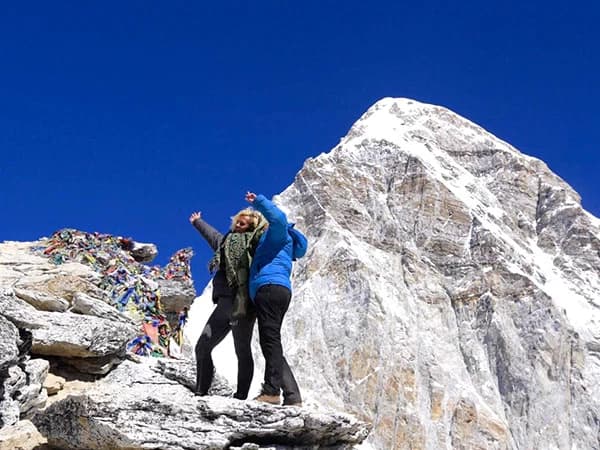
Crossing scenic high passes on the Everest Base Camp Trek route
One of the two best months for EBC treks. Spring is in full bloom.
Temperature: Comfortable and pleasant. At Gorak Shep, the temperature varies between 0°C and 5°C. At night, it drops between -8°C and -3°C. Lower elevations are pleasant and warm.
Weather Conditions: Good. Mornings are clear with good views. Afternoon clouds form on the higher peaks but are not accompanied by rain.
Trail Conditions: Good. Dry. Some dust on the lower trail due to the large number of trekkers. Good trekking conditions.
Services: All lodges are fully functional. Menus are complete. Bookings are a good idea for the most popular places.
Crowds: Peak season. Expect a lot of trekkers on the trail. Lodges are fully booked. Meet trekkers from all over the world.
Flora: The rhododendron forests are in full bloom. The stretch between Namche and Tengboche is absolutely beautiful with rhododendrons in full bloom in shades of red, pink, and white.
Special Feature: Everest Climbing Season is in full swing. Base Camp is buzzing with activity.
Best For: First-time trekkers. If you are a rhododendron lover, then this is the best time. If you are averse to cold weather, then April is the best time.
May - Late Spring
May brings extended spring weather with a hint of monsoon.
Temperature: This is the warmest month of the year for trekking. At Gorak Shep, it can be as high as 2°C to 8°C.
Weather Conditions: In early May, it's similar to April's good weather. In late May, there are afternoon clouds and some rain as the monsoon approaches.
Trail Conditions: In late May, it's dry but dusty, especially on lower trails.
Services: All services are in operation but slightly below par as lodge staff deal with accumulated wear and tear.
Crowds: High until mid-May. Crowds thin out towards the month-end as the monsoon looms.
Flora: Rhododendron flowers are past their peak but still look great. Wildflowers are in full bloom in high altitudes.
Best For: Those looking forward to the best weather conditions for trekking.
June - Early Monsoon
June is the start of the Monsoon period. Trekking conditions are adversely affected.
Climate: Lower altitudes are dominated by warm temperatures. Daytime temperatures at Gorak Shep are between 3°C and 10°C, and nighttime temperatures are between 0-5°C.
Weather: Rain starts to fall regularly. Mornings are generally dry, and afternoons are generally wet. The mountains are cloudy most days.
Trail Report: Muddy, slippery trails, particularly on lower trails. At higher elevations, it is eastern because of the rain shadow elevation effect.
Services: All lodges are open, but business is slow. You are likely to have lodges to yourself.
Crowds: Significantly fewer. In fact, very few trekkers attempt EBC in June.
Challenges: Leeches are present on trails below 3,000 meters. Flight delays to Lukla are common.
Best For: Budget travelers willing to brave the weather in return for low prices and fewer crowds.
July - Peak Monsoon
July is the peak monsoon season. It is the wettest month of the year.
Temperature: Much like June. Warm in the lower elevations and cold in the higher elevations.
Weather Conditions: Heavy rain occurs almost daily. Mountain views are scarce. It's possible to go several days without seeing the peaks.
Trail Conditions: Wet and muddy. Crossings can be treacherous during heavy rainfall.
Services: Open, but you'll pretty much have the lodges to yourself.
Crowds: None. Even seeing another hiker is noteworthy.
Landscape: Incredibly lush and green. Wildflowers bloom profusely. If you like green landscapes, this has it in spades.
Best For: For the adventurous types who really don't mind the rain and want complete solitude.
August - Late Monsoon
August is still the monsoon season, but it improves by the end of the month.
Temperature: Generally warm. In higher areas, 5-12 degrees Celsius by day and 0-5 degrees Celsius by night.
Weather Conditions: Early August is like July with heavy rain.
Trail Conditions: Trails are still muddy but improving. Landslides are a concern on lower trails due to heavy rain.
Services: Normal. Lodge staff are preparing for the autumn season.
Crowds: Very low but increases by month-end.
Landscape: Fresh and green. Early signs of freshness after the monsoon.
Best For: Hikers who want to see early signs of autumn before crowds arrive.
September - Early Autumn
Autumn arrives in September. The weather changes quickly this month.
Temperature: Nice and pleasant. 3-10 degrees Celsius in Gorak Shep and -5 to 0 degrees Celsius at night.
Weather Conditions: Early September can see monsoon end rains. From mid to late September, the weather is settled and clear.
Trail Conditions: Drying off after monsoon rains. The scenery is green and fresh due to monsoon rains.
Services: Fully available. Supplies replenish. Food options increase to the full menu.
Crowds: Building steadily through the month. Early September is quiet. Late September is busy.
Landscape: Fresh and clean air. Spectacular views of the Himalayas.
Best For: Trekkers who want good weather and want to be before crowds arrive.
October - Peak Autumn
October is, without a doubt, the best month for an EBC trek. It is almost perfect.
Temperature: Comfortably cool.
Weather conditions: Extremely stable, with clear skies being the norm. Rainfall is extremely rare.
Trail conditions: Dry, stable, and perfect for a trek.
Services: Peak season, so everything is functioning at its best.
Crowds: Peak season, which means the trails will be crowded with trekkers, especially at the popular lodges.
Landscape: The lower regions will be at their greenest after the monsoon, while the mountains will be crystal clear for photos.
Air quality: At its best, with the dust washed away by the monsoon rains.
Best for: First-time trekkers, photographers, etc.
November - Late Autumn
In November, the good autumnal conditions continue to prevail with a gradual fall in temperatures.
Temperature: Cold compared to the previous month of October. At Gorak Shep, the temperature varies from -3°C to 3°C during the day and from -12°C to -8°C during the night.
Weather Conditions: Early November has similar conditions to October. Late November has decreasing temperatures as the onset of winter approaches. The sky remains clear.
Trail Conditions: The conditions are excellent. The trails are dry and stable. There may be snowfall on the highest peaks by the end of November.
Services: The services are functional until the middle of November. The high altitude lodges may start to close by the end of the month.
Crowds: The crowds are high until the middle of November. They may decrease by the end of November as the onset of winter approaches.
Best For: November is best for trekkers who want good weather and smaller crowds compared to October.
December - Early Winter
December enters full winter mode.
Temperature: Cold. At Gorak Shep, from -5°C to 0°C during the day and from -18°C to -12°C at night.
Weather Conditions: Clear skies. Good visibility. But the temperature plunges radically, particularly at night.
Trail Status: Snow has arrived in the high country. The section between the lake and Dingboche is snow-covered above mid-December.
Services: Teahouses are closed for winter, especially above Namche.
Crowds: Minimal. Empty trails. Quiet trekking.
Best For: Experienced winter trekkers with the right gear for cold weather.
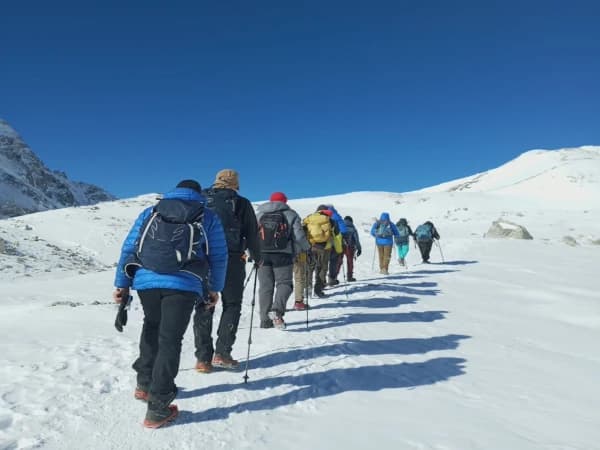
Serene mountain landscapes on the Everest Base Camp Trek in Nepal
Comparison Factor
Autumn (September - November)
Spring (March - May)
Peak Months
October and Early November
April and early May
Overall Weather Stability
Exceptionally stable. Clear patterns of weather. Rain is extremely rare. Changes in the weather are minimal. Most reliable season of the year.
Very good stability, but slightly inconsistent compared to autumn. Weather patterns tend to be stable, but with afternoon cloud cover, a frequent occurrence. There is also a possibility of pre-monsoon rain showers in late May.
Sky Clarity
Crystal-clear sky all day. The post-monsoon season has a crisp, transparent quality. No dust, no haze. The air is pristine, washed clean by the summer rains.
Mornings are clear, but cloud cover develops over peaks in the afternoon. Slight haze due to dust and pollen. Not as crisp as autumn, but still good.
Mountain Visibility
Outstanding all-day visibility. You can see the mountains all day from sunrise to sunset. Ideal location for photography. All details of the peaks are visible. Best views of the mountains for the entire year.
Good morning, views, but peaks tend to be cloud-covered in the afternoon. Views are good until 10 or 11 AM. By mid-afternoon, peaks tend to be obscured by cloud cover. Clever trekkers start early to catch views.
Daytime Temperature (Namche Bazaar 3,440m)
10°C to 15°C. Cool but comfortable weather for trekking. A light jacket is needed on sunny afternoons.
12°C to 20°C. Noticeably warmer and more comfortable. Can trek in a t-shirt during sunny periods. Very pleasant weather for hiking. Suitable for those who like warmer temperatures.
Nighttime Temperature (Namche Bazaar 3,440m)
10°C to 15°C. Cool but comfortable weather for trekking.
3°C to 8°C. Nights are milder. Less extreme cold. More comfortable sleeping temperatures.
Daytime Temperature (Gorak Shep 5,164m)
0°C to 3°C. Cold but can be managed. A good sleeping bag is needed.
0°C to 5°C. Similar to autumn but slightly warmer overall. More comfortable temperatures to stay at high altitudes for longer.
Nighttime Temperature (Gorak Shep 5,164m)
-10°C to -15°C. Very cold. Sleeping bag required with a rating of at least -15°C.
-8°C to -3°C. Cold temperatures, but not as extreme as autumn. -A 10°C sleeping bag is sufficient in April-May. More manageable temperatures for those sensitive to cold.
Precipitation
Very low. Rain is extremely rare. Light snow is possible at the highest elevations in late November. Driest trekking season.
Low but rising towards May. Possible light rain, especially in the afternoons. Pre-monsoon rains in late May. More rainfall than in autumn.
Trail Conditions
Dry, stable, perfect. No mud at all. Little to no snow, except at the highest elevations, in late November. Perfect conditions for walking. Rivers are low after the summer runoff.
Dry but dusty. Heavy amounts of dust due to high amounts of trekkers in the season. Some snow patches are possible in early March.
Air Quality
Superb. The monsoon has washed away all dust and pollutants from the air, making it exceptionally clean.
Good, but not as good as it was in autumn. Dust on the trails and pollen from flowers. Haze in the air.
Natural Scenery
Post-monsoon greens at lower elevations, gradually changing to autumn colors at higher elevations, with stark, dramatic mountain landscapes. Crystal clear views, with the geology of the mountains prominent. The landscape is sharp and crisp.
Vibrant and colorful. Lower elevations are green. Rhododendron forests are in full bloom of red, pink, white, and purple flowers. Wildflowers are out. Very lush and alive.
Rhododendron Bloom
None. Flowers have finished blooming. The woods are changing color in autumn.
Spectacular. Peak bloom in April. Forests between Lukla and Tengboche are like tunnels of color. Nepal's national flower is in full bloom. The season is unique to spring.
Crowd Levels
Very high in October. High in early November. Trails busy with international trekkers. Popular lodges fill by afternoon. Social, energetic atmosphere. It’s less crowded in late September and late November.
Very high in April. High in early May. Similar crowd levels to the autumn season. Busy on the trails, lodges fill up quickly. Festive atmosphere. Late March is quiet.
Lodge Availability
All lodges are fully operational. Full menus available. But popular locations fill quickly. Securing same-day lodging is tough in peak October.
All lodges are fully operational. All services are available. However, popular lodges fill up quickly. Similar availability issues to the autumn season in April.
Pricing
Peak season pricing. Higher prices for lodges, guides, and porters. Over-priced flights into Lukla. Most expensive time to trek.
Peak season pricing. Similar rates to autumn. Strong demand leads to higher prices all over. Comparable to autumn prices.
Guide/Porter Costs
Higher prices from those peak-demand periods. Experienced guides book out quickly. Good staff don’t come cheap; be prepared to pay the market rate if you want them. Guides costs $25-35 per day, and porters cost $20-25 per day.
Higher rates similar to autumn. Peak season means competitive pricing. Quality guides are in high demand. Guides cost $25-35 a day, porters $20-25 a day. Same cost structure as autumn.
Permit/Queue Time
Permits were easy pick up, but there are queues for permit checks during busy October. Be prepared for possible delays at the Sagarmatha National Park entry. Popular photo spots are crowded.
Permits are easily got but lines here in autumn are as in April. Base Camp can be congested with climbing teams. There are wait times for popular perspectives in photos.
Altitude Sickness Risk
Moderate risk. Symptoms can invariably seem even worse when temperatures are colder. Proper acclimatization is essential. Good stable weather means a more routine acclimatisation program. Risk is manageable with proper pacing.
Moderate risk similar to autumn. Ironically, things can feel much more pleasant with a slight bump in temperature. Stable weather supports good acclimatization. Risk factor is essentially equivalent to that in autumn with sufficient planning.
Flight Reliability to Lukla
Good reliability. October offers the best flight conditions. Clear weather means fewer cancellations. But that high demand leads to flights filling up quickly. Incorporate a few buffer days for any possible delays.
Reliable enough, but the afternoon clouds delay. Morning flights more reliable. Late May has more cancellations due to weather as the monsoon season encroaches. Build buffer days.
Everest Base Camp Activity
Quiet. No climbing expeditions. Base Camp is a largely empty glacier. Peaceful atmosphere. Just consider the natural things.
Bustling with activity. Main Everest climbing season (April-May). Teams are acclimatizing, and some are targeting summit pushes. Base Camp becomes a temporary city. Exciting atmosphere. Can meet mountaineers.
Photography Opportunities
Exceptional. All-day clear light. Sharp, detailed mountain shots possible. Sunrise and sunset are particularly spectacular. Best season for mountain photography. No afternoon cloud interference.
Excellent but time-sensitive. Beautiful shots are to be found during the morning golden hour. And then there are the rhododendron blooms, perfect for one-off photo opportunities. Afternoon clouds limit mountain photography. Good for nature and flower photography.
Sunrise Views (Kala Patthar)
Absolutely spectacular. Clear skies are almost guaranteed. Unimpeded views of Everest aglow at first light. Ideal for that iconic sunrise photo.
Very good but a tad less consistent. Morning clouds are a possibility, but less likely than in the afternoons. Still offers a good sunrise most days.
Acclimatization Comfort
Comfortable. Good weather means predictable trekking days. No weather-related interferences to the acclimatization program.
Comfortable but occasional weather variations. Higher temperatures can also make acclimatization more enjoyable for some. Decent stability for optimal head space.
Teahouse Atmosphere
Lively and international. Packed lodges create social evenings. Easy to meet fellow trekkers. Communal dining rooms filled with conversation.
Lively and social. Similar atmosphere to autumn. Shared memories of the Everest climbing season. International trekking community.
Best For
Photographers seeking perfect clarity. First-time trekkers who want the best weather and those who value mountain views above all else. Those who are O.K. with a cooler climate. Anyone wanting guaranteed clear skies.
Those preferring warmer conditions. Rhododendron and nature enthusiasts. Folks who love that season-filling atmosphere of climbing. Trekkers who can rise early in the morning for views. Anybody who will take comfort in the most perfect weather.
Main Advantages
Best visibility of the entire year. Most stable weather patterns. All-day clear skies. Crisp, clean air. Reliable conditions. Perfect for mountain viewing.
Warmer temperatures overall. Spectacular flower blooms. More comfortable sleeping conditions. Exciting climbing season atmosphere. Longer daylight hours.
Main Disadvantages
Colder temperatures, especially at night. Peak crowds in October. Higher prices. Flights book out early.
4 out of 5 (Great in the mornings, not so much in the afternoons)
Overall Experience Rating
5 out of 5 (Best for weather-focused trekkers)
5 out of 5 (Best for comfort-seeking trekkers)
If you want the very best mountain views with clarity and definition, and are willing to accept colder temperatures and clear blue skies all day long, then choose October.
If you want warm temperatures, want to see beautiful blooming Rhododendrons with tunnels of colors everywhere you look, want to start your days early to see the mountains at sunrise, and are willing to accept clouds on the mountain peaks in the afternoon, then April is your best choice.
While April is a wonderful time to see the Rhododendrons and is perfect for those who want warm temperatures and beautiful wildflowers, October is the better choice for those who are new to this trek and want guaranteed mountain views and perfect weather.
Frequently Asked Questions
Which month is best for Everest Base Camp trek?
October is the best month. It boasts the bluest and most stable sky and great visibility. April is next due to temperatures rising and the rhododendrons budding, but with afternoon clouds. Both are high-season with big crowds. If you want a bit fewer people, consider late September or early November, both of which are beautiful but generally with smaller crowds.
Can you trek to Everest Base Camp in winter?
Yes, but it's extremely challenging. High camps have temperatures of -20°C or lower. Many teahouses close. You'll require a sleeping bag rated to -20°C, a heavy down jacket and a full cold-weather kit. But winter also brings crystal-clear skies, empty trails and some of the most beautiful vistas you'll see. It's only for serious trekkers.
What is the weather like at Everest Base Camp?
The weather varies dramatically by season. October is normally clear, with daytime temperatures ranging between 0 and 7 degrees Celsius, nighttime between -10 and -15. April: Cloudy in the afternoon. In winter, nights of -20°C or colder occur. The monsoon period is the warmest, but with rain and clouds. Wind chill will make it feel a lot colder.
Is EBC trek possible during monsoon season?
Yes, but not recommended. Monsoon (June to August) brings downpour, clouds covering mountains, muddy trekking routes and flight delays in Lukla. If you've travelled out of peak season to save money (and for fewer trekkers), you won't be disappointed. The terrain is now lush and green, but mountain views are few. Less monsoon rain falls in the Khumbu than elsewhere in Nepal.
How cold does it get on the Everest Base Camp trek?
You will experience day and night temperatures between 10 and 15° C and 0 and 5°C, respectively, in high seasons at Namche Bazaar (3,440m). Gorak Shep (5,164m) has 0°C to 7°C in daytime and -10°C to -15°C at night. In the winter nights would be around -20°C to -25°C. You will want a sleeping bag, rated to -10°C minimum and preferably -15°C.
Is April or October better for EBC trek?
Select October for guaranteed best mountain views, all-day clear skies and most stable weather conditions. Opt for April at warmer temperatures, rhododendron in bloom and better weather. October has better weather. April is warmer. Each has a similar crowd and price.
Can beginners trek to EBC?
Yes, with proper preparation. The hike doesn't necessitate technical climbing skills but does require good physical conditioning, proper acclimatization and mental resolve. Do 3 to 6 months of training with cardio and strength-building workouts. Select a trip that includes enough acclimatisation days. Hire an experienced guide. Tread in the height of the season (made that up) for optimum weather.
How far in advance should I book for peak season?
Book three to four months in advance for October and April treks. The flights to Lukla get booked soon. Popular guides get booked out. If you're traveling over a major holiday, you should book even farther in advance. Shoulder seasons offer more flexibility.
What is the visibility like during different seasons?
Autumn (October-November) is ideal for clear visibility all day long. Spring (April-May) gives brilliant morning vistas, but after midday, clouds form around the peaks. Monsoon, where the visibility is worst, the clouds cover the mountains almost every day. After the rains have scrubbed away the dust, post-monsoon air in the fall, when everything seems to be drying out again, is particularly clean.
Do I need previous trekking experience for EBC?
Previous trekking does help, but it is not compulsory. The most important thing is staying in good physical condition and keeping your wits about you. If you're a newcomer, pick peak seasons for consistent weather and full services. Employ a good guide who can assist with altitude and route finding. Continue with the training for about 3-6 months. Before your trek, multi-day hikes inspire confidence and troubleshoot any gear issues.