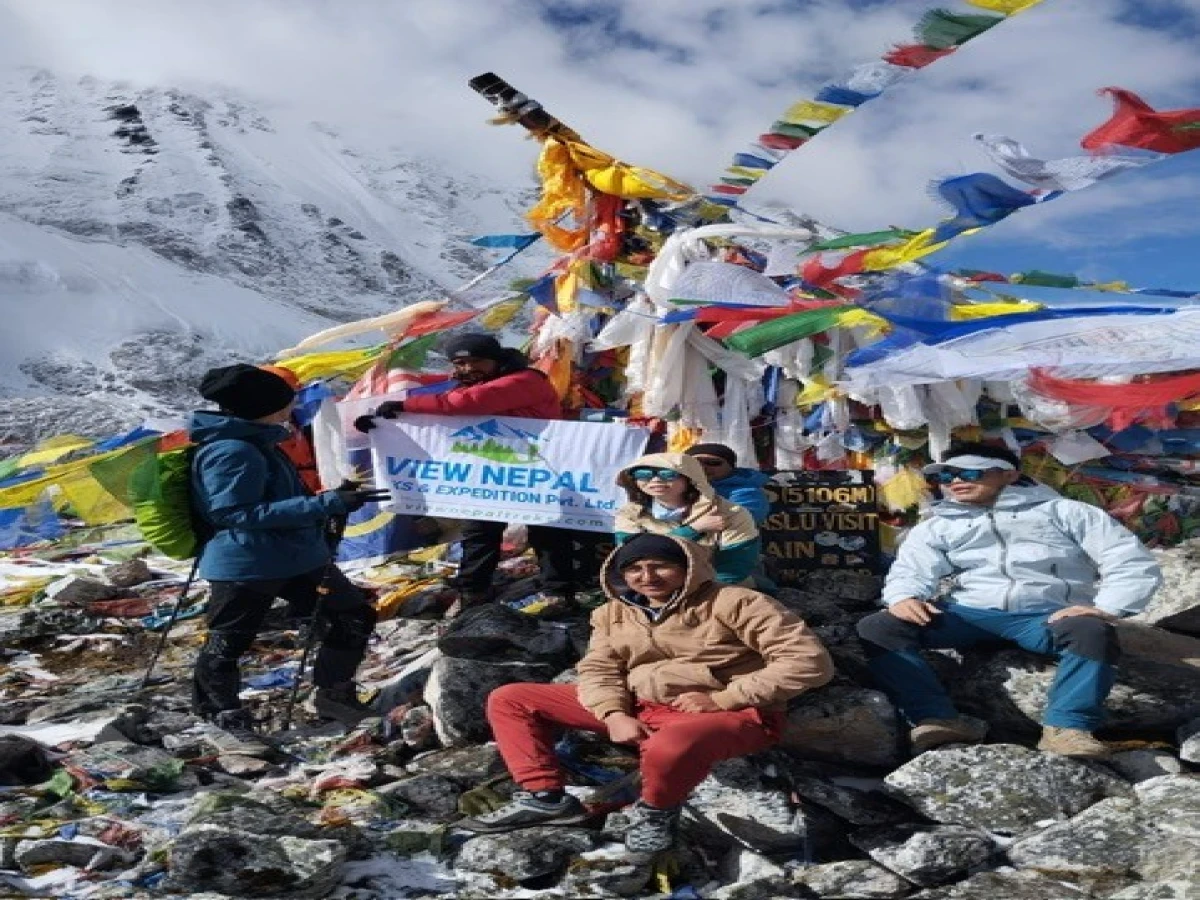
Manaslu Circuit Larkey Pass Trek 16 days

Manaslu Circuit Larkey Pass Trek 16 days

5 reviews
Customize Trip
Trip at a Glance
Duration16 Days
Trip GradeModerate
CountryNepal
Maximum AltitudeLarke Pass 5,160 m / 16,929 ft
Group Size1 to 20
StartsKathmandu, Nepal (1,400 m / 4,593 ft)
EndsKathmandu, Nepal (1,400 m / 4,593 ft)
ActivitiesTrekking, Mountain Pass Crossing, Cultural Exploration, Monastery Visits, Scenic Drive
Best TimeMarch, April, May, September, October, November

Manaslu Circuit Larkey Pass Trek 16 Days Overview

The Manaslu Circuit Trekking is one of the greatest trekking routes in Nepal. It is an exclusive restricted trekking destination that completes a circumnavigation of the world’s 8th-highest mountain, Mt. Manaslu (8163m) and lies in the Gorkha District of North-Central Nepal. 

This trail goes along the Budhi Gandaki River valley north through a subtropical gorge to a Gurung and a Tibetan settlement. It crosses the sacred valley with ancient Tibetan Buddhist monasteries, then traverses a spectacular landscape to the high mountain terrains over Larke La Pass 5160m and then descends along the Marsyangdi River valley to the Annapurna Region.

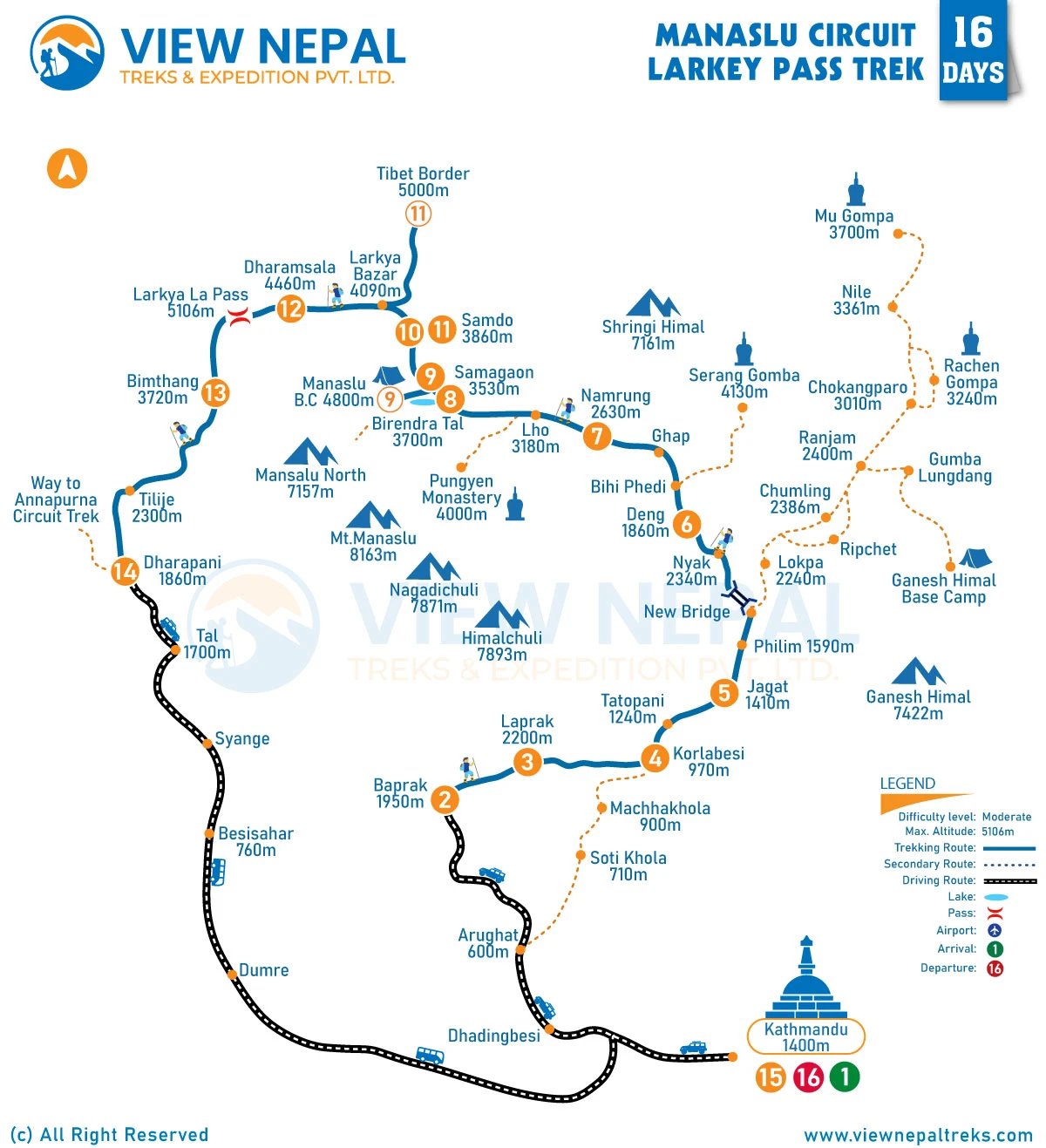
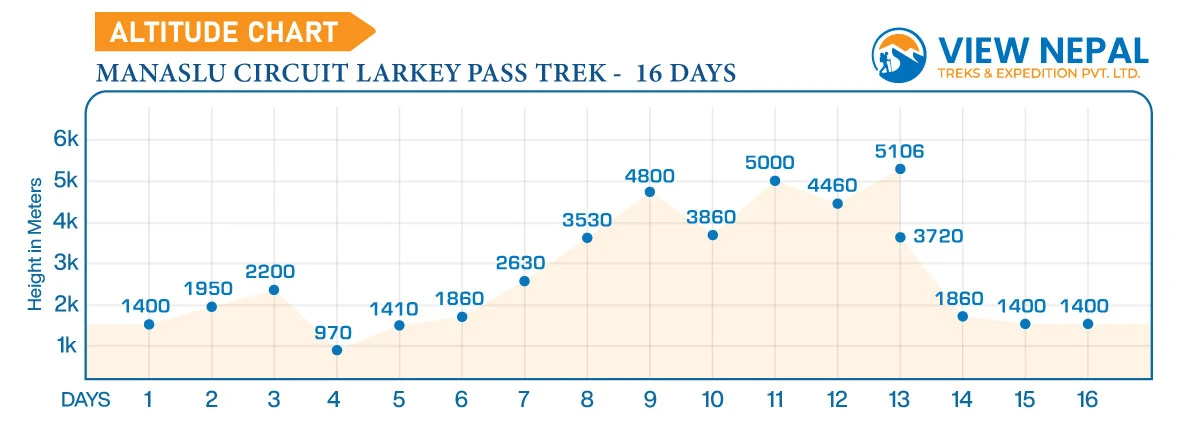
Tracing some 177km of trails, the route swings through incredibly contrasting terrains; from 970m river valleys at Khorlabesi up to a 5160m glacial pass above Dharamsala. 

On route, visitors will experience Tibetan Buddhist culture as found in the remote village of Sama-Gaun and in the Nubri and Tsum villages of Samdo and Namrung; regions where millennia of ancient practices remain relatively untouched by the mass tourism of recent decades.

Unlike other renowned trails like the Everest Base Camp or Annapurna Circuit, the Manaslu Circuit is a regulated trek that necessitates obtaining three kinds of special permits. Previously 2 trekkers were required to get permits but now solo trekking with a licensed guide is allowed.

These regulations are in place to reduce the annual footfall on the trail, thereby keeping it natural and pure in nature. Trekkers longing for a more profound cultural immersion, a remote setting and real satisfaction through the journey without having to contend with a commercial trail may find this trek to be truly exceptional.

Key Highlights of The Manaslu Circuit Larkey Pass Trek

  • Circumnavigate Mount Manaslu (8,163m), the eighth highest mountain in the world, on a complete Himalayan circuit.

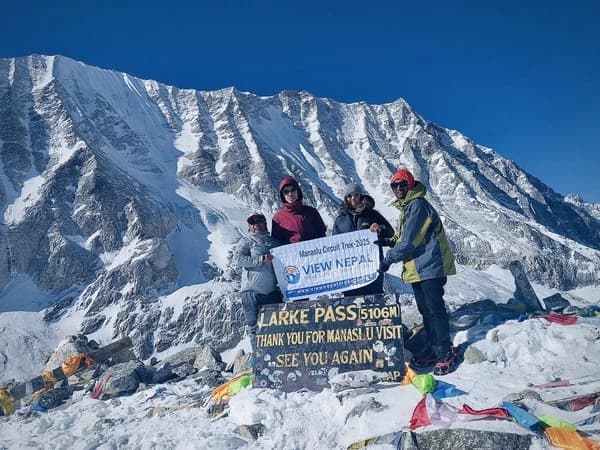
  • Cross the dramatic Larke La Pass (5,160m), one of Nepal’s most spectacular high mountain passes.

  • Experience authentic Tibetan-influenced Nubri culture in Sama-Gaun, Samdo, and Namrung villages.

  • Trek through diverse landscapes ranging from subtropical river gorges to alpine meadows and glacial moraines.

  • Visit ancient Buddhist monasteries, mani walls, chortens, and prayer-flag-lined passes along the restricted trail.

  • Enjoy fewer crowds compared to Everest Base Camp and Annapurna Circuit due to controlled permit regulations.

  • Relax in natural hot springs at Tatopani after long days of trekking in the Budhi Gandaki valley.

  • Start the adventure by taking a picturesque trip to Barpak, the village of Gurungs, which is the starting point of the Manaslu trek.

  • During the acclimatization day in Sama Gaun, you have to hike to Manaslu Base Camp (4,400 m).

  • See the wonderful Birendra Lake, the glacial lake of turquoise color under the mountains of Manaslu.

  • Visit the serene Pung Gyen Gompa - the ancient Buddhist monastery.

  • Make an acclimatization trip to the Tibet border from Samdo.

  • See the spectacular sunrise and sunset views of Manaslu (8,163 m), Himalchuli, Ngadi Chuli, Ganesh Himal, Cheo Himal, and Annapurna II.

  • Explore the Manaslu Conservation Area that has a Himalayan variety, alpine forests, rare Himalayan animals, and a diversity of nature.

  • Spend the night in traditional teahouses and gain the experience of the warm hospitality of the Gurung and Tibetan people.

  • Cross thrilling suspension bridges over Budhi Gandaki River and trek ancient Himalayan trade routes.

  • The trek leads across charming villages of Barpak, Laprak, Jagat, Philim, Dyang, Namrung, Lho, Sama Gaun, Samdo, Dharamsala, Bimthang, and Dharapani.

  • Enjoy the changing landscapes from green rhododendron forests and terrace hills to rough glaciers and snow-covered mountain passes.

  • Follow one of Nepal’s best-hidden routes and have a true experience of the wilderness without many popular routes.

  • Take amazing photos of glaciers, alpine valleys, beautiful cliffs, waterfalls, and high mountain peaks during your tour.

  • The gradual rise in altitude with the planned acclimatization will make the trek more enjoyable and safer.

  • Complete one of the most fascinating treks in Nepal that offers a combination of adventure, culture, nature, and breathtaking mountain views within one trip.

Mount Circuit Larke Pass Trek 16 Days Essentials

Trip Facts

Details

Trip Name

Manaslu Circuit Larkey Pass Trek 16 Days

Destination

Manaslu Region, Gorkha & Manang, Nepal

Trek Duration

13 Trekking Days (16 Days Including Arrival & Departure)

Trip Grade

Moderate to Challenging

Maximum Altitude

Larkey (Larke) Pass – 5,160 m / 16,929 ft

Mount Manaslu Height

8,163 m / 26,781 ft (World's 8th Highest Mountain)

Starting Point

Barpak (1,950 m)

Ending Point

Dharapani (1,900 m)

Accommodation

Local Tea Houses / Mountain Lodges

Meals

Breakfast, Lunch & Dinner During Trek

Transportation

Local Bus / Private Jeep (Optional)

Best Seasons

March, April, May, September, October, November

Permits Required

Restricted Area Permit (RAP), MCAP & ACAP

Group Size

Any group size, Solo too with guide (Restricted Area Regulation)

Guide Requirement

Licensed Trekking Guide Mandatory

Major Attractions

Barpak, Laprak, Tatopani, Sama Gaun, Birendra Lake, Manaslu Base Camp, Samdo, Tibet Border, Larkey Pass, Bimthang

Highest Pass

Larkey Pass (5,160 m)

Culture

Gurung & Tibetan Buddhist Communities

Difficulty Level

High-Altitude Tea House Trek

Wildlife

Himalayan Tahr, Blue Sheep, Musk Deer, Himalayan Monal & Rare Snow Leopard Habitat

Region

Manaslu Conservation Area & Annapurna Conservation Area

Trail Type

Remote Himalayan Circuit Trek

WiFi & Network

Limited; available in selected villages

Suitable For

Experienced Beginners with Good Fitness, Adventure Seekers & High-Altitude Trekkers

Trip Style

Guided Tea House Trek

Loop Around Mount Manaslu (8,163 m) - The World's Eighth-Highest Mountain

Manaslu Circuit Trek is a unique trek in Nepal that takes you in a full circle around Mount Manaslu (8163 m), which happens to be the eighth-highest mountain in the world. The trek to a single destination (like treks to a base camp) will make you return via the same route that you trekked to get to the base, but this trekking experience will take you around the entire massif.

During this expedition, you can see glacial formations, Himalayan valleys, distant villages inhabited by people with Tibetan traits, remote jungles, and an amazing Larkey Pass(5160m), and a slow immersion into the Annapurna region. 

Undoubtedly, it is a high-altitude journey with diverse landscapes, lots of culture and views on Manaslu and neighboring mountains; perhaps the finest trekking circuit in Nepal!

Legendary Larke La Pass (5,160 m) - The Highest Point of the Manaslu Circuit 

Crossing Larkye La Pass 5160m is the crowning experience of the Manaslu Circuit trek and the highest pass in this trek. The famed Himalayan pass links up the isolated Manaslu region to the Annapurna region, offering spectacular 360-degree views of Manaslu (8,163 m), Himlung Himal, Cheo Himal, Kang Guru, and Annapurna II.

The route travels over glacial moraine, snow, and brightly colored prayer flags, making it one of Nepal's ultimate high alpine routes. Having taken days to acclimatise, the walk to the top becomes a physical challenge and a memorable one that is part of Nepal’s highlight moments.

Why Choose the Manaslu Circuit Larkey Pass Trek?

The Manaslu Circuit Larkey Pass trek stands out as a premium Himalayan journey in Nepal, offering the perfect blend of high-octane adventure, authentic cultural encounter, and spell-bounding Himalayan sceneries. Being a restricted region trekking experience, this trek allows the trekkers to relish the solitude with unique villages reflecting Tibetan influence on their culture. 

The adventure unfolds with circumnavigating Mount Manaslu, the 8th highest mountain in the world (8,163m). The climax, the crossing of the remote Larkey/Larke Pass (5160m) at over 5000m, is rewarded with 360 degrees of unadulterated panoramic views of gigantic peaks.

Experience an Unspoiled Himalayan Adventure

The restricted permit systems are crucial in preserving Manaslu's untouched allure, thus ensuring trekking through less-traveled yet serene routes that boast raw and unspoiled wilderness with a true wilderness connection. One of the most iconic and unique off-beat trekking trails of Nepal for trekkers inclined towards unique Himalayan expeditions.

Discover Rich Himalayan Culture

Visit traditional Gurung and Tibetan Buddhist villages, monasteries dating back to hundreds of years, roll out the Buddhist prayer wheels with their lovely colourful patterns and enjoy meeting mountain villages with the most interesting and warm hospitality, the tradition which is so much unchanged for centuries.

Conquer the Spectacular Larkey Pass

Topping off at an impressive 5,160 m (16,929 ft), Larkey Pass is considered to be one of the most picturesque and adventurous high-altitude mountain passes in Nepal, with views of five out of the eight-thousand-metre peaks: Manaslu, Himaling Himal, Cheo Himal and Kang Guru, with Annapurna II, plus views across numerous other glaciers.

Enjoy Incredible Landscape Diversity

From rolling river valleys, thundering waterfalls and rhododendron forests to glacial plains, icy moraines, turquoise lakes and snow-laden passes, the terrain changes every day. It provides a constantly unfolding picture show to complement each day of trekking.

Perfect Balance of Adventure and Acclimatization

You're also equipped with two carefully arranged acclimatisation days in Sama Gaun and Samdo, where you'll also have chances to walk to Birendra Lake, Manaslu Base Camp, Pung Gyen Gompa, or towards the Tibetan border. These walks contribute to your acclimatisation in addition to the extra spectacular views and fascinating sights.

Where Does the Manaslu Circuit Trek Begin and End?

Manaslu Circuit Larkey Pass Trek is designed as a classic journey through the lesser-visited Manaslu region in the west of Nepal. Whereas the typical Manaslu circuit treks normally commence from Soti Khola or Machha Khola, the itinerary we have designed here starts from the picturesque Gurung village of Barpak (1,950 m), providing a peaceful cultural initiation before entering the main circuit trail.

The hike finishes in Dharapani (1900 m) in the Annapurna region; you take a jeep back to Kathmandu via Besisahar. The Barpak route has also proved to be a well-sought-after option by many trekkers, hoping for much culture and plenty of high mountain vistas.

Starting Point: Barpak (1,950 m)

Begin your trip with a scenic drive from Kathmandu to Barpak, a remote Gurung village famed for its traditions and breathtaking view of the mountains.

Highlights:

  • 7-8 hours road trip from Kathmandu 

  • Panoramic views of Ganesh Himal & the peaks around

  • Authentic Gurung culture & village life. 

  • The start point for the off-the-beaten-track Manaslu route.

Trekking Route

From Barpak, the trail follows this rewarding route:

Barpak → Laprak → Khorlabesi → Tatopani → Jagat → Philim → Dyang → Namrung → Lho → Sama Gaun → Samdo → Dharamsala (Larke Phedi) → Larkey Pass (5,160 m) → Bimthang → Dharapani

En route, you walk through forests and rivers, deep gorges, Tibetan-influenced traditional villages, alpine fields, and glacial valleys, and you will reach Larkey Pass with an awesome experience, and then hike into the green valley of Marsyangdi.

Ending Point: Dharapani (1,900 m)

After we cross the famous and incredibly steep Larkya Pass, the journey from the picturesque alps of Bimthang begins heading southwards to the popular village of Dharapani to join the Annapurna Circuit trail on day 1 of the trek.

Highlights:

  • Trek concludes at Dharapani on the Marsyangdi River

  • Return drive to Kathmandu via Besisahar.

  • Ideal end to the finest high-altitude journey on earth in Nepal!

Why Our Manaslu Circuit Trek 16 Day Itinerary Is Better Than 12, 14, and 15-Day Options

An itinerary can have a major effect on a trekker's general trekking experience. Our Manaslu Circuit Trek 16-Day itinerary is custom-written to get the right balance of adventurism and trekking time; you dont be pushed to get through the mountains or unnecessarily spend longer. 

This trekking itinerary focuses on giving you all of the best of what the Manaslu region has to offer for a satisfying experience. Generally, a 16-Day itinerary with 13 day trekking is favored and suggested as an appropriate-length trek by trekking gurus. 

This is considered a comfortable to best middle-ground to fit an adequately fit trekker and offers proper acclimatisation without making a trek out of an already sufficient one.

Why our 16-day itinerary stands out:

  • It ensures special acclimatisation in Sama Gaun, decreasing the risks of altitude sickness before passing Larkey Pass(5160 m). 

  • It begins through the spectacular trek route of Barpak thus it leads you to more rich and vibrant culture than typical itineraries. 

  • The treks with its exceptional day-hikes to Birendra Lake, Manaslu Base Camp, Pung Gyen Gompa, Samdo Viewpoint and the Tibetan border deliver an unforgettable experience of the Himalayas. 

  • 7-9 hours of trekking per day with an adequate balance to help save your energy for the tricky pass traverse. 

  • Covers all the essential parts of the major sights without seeming too quick and skipping the main draws.

A 12-day trekking itinerary is generally an accelerated version, which often results in merging a long trek with little time allocated to rest, exploration, or acclimatisation at higher altitudes. This renders it a more punishing trekking route with little breathing space at the altitude. 

The 14 Days trekking itinerary adds a day more to your resting or acclimatisation time and is ideally for amateurs, elderly trekkers, and those who want to move slowly while trekking. However, if you are fairly fit, it's not compulsory to do this tour, as you don't really require the spare time to get to the end of the circuit.

The 15 Day Manaslu Circuit Trek is generally recommended for those who prefer a slower pace or like to make long side excursions. This can be pleasurable, but it adds on days (and their corresponding days’ lodging at cost!). It will cost more without adding significant amounts to the actual trekking portion of the experience itself. 

For the vast majority of people, we consider our 16-Day Manaslu Circuit Trek to be the most prudent and enjoyable, offering the best blend of safety, acclimatization, cultural exchange, visual spectacle, and economical value.

Larke la Manaslu Circuit Trek Price 2026/2027/2028

This relatively high trek to Nepal for reasonable costs is an ideal tour, presenting superb rural Himalayan mountain vistas, an unfiltered Tibetan Culture as well as overcoming the tough Larkey Pass (5160m/16,929 ft). 

Costs for conventional guides deals in between US$ 900 as well as US$ 1800 USD per head to a large extent for programs in 2026, 2027 as well as 2028 with specific trekking costs differing on trek length, team dimension, comfort degree, vehicle and also logistics.

Private and luxury options obviously tend to be a bit more expensive, while a group of six or more people often reduces the individual package prices. 

Because Manaslu is a designated “restricted trekking area,” group trekking prices, when considering what typically comes included such as: mandatory permits for the area, guides certified by the tourism board, vehicle for transfers, tea house accommodations, and meals; the trip turns out to be very economical for this amazing circuit.

Why Choose View Nepal Treks For Trekking to Manaslu?

  • Experienced Local Trekking Team: Join an experienced local team, having guided many treks on the Manaslu Circuit, even over the pass itself. We will take you beyond the usual tourist experience all the way over the notoriously difficult Larkey Pass (5,160 m).

  • Well-Planned 16-Day Itinerary: The itinerary we plan considers good acclimatization, reasonable walking duration, and adequate duration in each location, so you have enough time to soak up the region's best features without rushing.

  • Authentic Barpak Route Experience: In contrast to the usual trekking routes of the Manaslu circuit, our trek starts from the beautiful Gurung Village named Barpak; from here, you feel a different ambiance. Here we will be exploring Traditional Gurung culture with less crowd.

  • Government-Registered Trekking Company: View Nepal Treks is a government-registered and reputed trekking operator from Nepal. We adhere to our commitment to offer professional trekking services and responsible tourism.

  • 100% Permit Management:  We obtain permits needed including RAP (Restricted Area Permit), MCAP and ACAP. The trekking will have a hassle-free operation with all possible permits sorted.

  • Professional Licensed Guides: Your journey is in safe hands with our guides, your personable, fluent English speakers who have your safety, well-being, altitude awareness and cultural experience in mind at all times!

  • Safety-First Approach: Follow us with the normal procedures of altitude climbing and also get prepared with the condition check, Acclimatisation plan as well as back - up plan.

  • Comfortable Tea House Accommodation: Sleep in thoughtfully-selected, family-run teahouses offering clean, private rooms, healthy and filling food, and the warm, welcoming spirit of the Himalayas.

  • Transparent Pricing with No Hidden Costs: Competitive Prices with transparent inclusions and real value from one of the highest-ranked tours in Nepal.

  • Small Group and Private Trek Options: Whether you travel solo or with your entire family, you’ll find the perfect trip for you with planned departures, family tours, small group travel, or private tours of custom design.

  • 24/7 Customer Support: Our supportive, in-country team is here to help you with anything you need from the time of your first enquiry with us right up to your journey home.

  • Responsible and Sustainable Trekking: We empower local people to be key participants in conservation efforts and responsible tourism in and around the Manaslu Conservation Area. Eco-friendly trekking. Support for local businesses.

  • Excellent Customer Satisfaction: Safe and inspiring Himalayan holidays, created just for you and tailored to your wishes. Professional service is guaranteed.

  • Complete Trip Assistance: In addition to the services that come standard with any of our trekking tours, we can assist with booking airport transfers, hotel reservations, private transport, baggage services, travel insurance, and even arrange any further touring needs in Nepal before or after your trek.
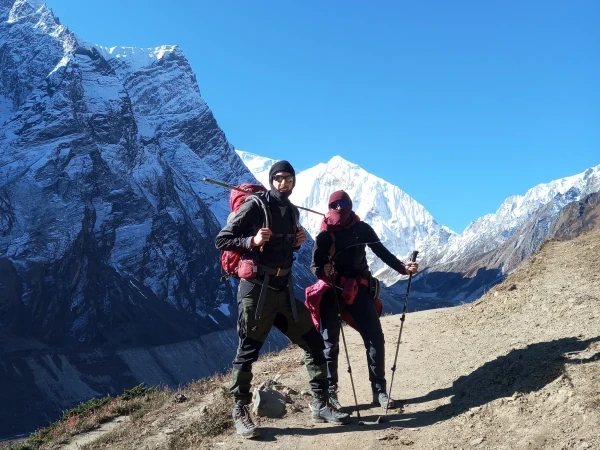
Itinerary
Trip PlanExpand all

Your arrival point will be Tribhuvan International Airport (TIA) in Kathmandu – the capital city of Nepal and situated at a high altitude of 1,400 meters. 

After completion of the immigration and baggage collection procedures, you shall be met by our driver and guide and transferred to the hotel in Thamel.

Thamel is the gateway for trekking adventures in Nepal, which has various trekking gear shops, medicine stores and currency exchange centers. Make the most of this afternoon by visiting us for help to obtain three obligatory permits: a Manaslu Restricted Area Permit (RAP), a Manaslu Conservation Area Project Permit (MCAP) and an Annapurna Conservation Area Permit (ACAP). Remember to bring along your original passport along with two recent passport-sized photographs.

Overnight at a hotel in Kathmandu.

Max Altitude: Kathmandu 1,400 m / 4,593 ft Meals: BreakfastAccommodation: HotelDuration: About 3 to 4 hoursDistance: Airport transfer about 6 km

Your day begins at dawn after an early morning breakfast at your hotel. Then you hop into a local bus or jeep for the northwest drive to the Gorkha District. 

It all begins along the Prithvi Highway before turning onto the more primitive mountain trails, which weave their way through the dusty, unpaved and sometimes narrow roads after Arughat Bazar. 

Your trip winds past rice terraces, crosses suspension bridges across the Budhi Gandaki River, and offers views of women in remote village markets balancing heavy bamboo baskets of fresh produce on their heads.

Barpak village is one of the largest villages in Nepal which is located at an altitude of 1,950 m in the Gorkha District. The 2015 earthquake heavily impacted it. You will find many new houses as well as traditional restored ones in the area. 

Here, the Gurung people are welcoming but shy with visitors; ‘Namaste’ can make a world of difference. You will settle at a simple teahouse, eat dal bhat (lentil stew with rice) and sleep; this bus ride is likely more draining than you expect.

Max Altitude: Barpak 1,950 m / 6,398 ft Meals: Breakfast, Lunch, DinnerAccommodation: Tea HouseDuration: About 7 hours driveDistance: About 140 km

Today is one of the most rugged trekking days of your trip, which begins early after hot porridge or eggs and tea in Barpak. You drop through a sharp incline of rhododendron and oak forest, then cross a stream, and then ascend steeply again towards Laprak. 

The steps are uneven and can be slippery mud after rain; that's when you know a guide is so useful! The hills above your head command fantastic views towards the Himalayan foothills and the Budhi Gandaki gorges below.

A second traditional Gurung village on the trek is Laprak, situated at some 1,950 metres. Gurungs here blend Tibetan Buddhism with Bon animism, and you will come across prayer flags stretched between the houses, stone walls covered in mantras, known as mani walls, and miniature Buddhist shrines where the paths meet. 

The village was also severely affected by the 2015 earthquake, although rebuilding efforts with government and NGO assistance have been made, and community solidarity is evident in daily life. 

Guesthouses in Laprak offer basic dormitories or private rooms. You can't really expect hot water; you'll have to be satisfied with warm water in a bucket.

Max Altitude: Laprak 2,200 m / 7,218 ft Meals: Breakfast, Lunch, DinnerAccommodation: Tea HouseDuration: About 6 hours trekDistance: About 13 km

Today will involve some serious downhill travelling, from the highland Gurung region down to Khorlabesi, at only 970 m on the Budhi Gandaki river gorge. Start walking as early as possible after breakfast and take care to watch your step on the very steep trail and protect your knees. 

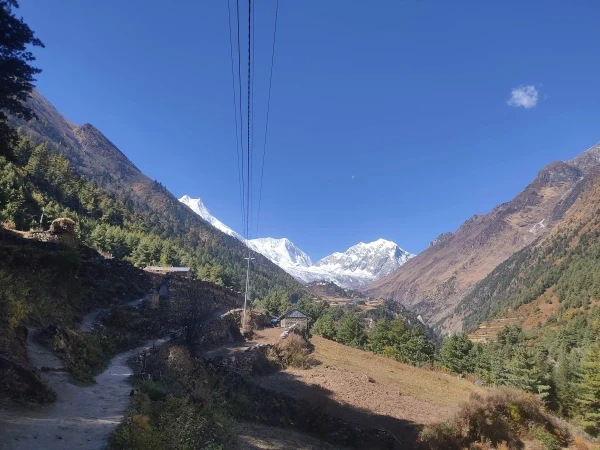
The trail goes through thick subtropical forest where troops of langur monkeys, vivid Himalayan birds and butterflies the size of your hand are often spotted. It crosses wooden and iron suspension bridges which sway and bounce above raging waters.

Khorlabesi is the entrance gate into the Manaslu Conservation Area, right where the valley constricts into a deep gorge. It becomes warmer and more humid as you descend, to the shock of many of our novice trekkers expecting a freezing day from day one. 

The trail now contains leeches from monsoon season and post-monsoon season; make sure to keep your pants stuffed into socks and to bring leech repellent. 

The trail now begins passing Magar and Gurung-inhabited villages where local teahouses have sprung up. You’ll spend the night sleeping here in the tea house.

Max Altitude: Khorlabesi 970 m / 3,182 ft Meals: Breakfast, Lunch, DinnerAccommodation: Tea HouseDuration: About 6 hours trekDistance: About 16 km

You will start your journey early today as there is only one real payoff today for weary legs, the natural springs of Tatopani. After your morning repast, you head upriver along the Budhi Gandaki on the trail which squeezes into a spectacular gorge, a sheer vertical walled canyon fringed by vegetation and hanging from the sides. 

The roar of the river is a constant companion to the ups and downs of the trail that alternates between flat riverbanks and sheer rocky climbs. Keep a close eye out for falling stones, especially after rain, on the parts of the trail cut directly into the side of the cliffs.

Tatopani, "hot water" in Nepalese, has a natural geothermal hot spring; don't skip half an hour or so of soothing relief for your protesting legs. These waters are hot to say the least, around 40C, and it is funny to see children from the local village watching trekkers enjoying the natural remedy. 

You make the final push onto the village of Jagat (1410m), and at this point you'll show your permits to the authorities at the police checkpoint. Jagat is a typical village, paved with stones and influenced by the Tibetan style of building with small tea houses dotted along a single main street. 

There are regular army or police checks (so keep your permit close at hand), so don't bury it at the bottom of your bag. Noodle soup, dal bhat or fried rice all cost a modest price and should see you right for the night - rest up because the following days are harder.

Max Altitude: Jagat 1,410 m / 4,626 ft Meals: Breakfast, Lunch, DinnerAccommodation: Tea HouseDuration: About 6 hours trekDistance: About 17 km

Today, your adventure involves an early start following a hearty breakfast at Jagat. As you start your hike uphill, the landscape starts to shift, gradually transitioning away from a predominantly Nepali culture into a more predominantly Tibetan Buddhist environment. You’ll continue through the Philim village at 1,600 meters, an area primarily inhabited by the Gurung people. 

Here you'll see massive water mills located by the river grinding grain for the entire village. Above Philim, the trek enters cultivated terraced land of millet, maize and buckwheat, which represents the dietary sustenance of almost all of the settlements along this valley.

The scenery becomes even more rugged as you continue towards Dyang at 1,800m. Gorge walls rise steeply on both sides, and the Budhi Gandaki river turns wild and verdant. You’ll walk over a handful of suspension bridges today; some you’ll feel are safer than others! 

The change in culture is undeniable: the mani walls get longer and longer, and the prayer wheels by doorways start appearing, with a greater number of people speaking with Tibetan inflections to their Nepali. 

Max Altitude: Dyang 1,800 m / 5,906 ft Meals: Breakfast, Lunch, DinnerAccommodation: Tea HouseDuration: About 6 hours trekDistance: About 20 km

Today, it’s the longest walk of your expedition, climbing continuously into rugged mountainous territory. Setting off from Dyang shortly after breakfast, you’ll soon trek into forests thick with pine and bamboo, where you’ll often see early morning mist draped over the treetops well after the day is well underway. 

At 2,160m lies Ghap, where the Tibetan Buddhist culture of the Manaslu Circuit becomes dominant, and you will see your first really sizable gompa. Here, a welcoming lama may offer you a blessing on the trail, should you be suitably introduced.

Higher up the valley from Ghap, it opens out significantly, with Himalayan peaks beginning to feature prominently against the northern skyline. We begin to see glimpses of the lower reaches of the Manaslu massif through openings in the woods, resulting in involuntary gasps from first-timers. 

At 2,660m Namrung is a real mountain village: a collection of stone-built houses with carved wooden windows, with an operating gompa (monastery) overlooking the cluster of homes. 

The people here are mostly from the Nubri community of Tibetan origin, who have settled this valley over the last several centuries. Overnight stay at a tea house.

Max Altitude: Namrung 2,660 m / 8,727 ft Meals: Breakfast, Lunch, DinnerAccommodation: Tea HouseDuration: About 7 hours trekDistance: About 20 km

The higher altitude will hit you as soon as you leave Namrung – the air gets thin, and the temperature drops considerably – your breathing quickens as you pack up for the day. Enjoy a warm and hearty breakfast; eat well; seven hours and a massive climb await at Sama-Gaun. 

The trail ascends to Lhogaon at 3,180m, a stone village cluster in the middle of alpine terraces and yak pastures. Mount Manaslu, Ngadi Chuli and Himalchuli now dominate the skyline at a striking, sheer visibility.

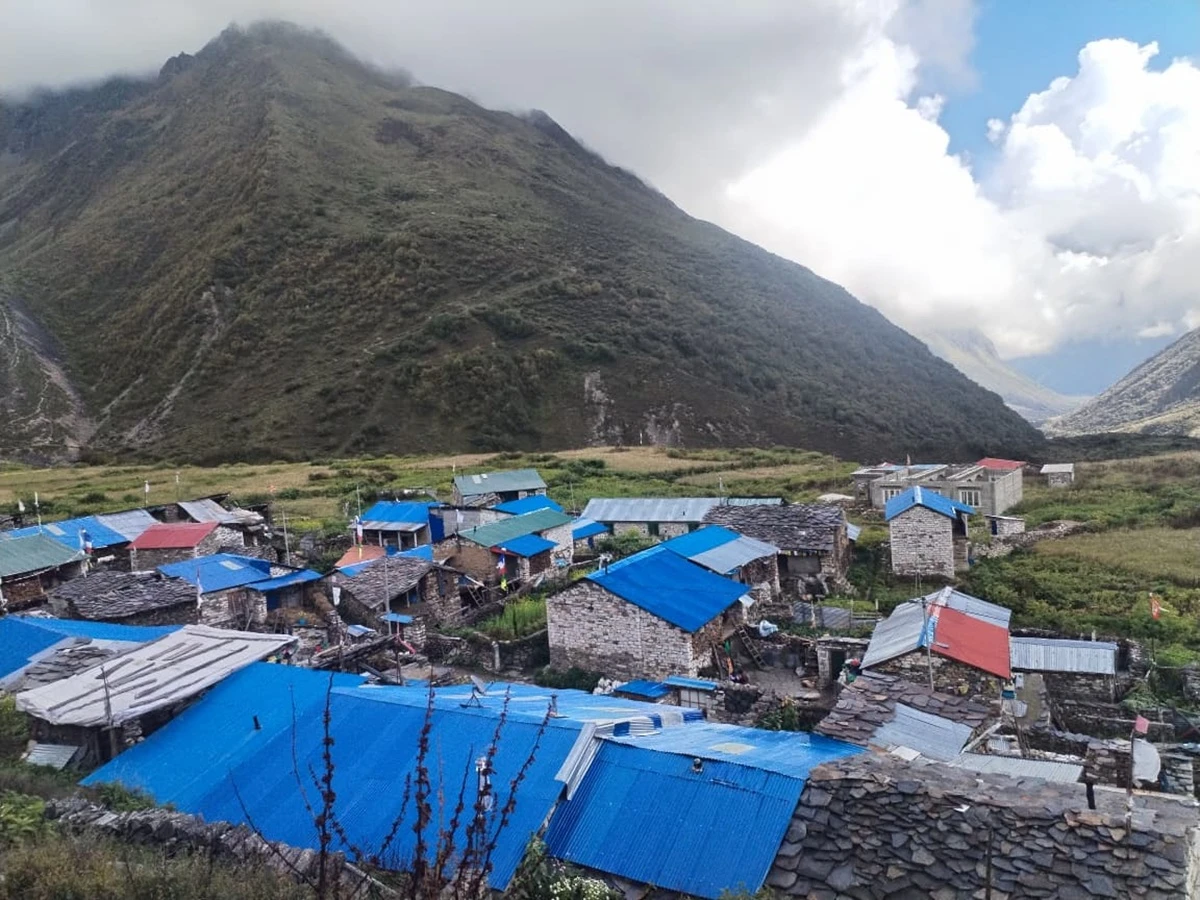
At an altitude of 3,530 meters, Sama-Gaun is the spiritual and social capital of the Nubri Valley and likely the most atmospheric of any on the Manaslu Circuit. Residents retain an entirely Tibetan way of life. 

The Nubri (a Tibetan dialect), the religion of Vajrayana Buddhism, and the traditional chuba robes often worn during ceremonies are characteristic of the community. The entire village revolves around a centuries-old monastery (Sama Gompa) adorned with thangka paintings and the glowing butter lamp stations inside.

Overnight stay at a tea house in Samagaon.

Max Altitude: Sama Gaun 3,530 m / 11,581 ft Meals: Breakfast, Lunch, DinnerAccommodation: Tea HouseDuration: About 7 hours trekDistance: About 18 km

You are not hiking today, and this rest day is almost certainly going to save the trek. Your body needs a full 24 hours to create more red blood cells and acclimatise to less oxygen at 3,530m. 

Wake without an alarm, have a slow breakfast and pick any one of three acclimatisation walks depending on your current physical state. Perhaps the best option is an out-and-back walk to Manaslu Base Camp at 4,400m. 

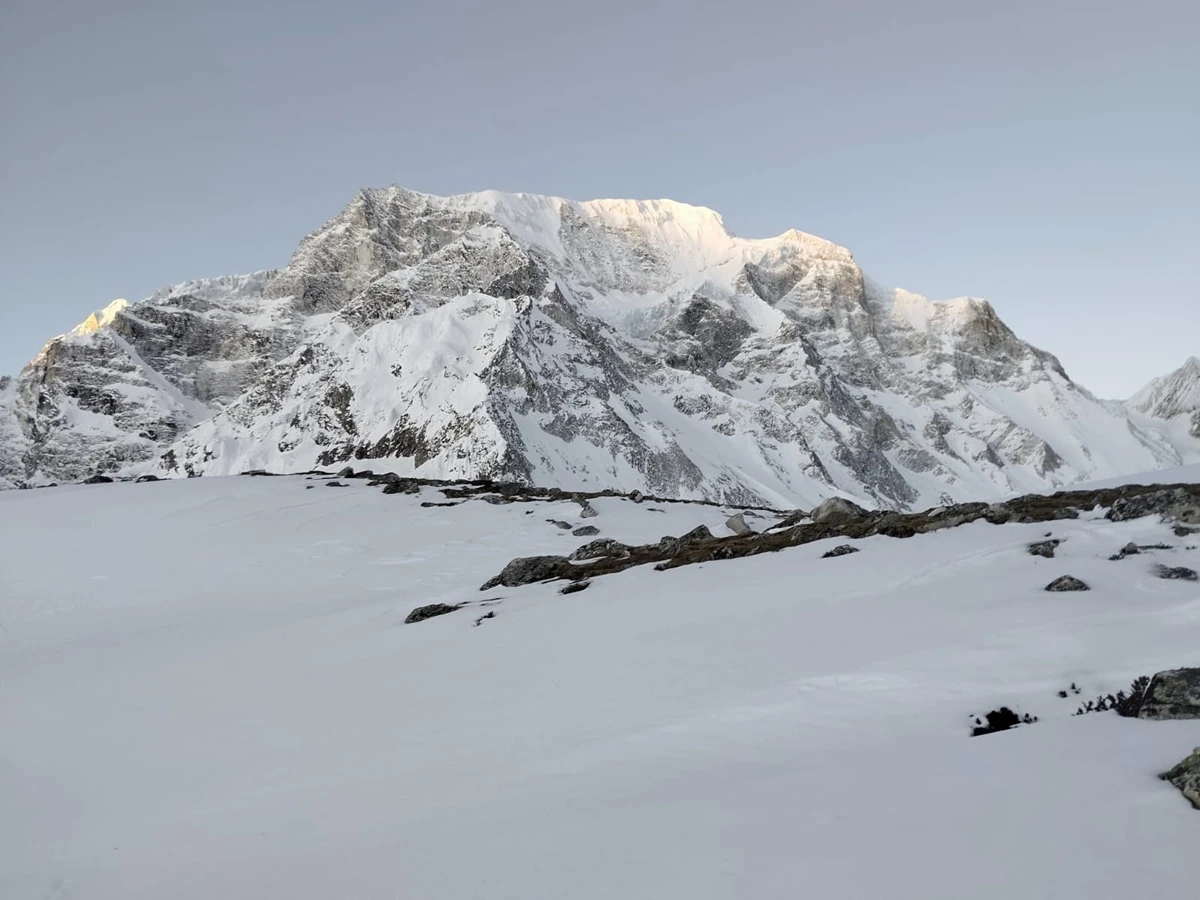
It is a four- to five-hour round trip to this amazing viewing point that will show you fantastic views of the southwest face of Manaslu and the Pungyen Glacier spilling down between rocky moraines.

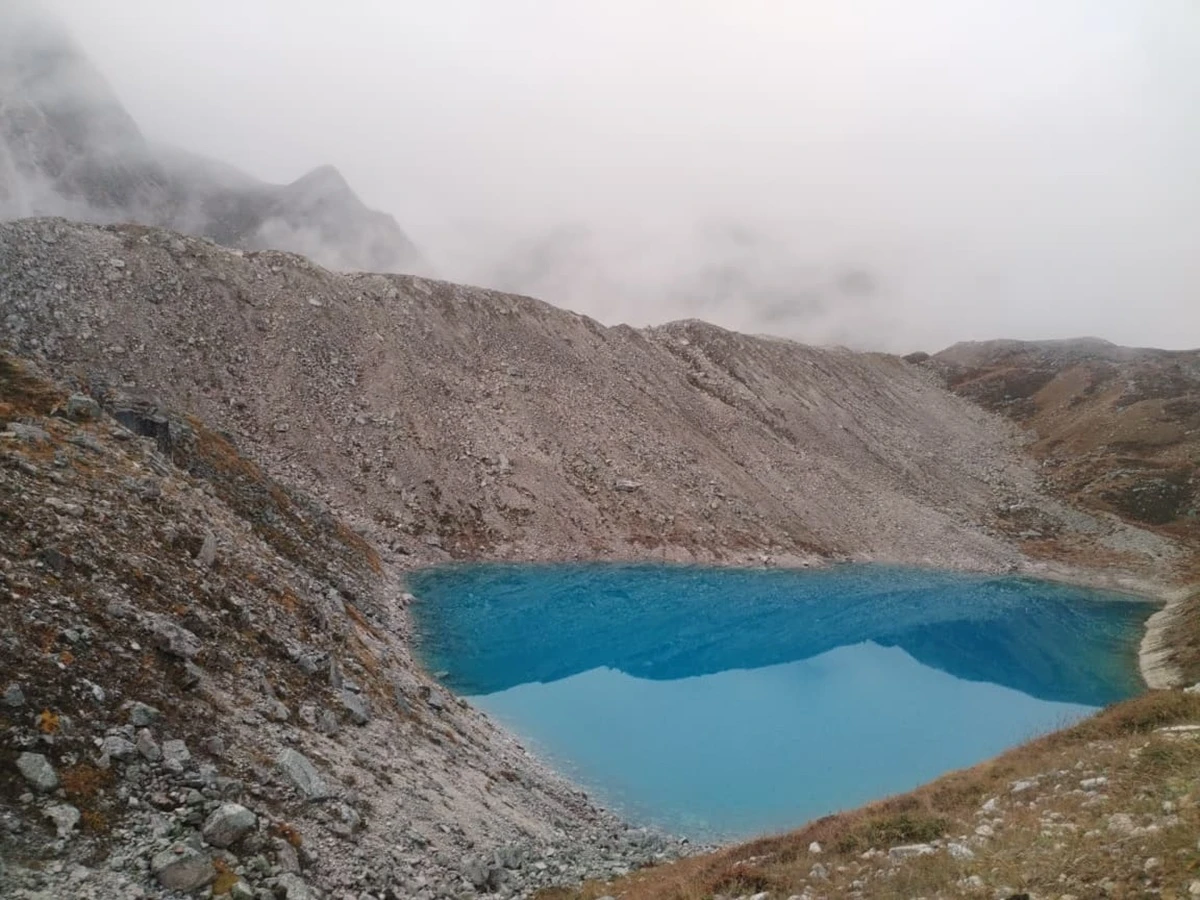
At 3,450 meters, Lake Birendra is a glacial lake of vivid blue sitting beneath a field of rocks; the shortest and easiest option. For the most authentic experience, Pungen Gompa is an active monastery situated on a cliff overlooking the valley. It may include some monks in residence performing ritual chants or making offerings. 

Whichever of the two options you decide upon, aim to be back in Sama-Gaun by 2:00 PM; after this, clouds typically form over the surrounding mountains and temperatures can drop very quickly. Eat heartily for dinner – dal bhat with butter tea (po cha) will fuel your muscles and is traditionally good for high altitudes.

Max Altitude: Manaslu Base Camp 4,400 m / 14,436 ft (Optional Hike) Meals: Breakfast, Lunch, DinnerAccommodation: Tea HouseDuration: About 5 to 7 hours hikingDistance: About 8 to 14 km depending on hike

This should be your shortest hiking day of the journey, but let’s not have the small distance make you start lazily – depart from Sama-Gaun at 7:30 AM, walking northeast up a high valley trek on which grazing yaks graze across thin alpine grasslands. 

The terrain is much sparser and is distinctly Tibetan – the tree-covered valleys are replaced by barren wind-swept ridges. You'll be crossing glacial rivers frequently along your walk, and the stones on some crossings are anything but secure; this is a good day for waterproof hiking boots.

At 3,860 meters, Samdo is a tiny but permanent Tibetan village of around 20 stone houses, a monastery, and a handful of six to eight small tea houses geared toward trekkers. For centuries, Samdo village has had a robust trading and cultural connection to Tibet. 

Arriving in the early afternoon, your trekking guide will lead you on a 45-minute steep trek up to the Samdo Himal viewpoint. This stunning vantage point, looking north across to the northern Himalayan range and up at the majestic 5,695-meter Samdo Peak, makes for an unparalleled photo opportunity. 

This viewpoint trek also has a two-fold altitude acclimation function: the practice of “climb high and sleep low”. Today, please aim for three to four liters of water, eat your full dinner, and no sleeping pills (these are lethal at altitude as they dull your respiration).

Max Altitude: Samdo 3,860 m / 12,664 ft Meals: Breakfast, Lunch, DinnerAccommodation: Tea HouseDuration: About 5 hours trek plus 1 to 2 hours hikeDistance: About 10 km

Today, you can enjoy an interesting rest day in Samdo with an organized hike towards the China/Tibet border near the northern face of Larke La.

Although you won’t be officially crossing the border, the trail to the Tibetan plateau's viewpoint offers a remarkable contrast to your trekking in the Himalayas; you'll get a view of the arid and vast, otherworldly landscape of Tibet.

Set off from your guesthouse by 8 AM because this high-altitude path requires you to set off early and get as far as you can before the fierce afternoon winds blow in.

You hike through rock moraines with grazing yaks up to the 4200–4500 meter-altitude (depending on how far your guide takes you). This border zone feels politically active; the Nepal army is posted somewhere around there, but not much is done; don’t photograph near them. The scenery is harsh and exposed and like something else- no trees, almost no vegetation; over the ridge there’s the brown plateau of Tibet.

From ancient times, salt-traders from Samdo used this path for trade in salt and grain in exchange for Tibetan products - this sort of activity largely ceased after the border controls were set up.

Return to Samdo in the early afternoon for a good lunch, after which get your gear ready for the hard day tomorrow at high altitude to Dharamsala.

Max Altitude: Tibet Border about 5,000 m / 16,404 ft Meals: Breakfast, Lunch, DinnerAccommodation: Tea HouseDuration: About 6 to 7 hours hikingDistance: About 14 km

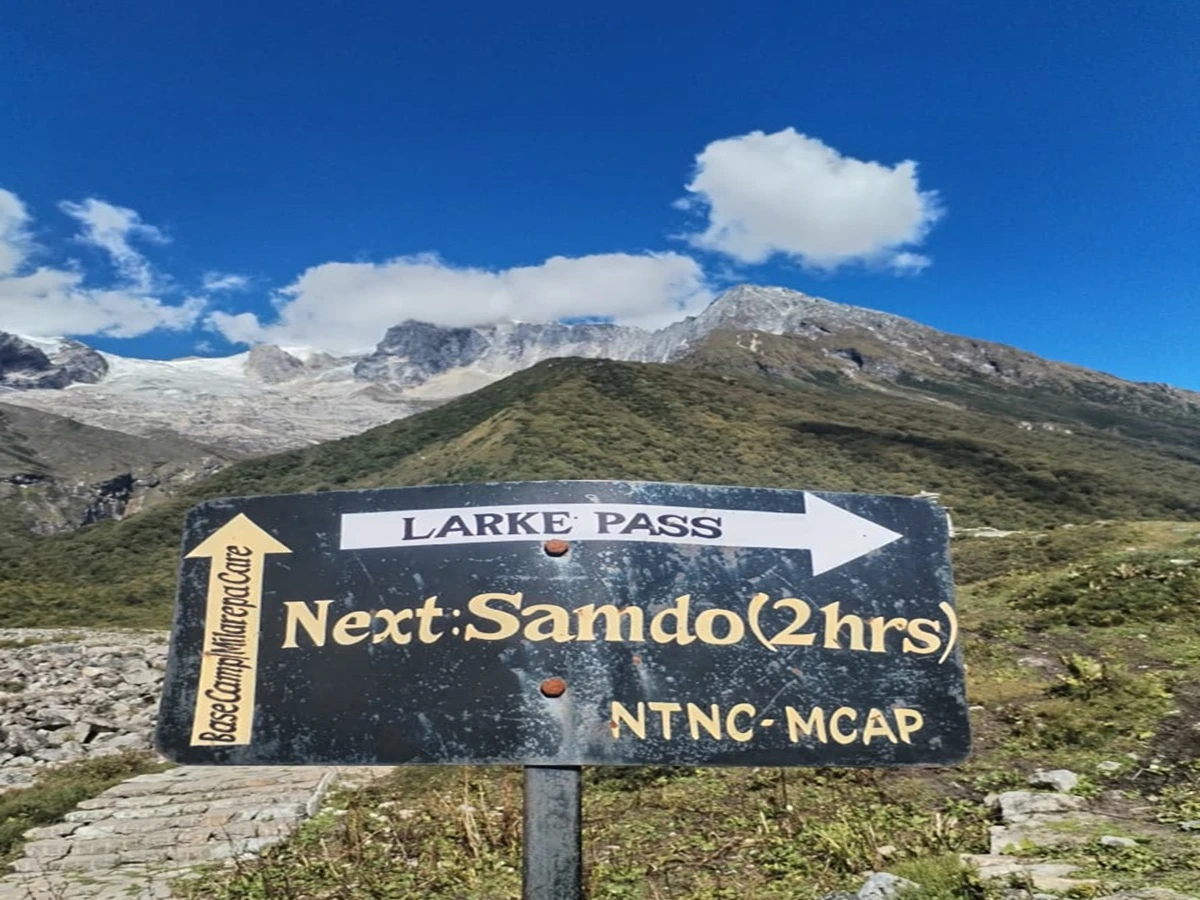
You pack carefully today and start your hike to Dharamsala (aka Larke Phedi). The walk is 4 hours long, beginning to climb steeply in a wide glacial valley with stream channels to be crossed as they emerge from the Larke Glacier above. 

The terrain is becoming rockier and barren, littered with glacial erratics, and winds, which are fierce above 4000m, will be building even if you leave Samdo with bright sunshine this morning, so layer up accordingly.

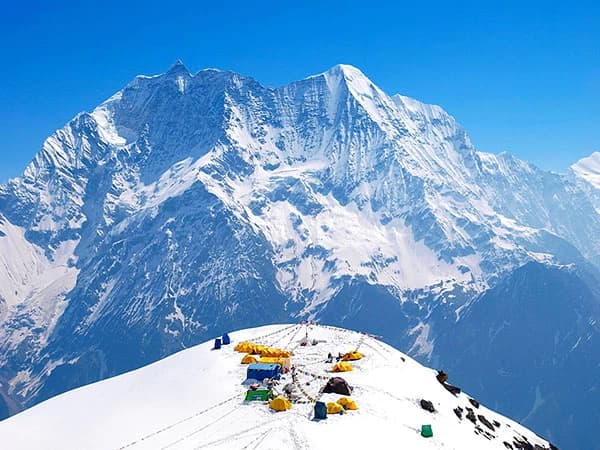
Dharamsala, at 4,460m, offers two to three stone teahouses with only a few beds; hard bunks, thin blankets, and hardly any electric power aside from that from solar-rechargeable lamps. Make sure you reach Dharamsala well before sunset to get a bed, as groups commonly camp out there prior to crossing the pass the next day. 

Use the afternoon for a short acclimatization circuit in the region above the teahouses and go over your gear again; crampons, if there is ice, adjust your trekking poles and make sure they are working well, check your headlamp’s batteries are new and make sure you have food and drink for a long day’s pass crossing, at least 8 hours long, the following day. 

Many first timers will feel a great amount of anxiety the night before crossing the 5,160m pass. This is normal. Don’t worry – you’re not wimpy! Arrange to get woken at 2 or 3 AM with your guide, then try to sleep at 7 PM.

Max Altitude: Dharamsala 4,460 m / 14,633 ft Meals: Breakfast, Lunch, DinnerAccommodation: Tea HouseDuration: About 4 hours trek plus optional side hikeDistance: About 7 km

Today, you’ll rise early before sunrise, have some breakfast in the teahouse (typically some bland but tasty instant noodles or bread with steaming tea) and set off on a journey to Larke La Pass. 

The first part of the track is a steep ascent of moraine, best taken slowly and sticking behind your guide. The last approach up to Larke La (5,160 m / 16,929 ft) travels along the glacier's edge and steep snow fields where previous trekkers in icy conditions set up fixed ropes. 

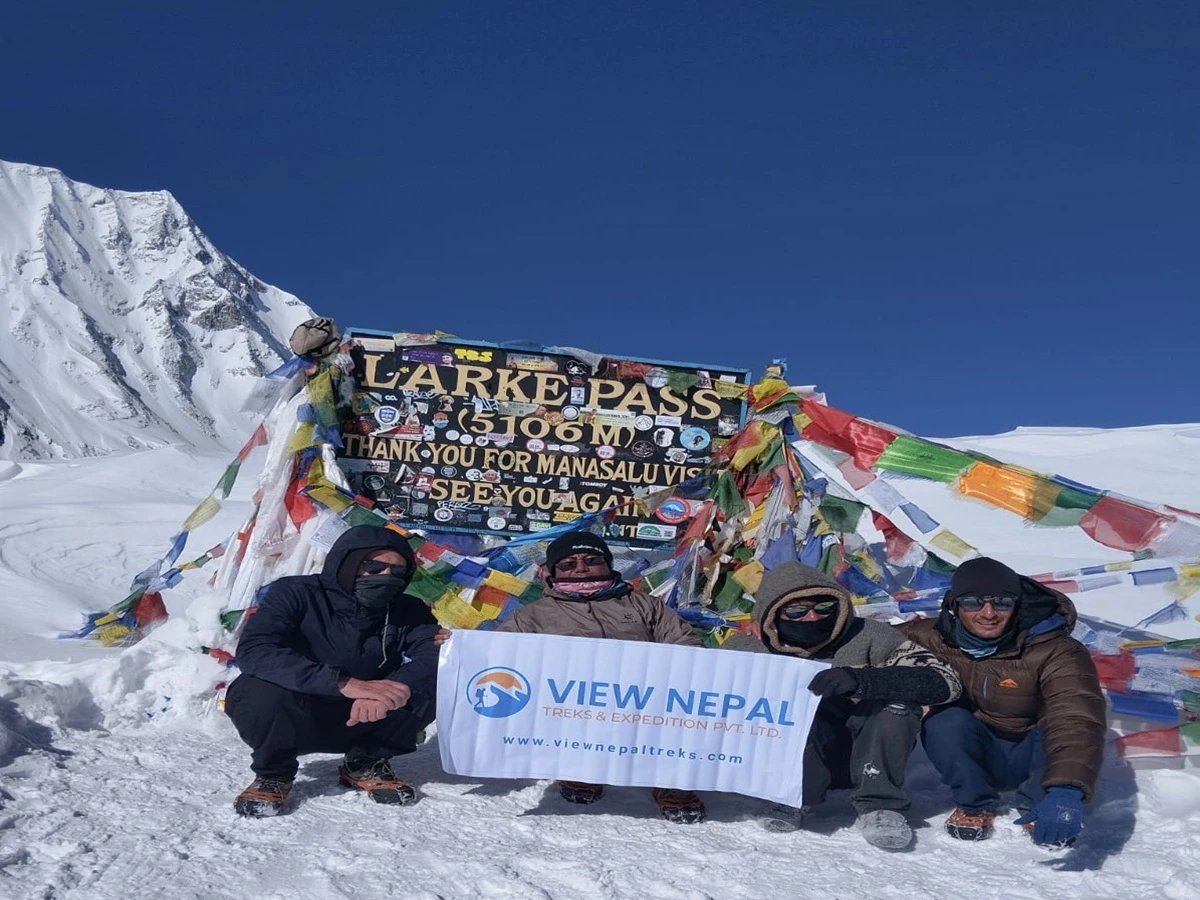
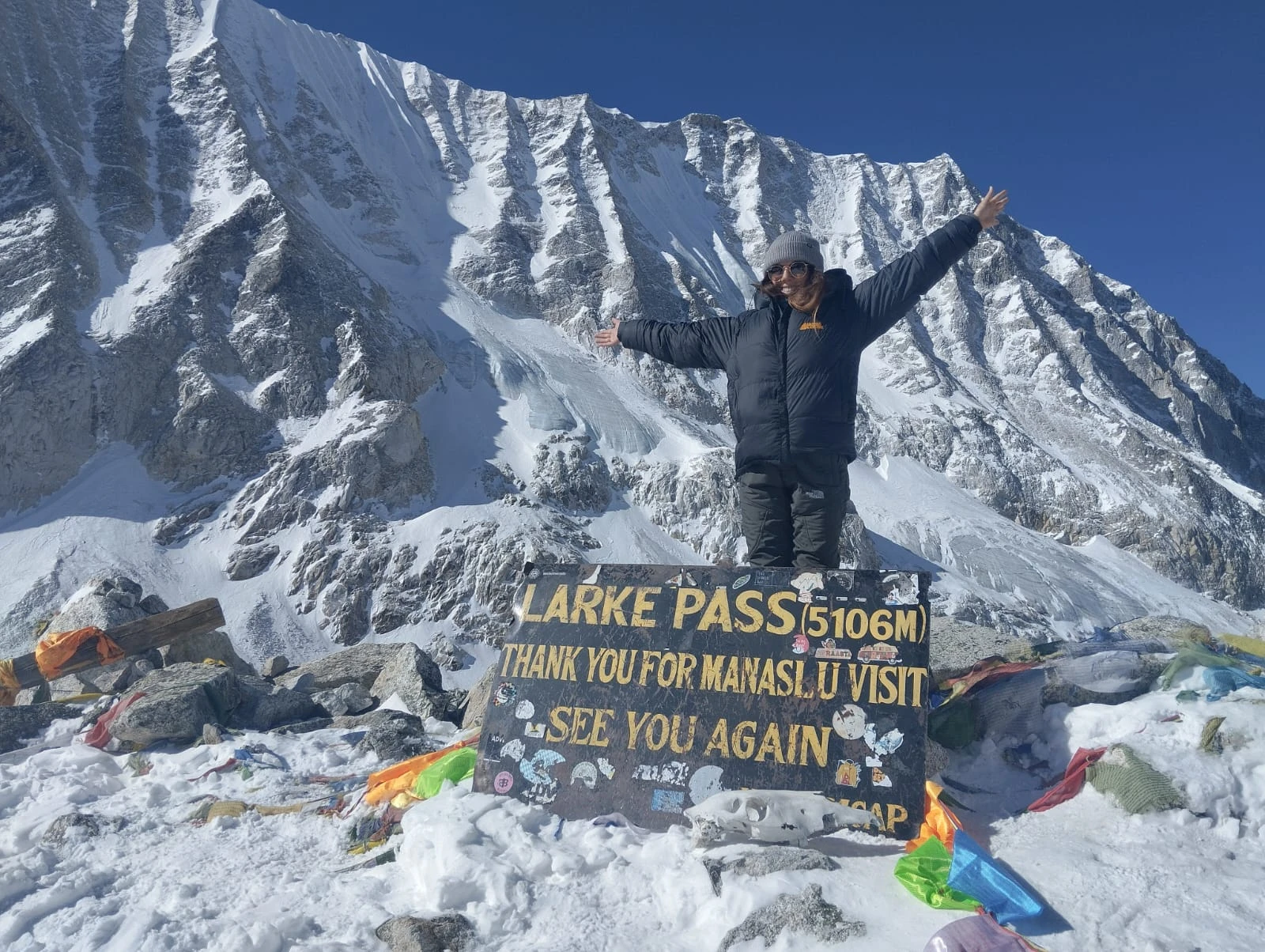
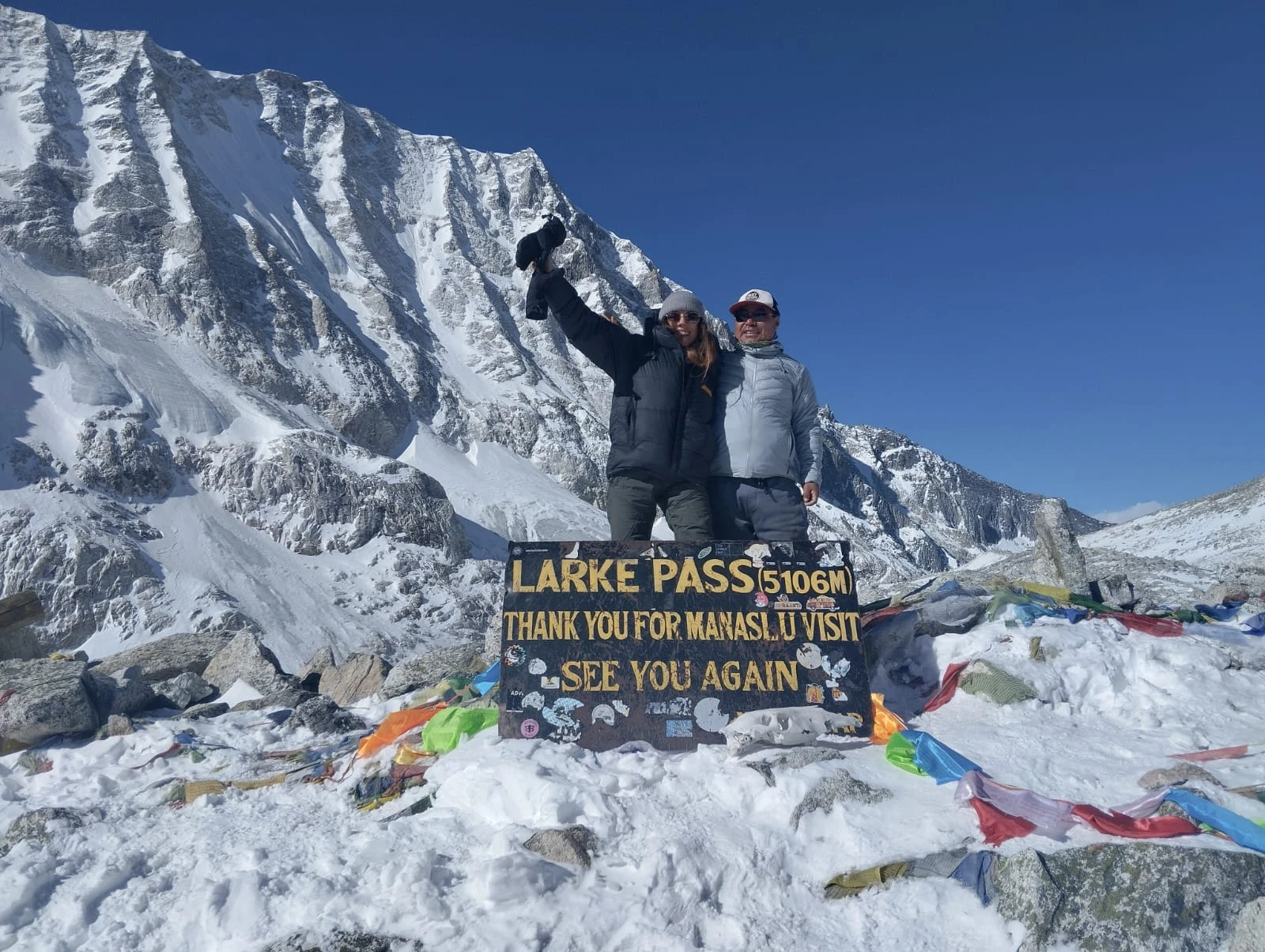
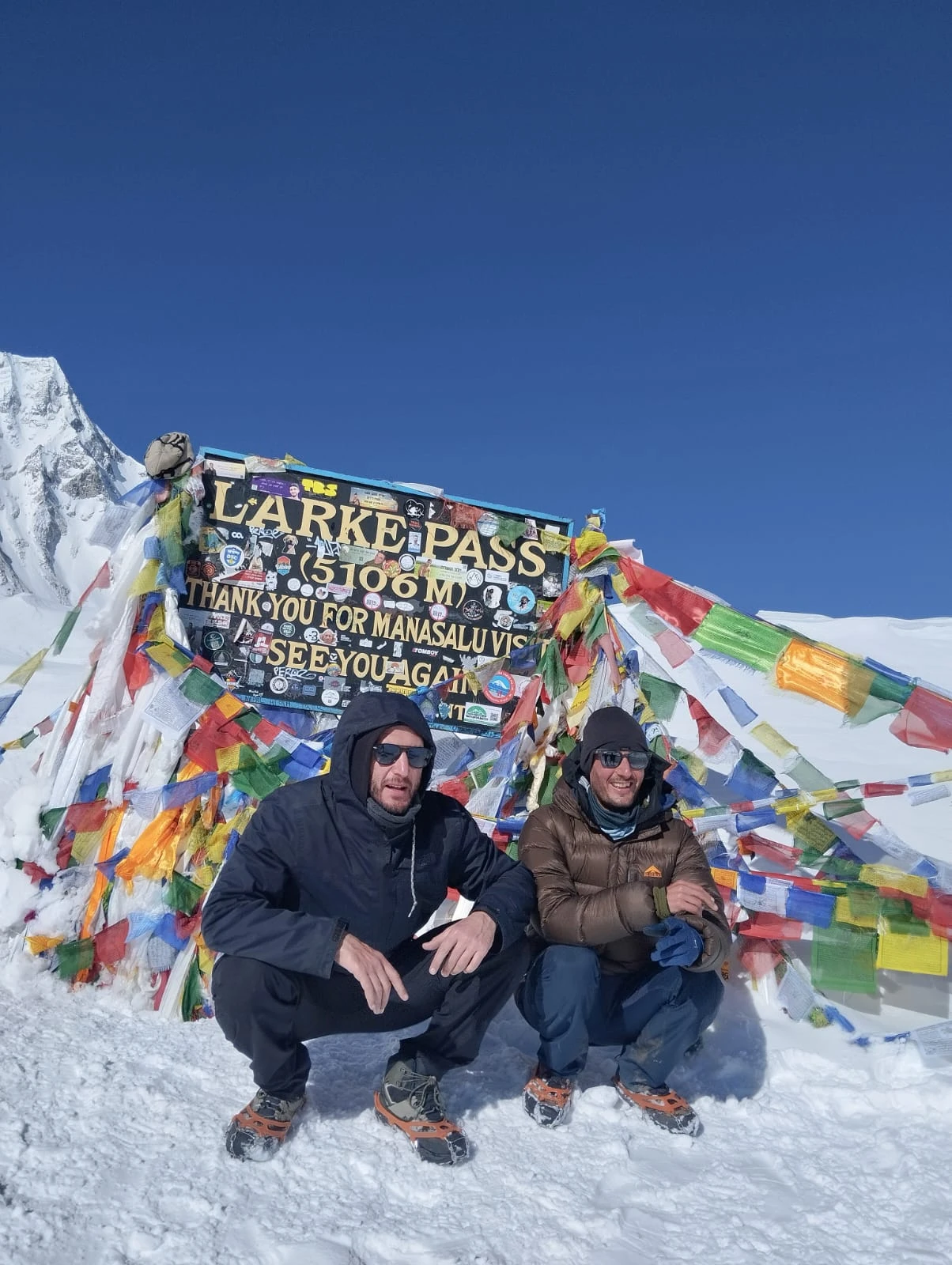
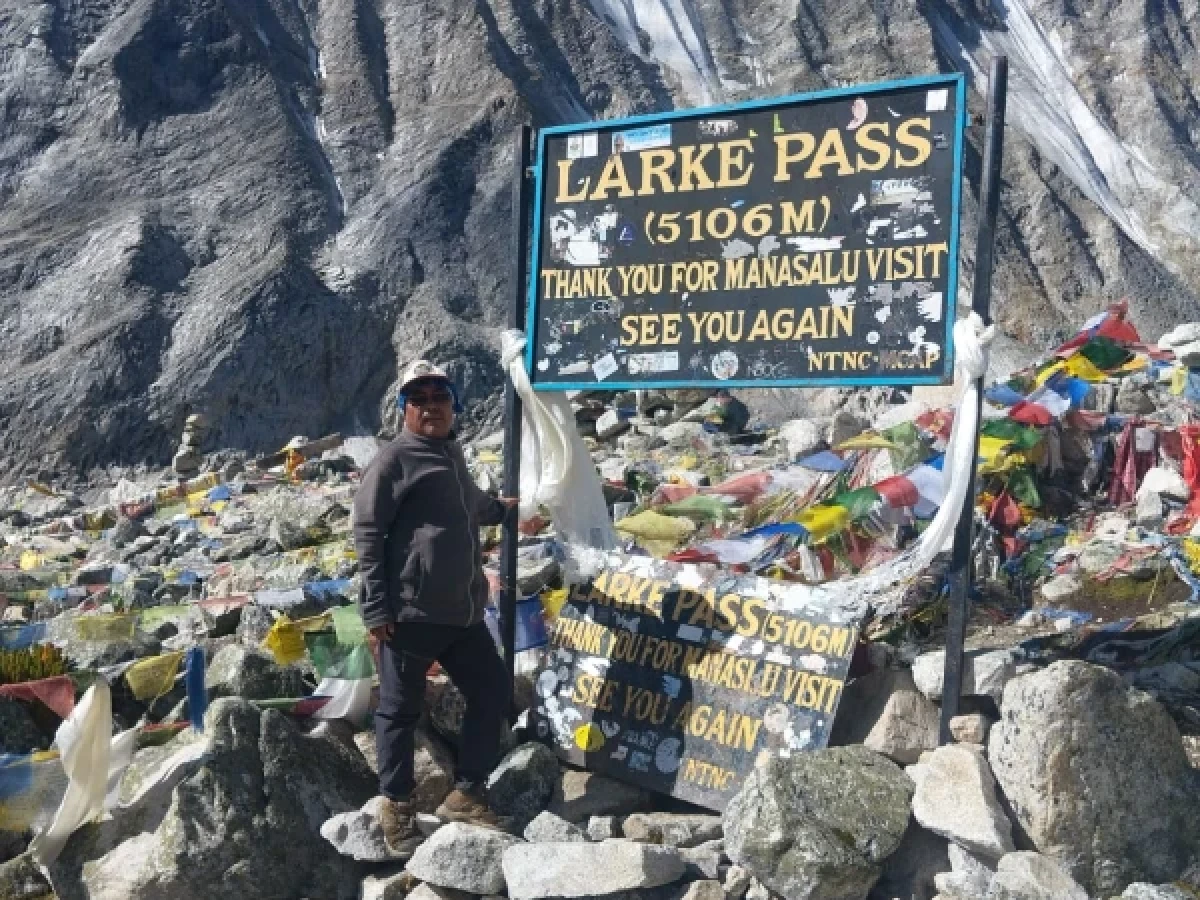
On top of the pass, prayer flags flutter violently in the frigid wind, and Manaslu, Himlung Himal, Cheo Himal, and Annapurna II dominate the extensive vista. So many trekkers shed tears at the pass summit; a mixture of relief, weariness, and simply utter wonder. 

Descending to Bimthang (3,720 m / 12,205 ft) takes just as much focus, as you navigate steep switchbacks, loose scree, and tired legs, which have the potential for you to slip and fall. 

By the time you reach Bimthang, its guesthouses and hot meals will seem like the height of extravagant comfort.

Max Altitude: Larke Pass 5,160 m / 16,929 ft Highest Point, Bimthang 3,720 m / 12,205 ft Meals: Breakfast, Lunch, DinnerAccommodation: Tea HouseDuration: About 8 hours trekDistance: About 16 km

This morning you wake up in Bimthang to discover the very obvious result of yesterday's labor on your legs! Nonetheless, you need to descend for nearly a full 1860 metres today to reach the bottom of the valley and Dharapani in the Marsyangdi River basin below. 

Have a good meal, eat a lot of breakfast and aim to set off early by 7 AM with good light as the first section passes over the Bimthang meadows. You will continue down, leaving the higher altitude meadows behind you and descend into the rhododendron forests which gradually thicken as the altitude falls quickly.

This trek passes from the Tibetan-flavored Manaslu valley to the lower Annapurna circuit area, of which Dharapani (1860m) is the border. Most people’s knees will be killing them this day from so much descending; using trekking poles set for the ‘uphill position ’, and a mindful technique of stepping is helpful. 

Here we stay in a nicer tea house, enjoy a bigger menu and actually manage a hot shower.

Max Altitude: Dharapani 1,900 m / 6,234 ft Meals: Breakfast, Lunch, DinnerAccommodation: Tea HouseDuration: About 7 hours trekDistance: About 21 km

Early in the morning, we will arrange transport from Dharapani to Besisahar (the headquarters of Lamjung District and the start/end point of the Annapurna Circuit), where you take the Prithvi Highway back to Kathmandu. 

This is a really long drive; it’s worth hiring a private jeep for a few dollars more than taking the bus. Just book it via your guide on the night before to be sure. 

Between Dharapani and Besisahar, the road takes lots of switchbacks and drives along the cliff edge of the Marsyangdi gorge, which offers some beautiful but somewhat stomach-clenching views.

The 9-hour bus ride takes us through Dumre and Mugling and around the rim of the Kathmandu valley before plunging into the capital city’s streets. The motion sickness from mountain roads has hit the returning trekkers; bring medicine and secure a seat by the window. Use the travel time to download the images and video you took, phone friends and family, or begin to de-brief from 16 exhausting days. 

You might feel quite culture-shocked upon your arrival in Kathmandu as weeks spent in small mountain villages don’t do anything to soften the impact of the city's noise and crowds. Hop into a Thamel guesthouse, take a proper hot shower (your first in days), and devour any food that you’ve been dreaming of since Day one.

Max Altitude: Kathmandu 1,400 m / 4,593 ft Meals: Breakfast, Lunch, DinnerAccommodation: HotelDuration: About 9 hours driveDistance: About 220 km

Today is your final day of adventure in Nepal. Once you’ve checked out, you’ll be collected by your driver, who will take you to the Tribhuvan International Airport (TIA). Plan to arrive a good three hours prior to your flight, as lines here for both check-in and security can vary wildly from manageable to agonizing. 

Don’t forget to stash your trekking permits, any souvenirs you may have bought along the way and your remaining Nepali Rupees (convert at a bank or exchange house beforehand for a much better rate).

Max Altitude: Kathmandu 1,400 m / 4,593 ft Meals: BreakfastDuration: About 30 to 45 minutes airport transferDistance: About 6 km
Unable to locate what you're seeking?Reach out to our travel experts.
Customize Trip
Cost Details
Includes
  • Airport pick up and drop off by private vehicle
  • 2 nights accommodation in a 3 Star Hotel in Kathmandu with breakfast
  • Tea house accommodation during the trek on twin sharing basis
  • Breakfast, lunch, and dinner during the trekking days
  • Kathmandu to Barpak transportation by local bus or private vehicle as per itinerary
  • Dharapani to Kathmandu transportation via Besisahar by shared Jeep or bus
  • Experienced government licensed English speaking trekking guide
  • Porter service with one porter for every two trekkers
  • Guide and porter salary, meals, accommodation, insurance, and transportation
  • Manaslu Restricted Area Permit (MRAP)
  • Manaslu Conservation Area Permit (MCAP)
  • Annapurna Conservation Area Permit (ACAP)
  • Required TIMS Card if applicable
  • Duffel bag and trekking map for use during the trek
  • First aid kit carried by the guide
  • All applicable government taxes and service charges
Excludes
  • International airfare to and from Nepal
  • Nepal entry visa fee
  • Travel and high altitude rescue insurance
  • Lunch and dinner in Kathmandu
  • Personal trekking equipment and gear
  • Hot showers, WiFi, battery charging, and laundry services during the trek
  • Alcoholic beverages, soft drinks, bottled water, tea, coffee, and snacks
  • Personal expenses and shopping
  • Tips for the guide and porter
  • Extra accommodation and meals due to flight delays, road blockages, weather, illness, or any unforeseen circumstances
  • Any services not specifically mentioned under the cost includes section
Essential Information

Manaslu Circuit Difficulty Level

The Manaslu Circuit Trek is considered one of the more difficult journeys, so it is not the best choice for couch potatoes without a prior history of trekking. Due to the remote setting, elevation, number of daily hours hiking and crossing of the 5,160-metre pass at Larke La, this trek is rated as moderate-hard in difficulty. 

Daily walks last anywhere from four to eight hours a day across suspension bridges, rocky trails, moraine areas and difficult, steep and rocky paths with lots of ups and downs.

Physically, the hardest day is the crossing of the Larke La Pass on day 13, which starts at 02.00 hrs in the dark, crossing glacier rim areas and up snowslopes into an eight-hour exposure to freezing wind. 

This section often surprises the inexperienced even after the steady days of acclimatisation. Altitude sickness is the biggest objective danger; the symptoms of Acute Mountain Sickness (AMS) can set in quite quickly from 3,500m on, no matter how fit an individual is.

Before you take on this challenge, you must be able to comfortably walk between six and eight hours on uneven ground, carrying 8–10kg (20–22lb) on a daypack. This should be built up over three to four months prior to your expedition, through regular cardiovascular fitness, stair climbing, and long weekend walks.

Airport Pickup and Hotel Transfer

After you've finished customs and immigration in the international arrivals terminal at Tribhuvan International Airport, your adventure really begins. A guide from your trekking company will be waiting for you just outside the exit gates, holding a sign bearing your name, so confirm these details in your email prior to travel, at least two days in advance of leaving.

The ride from TIA to your destination in Thamel usually takes 30–45 minutes, depending on just how bad traffic is on Kathmandu's roads, which is normally terrible at rush hour in the mornings and evenings.

Nearly every legitimate trekking company has the airport pickup in their package deal. We ensure your seamless pickup process at the airport through our company's representatives.

When you get to your resort room, get in touch with our representative on their phone and give them your passport and make arrangements for your permit: don’t dally; permits workplace within the Nepal Tourism Board office in Thamel by 5:00 PM Mon –Fri, and on the weekend they're not going to open their doors.

Transportation During the Manaslu Circuit Trek

Transportation for the Manaslu Circuit involves a number of vehicles due to varying terrain types. 

On Day 2 you’ll be taking a local bus or jeep hire from Kathmandu to Arughat Bazaar, and then further along progressively worsening roads toward Barpak; a 7-hour ride of roughly 160 km on increasingly worse mountain roads. Hire of a private jeep for the route beyond Arughat will be significantly more, but provide infinitely greater comfort.

On day 15, the return journey from Dharapani to Kathmandu by local jeep or tourist bus will take eight or nine hours to travel to Besisahar and onwards to Kathmandu. 

Local buses are cheaper than jeeps, but they will be more cramped and much slower, as well as more emotionally draining than a jeep following sixteen days on the trail. 

Most of the trekking companies now run reserved jeeps back down from Dharapani, so it is worth arranging and paying for this when booking the trip in the first place, as availability goes down dramatically on trekking days during the height of the October and November trekking season.

Food and Meals on the Manaslu Circuit Trek

The food on the Manaslu Circuit Trek will be simple, repetitive and calorie-based rather than haute cuisine. All teahouses will offer you the traditional Nepali staple: dal bhat. This comes in a platter of rice, lentil soup, seasonal vegetable curry and pickle. 

In most villages you can have free refills, and you’ll feel this fuel power your body and replace the lost salt as you climb higher. 

You’ll probably also find some combination of Tibetan bread, porridge, eggs, fried rice, noodle soup, momos, pasta, and pancakes on menus that will become increasingly limited and costly as you get higher and away from Namrung and Samagaun where everything is packed on mules or carried on backs.

New climbers frequently do not eat sufficiently because they suffer mild nausea as a result of altitude sickness. Still, it is really important to keep your food intake up even if your appetite has lowered. 

Accommodation During the Manaslu Circuit Trek

The accommodation is exclusively teahouses, essentially family houses that have been transformed into lodges with both rooms and dining facilities under one roof. Accommodation is radically different for low- and high-elevation towns. Until Jagat, teahouses seem relatively luxurious with their wooden furniture and solid sleeping arrangements.

Higher up beyond Sama-Gaun, up to Dharamsala, think about basic stone walls, virtually no insulation, and communal bathrooms that can accommodate up to 10 or 20 people sharing them all at once.

What to Expect in a Teahouse on the Manaslu Circuit?

Rooms

In a teahouse room on the Manaslu Circuit, you will most likely find two single wooden beds with foam mattresses, a thin pillow, and one modest blanket. Walls will generally be constructed of plywood or stone with little insulation from the cold mountain night. Not all doors will lock; travel with a small travel padlock for peace of mind.

Above Samagaun, rooms get steadily smaller and colder. Always have a warm sleeping bag with a rating of -10 deg C as the blankets provided at the teahouse above 3,500 meters won’t cut it.

Toilets and Showers

Below Jagat, most of the tea houses feature squat toilets and minimal privacy and cleanliness. Above Philim, you begin to see Western-style sit-down toilets, but even these are unreliable. 

Lower down the trail, there are hot showers, but they are extremely rare from Namrung and up, where the sun becomes intermittent in its warming capacity. Take showers that require cold buckets of water, or no showers at all at the villages of Dharamsala and Samdo. 

Pack wet wipes that are biodegradable, dry shampoo, and hand sanitizer for your daily hygiene routine. Most trekkers do not take a real shower for 3 or 4 days at elevations over 3500m, so get ready to make the best of it.

Heating

Rooms are not heated on the Manaslu Circuit. Generally, there is one stove, fueled by wood and/or yak dung, in the common dining room, where all guests huddle for warmth each night; it is the focal point of the evening in every teahouse. 

Above Samagaun, ambient temperatures regularly dip to below -10°C, from October to December. Put on your complete thermal base layer, fleece mid-layer, and sleeping bag inside your room. Do not operate any gas-burning appliance inside any enclosed space due to a risk of CO (carbon monoxide) poisoning.

Electricity and Internet

Almost all the teahouses on the Manaslu Circuit are powered by solar panels, and this gives very little electricity, mostly enough for lights and charging devices like phones. 

Expect to pay between 200 and 500 Nepali Rupees (NRs) for a phone or power bank charge, depending on the altitude of the village and the amount of sun. Take a large capacity power bank (at least 20,000 mAh) to limit your dependence on teahouse charging facilities. 

WiFi is available in villages below Namrung (eg. Jagat and Philim) but completely non-existent higher up. Ncell SIM cards with data connectivity work up to about Samagaun on a clear day.

Drinking Water

Don't drink tap or untreated river water on the Manaslu Circuit, no matter how clean it may look. Most teahouses sell bottled water, but that adds up to a lot of plastic bottles on a delicate conservation trail. 

Bring a 1.5-liter Nalgene or Hydrapak and a pack of purification tablets, a SteriPen UV purifier, or a Sawyer Squeeze filter, and you can get boil water from the kitchen at every teahouse to filter through the bottle. 

The cost of getting boiled water from the teahouse kitchen ranges from about 100 to 200 rupees for a liter.

Best Time To Go On 16 Days Manaslu Circuit Trek

Spring Season (March to May)

Spring conditions provide clear mountain vistas, moderate temps, and stable weather, which means Spring is arguably one of the top seasons for beginners. The trail between 2000 and 3500m reaches daytime temps of 10 - 20 C (though higher on trails above 3500m, temps will dip below zero at night). 

Rhododendron blooms in red and pink in the forested sections of the trail between Jagat and Namrung, offering a wonderful highlight on the valley trek. 

Early March may see patches of snow remaining in places above Larke La; a few micro-spikes may be needed in such conditions. From mid-May, there tends to be a build-up of clouds in the afternoon and summit views can be obscured. 

This season has a constant stream of trekkers, and it doesn't experience the same overwhelming numbers as seen around Everest; the teahouses will all be open but generally not bursting at the seams.

Autumn Season (September to November)

Autumn is the safest and best time to do the Manaslu Circuit Trek, as the post-monsoon days are usually crystal clear and offer unhindered views of Manaslu, Himalchuli and Annapurna II. 

Comfortable daytime temperature at mid-altitude is between 12-18°C, and nighttime can drop well below 0°C above 3500m. The trail dries up after early September. 

October also has the cleanest and snow-free Larke Pass. October also has the highest permit applications, so be sure to book well in advance. Teahouses at Dharamsala are popular with October trekkers.

Off-Season Trekking on Manaslu Circuit

Monsoon Season June to August

Monsoon presents very wet and humid conditions with numerous landslides and leeches below 3,000m. There is a very high chance of at least daily rain, and as such, there is a considerable risk of landslides on the Budhi Gandaki gorge and particularly between Machha Khola and Jagat.

Water levels in rivers swell greatly; some river crossings can be much more treacherous. Mountain views, particularly of Manaslu 8,163m, will often be obscured by heavy cloud cover. However, rain and leech risk decreases markedly as one gets towards the border of Tibet and passes over Samagaun due to rain-shadowing effects.

Trails can become quite boggy and slippery, leading to a much higher probability of falling for those new to trekking. This season should really only be tackled by seasoned, hardy trekkers with very flexible departure dates. Delays between Kathmandu and Arughat during the very height of the monsoon week are still the norm.

Winter Season December to February

You can do the winter Manaslu Circuit trek, but it’s the equivalent of being “difficult” multiplied by ten. Above 3,500m, night temperatures on the trek routinely drop well below -15C. Heavy snowfall at Larke La pass sometimes prevents transit across it, especially after post-January blizzards.

In Samdo and Dharamsala, your options are very few, as tea houses often simply close during winter, and there are too few customers for two rooms to be open, for example.

But! There is a silver lining; on clear, stable days the winter views from the trek and Larke La are spectacular, and the trekking path will be empty, as few have the courage, preparation and sheer dumbness to attempt it.

Only trekkers who are fully experienced, properly equipped with winter trekking kit and accompanied by the very best guide will even consider traversing Larke La during winter.

Permits & Regulations for Manaslu Circuit Trek

As the Manaslu Circuit Trek enters an extremely delicate restricted border zone, close to Tibet, trekkers need to obtain 3 different special permits and strictly follow the government’s regulations. Trekkers aren’t allowed to travel individually. Earlier, Nepal Immigration Department said a minimum number of two persons along with a registered Nepali guide must be ensured to organize any trek. However, a new provision stated that a solo trekker can do trekking to Manaslu Circuit Trek with the presence of a registered Nepali guide (updated on March 2026).

Manaslu Restricted Area Permit (RAP)

This is the most important of all trek permits as it covers your travel between Jagat and Dharapani within the region. The Manaslu Restriction Area permit is priced differently depending on the season. The charges from September to November are $100 for 7 days and $15 for an extra 7 days. 

The fees reduce from December to August, as it will be $75 for 7 days and $10 per day from the eighth day. It differs from other permits as the date on which you enter and exit the restriction zone should match the date printed on the permit; otherwise, you will have to pay a penalty at checkpoints.

Manaslu Conservation Area Permit (MCAP)

Every trekker needs to have a Manaslu Conservation Area Permit (MCAP) to enter the Manaslu protected region, which is looked after by the National Trust for Nature Conservation (NTNC). It is about NPR 3,000 (approximately USD 23 to USD 25) for foreign nationals, while for SAARC nationals, it is NPR 1,000. 

The validity of the MCAP once you have entered doesn’t have any time limit as long as you are within the conservation region without exiting and re-entering. This permit fee goes for local biodiversity conservation projects and community development projects of the Manaslu region. 

The MCAP permit is usually checked at the checkpoint in Jagat for the first time.

Annapurna Conservation Area Permit (ACAP)

As the Manaslu Circuit trek ends at Dharapani and follows the Marsyangdi River down into the Annapurna Region, you need to buy an Annapurna Conservation Area Permit. It is priced the same as MCAP: NPR 3,000 (International) or NPR 1,000 (SAARC). This is necessary since you end the last two days of your trip in ACAP. 

Even if you only spend 24 hours in the ACAP region and drive off to Besisahar later, you need to have your permit, which the rangers will inspect at the checkpost in Dharapani.

Travel Insurance for Manaslu Trekking

Travel insurance for the Manaslu Circuit is essential as this high-altitude and remote trek comes with significant health and safety considerations. Your insurance must include helicopter rescue and medical expenses coverage up to 6,000m, given the Larke La Pass passes through over 5,000m. 

Be careful as most standard travel insurance plans do not include "mountaineering" and may also have coverage caps of 3,000m – check what these are when you sign up with a provider. 

The insurance must include "search and rescue" and "repatriation." Keep a physical copy of your insurance certificate and its emergency contact number (usually the 24-hour hotline number) with you to hand to your tour operator and guide.

Tourist Visa for Manaslu Circuit

You will need to obtain a valid Nepali Tourist Visa in order to come to the country for the Manaslu Circuit Trek. For the vast majority of nationalities, you will be able to acquire a Visa on Arrival in Kathmandu at the Tribhuvan International Airport (TIA). 

You must always check the current validity of a Visa on Arrival for your own country's passport before you leave home, though. Fees for visas are accepted in any of the major currencies –USD, EUR or GBP, and the current prices are $30 (15-day visa), $50 (30-day visa) or $125 (90-day visa). 

As you are on a 16-day programme, you will need to buy at least a 30-day visa so that you can give yourself enough time to arrive, prepare, and accommodate the unavoidable delays the mountains might give you in Larke La.

The Nepal Immigration website will have an online Pre-Arrival Visa application to fill in, which you have to print out and bring along, with its barcodes. Remember your passport should be valid for at least six months, from the date of entry, and with a blank page for the sticker. A fresh passport-size photo is handy, in case you can’t upload an e-version. 

Not all nationals qualify for the on-arrival visa facility; some are required to have secured the same from a Nepalese diplomatic mission abroad before your arrival. Always bring extra cash, as sometimes there are issues with the connectivity for the credit card machines at TIA.

FAQs

Yes, with decent physical condition, prior preparation, and a licensed tour guide, beginners can complete the trek. But a multi-day trekking experience is highly advised, as this trip involves long walking days and trekking across Larkey Pass (5,160 m).

This is a restricted trekking area, which means it requires special permits and you'll need to have a licensed guide. This is why Manaslu offers so few tourists to most of its routes compared to Everest and Annapurna treks.

The major challenge lies in crossing Larkey Pass, because it is at a very high elevation and consists of a prolonged and difficult climb. Experienced trek leaders guide most of us to clear the pass with an acclimatized approach; walking at a moderate and rhythmic speed and by the kind of grace provided by the weather.

No. You can’t trek individually in the Restricted Area like the Manaslu region. You need to trek with certified local guides and follow the regulations required by the government.

Our route via Barpak first follows remote trails through ancient Gurung villages before connecting into the classic Manaslu Circuit, giving you an alternative, more cultural, and more peaceful start to the trip, as well as more landscape variety.

If you want a Himalayan experience that is a little more off the beaten track and authentic, with villages showing strong Tibetan influences, fewer trekkers, and a challenging high-pass crossing (arguably one of Nepal’s most spectacular), a trek on the Manaslu Circuit is your calling.

We offer experienced Nepalese guides, itinerary planning assistance, trek permit, tea house trekking services (with proper meal included), honest price for the cost. If needed, contact us, we'll be happily supporting 24x7 for 365days a year to provide you with great trekking memories.

Yes. It is possible to customize the itinerary by adding extra rest/acclimatization days, side treks, or to alter the pace to your fitness level and timeframe. Private departures can allow the maximum amount of flexibility.

Yes, but connection is limited – there’s mobile reception in some of the villages, and many teahouses are selling Wi-Fi at a rate. Still, the connections get progressively slow and patchy the higher you ascend into the villages.

High altitude trekking travel insurance with emergency evacuation by helicopter is highly recommended although it is not legally required for every traveller.

Call to our expert 24/7
Bhupendra Adhikari
+977 9851029611
travelers choice
An Authentic Manaslu Experience

If you wish to have a proper feel of the Himalayas, go ahead and make your booking with View Nepal Treks. Their local guides provided genuine culture, monastery visits, and...

read more +
April 15, 2026
M
Malachy Prince
- United Kingdom
Professional Guides and Excellent Service

From the very start, I found the level of customer service to be highly impressive, from booking with View Nepal Treks right up to the point of departure! There was...

read more +
September 16, 2025
R
Robyn Nolan
- Morocco
Incredible Value for Money

One of the best decisions I ever made was hiring View Nepal Treks. It all came together neatly in one package; everything I needed, no surprising costs. Accommodation in the...

read more +
May 13, 2025
R
Rhiannon Velasquez
- Singapore
You May Also Like
Hidden valley trek
Larke La Pass Manaslu CIrcuit
Starting From
US$1600US$1700
Manaslu Expedition
Starting From
US$30000
Manaslu Circuit Trek 14 Days Cost 2026, 2027
Manaslu Circuit Trek - 15 Days
Starting From
US$930US$1050
Need Help? Call Us.+977 9851029611