Best Time for Nepal Tibet Bhutan Tour - Month-by-Month Weather
It is important to note that there is no month when all three destinations have the same weather. Chitwan is located in Nepal's warm lowlands, while Lhasa is situated at about 3,650m (11,975ft) altitude, and there are other climatic seasons and temperatures in the western valleys of Bhutan.
However, for this specific tour, the best months for this journey would be October and November, followed by March and April.
March to May - Spring Conditions Across All Three Countries
March and April provide pleasant weather for sightseeing in Kathmandu and Pokhara while Bhutan's valleys are turning greener. The spring flowers and rhododendrons make for another sight to see on the roads of Bhutan.
The temperature in Lhasa is cooler, particularly in the morning and evening. It should be noted that people should not pack the stuff for Tibet according to the temperatures in Chitwan.
As for May, there is a temperature increase in Nepal, and cloud formation in the afternoon becomes more frequent.
September to November - Autumn Weather and Himalayan Visibility
The months of October and November are particularly appealing for this particular itinerary. The monsoon rains have mostly dissipated in Nepal, and mountain views may improve in the Himalayas. In Bhutan, the fall season is associated with mountain visibility and cultural festivals.
Lhasa starts getting colder, especially in November. September’s weather can be less predictable since monsoon weather conditions might continue in Nepal and Bhutan.
June to August - Nepal's Monsoon and Travel Limitations
This is the most challenging period in terms of logistics for this itinerary.
Rainfall may hinder the highways between Kathmandu-Chitwan-Pokhara, and Chitwan Park officials may impose restrictions on jeep safaris during the monsoon. Rainfall occurs in large amounts during the summer in Bhutan too.
Lhasa will have relatively pleasant daytime weather, but this does not mitigate road and flight hazards elsewhere.
December to February - Winter Travel in Tibet and Bhutan
Winters may also be a viable option for travelers who like cold weather. Nevertheless, winters may become extremely cold in Lhasa, and snowy or icy roads could be encountered when travelling at higher altitudes in Bhutan.
On the other hand, Chitwan is relatively warm, and hence there would be a significant difference in temperatures during the same holiday.
Monthly Weather and Travel Suitability
|
Month
|
Overall assessment
|
Main consideration
|
|
January
|
Possible with winter preparation
|
Cold Lhasa and high passes
|
|
February
|
Variable
|
Winter conditions
|
|
March
|
Recommended
|
Spring weather
|
|
April
|
Recommended
|
Generally favourable sightseeing
|
|
May
|
Good, increasingly warm
|
Clouds and rising temperatures
|
|
June
|
Less suitable
|
Monsoon begins
|
|
July
|
Challenging
|
Heavy rainfall and road disruption
|
|
August
|
Challenging
|
Monsoon restrictions
|
|
September
|
Improving
|
Uncertain monsoon withdrawal
|
|
October
|
Highly recommended
|
Popular autumn travel
|
|
November
|
Highly recommended
|
Clearer conditions, colder nights
|
|
December
|
Possible
|
Winter temperatures
|
October and November would be our preferred choices for travelers who have inflexible travel dates.
Nepal Tibet Bhutan Visa Requirements and Travel Documents
This is where tourists should understand the issue before buying non-refundable international tickets.
In the case of an itinerary including entry into Nepal on day one, returning from Tibet on day 11, and returning from Bhutan on day 16, it means that the traveller needs to have permission to re-enter Nepal.
Nepal Tourist Visa and Multiple-Entry Requirements
Most eligible foreign visitors can acquire the tourist visa either upon arrival in Nepal or through the appropriate advance application process. The Nepal tourist visa normally has a multiple-entry facility.
The most common categories of the visa are 15 days, 30 days and 90 days; however, the traveler has to get a visa according to their itinerary and nationality.
In this case, a 15-day visa is not advisable since the last re-entry into Nepal will be outside the validity of the visa. It is better to check the entire duration of the 17-day trip.
The Nepal Immigration Department is very clear that the tourist visa will be a multiple-entry visa.
Tibet Travel Permit, Chinese Visa and Entry From Nepal
Foreign tourists require a valid Tibet Travel Permit and must comply with Chinese immigration rules.
There may be differing admission rules for tourists arriving in Tibet from Kathmandu and those arriving in Tibet from mainland China. Whether a visitor requires a visa will depend on current legislation together with any special circumstances applying.
It is recommended that you firstly ascertain precisely what is required from the recognised Tibet travel agency, before disclosing details of your passport.
Whilst it may appear that a regular Chinese tourist visa would suffice for admission into Tibet, this is not necessarily the case.
Admission into Tibet from Nepal is of particular importance as there is an overnight stay in Kathmandu as part of the tour prior to travelling to Lhasa.
Bhutan Tourist Visa and Sustainable Development Fee
Most visitors will require a visa to enter Bhutan.
In addition to a visa, Bhutan also collects a Sustainable Development Fee (SDF). From November 2026, the general SDF fee for most adults (excluding Indians) is USD 100 per night. There are, however, variations to this fee depending on a visitor’s nationality and age.
On a four-night visit to Bhutan (including Thimphu, Punakha and two nights in Paro), the general SDF for adults would equal USD400.
The Bhutan tourism board states that the discounted SDF will remain in effect until December 31, 2029.
Passport Validity and Immigration Documents
Ensure that your passport is valid for entry into Nepal, China/Tibet and Bhutan, together with any other countries that you may be transiting through.
Visitors should ensure they have:
- Passport copies equivalent to their flight ticket.
- Visa and permission to travel approvals.
- Flight confirmation.
- Insurance information.
- Local agent contact details.
- Hard and soft copies of relevant information.
Typing errors in a passport can often cause more problems than even a disrupted sightseeing schedule, when compared to your air ticket.
International Flights Between Kathmandu, Lhasa and Paro
The itinerary contains four regional international flight sectors:
|
Tour day
|
Flight sector
|
Purpose
|
|
Day 08
|
Kathmandu - Lhasa
|
Enter Tibet
|
|
Day 11
|
Lhasa - Kathmandu
|
Return to Nepal
|
|
Day 12
|
Kathmandu - Paro
|
Enter Bhutan
|
|
Day 16
|
Paro - Kathmandu
|
Return to Nepal
|
These four sectors are fundamental to the structure of the tour. They should not be treated as interchangeable with overland transfers.
Kathmandu to Lhasa and Return Flight Arrangements
Although there are usually around 5 flights a week on the Kathmandu- Lhasa route, this can differ between companies and also depending on the season.
Flight Connections
Days 8 and 11 need to be aligned with the airlines’ flight schedule. Should appropriate flights not be available on the required days, then perhaps the start date of the holiday can be changed so that the complete holiday can still proceed. We would never compromise the 2 full days in Lhasa in order to accommodate poor flight connections.
Kathmandu to Paro and Return Flight Arrangements
Both Drukair and Bhutan Airlines operate flights between Kathmandu and Paro. Even though Drukair does provide a regular service on this route, it is still advisable to check both the date and availability of flights.
Furthermore, the mountainous location of Paro Airport could also cause flight issues, and this may depend on the weather conditions. For optimum planning, it would be ideal to ascertain Bhutan’s flight information first so that subsequent arrangements for the party can be made.
Flight Availability and Schedule Changes
The most sensitive connection in this schedule is between Days 11 and 12: the traveller travels back from Lhasa to Kathmandu and travels from Kathmandu to Paro the next day. This gives little room for recovering from an airline delay in the previous leg. In case of a delay of the flight from Lhasa, there might be disruptions in the arrangements for Bhutan.
The suggested approach would be to have these flights arranged as one sequence rather than buy tickets for the sectors separately without coordinating them.
Baggage Restrictions Across Different Airlines
Travelers must not expect the baggage allowance at the arrival airport airline to apply to Lhasa and Paro sectors. The baggage allowance of weight and size varies according to the airline, class and the ticket purchased.
It is especially important for travelers having large suitcases or cameras. Check baggage allowance for the 4 regional airlines in the schedule of 17 days.
Altitude and Acclimatisation During the Nepal Tibet Bhutan Tour
Flying Directly From Kathmandu to Lhasa at 3,650 m (11,975 ft)
For our trip, we will travel from an elevation of about 1,400 m (4,593 ft) in Kathmandu to an elevation of 3,650 m (11,975 ft) in Lhasa on Day 8. Therefore, we will be climbing by about 2,250 m (7,382 ft) on Day 8. As opposed to hiking, our travel will not offer time for us to acclimatize as we go higher.
Rapid arrival above an altitude of 3,400 m (11,150 ft) is considered a risk factor for altitude sickness by the CDC. This is the reason why we have planned to use Day 8 only for travel and resting before visiting the Potala Palace.
Recognising Altitude Sickness During the Lhasa Stay
Altitude sickness can present with a headache, nausea, dizziness, fatigue, and trouble sleeping. These signs and symptoms often develop after arriving at altitude rather than during the flight.
Travelers are advised not to engage in any strenuous activity after they arrive in Lhasa and to notify anyone who develops any signs. Difficulty breathing at rest, mental confusion, and inability to walk straight are signs that require immediate medical attention.
Altitude at Dochula Pass and Tiger's Nest
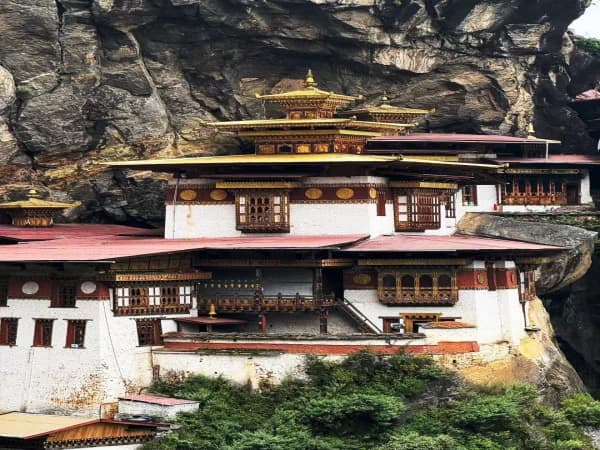
Eventually the route ascends to Dochula Pass (approx. 3,100m/10,171ft) and Tiger’s Nest Monastery (approx. 3,120m/ 10,236ft). Although this is below the level of Lhasa, there is still considerable physical demand in completing the Tiger’s Nest Monastery path.
Whilst on the walk there will be both climbing and steps to negotiate. It is important that guests recognise the distinction between the effects of high altitude and the physicality of completing the walk.
Medical Conditions Before Booking
People with pre-existing heart or lung issues, a history of severe altitude sickness and/or other medical concerns should consult with a medical professional prior to commencement of travel. Individuals must tailor their own medical treatment. Acetazolamide may be taken but again, due to the lack of long-term trekking, we cannot deem this tour suitable for all medical profiles.
Accommodation Standards
Hotels in Kathmandu, Chitwan and Pokhara
Kathmandu and Pokhara have a wide choice of hotels offering bathrooms, restaurants, internet and various levels of comfort. Accommodation in Chitwan is typically tailored for nature-based tourism. Depending on the facility, accommodation can be in a garden setting or small buildings. Choice of hotel affects the convenience of wildlife tours and evening transfers. It is more convenient for this trip to stay at an accommodation close to the point where you will start your Chitwan wildlife tour, rather than select an accommodation with a lower price.
Hotel Facilities and Heating in Lhasa
Because of the high altitude and colder weather conditions, heating facilities become crucial for your comfort. A hotel room that seems very nice and comfortable in pictures may have different heating facilities than those in Kathmandu.
It is highly recommended to verify this information beforehand, especially for winter departures.
Accommodation in Thimphu, Punakha and Paro
Apart from contemporary hotels, more traditional Bhutanese buildings are also available for people to stay in. Compared to both Thimphu and Paro, Punakha is warmer as it is on a lower level within the valley.
As we would otherwise have to undertake yet another arduous journey to Thimphu, Punakha has been chosen as our place to stay overnight.
Twin-Sharing, Single Rooms and Upgrades
Whilst some people may wish to book a single room, others may prefer twin and/or double rooms. Any single supplements, room upgrades and additional nights must be specified.
Road Transportation and Driving Conditions in All Three Destinations
Although the Nepalese section of our tour contains the most extensive long-distance driving, in Tibet, transport is predominantly airport-to-airport and local sightseeing in Lhasa. For Bhutan, the mountainous roads result in shorter road journeys.
However, we cannot simply analyse these tours in terms of kilometres travelled.
Kathmandu - Chitwan - Pokhara Highway Conditions
The route takes you to Kathmandu to Chitwan on Day 3, Chitwan to Pokhara on Day 5; and Pokhara to Kathmandu on Day 7. The route passes through Nagdhunga, Naubise, Malekhu, Mugling, Narayangarh, Dumre and Damauli. Although the Narayangarh- Mugling part is surrounded by hills and the Trishuli River, sections of the Mugling- Pokhara route have seen major highway enhancements.
It is emphasised that days 3, 5 and 7 should still be used for travelling. Extra safari or sightseeing on these days would suffer from regular highway congestion.
Airport Transfers and Sightseeing Vehicles in Lhasa
Approximately 60 kms of roads are used for the airport to and from Lhasa along the Yarlung Tsangpo and Lhasa Rivers. Within Lhasa, the vehicle circulates places of interest. However, visitors must walk within places of worship.
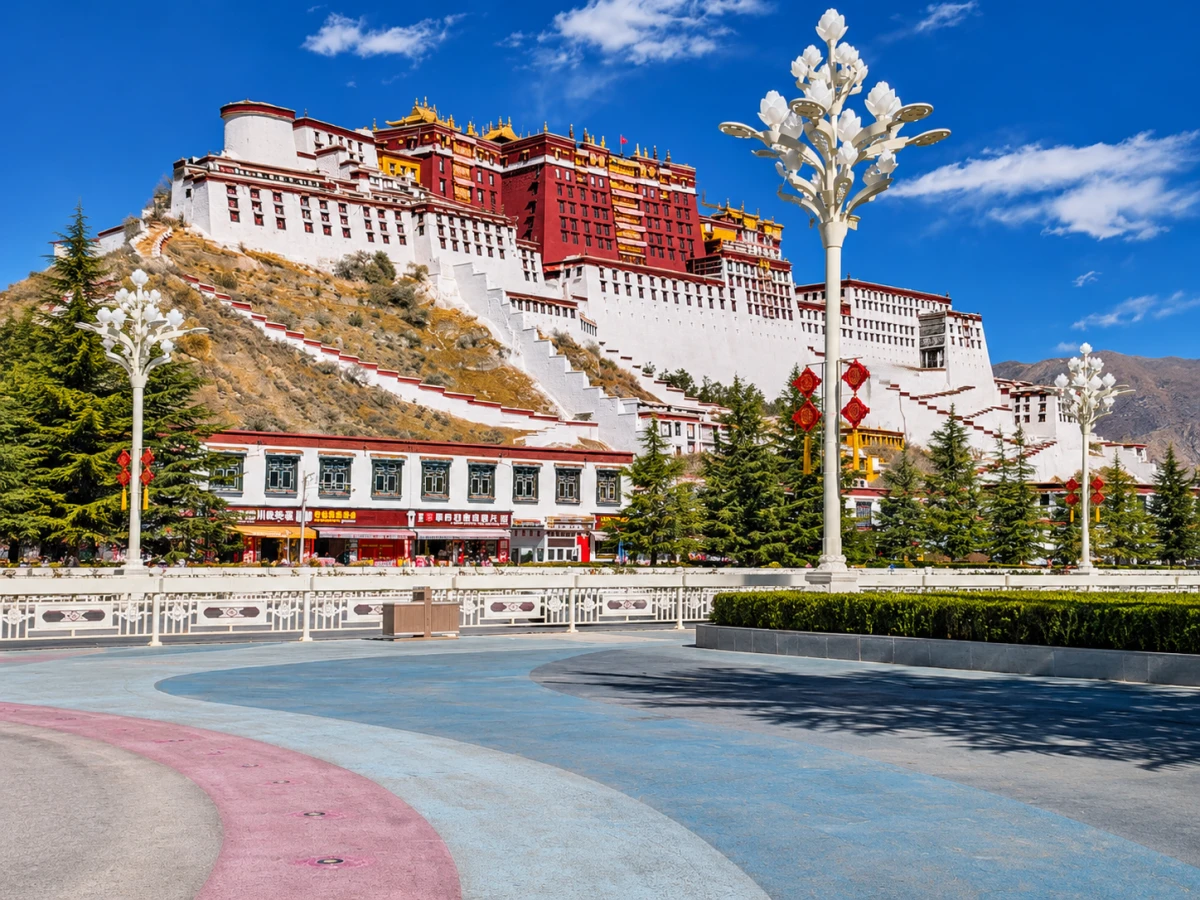
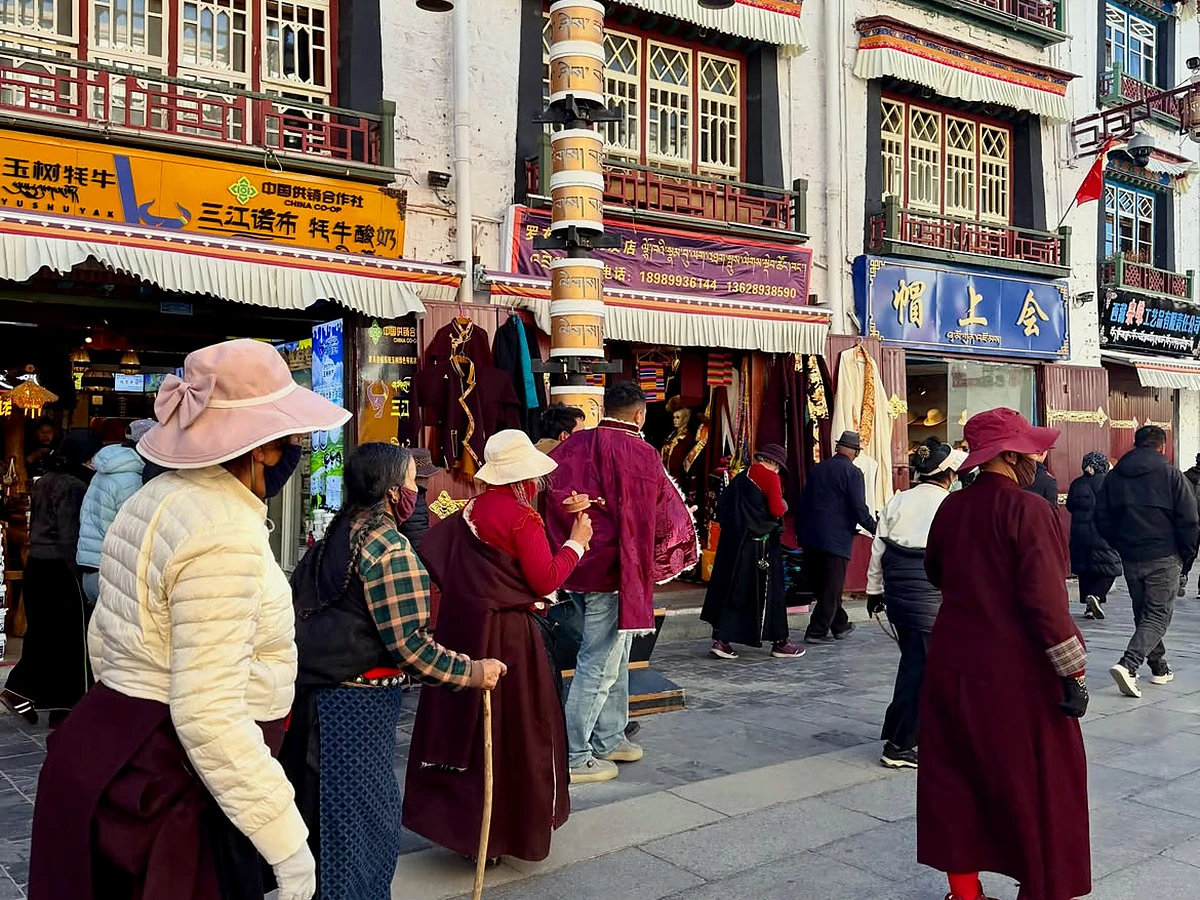
Such places include the Potala Palace, Jokhang Temple and Barkhor. Not all can be viewed from a vehicle.
Mountain Roads Between Thimphu, Punakha and Paro
In Bhutan, the road routes go first to Thimphu, Dochula and Punakha. Then Paro is also accessible by road. These include woodland, hilltop villages and mountain bends.
Dochula Pass can reach approximately 3,100 meters (10,171 feet) and in winter it may be misty, wet and/or snowy. Although the distance between Thimphu and Punakha is not great, we would like to emphasise that this is not necessarily a quick city-to-city journey.
Private Vehicles and Luggage Space
Both the number of people and the amount of luggage must be taken into account. Generally, seven people travelling with large cases will require a different vehicle set-up than seven people with smaller cases.
The suitable vehicle(s) must be/are chosen according to the actual booking details rather than simply by the number of seats available.
Meals and Drinking Water During the 17-Day Tour
Nepali Meals in Kathmandu, Chitwan and Pokhara
Dal bhat is commonly eaten in Nepal and consists of rice, lentils and either vegetarian or meat-based curry. In Kathmandu, Newari food is also served, which includes items such as bara and yomari. There are many international restaurants within Thamel.
Within Chitwan, local food is cooked with a base of rice and also contains fish and vegetables. Pokhara has a mix of local and international restaurants centred around its Lakeside. Alongside our hotels’ buffet facilities, we would suggest that guests try local food in Nepal.
Wherever possible, guests should sample local food.
Tibetan Food and Dining in Lhasa
Thukpa (soup containing noodles), momos and tsampa (roasted barley flour) as well as butter tea can potentially be eaten in Lhasa. On the Tibetan plateau, Tibetan food is influenced by the surrounding area and what can be farmed there.
Whilst the food on offer in more modern restaurants is wider in scope, butter tea is noticeably different from the milky, sweet tea consumed in Nepal. It is in fact salty and greasy in nature.
Bhutanese Cuisine and Dietary Requirements
Bhutanese food is highly flavoured with both chillies and cheese. One of the most famous Bhutanese foods is ‘ema datshi’. Other foods include potatoes, fungi and local vegetables.
The level of heat of Bhutanese chillies can be far greater than visitors are used to. Typically, vegetarian food can be sourced, although it is essential that special dietary needs, including allergies and being vegan, are discussed before the tour begins.
Drinking Water and Food Hygiene
Filtered or bottled water should be consumed. Tap and river water should be avoided. This is particularly so in the hotter months in Chitwan and whilst walking along the Tiger’s Nest trail.
Individuals with delicate digestive systems should avoid raw food and drinks prepared using questionable water supplies. Details of the food that is provided as part of the tour must also be given.
Physical Fitness and Walking Requirements for the Tour
Whilst this is not exclusively a walking or a car-based holiday, differing locations need to be explored in various ways. For those with a physical disability, excursions to Potala Palace and Tiger’s Nest are frequently of greater importance than other urban sights.
Walking at Kathmandu's Heritage Sites
Kathmandu’s Durbar Square, Pashupatinath and Boudhanath all contain uneven ground. Temples also contain steps. Footpaths are present. Although there are roads near the summit of Swayambhunath, individuals who walk up the typical long flight of steps will often find it difficult to access this site. Those unable to stand for lengthy periods of time should inform us of this in advance.
Staircases and Walking at Potala Palace
Built upon a hill in Lhasa’s centre, Potala Palace has steep steps. Again, the high altitude of around 3,650m (11,975ft) contributes to this.
Even those used to walking at lower levels can suffer from breathlessness. We suggest that guests walk at a comfortable speed on the permitted sightseeing tour rather than attempting to match the walking speed of other parties.
Tiger's Nest Monastery Hike – Distance, Duration and Elevation Gain
The Tiger’s Nest Monastery trek is the most arduous walking excursion in Bhutan. Typically, it is approached from Ramthangkha and ascends through pine trees to the monastery, which is situated at around 3,120m (10,236ft).
Depending on the chosen path, the outward and return leg of this walk is generally between 6- 8 km in length. It generally takes between 4-6 hours to complete. From the main point of commencement, the overall ascent is around 600-700m (1,969-2,297ft).
The final section comprises steps, together with the downhill and then uphill walks to cross a waterfall. Prior to travelling to Bhutan, we advise guests to prepare for this walk. Physical fitness for sightseeing is not generally thought to be as crucial as is often believed.
Senior Travellers, Children and Families
Whilst age is not necessarily a key determinant in whether someone can complete the Tiger’s Nest trek, good walking fitness, together with general health, acclimatisation and support are far more significant considerations.
Parents must establish whether the youngest member of their family can manage the Tiger’s Nest trek. Should guests be unable to complete this, an alternative, more modest walking option can be explored. However, even on this alternative excursion, the aim would still be to reach Tiger’s Nest and not the monastery itself.
Travel Insurance, Medical Facilities and Emergency Arrangements
As a three-nation holiday, often the issue of suitable travel insurance is neglected. Generally, such insurance will provide cover for Nepal but will also contain clauses relating to China/Tibet and Bhutan.
It is highly advisable to investigate an insurance policy’s geographical coverage in advance.
Medical Insurance Across Nepal, Tibet and Bhutan
You should check that your insurance provides:
- Healthcare
- Emergency repatriation
- Insurance for high-altitude excursions in Lhasa.
- Curtailment of holiday and flight connection issues.
- Pre-existing medical conditions.
Despite Bhutan removing the requirement for travellers to have insurance as part of the visa application process in April 2024, it is still not optional.
Emergency Treatment and Evacuation Limitations
Although Kathmandu provides good medical care, sufferers wishing to access specialist medical advice may find it difficult in Chitwan, on the mountain roads of Bhutan and in an emergency in Tibet. Even if tourists have been to all three countries, there is no automatic assurance that they will be able to be repatriated.
When medically repatriating people between countries, as well as considering the patient’s health, it is also important to understand the immigration regulations of the relevant country.
Prescription Medicines and Health Documentation
Tourists should ensure that they have sufficient supply of medication and that it is in the original container. In some instances, medication is categorised differently in different countries.
Cultural Etiquette and Religious Site Entry Rules
Whilst there are commonalities in religion, it is important not to generalise and assume. You will be visiting active places of religious pilgrimage. Primarily, these are for religious purposes and are not for tourists.
Temple Entry Restrictions in Nepal
People who are not Hindus are unable to enter the main temple in Pashupatinath. However, there are areas surrounding the temple which allow tourists to view the temple and also witness activities on the banks of the Bagmati River.
You should avoid photographing both funerary rites and people’s sadness for a deceased relative. Whilst at Boudhanath and Swayambhunath, you should walk in the same direction as the majority of pilgrims, i.e. clockwise, around the main stupas.
Photography at Tibetan Monasteries
There are areas within monasteries, including the Potala Palace, Jokhang Temple, Drepung and Sera, where photography is not allowed. A photography ticket does not allow unrestricted access to take photographs.
Avoid disrupting religious activity and discussions between monks. Ideally, we prefer tourists to focus on one courtyard rather than numerous chapels simply in order to take photographs.
Bhutanese Dzong Dress Codes and Customs
Bhutanese dzongs are both religious and used for government purposes. Alongside other guidelines, it is expected that people will dress appropriately – for example, ensuring that shoulders and knees are covered.
At some religious locations, it may also be necessary to take off your hat. Generally, photography inside temples is not permitted. Within Bhutan, guides are particularly good at explaining the difference between open courtyards, monastic areas and areas which are off-limits to tourists.
Local Guides, Languages and Communication Across Three Countries
It is more appropriate to refer to local guides rather than a tour guide who is an expert on the different religions of Nepal, Tibet and Bhutan.
Whilst a guide may understand much of the culture within Newar Kathmandu, this does not automatically convey an understanding of history such as that of the Gelug Monastery in Tibet and the dzong in Bhutan.
Nepal-Based Tour Coordination
View Nepal Treks will manage the itinerary from their base in Nursing Chowk, Thamel, Kathmandu.
This includes airport transfers, inter-city travel and sightseeing in Kathmandu, Chitwan and Pokhara. Local guides are particularly useful for advising on transport and sightseeing, taking into account traffic and opening hours.
Tibetan Guide Arrangements in Lhasa
Permission must be obtained for foreign tourists to employ a Tibetan guide.
A Tibetan guide can give detailed information regarding places of interest, including Potala Palace, Jokhang Temple and monastic debate. Whilst historical information is provided in guide books, a guide’s religious knowledge is of greater value.
Bhutanese Guides and Sightseeing Support
Tourists to Bhutan must employ officially recognised guides for both sightseeing and for entry to cultural sites.
Such a Bhutanese guide would be able to explain the function of dzongs, local festivals and the religious importance of Tiger's Nest. The Bhutan official tourism guide emphasises the guide qualifications necessary for touring both monuments and dzongs.
Mobile Connectivity and Internet Access
Access to the internet and mobile networks differs between the three areas. Both Nepal and Bhutan have their own mobile network. Tibet is subject to the same regulations on internet access as the rest of China.
Not all international communications and internet pages may be accessible in Tibet. Travelers are asked to advise family members of any difficulties in communications and to maintain paper versions of key contact details and paperwork.
Currency, Payments and Personal Expenses in Three Countries
Travellers must manage three currencies during this itinerary. We recommend keeping the main package payment separate from spending money for meals, souvenirs, additional activities and personal purchases.
Nepalese Rupees and Payment Methods in Nepal
The Nepalese rupee (NPR) is the currency in Nepal.
Cash can still easily be used for payments at restaurants and in shops.
Whilst there are numerous ATMs and money exchange services in both Kathmandu and Pokhara, foreign payment cards can be subject to restrictions and charges.
It is therefore recommended that you exchange a degree of currency upon your arrival so that you do not have to transport large volumes of Nepalese currency for the 17 days of your holiday.
Chinese Yuan and Digital Payments in Tibet
The Chinese yuan (CNY) is the currency in Tibet. Electronic methods of payment are widely used in mainland China, including Alipay and WeChat Pay.
Foreign payment cards may also be associated with these electronic payment systems, provided that suitable verification can be provided.
However, it is incorrect to assume that a standard foreign bank payment card will work in all situations.
Provision of suitable payment methods should be made in advance, and additional yuan should also be sourced in order to facilitate minor payments.
Bhutanese Ngultrum and Indian Rupees in Bhutan
Bhutan uses its own currency: the Bhutanese ngultrum (BTN), which is fixed to the Indian rupee. Furthermore, Indian rupees can also be used in Bhutan. Again, depending on the situation, not all denominations may be accepted.
Although there are ATMs and card payment services in selected towns, cash is still a good method of payment for more modest items.
|
Destination
|
Currency
|
Useful spending arrangement
|
|
Nepal
|
Nepalese rupee (NPR)
|
Cash and cards in major cities
|
|
Tibet
|
Chinese yuan (CNY)
|
Cash and supported digital payments
|
|
Bhutan
|
Bhutanese ngultrum (BTN)
|
Cash plus cards where accepted
|
We recommend budgeting separately for personal purchases instead of treating the package price as an unlimited spending allowance.
Packing List for Nepal Tibet Bhutan Tour 17 Days
Although the length of time spent travelling is not an issue, the temperature variation between Chitwan lowlands, Lhasa plateau and Bhutan mountains is what is problematic. Travelers may find it difficult to adjust to the temperatures in Lhasa (particularly during spring, autumn and winter) if they have only brought light clothing.
Clothing for Chitwan and Tibet
Multi-layered clothing can easily be both added to and taken off. Light clothing is suitable for Chitwan. However, in Lhasa it will be essential to have a warm jacket as well as thermal and wind-resistant clothing. Long-sleeve shirts and long trousers must also be worn when visiting temples and monasteries.
Footwear for Tiger's Nest Monastery
Good quality hiking shoes which provide good grip are required for walking up to Tiger's Nest. It is not recommended that you travel with new shoes as these will not have had the chance to ‘break in’ for long ascents. Alongside the path there are muddy sections, slopes and stone steps. Plus, a compact day bag is useful to transport extra clothing, water and other items.
Electronics and Photography Equipment
- Smartphone or camera
- Charging leads
- Approved power banks and a multi-plug travel adaptor.
- As with cabin luggage, power banks must be transported in accordance with the airline’s guidelines.
When taking photographs within religious buildings, restrictions apply, so these should be noted.
Essential Documents and Medical Supplies
Our recommended list of items for you to take is as follows:
- Applicable passport and travel papers
- Insurance details
- Any medication that you are prescribed
- Well-fitting hiking shoes.
- Warm jacket and multi-layered clothing.
- Light clothing.
- Wet weather clothing (for the rainy season).
- Sunglasses and sun cream.
- Water flask.
- Multi-plug travel adaptor.
- Compact day bag.
We do not advise taking large pieces of trekking equipment, as your journey will comprise just one main mountain ascent.
Flight Delays, Border Restrictions and Changes to the 17-Day Itinerary
The issue with this option is an association between the Lhasa return flight (Day 11) and leaving Bhutan (Day 12). Even after completing the sightseeing component, there can still be an effect on one country due to issues in another.
Missed Kathmandu - Lhasa Flight Connections
If the Day 8 flight cannot go ahead, there may need to be an adaptation to the Lhasa sightseeing component. Advancing the flight by one day will cause a reduction in the amount of time available to be spent at Potala Palace, Jokhang Temple and/or monasteries. Alongside the return flight, the Tibet travel permit must also be assessed and added to the revised programme. The outward flight should also be analysed. Prioritising the correct flights will then occur, followed by amending the Lhasa sightseeing programme.
Bhutan Flight Disruptions
Should the Day 12 flight from Kathmandu to Paro be delayed, this will affect the Thimphu, Punakha and Paro locations. There is a specific order to the nights in these locations: Thimphu, then Punakha and finally Paro.
Failure to include a night in one location, without analysing the driving programme, will create an unviable day for travelling. All variations must be analysed in relation to flights, hotels and activities.
Tibet Entry Restrictions
Tibet travel rules may change. Just because a person has been granted permission to travel on a particular date and programme does not necessarily mean that this can be applied to a different date and/or programme. The local approved travel agency must assess whether the altered programme is allowable.
Additional Accommodation and Expenses
Extra costs will be incurred due to additional hotel nights and/or flight and transport variations. It is the terms of both the hotel bookings and travel insurance which will decide which party is responsible for these extra costs.
We suggest that you maintain an emergency fund and avoid spending all your money on items for souvenirs and other non-essential goods.
Festivals and Public Holidays That May Affect Your Tour
Dates of festivals could prove to be of added cultural value and could also affect transport, hotels and places of worship. It is also advised to research the festival and flight calendars, in addition to researching climatic factors, when deciding on travel dates.
Nepal's Dashain, Tihar and Religious Festivals
Both Dashain and Tihar are significant festivals. During Dashain, many people travel back to where they live, so transport may be busier. Businesses may also have reduced opening times.
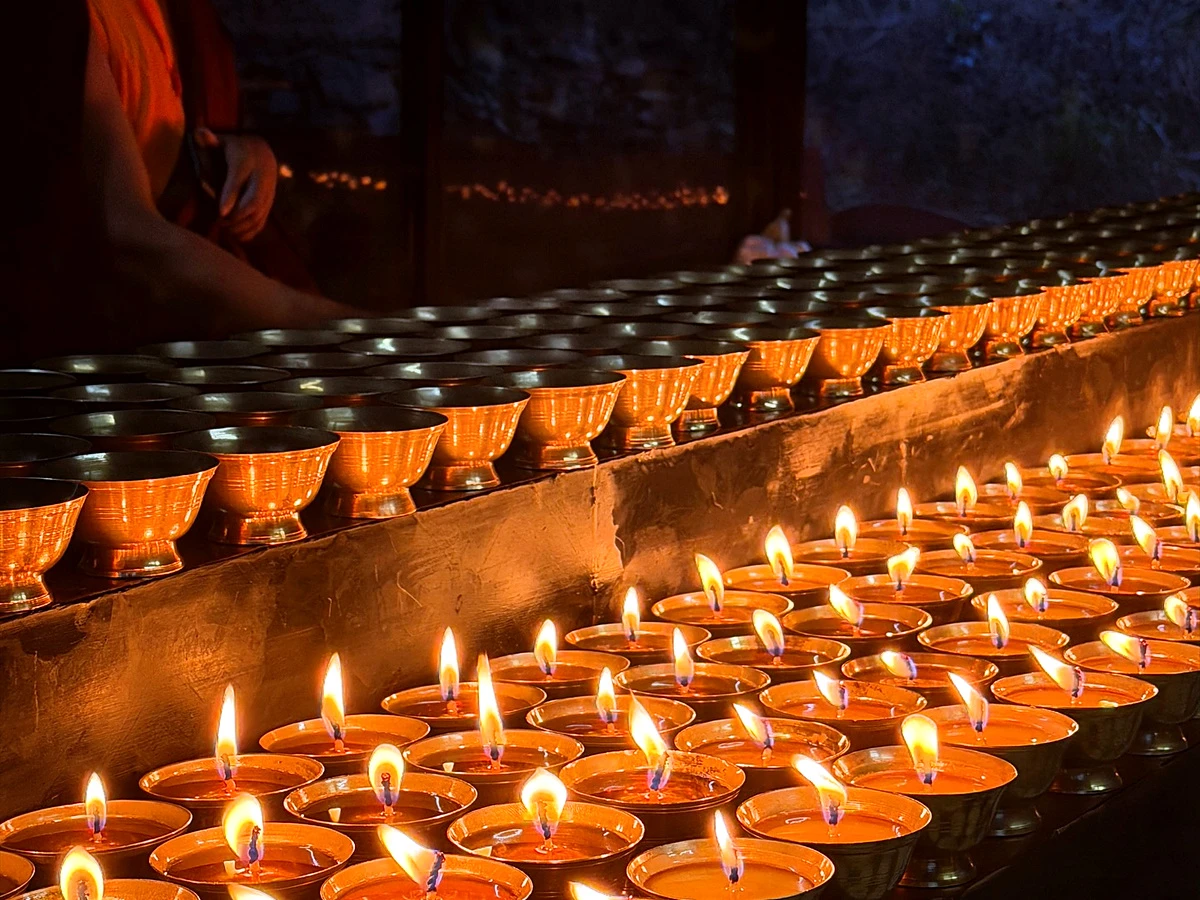
The Tihar festival involves lighting, along with religious and community activities. In Kathmandu, for example, there may also be festivals such as the Indra Jatra Festival.
Tibetan Buddhist Festivals
Lhasa has a number of key Buddhist festivals within its religious calendar. Whilst key festivals are being celebrated, there may also be higher levels of pilgrimage to and around the Jokhang Temple and other places of worship. However, it is not safe to presume that all monasteries will hold ceremonies that are open to visitors. Photography and entry to some areas may be limited during festivals.
Bhutan's Tshechu Festivals
Bhutanese Tshechus consist of masked dance and religious activity. Festival periods can attract high volumes of domestic and international tourists. Hotels within urban areas, including Paro and Thimphu, will therefore likely require pre-booking. Should you wish to visit Bhutan predominantly for one of its festivals, then we would recommend travelling at times that coincide with festival dates. Photography and entry to some areas may be limited during festivals.