Technically, if you are considering going on the Everest base camp trek without a guide, you can't do it; practically, you can. The rules and regulations are somewhat confusing due to the overlap between local and national authorities.
As of April 2023, the Nepal Tourism Board required all international trekkers to use registered trekking guides for all trekking in national parks and conservation areas (including all areas of Sagarmatha National Park, where you will find the base camp of Mount Everest). This rule was put in place to promote the safety of trekkers and create jobs for locals.
The likelihood of being able to complete the base camp independently has changed since the guidelines from the national to the local level were clarified. Simply stated, the local Khumbu Pasang Lhamu Rural Municipality issued an expressly written notice that, as far as they were concerned, there is no restriction to individuals trekking independently within the Everest region. This local authority runs a permit system for the Khumbu area, permitting local authorities to make decisions regarding the enforcement of this national rule.
You may be able to trek to EBC without a guide come 2026, but the rules and the enforcement of those rules are unclear. When entering Sagarmatha National Park and the Khumbu region, you'll need two different permits. You can obtain both permits when you arrive in Lukla or Monjo.
Self-guided trekking on your own is a very different question from the question of whether it is allowed or not. The following sections will discuss the practical benefits and the potential dangers of trekking self-guided to EBC.
Quick answer
Yes — you can trek to Everest Base Camp without a guide in 2026, but only because the Everest region is the exception to Nepal's national rule. The Nepal Tourism Board's April 2023 regulation requires a licensed guide for foreign trekkers in most national parks and conservation areas. However, the Khumbu Pasang Lhamu Rural Municipality — the local authority that governs the Everest trail — has publicly confirmed that solo and independent trekkers are allowed in the Khumbu region. You need two permits (Sagarmatha National Park Entry Permit and the Khumbu Pasang Lhamu Rural Municipality Permit) and no TIMS card. Enforcement is set locally and can change, so confirm the current status before you fly.
Prefer to skip the permit queues and altitude guesswork? See our fully-supported Everest Base Camp Trek — guide, permits and Lukla flights handled.
Is a guide mandatory for Everest Base Camp in 2026? No — not in the Everest (Khumbu) region. While Nepal requires guides for foreigners in most trekking areas, the local Khumbu Pasang Lhamu Rural Municipality permits independent trekkers. EBC is currently the main mainstream Nepal trek you can legally do solo. A TIMS card is not required.
Can You Trek Everest Base Camp Without a Guide?
If you are the one wondering about a solo Everest Base Camp trek or an independent EBC trek, you’ve got to have some clear answer based upon the most up-to-date official situation that exists right now. The short answer is that you are not allowed to hike to Everest Base Camp independently as a foreigner on the regulated portion of the trail in Sagarmatha National Park.
Nepal’s tourism authorities have, in recent years, revised regulations to make it mandatory for foreign trekkers to book with a registered agency and be accompanied by a licensed guide while trekking in high-altitude and protected areas. This means that you are not able to legally get the necessary permits and therefore cannot enter the high mountain zone on your own without a guide.
We realize that some sources online, and reports from trekkers, indicate that you could still hike alone on Everest trails without a guide, and in some cases, people have, without being stopped. These are the reasons why you can’t legally trek solo:
Legal Requirement: The Nepal Tourism Board (NTB) has issued a legal requirement that licensed guides are required to accompany foreign trekkers on the important high-altitude trekking routes of Nepal.
Permit Connection: As of now, your trekking permit will be processed with the details of your licensed guide; therefore, you will not be able to submit a permit application without having a licensed guide.
Safety Expectation: Officials ultimately believe it is the responsibility of a responsible professional to be your guide for purposes of navigating through the trails, as well as for making any type of emergency decision.
Better Compliance: A licensed guide will assist you in following the local laws, thus reducing the likelihood of having any issues at checkpoints while trekking in Nepal.
The trail from Lukla to Everest Base Camp is well marked and manageable for confident solo trekkers
Independent trekkers choosing to go on the Everest Base Camp trek (with a guide) are making the choice to both plan and personally execute their adventure, independent of having already booked a pre-confirmed tour with any other outside agency or group.
The term "Do It Yourself" (DIY) applies to Everest Base Camp trekking, where people arrange their own logistics to ensure that they are covering all necessary permissions, routes, places, food and how quickly they will be moving without having to depend on an agency for review.
Conversely, while a person is going to take the same hiking path as someone who is participating in an organised trip via Lukla, through Namche Bazaar, Tengboche, Dingboche, Lobuche all the way up to Base Camp (and eventually up to Kala Patthar), in a DIY arrangement the trekker is fully responsible for making all of the significant decisions related to their trek including time period of the trip, the location of rest stops and how to transport items.
Choosing to conduct the trek in a DIY manner grants you more freedom and control over the way you create your own itinerary and walk to your own rhythm.
A lot of hikers like to plan their entire trip themselves and save on the cost of hiring organisations to do that for them. They may book their flights/accommodations/tea houses/permits independently, or they may use one company to do all these for them up front. With a DIY trip, you will also carefully plan out your acclimatisation days and monitor your own health as you gain in elevation. This independence gives hikers the flexibility to customize their own experience and will result in a more personal and adventurous experience.
A successful DIY Everest Base Camp trek requires a level of confidence in navigating a myriad of details, such as permits, lodging, food options, trail conditions, possible weather changes, and how to handle painful emergencies that may arise on your trek.
The majority of the way to Everest Base Camp is well-marked; however, you need to know where you are going. Because the trek is going to be done at a high altitude in a fairly remote location, having access to the appropriate information and gear is going to be essential to a successful overall trek.
Some people choose to use a hybrid approach to a DIY trek by utilizing the services of a porter or guide for parts of their trek, but are still responsible for the overall planning of their trek.
If you still want some part or aspect of a DIY experience but wish to operate within the existing framework, here are three alternative strategies to consider:
Either hire a private guide and let you have an important role in determining how fast to travel and what type of lodging is appropriate for you;
or join a small guided tour and ask that your guide accommodate your individual needs as much as can be done safely,
or plan your own route largely on your own, but have a professional guide on the critical parts of your route(s), plus assist with obtaining all necessary permits.
It is doable to trek EBC independently as per the new rules of Nepal, but with certain precautions and disciplines. National policies advocate guides, but local Khumbu leaders permit unaided trekkers with appropriate permits.
Permits You'll Need for Your Trek
Two permits must be obtained before starting your trek in Sagarmatha National Park as an Independent Trekker. The two permits are the Sagarmatha National Park Entry Permit (approximately $30 USD) and the Khumbu Pasang Lhamu Rural Municipality Permit (approximately $20 USD).
The permits can be acquired in Kathmandu, Lukla or Monjo with your passport photos and your passport at the respective offices. As of 2026, independent trekkers do not require a TIMS card in the Khumbu region; however, the checkpoints at Monjo and Namche will still conduct checks.
Not sure solo is right for you? Compare it against our all-inclusive guided EBC trek — transparent pricing, no hidden costs.
Total for a foreign independent trekker: roughly NPR 6,000 (~USD 50). Fees and VAT are set locally and can change between seasons — verify on arrival. Figures current as of 2026.
Day 8 = Descent. All of the trails in this area are marked and have teahouses; if you make a side trip off the trail, you run the risk of a fine or being denied access. Your flight to Lukla should be scheduled for early morning; night treks are not permitted due to safety concerns.
Safety Guidelines
Any solo hiker should monitor their condition for Acute mountain sickness (AMS) and seek help for treatment if symptoms occur; without having a guide on duty, they cannot obtain assistance. Every hiker is required to have comprehensive travel insurance that covers air evacuation (mandatory for all).
All solo trekkers must register their route at either station along their chosen course; all solo trekkers are requested to check in with all teahouse operators to advise them of their plans.
While hiking along an edge or near a cliff, all solo trekkers should keep their distance from yaks; they should drink at least four liters of water daily during their trip; and they should give themselves a minimum of two days for acclimatization.
Equipment and Preparation Requirements
All trekkers should take special care to ensure proper packing for their trip. Each solo hiker should always pack their backpack so as to never exceed ten kilograms. And don't forget a warm and dry sleeping bag. Wear appropriate layered clothing. Plus, take a good set of poles and a good backup map or GPS.
Take any and all medication, including any type of mountain sickness (AMS) medications. And you'll also need a good headlamp. So don't leave home without a good set of polarised sunglasses either.
Prior to leaving Kathmandu, all trekkers should test their gear, and will spend approximately $50 per day on food and lodging (higher rates apply during high season months – March through May and September through November).
Gear and Preparation Mandates
Pack: waterproof backpack (<10kg), sleeping bag, clothing, poles, map/GPS, medication (AMS relief, painkillers), flashlight, polarized sunglasses. Test gear in Kathmandu. Food/lodging costs: $50/day. Increase in peak seasons: March-May, September-November.
Restrictions and Penalties
No solo trekking in groups of one without permits: fine/expulsion. National regulations prohibit soloing in most parks; however, locals in the Khumbu area allow soloing with a Trek Card. However, not recommended due to weather/altitude. Porter support is optional but recommended. Using 'guides' without a license is illegal.
Understanding All the EBC Trek Rules Nepal
EBC Trek Rule no 1: Guide Requirement Licensed Guide Is Mandatory
Foreigners must trek EBC with a licensed guide from a registered trekking company, you simply can't start the EBC trek, or continue it, on your own as a solo foreign trekker. Plus, guides need to be qualified and employed by a TAAN-affiliated or government-authorized operator, so it's not as simple as just hiring someone locally on the spot.
At checkpoints and permit offices, you'll be required to produce a guide stamp or agency statement. Don't underestimate this part as failure to produce one frequently results in refusal or being turned back entirely.
EBC Trek Rule no 2: Independent/Solo Trekking Ban on EBC Route
Independent or solo treks by foreigners on the Lukla–Namche–Gorakshep (EBC) trail are not allowed under the new national trekking rules. It's not legal to plan and do the EBC trek alone even if you're a pro mountaineer, you need to be registered with an agency and walk accompanied by a licensed guide.
At Monjo, Namche, and other checkpoints along the trail, enforcement is very real. Recent reports from travelers confirm that solo hikers have been fined, turned around, or flat-out denied permission to continue so don't assume you'll slip through unnoticed.
EBC Trek Rule no 3: Permits Must Be Processed Through Agencies/Guides
All permits for Sagarmatha National Park and the local rural municipalities (Khumbu Pasang Lhamu and others) must be obtained via an agency or guide.
In practice, as an individual foreigner in the field, you would have difficulty purchasing these permits and presenting them in the way necessary to satisfy the permit control processes at the entry points to both the national park and the local rural municipalities.
Permit scanners used to check permits against the agency/guide logs at the above location will only permit you to enter if your permit(s) are found by name in the agency/guide logs; if the agency/guide has not pre-registered you, you will be denied entry.
EBC Trek Rule no 4: Proof of Insurance and Medical Coverage Is Required and Verified
All trekkers are required to have travel insurance that provides sufficient cover for high-altitude rescue and evacuation (generally having a minimum amount of that coverage per person) and to potentially provide proof at the time of obtaining a permit.
All agencies provide their insurance policy information as part of the trek registration process; without a recognized policy, your permit application may be rejected, or your guide will refuse to take you.
At the time of submitting a permit application, all agencies and/or checkpoint personnel will verify the provided proof of insurance; if the insurance does not cover high-altitude rescues, the liability will pass to the trekker, and possible fines/denial may apply.
EBC Trek Rule no 5: Registered Itinerary and Guide Logs Must Be Filed
Your agency must declare its itinerary and guide assignment with local authorities, and the guide is required to log their party at each checkpoint along the way. Deviating from the declared route or pushing ahead without your assigned guide is considered non-compliance. So don't think you can make independent plan changes on the fly; anything not sanctioned by the agency could land you in legal trouble and create serious accountability problems.
At checkpoints, enforcement is methodical. Officials will compare the number of trekkers present against the named groups on record, and if they don't match, you'll find yourself facing an inquiry from local authorities, with the very real possibility of being turned back entirely.
EBC Trek Rule no 6: Checkpoints Actively Enforce Guide/Permit Compliance
Park/municipal checkpoints (Monjo, Namche etc…) can enforce guide-permit rules; this includes stopping trekkers, checking papers and revoking permits.
You should expect to have documents checked as a matter of course; if your guide registration is not at hand when you arrive at a checkpoint (to enter into the park area), you run the risk of being denied entry to the park area.
Many recent reports from travelers indicate that checks are now occurring more frequently and are being performed more strictly than in the past (prior to 2023).
Violations of the rules may lead to penalties like being fined or having permits to trek. Violating the rules could lead to having to return to a lower elevation to rent equipment, as fines can be substantial and are often hundreds or thousands of NPR. Additionally, if your airline, lodging, or other travel expenses are at risk of being useless because of travel restrictions, you could be denied entry into Nepal.
Practices/Enforces I.e., you will receive a fine, immediately turn around from a checkpoint and will lose your rental time and/or transport fees.
EBC Trek Rule no 8: No Exceptions for Foreign Trekkers Nepali Citizens Exempt
The guide requirement applies to foreign trekkers; only Nepali citizens are fully exempt. So if you're not Nepali, you must comply, and your research into visa or residency status won't qualify you for any kind of exemption. At checkpoints, nationality is asked upfront and the process is followed accordingly. Don't expect any grey areas here.
EBC Trek Rule no 9: “Porter-Only” or Minimal Support Still Counts as Guided
Hiring a porter instead of a guide won't get you around the rule. The regulation requires the presence of a licensed guide, so even if you book your trek with the intention of using a porter only, it simply won't be accepted. Trekking agencies offer the guide and porter as a combined service, or place the trekker with a guide directly. At checkpoints, officials will look for guide ID cards, specifically it's the guide's credentials they're checking, not whether a porter is present.
EBC Trek Rule no 10: Rescue Responsibility and Personal Liability
If you attempt to trek on your own in violation of the rules, you take full financial responsibility for any rescue operation. On a mountain this remote and unpredictable, that's not a small risk. If you get injured or need evacuating, authorities will hold you personally liable and your insurance claim is unlikely to be entertained if you've broken local laws by trekking solo. You'll bear the cost entirely, so it's worth thinking hard before making that call.
Pros and Cons of Trekking Without a Guide
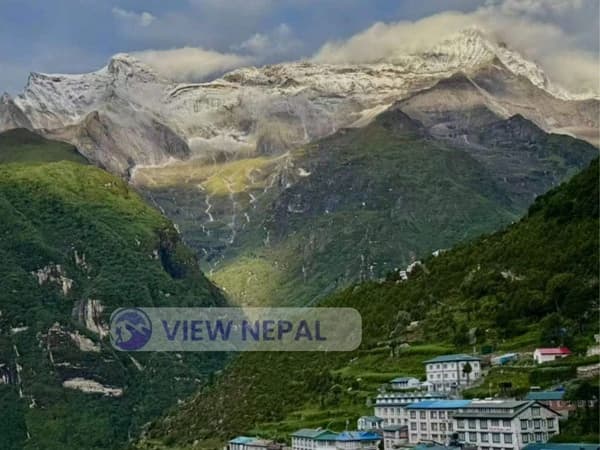
Namche Bazaar is the main acclimatization stop on the Everest Base Camp trek, teahouses, gear shops and maps all available for independent trekkers
Pros First
Complete Freedom and Flexibility
Hiking or walking through the Himalayas, such as the Everest Base Camp Trail, gives you the chance to be adventurous, and you have a big decision to make: do you hire a guide to take you or go on an independent trek? If you decide to take an independent trek to Everest, then you will receive many unique benefits and some challenges that will require careful planning before you leave.
Cost Savings
Using a guide and porter will greatly increase the cost of trekking. If you trek to EBC without a guide and/or with a porter, you won't need to pay these costs. (Cost of a guide $25-40/day; Cost of a porter $15-25/day) The self-guided EBC trek will save you 30%-50% on your total cost of the trek for budget-minded travelers, which will make it easier to take on more ambitious adventures and help you save money on your treks overall. The amount you save from not hiring a guide and/or porter can be put towards better lodging, extra days for acclimatization or lengthening your overall journey.
Personal Growth and Self-Reliance
Self-guiding the trail gives you confidence and self-reliance that guided treks do not. You’ll learn essential skills about the art of route-finding, making decisions under pressure and problem-solving while in remote locations. The feeling of satisfaction that comes from hiking over difficult terrain by your own wits and strength is immeasurable. I’ve heard countless Independent Trekkers say they pushed the walls of their own limitations and self-doubt to change forever how they saw themselves.
Authentic Cultural Interactions
If you don't use a guide to act as a buffer, there's a better chance you will have direct contact with the local community. This results in a much more authentic relationship with the teahouse owners, other trekkers, and villagers you encounter on your journey. In many cases, the amount of energy spent communicating and moving around without a guide will lead to lasting and more substantial cultural exchanges.
Cons Now
Risks and Safety
Trekkers hiking Solo to the Base Camp are exposed to the highest level of risk on an adventure. High altitudes exponentially increase the risk of developing Acute Mountain Sickness (AMS), and an untrained person may ignore noticeable signs of distress until it’s too late.
First Aid Community
The language, knowledge of rescue procedures, geographical area and distance from emergency services only increase the level of risk when you are hiking alone. Licensed Guides have networking relationships for emergency assistance, means of communicating to request an ambulance, as well as training in full and safe evacuation procedures from the Annapurna area.
Whether You Have a Guide or Not, Navigation is a Challenge
While the EBC trekking route is marked, bad weather (snow or fog) may obscure the trail, thereby reducing visibility and creating disorientation. Guides understand where to find alternate routes or safe areas when they experience landslides or severe storms, but relying only on a GPS or a phone puts your life at risk.
Gaps in Local Expertise
Guides provide essential local knowledge and connections, such as stories of the area, cultural traditions, updates on trail conditions prior to a trek, and many tips on such things as reliable teahouse accommodations and advice on how to properly acclimatize to the altitude will be missed on your journey if you do not have a guide.
Health Risks and Altitude Management
Altitude sickness can be severe and sudden, so pacing right and letting your body get used to the environment is why you have guides. Otherwise, an independent trekker might not know their own limits or overpush themselves.
Limited Assistance While in Distress
Guides can help with all aspects of support, including motivation, logistical issues and companionship that may be critical in times of fatigue or illness. Going solo is your own decision based upon your level of experience, fitness, and comfort with risk versus safety.
Everest Base Camp Trek Private Guide Option to Choose Instead of Solo
Having a personal guide for the Everest Base Camp trek will provide you with the ideal balance of independence and expert assistance. A personal guide allows you to travel at your own pace while also receiving professional support in terms of safety, culture, and logistics. A dedicated (licensed) guide will keep you completely in control of your travel itinerary and pace, while relying on their expertise to navigate, assist you with altitude safety, arrange accommodation, and guide you safely.
As an additional bonus, the majority of trekkers opt to hire a porter as well, to carry all of their trekking gear. By using a porter, your trek will be less physically demanding.
In addition to the many benefits that a private guide provides (flexibility and safety), they will also help you with language interpretation and be able to assist you with evaluating altitude sickness early in your trek, recommending the best teahouses along your route, and sharing their own personal stories about the Sherpa people and Buddhism.
In contrast to a fixed group tour, a private guide will also customize your trek (route and pace) for your specific needs and personalize the rest of your trek for you.
You can find a private guide for approximately $30 – $45 a day and a porter for $20 - $30 a day to travel with you; This price becomes less expensive when you are traveling as a group of trekkers sharing the costs. Guides can be arranged through many of the Kathmandu agencies or when you arrive in Nepal; however, it is critical to choose a licensed, professional, and well-reviewed guide. Lastly, by using a private guide, you will have the advantages of a solo trek but still be able to benefit from the guide's depth of knowledge and experience.
"In our 15+ years guiding the Khumbu, the trekkers who get into trouble solo are rarely the unfit ones — they're the ones who underestimate how fast altitude decisions have to be made above Dingboche. The rule technically lets you go alone, but the mountain doesn't grade on intent. If you trek independently, build in two acclimatisation days and never climb more than 500m of sleeping altitude per day above 3,000m." — Trek Operations, View Nepal Treks
Still weighing solo vs guided? Tell us your dates and fitness level and we'll give you an honest recommendation — plan your trip.
FAQS
Is a guide mandatory for Everest Base Camp in 2026?
No. Nepal requires guides for foreigners in most national parks and conservation areas, but the Khumbu Pasang Lhamu Rural Municipality allows independent trekkers in the Everest region, making EBC the main mainstream Nepal trek you can legally do solo.
How much do EBC permits cost without a guide in 2026?
About NPR 6,000 (~USD 50) total: the Sagarmatha National Park Entry Permit (NPR 3,000 + 13% VAT) and the Khumbu Pasang Lhamu Rural Municipality Permit (NPR 3,000). No TIMS card is required.
Do I need a TIMS card to trek EBC solo?
No. The TIMS card is not required or enforced for independent trekkers in the Khumbu region as of 2026.
Can a beginner trek to Everest Base Camp without a guide?
It's not recommended. EBC is non-technical but the risk is altitude, not terrain. First-timers without high-altitude experience are far safer with a guide who can spot and act on early altitude-sickness symptoms.
Where do I buy EBC permits if I'm trekking independently?
The Sagarmatha National Park permit is available at the Nepal Tourism Board office in Kathmandu or the Monjo checkpoint; the Khumbu Pasang Lhamu permit is issued in Lukla or Monjo. Bring your passport, passport photos, and cash in Nepali rupees.
Is it safe to trek to Everest Base Camp without a guide?
Trekking to Everest Base Camp without a guide is risky, as guides serve important roles in helping trekkers acclimatize to the altitude, advise on symptoms of altitude sickness, and help speed up rescues from the mountain. Also, altitude sickness could cause you to become incapacitated because of altitude or be unable to receive the help you need. Access to Emergency Services in some areas may be limited or completely restricted.
Can beginners go solo to Everest Base Camp?
For novices, trekking solo is simply out of the question. Without experience at high altitude and solid emergency management knowledge, it's not a smart move. A guide generally helps in managing acclimatization and decreases the likelihood of serious altitude issues. Opt for a guided route specifically created with first-time trekkers in mind, and you'll find the whole experience far more manageable.
How much does the Everest Base Camp trek cost without a guide?
Independent solo trekking isn't permitted, but the lowest you can expect to pay for a EBC trek without a guide is typically around 800 to 1500 USD for 12 to 14 days. That figure includes permits, Lukla flights, teahouse lodging and meals, porter-guide fees and basic insurance and gear. Prices fluctuate with the season, exchange rates and whether you're sharing services.
Is solo trekking to EBC legally allowed?
No. Even inside protected areas, you need a licensed guide who can also work as your porter-guide to get permits and gain entry. Attempting a hike without one could result in fines, denial of entry and loss of permits. Always respect local permit regulations and hire a certified guide before you set off.
Can I hire only a porter instead of a full guide?
Yes. The minimum acceptable guide is usually a porter-guide and can be hired for much less cost than a full guide for an entire trek. Porter-guides are there mainly to carry your bags and maybe give you a bit of basic trail information, but they may speak less English and have less medical supervision than a fully certified professional. It’s somewhere between the cheap, wanton costs of a guideless trip and those of hiring out a full phalanx of guides and porters to carry your expedition on their backs.
What are the main safety risks if I try to go without a guide?
The chief hazards are altitude mountain sickness, disorientation in poor visibility, injury miles from help and delayed rescue. Helicopter rescues are costly and entirely dependent on the weather. On cold nights, especially, you'll be glad you have someone experienced nearby who can spot early symptoms and tap into local networks fast. A guide can greatly reduce those risks upfront.
How physically difficult is the trek for someone attempting it independently?
The trip is physically demanding. Expect several days of five to eight-hour treks, steep elevation gains and sustained altitude up to around 5,364 metres at the EBC viewpoint zones. Doing it unguided is much more taxing because you have to set your own pace, navigate on your own and make all the altitude strategy calls yourself. Train up to it with cardio workouts, long hikes and load-bearing exercise well in advance.
What permits do I need if I want to trek EBC “without a guide”?
You'd still need to purchase the Sagarmatha National Park permit and a TIMS permit registered under a licensed guide or company. These are usually organised by your guide directly, so don't stress about chasing them down alone. TIMS-only entry to protected areas is no longer valid. No permits means no travel, plus the very real risk of fines and refusal of entry.
Are there alternatives to full guided packages for more independence?
Yes. You can hire a porter-guide, join a small private group or book a lightly guided trek to maintain flexibility while staying legal and safe. Many trekkers go halves: take a guide along primarily for safety but dictate their own pace and side hikes. In Namche Bazaar, for instance, you'll find this kind of arrangement fairly easy to set up. It gives you independence without disregarding regulations or putting yourself at unnecessary risk.
What should beginners do to prepare if they plan to trek EBC with a guide?
New trekkers should start training 6-8 weeks before their trip by completing cardio exercise, hill hikes, and walking with a backpack to increase endurance. Trekking insurance should include high altitude evacuation coverage and you will need to prepare for extreme weather by buying a variety of clothing styles that can be worn in layers. Build in extra acclimatization days at key stops like Namche Bazaar. Also hire a licensed guide or company with a clear focus on acclimatization and safety, and you'll be setting yourself up for a genuinely rewarding experience rather than a stressful one.
Ready to trek the safe way? Book the Everest Base Camp Trek with View Nepal Treks — licensed guides, full permit handling, and 24/7 emergency support. Get a quote.