If you are thinking, “I am not a hiker, can a beginner really do this?” then the answer is yes. Even if you rate yourself a 1 out of 10 on the hiking experience scale, you can definitely give the Everest Base Camp Trek for beginners a shot if you prepare for it properly and take your time.
The EBC Trek is not a technical climb; you do not need ropes, ice axes, or mountaineering skills; however, this trek is strenuous. The duration of the trek is approximately 12 to 14 days, and you will be trekking approximately 5 to 7 hours per day.
The main challenge of the adventure is not with the actual trail; it is with the altitude. Finally, the Everest Base Camp is located at an altitude of over 5300m; due to the elevation, the air is thin, making for lower levels of oxygen in the air. As part of your Everest base camp trek, itineraries provide acclimatization days in places like Namche Bazar, so your body can adjust properly to the environment.
Each year, there are a number of first-time trekkers who make it to Everest Base Camp through having an adequate exercise program (walking, cardio, plus some strength training), having a well-planned pace, and having suitable equipment. It is very important for each trekker to stay hydrated, listen to their body, and minimize their impatience.
Is Everest Base Camp Trek Suitable for Beginners?
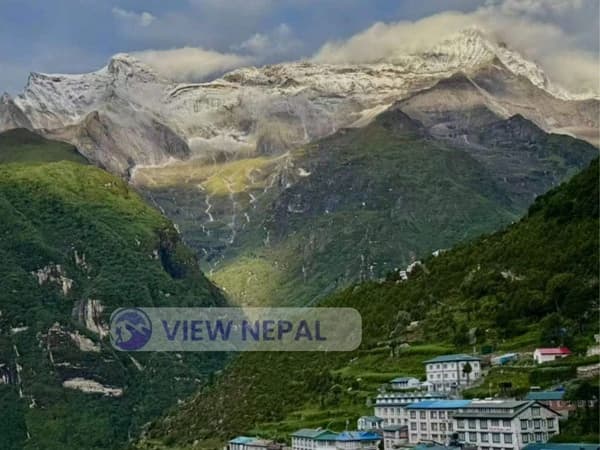
Namche Bazaar sits at 3,440m and serves as the key acclimatization hub for first-time EBC trekkers.
Yes, however, you must be aware of what your body and mind will need to do during this trek and be respectful of that need.
The Everest Base Camp trek is not a technical climb; you will require no ropes, crampons or special mountaineering skills. However, you will need to have at least a fair level of fitness, a reasonable level of mental toughness, and an ability to take the trek at a slow and progressive pace. The distance of the trekking trail is approximately 130 km (80 miles), and consequently, the most difficult aspect will be the altitude instead of the terrain.
Trekkers who have never trekked in the Everest area before are often amazed by how well labeled the trek routes are, what food and lodgings are accessible at the various tea houses along the treks, and how knowledgeable a local guide will be for beginner trekkers regarding assisting them to properly pace themselves. You will not be trekking alone, which helps a lot.
In addition to that, altitude sickness will affect people no matter how fit they are. Altitude sickness does not discriminate between an athlete and a casual walker - it will affect both types of trekkers. Therefore, it is very important that an above-average beginner Everest Base Camp trekker takes acclimatization days seriously because it is the most critical aspect of a beginner Everest Base Camp trek.
If a person is able to walk 5-6 hours per day on rough trail surfaces and is dedicated to proper training leading up to their trip, then there is a good chance the person will achieve their goal of reaching Base Camp.
Every beginner has their own starting point. Your experience level will impact how the trek feels for you, so here's what to expect relative to where you are.
If You're An Absolute Beginner Who Has Never Hiked
You will be challenged both physically and mentally as you will experience the effects of altitude sickness, combined with the length of an average day on the trail (5–7 hours), on rocky and uneven terrain. You will have sore muscles and feel out of breath; you'll likely have moments of doubt about your ability to complete this trek as a beginner hiker or otherwise.
The good news is, beginners with absolutely no hiking experience complete this trek every single season. The key to completing this trek as a beginner hiker is to begin training for it 3-4 months before your trip. Other key things to keep in mind are to include enough time to rest throughout your itinerary, take your time, listen to your guide, and most importantly, pay attention to your body. Your trekking team will be there to support you.
If You've Done Some Hiking But Nothing at High Altitude
You are prepared, too, if you have completed some multi-day hikes; your body will understand what sustained effort at a lower altitude feels like as well.
The Challenge one will face on the first trek to EBC will be that the altitude is an unknown variable which has not been previously experienced. However, the body has already experienced the demands of the muscles and cardiovascular system, and therefore, your main objective is to replicate high-effort conditions during training, and view every day used for acclimatization on the hike as a present (not as a setback).
If You've Trekked at Altitude Before (Above 3,500m)
Having hiked at altitude before above 3,500m is a real advantage going into the EBC trek. You already know what thin air feels like, you understand the importance of staying hydrated, and you've almost certainly learned how to keep your pace in check when the oxygen starts to thin out. So in many ways, you're starting from a stronger place than most.
But don't let that familiarity make you complacent. The EBC trek takes things to another level entirely. Once you get above Namche and push past Dingboche, you'll be entering altitude territory that demands even more from your body, and you'll need to let it adapt properly rather than pushing through. The good news is that your previous experience means your body is much better equipped to handle that adjustment than it would be otherwise.
What makes the difference between those who reach Base Camp and those who don't is how prepared they are for the trek ahead. Here are some suggestions on how you and your group can prepare for the trek.
Start Physical Training Early at Least 3 Months Out
Preparing for the EBC trek can start long before you ever get on a plane to go to Nepal. Training does not have to be overly complicated; however, it should be done regularly. You should begin to walk daily, and increase the distance and difficulty of the terrain with time. Include stair climbing, hill walking, and long weekend hikes in your schedule to add variety and challenge to your routine.
Cardio fitness is very important, too, so any physical activity that will get your heart rate up and keep it up will help prepare your lungs to function at high altitude. You need to be able to walk a minimum of 5-6 hours on uneven terrain with moderate elevation gain (uphill) before the start of your trek.
Strength training for your legs and core is also critical to help your body cope with the steep climbs and descents you will face throughout your trek. Squats, lunges and step-ups will all be helpful for building strength in your legs to assist with those sections of the trails.
Make sure you do not buy new boots the week you are ready to go on your trek. When you buy your new hiking boots, it is important to break them in for at least 6-8 weeks before you hit the trail. Stiff boots will cause blisters, which is one of the top reasons people will either slow down or drop out of a trek early. You need to take your training hikes wearing your boots so that your feet get adjusted to them.
The same goes for your backpack, trekking poles and layering systems. You should break in your full kit so that you understand what works and what doesn't prior to being in such a remote area on your Himalayan trek.
Train for the Everest Base Camp Trek at Altitude If You Can
If you reside near mountains, use them to your advantage. Hiking at elevations higher than 2,000 metres gives your body a taste of what it’s like at a greater elevation. If you do not have access to a mountain, training your cardiovascular system is the second-best way to prepare.
You will gain the majority of your acclimatization on the trip via the schedule of acclimatization days and your gradual trek pace.
Sort Your Insurance and Health Check
Before you depart, ensure that you have a travel policy that covers trekking at high altitudes, as well as emergency evacuation by helicopter. This is not optional; it is a must. There are many medical emergencies that occur along the Everest trail, plus an evacuation by helicopter from a high-altitude region can be thousands of dollars, excluding proper insurance.
Make sure you also visit your doctor to discuss altitude sickness prevention methods and the use of Diamox (acetazolamide, an effective drug). Many climbers who take the time to learn about and use them have more success with altitude acclimatization.
Everest base camp trek for beginners itinerary a Beginner can Follow
Most itineraries for the EBC trek are between 12 and 14 days long. However, we highly recommend that beginner trekkers take a minimum of fourteen days to finish the trek so that adequate acclimatization can be done along the way. Most beginner trekkers make a costly mistake of trying to rush the EBC trek.
Day 1: Fly Kathmandu to Lukla, Trek to Phakding (2,610m)
Your trip will commence with an exciting flight to Lukla airport, followed by an immediately downhill trek to Phakding. You should be able to use your first day's trek as a means of getting your feet and lungs used to what you will have to do for the rest of your trip.
Day 2: Phakding to Namche Bazaar (3,440m)
Day 2 of the trek will consist of hiking from Phakding to Namche Bazaar, which is a major challenge. The trail will steadily rise, and you will have a few steeper parts toward the end. There will be several suspension bridges along the way. Namche Bazaar is the large centre of the Khumbu region. Among other things, it has many shops, bakeries and other trekkers from around the world.
Day 3: Acclimatization Day in Namche Bazaar
Day 3 is a required acclimatization day. This is a necessary day so that your body can become accustomed to the altitude before you climb any higher. While you are resting and drinking lots of water today, you can hike to the Everest View Hotel (3880m) for a spectacular first view of Everest, Lhotse and Ama Dablam.
Day 4: Namche to Tengboche (3,867m)
Day 4 consists of a mixture of uphill and downhill hiking through rhododendron forests from Namche to Tengboche. Tengboche is home to the world-famous Tengboche Monastery, and on a clear day, the views of Everest, Lhotse and Ama Dablam are stunning.
Day 5: Tengboche to Dingboche (4,410m)
Today you make a transition into high altitude terrain so you will notice that the air is much thinner today than it has been in the past few days. With that being said, walking slowly and steadily for every step will help you acclimatize as you move forward. Dingboche is located in a beautiful setting surrounded by large rock walls and very open fields.
Day 6: Acclimatization Day in Dingboche
This is another rest day that your body definitely needs. You can go for a hike up a ridge above Dingboche (approximately 5100m) to further acclimate yourself before returning to bed for the night. The general rule of thumb when you are at altitude is to "Climb High, Sleep Low."
Day 7: Dingboche to Lobuche (4,940m)
Today, you will be trekking through truly remote and dramatic mountain terrain. Along the way, there are beautiful stone memorials for climbers who died attempting to climb Everest. This is a very humbling and powerful experience that gives you a full perspective of how amazing Everest really is.
Day 8: Lobuche to Gorak Shep (5,164m) and Everest Base Camp (5,364m)
Today is the big day. Your group goes to Gorak Shep, drops off the heavy backpack and continues to Base Camp. The trail to Base Camp is extremely rocky, and the pace of your group will be relatively slow, but every step will be worth it when you finally arrive at Base Camp. Take a few moments to take it in, because you worked hard to achieve this goal.
Day 9: Kala Patthar (5,545m) and Trek Down to Pheriche (4,371m)
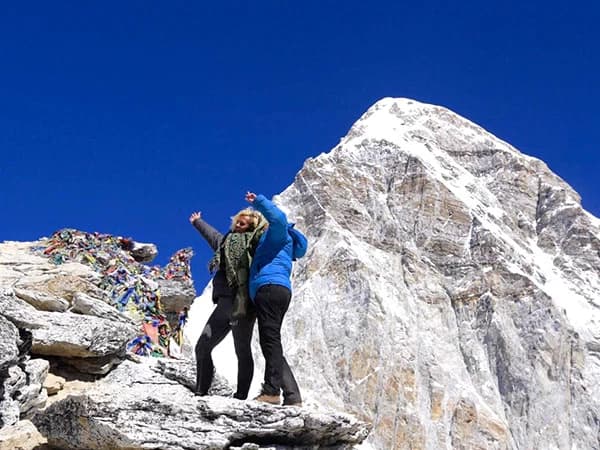
At dawn on Day 9, most trekkers leave by 3am to reach the summit of Kala Patthar before the iconic Everest sunrise. After visiting the summit, you will begin trekking down. In most cases, trekking down is much harder on the knees than trekking up, so your legs will greatly appreciate trekking poles.
Days 10 to 12 Descend Back to Lukla
You hike back down through the villages you came through on your way up. You’re ahead of the curve, and it still seems unbelievable how far you’ve come as an organization.
Day 13: Fly Back to Kathmandu
Delays at Lukla airport are typical, so be sure to include an extra buffer day. When you arrive in Kathmandu, go out and celebrate you have done what most people only dream of doing.
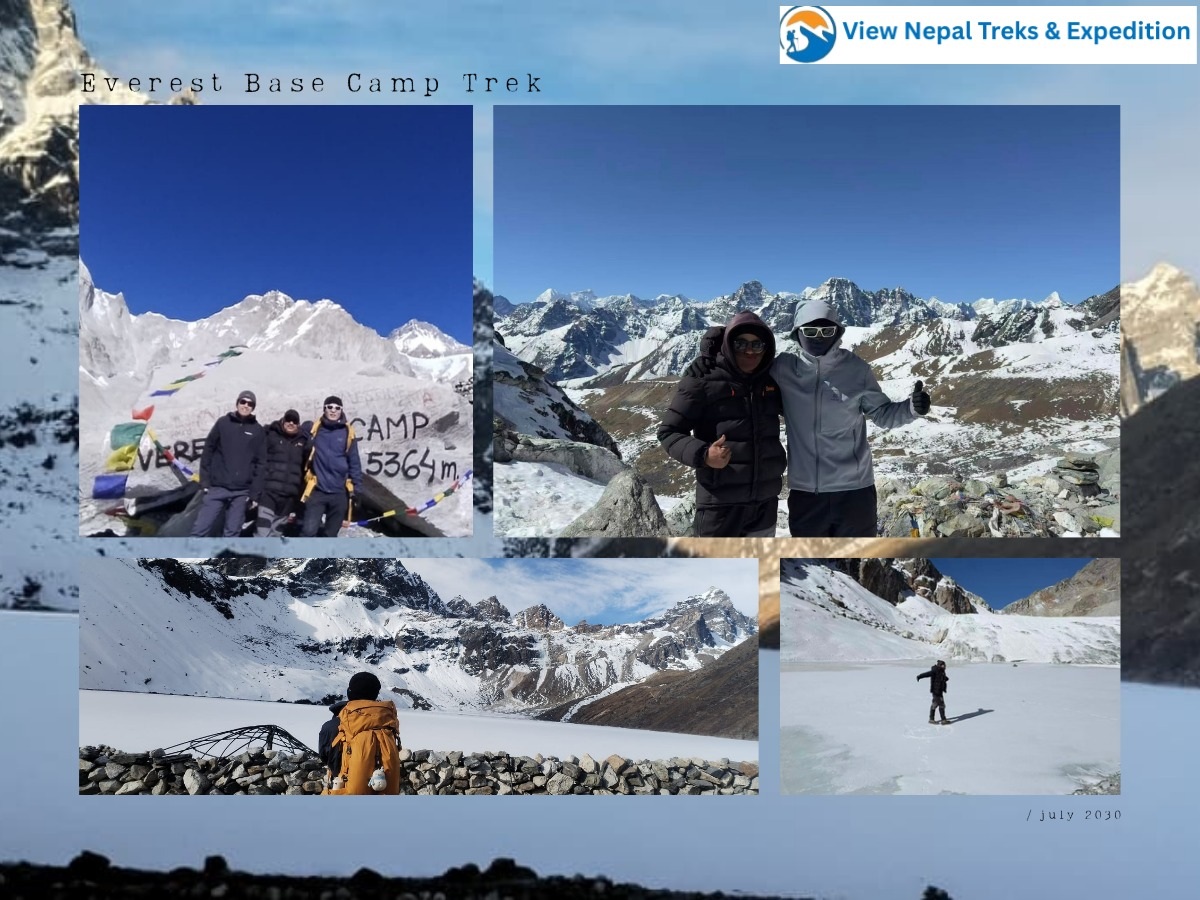
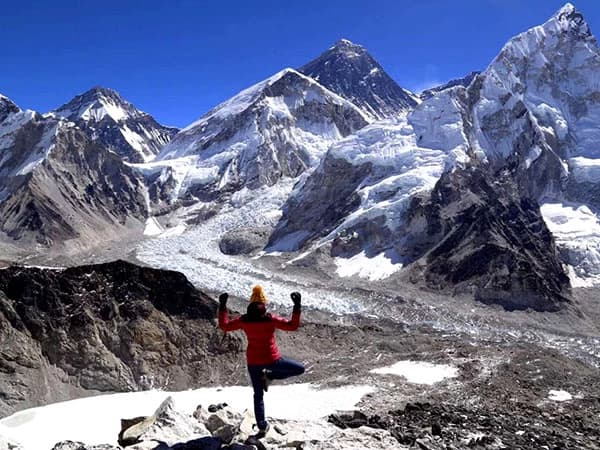
Reaching the EBC sign at 5,364m - the moment every first-time trekker works toward.
Even well-prepared trekkers fall prey to mistakes that hold them back or put their health in danger. But here is a list of the worst mistakes to make on the Everest Base Camp Trek that completes the buyer's guide.
Going Too Fast, Too Soon
The worst thing to do on the EBC trek is to take things too quickly. Base Camp cannot come soon enough for anyone, and no one gets there very quickly; the mountain does not reward fast, it rewards slow. As you ascend too quickly, the body does not get enough time to produce more of those red blood cells needed to carry oxygen at altitude. That can lead to altitude sickness, which, without warning, can become serious.
Heed the rule every good guide follows: Gain no more than 1,000 to 1,500 feet a day above 10,000 feet and have at least two full days of proper acclimatization during your trek. Do not allow other trekkers who are rushing past you to alter your pace. Your timeline is your own.
Ignoring Symptoms of Altitude Sickness
Altitude sickness may begin with very subtle, easy-to-dismiss symptoms, such as a slight headache, extreme fatigue or mild nausea. Unfortunately, most new climbers overlook the symptoms, and they try to work through them, thinking that they will go away. Some cases do, while others may not resolve and can become extremely dangerous.
There are two types of severe altitude sickness known as HACE and HAPE, both of which can be fatal. The only immediate treatment is descending from the mountain as quickly as possible. If you are experiencing any altitude sickness symptoms, tell your guide immediately. There is absolutely no shame in experiencing altitude sickness; it is a physical reaction, not a weakness.
Underpacking or Overpacking
Problems can arise from both under-packing and over-packing when out hiking. Under-packing means that you don’t arrive with enough layers of clothing to keep warm, a waterproof coat, or a sunhat or sunscreen; these are needed in high elevations. Overpacking means that you have too much weight in your pack, making each long day of hiking difficult when climbing.
A good size target for the weight of your daypack is 8-10kg. You can hire a porter for much of the weight you will take with you, and this is inexpensive and would help to support the local community and greatly improve how you feel during each day of hiking while out in nature.
Skipping Hydration
At altitude, moisture from your body evaporates quickly via respiration and through physical exertion. Lack of hydration exacerbates altitude sickness, as well as slowing down your body’s acclimatization to the altitude. Many trekkers do not drink sufficient amounts of water due to an absence of thirst.
Daily water intake should be 3 - 4 L during your trek. Alcohol consumption should also be avoided during the first 3 or 4 days of your trek because it increases the rate of dehydration and prevents you from getting a good night’s sleep.
Choosing the Wrong Season
Hiking EBC in the monsoon season (June-August) is slippery trails, a lack of visibility and overall not as fun. The best two windows are the pre-monsoon (March to May) and post-monsoon (September to November). Both promise consistent weather, clear skies and the more auspicious conditions of a trail.
October and November are especially high in demand for the pure, cool sky, not blocked by any mountain views.
FAQ Everything Beginners Want to Know About the EBC Trek
1. Can first-timers really complete the Everest Base Camp trek?
You can and you will. There are lots of people who successfully do the trek every season, so you are no exception. The trek does require you to be physically fit and to respect how altitude affects you; there are no technical skills required. As long as you follow a solid training program, use a knowledgeable local trekking guide with a beginner-friendly trek, having never been to a high altitude location will not prevent you from making it to EBC.
2. How fit do you actually need to be for EBC?
You must be able to hike for 5 to 7 hrs per day on uneven surfaces for several days in a row. Generally, you do not have to be an athlete; being in good enough shape prior to the trek will greatly enhance your overall experience. To get prepared for EBC, you should start a minimum of 3 months prior to the trek and combine your hiking with aerobic exercise during the same period of time.
3. How long does the EBC trek take for beginners?
The easiest way is to take 14 days with adequately planned breaks for everyone to properly adapt to the lower oxygen amounts at various elevations. The faster 12-day trips offered by most tour companies may not give your body enough time to appropriately adjust; therefore, we believe that 14 days should be your target.
4. What is the hardest part of the Everest Base Camp trek?
Dingboche to Lobuche and then again on to Base Camp are normally the hardest points on the EBC Trekking to Bar Camp wayports due to all of these factors: altitude (very high), oxygen level (very low) and more technical terrain.
5. Do beginners need a guide for the EBC trek?
It is now required by law for every trekker visiting the Everest region of Nepal to have a licensed guide accompanying them. Besides being required by laws in Nepal, having someone who knows the area you will be trekking can provide you not only with peace of mind but also be a great resource for early detection of altitude sickness, have intimate knowledge of every step along the treks, and assist you with decision making during times when you become too fatigued or mentally exhausted to make good decisions by yourself.
6. How do I prepare for the EBC trek in just 3 months?
The three most important areas of physical training are: Cardiovascular fitness, Leg strength and Multi-day hiking. To help you prepare yourself for this trek, train using running or biking 4-5 times per week, add squat/lunging exercises to develop your leg strength, and practice weekend hiking with a weighted pack on your back. In your last month of training prior to starting your EBC trek, try to complete at least one two-day hiking trip to simulate back-to-back treks as you will do when you hike the EBC.
7. Is altitude sickness common on the EBC trek?
Very common. All trekkers have at least headaches, fatigue or nausea while on the trek (mostly it happens in the early hours of the flight). The secret, he said, is not to ignore that and make sure one acclimatizes properly. Head out of the house armed with about 12 pills and ask your trekking guide to keep an eye on you.
8. What gear do beginners actually need for EBC?
In your core kit, you should have sturdy hiking boots (properly broken in before the trek), moisture-wicking base layers, a warm insulated jacket and an outer shell that is waterproof, trekking poles, a sleeping bag rated to at least -15°C, UV protective sunglasses and sunscreen. Viewer discretion is recommended for a quality daypack. You can also rent sleeping bags and down jackets in Kathmandu or Namche Bazaar if you prefer to travel light.
9. How much does the EBC trek cost for a beginner?
A full EBC trek package with a licensed guide and porter usually costs $1,200 to $2,500 depending on the agency and what’s included. Put flights to Kathmandu, gear purchases, travel insurance, your Nepal visa and daily personal spending on top of that, and you will be looking at a total budget somewhere between $2,500 and $4,500 for most international trekkers.
10. What should beginners eat on the EBC trek to stay energized?
The tea houses on the route all have a good selection of food dal bhat (lentil rice), pasta, noodle soups, eggs, and porridge are some of the popular ones. Dal bhat is a solid choice because it’s filling, carb-heavy and often served with unlimited refills. Bring trail snacks such as energy bars, nuts and chocolates. Steer clear of heavy or greasy meals at altitude as they’re more difficult to digest when your body is already operating overtime.