Why Is the Pikey Peak Trek Becoming So Popular?
The Pikey Peak Trek has become incredibly popular over the years for all the right reasons. The Everest region is well-loved by trekkers because it’s packed with incredible mountain scenery, Sherpa culture, tranquil paths and cosy teahouses.
It also happens to have downsides: busy trails, difficult altitude, and a costly flight from Lukla. Since travellers are now looking for more authentic treks without the hordes of people and challenges that accompany them, Pikey Peak is quickly becoming one of the best-kept secrets in Nepal.
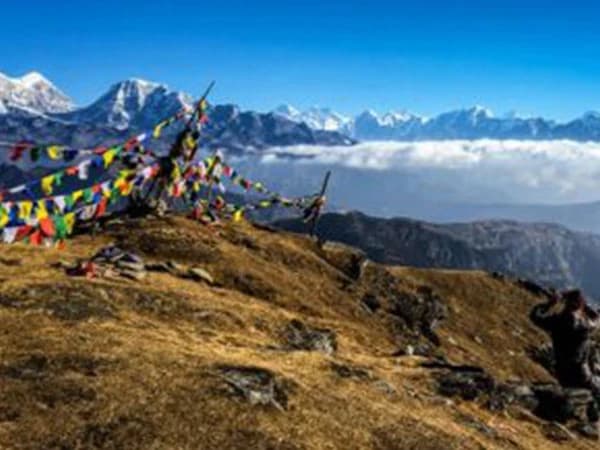
The major draw here is the incredible sunrise view from Pikey Peak (4,065m). The vantage point provides jaw-dropping 360° panoramas of Mt. Everest, Lhotse, Makalu, Kanchenjunga, Numbur Himal and other spectacular giants of the Himalayas.
Pikey Peak trek is also perfect for first-time trekkers and for those who don’t have a lot of time, as it can be done within 5-7 days and at a manageable altitude.
This is a less crowded alternative to the EBC trekking route, passing through tranquil forest areas, ancient Sherpa villages, monasteries, and offering unmatched warm local hospitality.
Given the easy accessibility of the route by road from Kathmandu, low trekking costs and unforgettable Himalayan views, the Pikey Peak trek remains a popular trekking destination for adventurers in Nepal.
Where Is Pikey Peak Located?
Pikey Peak is found in the Lower Solukhumbu (Solu) region of eastern Nepal. The mountain is a part of the greater Everest range but lies far to the south of the crowded Everest Base Camp trek and thus offers a quieter alternative with wide vistas of the Himalayas and a strong Sherpa culture. The summit is at an altitude of 4,065m (13,336 feet) and is one of the highest vantage points in Solu.
Geographic Location
|
Details
|
Information
|
|
Country
|
Nepal
|
|
Province
|
Koshi Province
|
|
District
|
Solukhumbu District
|
|
Region
|
Lower Solukhumbu (Solu Region)
|
|
Himalayan Range
|
Mahalangur Himal (Everest Region)
|
|
Elevation
|
4,065 m (13,336 ft)
|
|
Mountain Type
|
Scenic Viewpoint Peak
|
|
Nearest Popular Village
|
Junbesi
|
|
Common Trek Starting Point
|
Dhap Bazaar
|
|
Trek Ending Point
|
Phaplu or Dhap (depending on itinerary)
|
Exact Coordinates
|
Coordinate
|
Value
|
|
Latitude
|
27.53° N
|
|
Longitude
|
86.47° E
|
|
Decimal Coordinates
|
27.5326° N, 86.4726° E
|
Administrative Location
-
Province: Koshi Province
-
District: Solukhumbu District
-
Local Region: Lower Solukhumbu (Solu)
-
Municipality Area: Solududhkunda Municipality
Surrounding Landscape
-
Surrounded by rolling alpine hills and ridgelines
-
Dense rhododendron and pine forests
-
Traditional Sherpa villages
-
Buddhist monasteries and prayer flags
-
Wide Himalayan viewpoints overlooking the Everest region
Pikey Peak Trek Route Map and Trail Overview
The Pikey Peak Trek traces a breathtaking trekking route in the Lower Solukhumbu region of Nepal, leading trekkers through tranquil Sherpa villages, dense rhododendron woods, alpine fields, Buddhist monasteries, and a breathtaking Himalayan ridge to the summit of Pikey Peak (4065m).
In contrast to the Everest Base Camp trek that has to go through huge crowds of trekkers, the Pikey Peak trek is relatively quieter and a more culturally rich Himalayan trekking destination, easily approachable through the roads from Kathmandu.
The traditional 7-day trekking trip is scheduled from Dhap Bazaar to Phaplu, but there are other options for starting and ending the trek from Jiri, Shivalaya or Salleri as well.
Classic Pikey Peak Trek Route
|
Stage
|
Route
|
|
Day 1
|
Kathmandu to Dhap (Drive)
|
|
Day 2
|
Dhap to Jhapre
|
|
Day 3
|
Jhapre to Pikey Peak Base Camp
|
|
Day 4
|
Pikey Peak Base Camp → Pikey Peak Summit → Junbesi
|
|
Day 5
|
Junbesi to Phaplu
|
|
Day 6
|
Phaplu to Kathmandu (Drive)
|
|
Day 7
|
Final Departure or Optional Kathmandu Sightseeing
|
Major Places Along the Trail
The trail crosses several attractive villages with differing landscapes and cultures:
-
Kathmandu (1400m) - Where the Pikey Peak Trek starts.
-
Dhap Bazaar (2850m) - The actual beginning of the trekking trail.
-
Jhapre (2820m) - Traditional Sherpa village with its first view of the Himalayas.
-
Pikey Base Camp (3640m) - An overnight stay on the way to the summit.
-
Pikey Peak Summit (4065m) - The summit of the trek.
-
Junbesi (2700m) - Sherpa village with ancient monasteries and a vibrant Buddhist culture.
-
Phaplu (2413m) - where the trek finishes and you then return to Kathmandu.
Trail Terrain and Landscape
During the hike, the landscapes change gradually:
-
Terraced farm fields
-
Pine and rhododendron forests
-
Yak pastures
-
Alpine ridgelines
-
Sherpa villages
-
Monastery and stupas
-
Stone paved pathways through villages
-
Open views of the Himalayas
The continuous transformation between these landscapes gives an incredible and new vista every day.
Route Accessibility
One of the greatest benefits of the Pikey Peak Trek is that it’s quite accessible.
|
Transportation
|
Details
|
|
Kathmandu to Dhap
|
7 - 9 hours by jeep or private vehicle
|
|
Trek Start
|
Dhap Bazaar
|
|
Trek End
|
Phaplu
|
|
Return to Kathmandu
|
Private jeep or local vehicle
|
|
Lukla Flight Required
|
No
|
Not needing to fly into Lukla saves you money on flights, plus you won't experience as many weather delays.
Alternative Trekking Routes
You can consider a few versions of the Pikey Peak Route, as per your time and interests.
|
Route
|
Duration
|
Best For
|
|
Dhap to Pikey Peak to Phaplu
|
7 Days
|
Most popular route
|
|
Jiri to Pikey Peak to Phaplu
|
8 - 10 Days
|
Cultural exploration
|
|
Shivalaya to Pikey Peak
|
8 - 9 Days
|
Traditional trekking route
|
|
Phaplu to Junbesi to Pikey Peak
|
6 - 7 Days
|
Shorter itinerary
|
The trekking routes differ but offer an equally spectacular experience of the Pikey Peak views.
Why This Route Is Special
This trail to Pikey Peak is considered to be one of Nepal’s best short treks since it provides trekkers with a mixture of outstanding Himalayas and a great cultural experience.
With great Himalayan views of Everest, Lhotse, Makalu, Cho Oyu, Kanchenjunga and so many others, trekking through original Sherpa villages which are mostly less affected by tourists means that trekkers get the best taste of local culture and traditions.
This is a well-paced trek with fewer trekking hours per day and gentle elevation rise, easy access via road, so the trekkers feel they have a balance of both adventure and a comfortable trek with great culture.
This trek is perfect for first-time trekkers to the Himalayas as well as for experienced trekkers wanting to experience the Himalayas without the usual busy Everest trails.
What Makes the Pikey Peak Trek Different from Everest Base Camp?
Both treks are in Nepal's iconic Everest region but deliver vastly different trekking adventures. If the ambition is to reach the foot of Mount Everest, EBC trekking is for you.
If you want to see beautiful scenery in the Himalayas, experience authentic Sherpa life, and wander over peaceful paths for a shorter amount of time, Pikey Peak is your go-to trek.
Think this journey as the incredible short trek to Everest Region if your main desire is just to see Everest and you’re not so fond of a strenuous two week higher altitude undertaking.
Quick Comparison: Pikey Peak vs Everest Base Camp
|
Feature
|
Pikey Peak Trek
|
Everest Base Camp Trek
|
|
Duration
|
7 Days
|
12 - 14 Days
|
|
Maximum Altitude
|
4,065 m
|
5,364 m (Base Camp), 5,545 m (Kala Patthar)
|
|
Difficulty
|
Moderate
|
Moderate to Challenging
|
|
Lukla Flight
|
Not Required
|
Usually Required
|
|
Trail Crowds
|
Low
|
Very High (Peak Seasons)
|
|
Altitude Sickness Risk
|
Low to Moderate
|
Moderate to High
|
|
Best For
|
Beginners, families, short holidays
|
Experienced trekkers, bucket-list adventure
|
|
Approximate Cost
|
Lower
|
Higher
|
|
Everest Views
|
Wide panoramic views
|
Close-up mountain experience
|
|
Trek Style
|
Scenic and cultural
|
Adventure and high-altitude expedition
|
Values may vary slightly depending on the itinerary.
1. Duration and Time Commitment
The most significant change in the Pikey Peak Trek is the number of trekking days. You can finish the trek within 7 days, which is great for people who have a short vacation time.
On the contrary, the EBC trek takes a long duration of 12-14 days, and you will also have to account for potential flight cancellations/delays due to weather. If you wish to get to the Everest region and come back in less than a week, then you have a clear winner.
2. Altitude and Physical Challenge
Elevation is another huge difference between the two treks.
The highest point of Pikey Peak is at 4,065m, while Everest Base Camp is at 5,364m (with almost every trekker also trekking to Kala Patthar 5,545m for Everest’s most epic view).
Due to the relatively low altitude of the Pikey Peak Trek, there is substantially less risk of altitude sickness and much less of a need for days spent acclimatizing. The Pikey Peak Trek is ideal for trekkers with little or no prior experience of high-altitude trekking.
3. Everest Views
It might seem like Everest Base Camp offers the finest views of Mount Everest, but this is not actually true.
The view from the Everest Base Camp overlooks the Khumbu Glacier and some of the surrounding mountains, while Everest can only be viewed partially through ridges near it. The best and most detailed views of Everest can actually be witnessed from Kala Patthar, a trek that requires you to reach Base Camp first.
When you reach Pikey Peak Summit, you can also take pleasure in an awesome 360-degree view of all major Himalayan ranges, including Everest, Lhotse, Makalu, Cho Oyu, Kanchenjunga, and Numbur Himal.
4. Trail Experience and Crowds
It is one of the busiest trekking trails in Nepal during the trekking season, spring and autumn; towns along the Everest Base Camp trail like Namche Bazaar, Tengboche and Dingboche can be crowded by trekkers worldwide.
In contrast, the Pikey Peak trail is much quiet, not a place for commercial tourists, but this trek passes through peaceful villages of Sherpas, forests, and Monasteries on ridges, which are more natural.
5. Accessibility
Another reason that Pikey Peak Trek is more convenient is the easy road access. This trek involves an approach by road starting from Kathmandu and driving to Dhap Bazaar. So the Lukla-flight-dependent trekking schedule is removed.
The Everest Base Camp trek starts with a flight from Kathmandu to Lukla, which is sometimes cancelled or delayed by mountain weather.
6. Which Trek Should You Choose?
Choose the Pikey Peak Trek if you:
-
Only a week available for the trek
-
Want a budget-friendly trek
-
Prefer fewer tourist trails
-
Avoid the Lukla flight
-
First-time Himalayan trekker
-
Want panoramic Everest sunrise views with lower altitude risk
Choose the Everest Base Camp Trek if:
-
You want to be at the foot of Everest Base Camp.
-
You have a minimum of two weeks in your schedule.
-
You’re not afraid of increased altitude and longer trekking days.
-
You want the classic Everest trek.
-
You are okay with trekking through crowds (during shoulder/peak seasons).
Pikey Peak Trek 7 Days Detailed Itinerary
Day 1: Drive from Kathmandu (1,400 m) to Dhap (2,850 m)
Your Pikey Peak Trek starts with an easy and scenic drive from Kathmandu to Dhap, the nearest gateway town to the Pikey Peak trail.
You drive along the BP Highway through the hills beyond Kathmandu, crossing towns such as Dhulikhel, Khurkot, Ghurmi, Okhaldhunga, and several other ethnic villages into Solukhumbu.
En route, you pass beautiful terraced rice fields, verdant green forests, serpentine mountain rivers, waterfalls and traditional countryside villages with timeless lives.
As you ascend gradually, the landscape slowly morphs into mountain ridges, and the distant views of the Himalayas can be seen on clear days.
After eight hours of journey, you will arrive in Dhap, a small settlement occupied by the Sherpa and Rai communities. It is a peaceful place to stop before commencing your trekking endeavors on the following day.
Walking Distance
There is no trekking on the first day. You travel by private jeep or tourist vehicle from Kathmandu to Dhap, which is approximately 230 km away. Your drive to Dhap is along the country’s highways, followed by narrow mountain roads of eastern Nepal.
Trekking Hours
Today's travel is a long one; it will take 8 to 9 hours in an automobile, depending on the condition of the roads and weather. Brief halts will be made during your trip to stop for your morning tea and breakfast, lunch, refreshments and take pictures of this beautiful landscape.
Elevation Gain and Loss
The total ascent from Kathmandu (1,400 m) to Dhap (2,850 m) will be about 1,450 m. It might sound like quite a large vertical gain in a single day, but it is done by a vehicle that would help your body start acclimatizing without the intense effects.
Trail Condition
Well-paved highways, mountain roads, sometimes gravel road sections, hillside roads with bends and country roads.
Major Attractions
-
Kathmandu Valley
-
BP Highway
-
Dhulikhel
-
Sunkoshi River
-
Khurkot
-
Ghurmi
-
Okhaldhunga
-
Terraced Farmlands
-
Traditional Rai Villages
-
Solukhumbu Hills
-
Dhap Village
About Dhap
Dhap is a beautiful village, resting at an altitude of 2,850 meters. Dhap is the usual starting point for the Pikey Peak Trek. It’s a peaceful mountain village embraced by pine forests, terraces, and hospitable Rai and Sherpa people. With comfortable lodges, the locals’ genuine warmth, and the serene atmosphere, this village is an excellent gateway to the lower Everest region.
Day 2: Trek from Dhap (2,850 m) to Jhapre (2,820 m)
After breakfast, you will start your first day trekking to Jhapre from Dhap along a mountain trail to explore the scenic environment and the beautiful Sherpa village. You traverse through gentle terrain, crossing the yak grazing ground and farmland to the hilly slope with a forest of pine and Rhododendron along with mani walls, colorful Buddhist prayer flags and Chorten.
Enjoy the trail with lovely locals in Himalayan surroundings while avoiding the main Everest Base Camp trail. You can get your first real view of Mount Everest, Numbur Himal and Karyolung if the weather is favorable. A smooth trail, this serves as a fantastic acclimatization day.
Take your time soaking in the serene beauty and observing the lives of Sherpa people on your way to one of the prettiest villages on the Pikey Peak itinerary.
Walking Distance
Today’s trek is about 14-15 kilometers long and consists of well-paved trails along the mountain ridges. It is a moderately undulating terrain, comprising gentle ups and downs with viewpoints at many locations offering a vista of the valleys and Himalayan panorama.
Trekking Hours
It will take about 5-6 hours to walk comfortably, with enough time for photo breaks and a tea break. Marvelous mountains’ll surround you.
Elevation Gain and Loss
The trail ascends and descends throughout the day, so it’s only 30m of overnight change (2,850 m to 2,820 m), so this should be a great acclimatisation day.
Trail Condition
Large wide forest paths, dirt trails, grassy ridgeways, stone staircases, village lanes and sections of easy ups and downs.
Major Attractions
-
Dhap Village
-
Sigane
-
Pine Forest
-
Rhododendron Forest
-
Yak Pastures
-
Mani Walls
-
Prayer Flags
-
Small Buddhist Monastery
-
Mount Everest View
-
Numbur Himal
-
Karyolung
-
Jhapre Village
About Jhapre
Jhapre is an ancient Sherpa village at 2,820 meters, known for its tranquility, ancient monastery and mountain views. You’ll find comfortable teahouses, friendly local hospitality and stunning sunrise and sunset views of Everest and Numbur.
Day 3: Trek from Jhapre (2,820 m) to Pikey Peak Base Camp (3,640 m)
Today's hike is one of the more rewarding, as you enter more alpine scenery, slowly trekking to higher altitude. The Pikey Peak Trek route leaves Jhapre behind. It enters a picturesque section with beautiful rhododendron and pine forests, traditional yak pastures, fluttering prayer flags and serene ridgelines overlooking the Solukhumbu region.
You will trek past small villages like Bhulbhule and Lhamuje and your mountain views will improve significantly with amazing views of Mount Everest, Makalu, Kanchenjunga, Gaurishankar, Numbur Himal, and several other Himalayan peaks with snow-capped summits.
From there on, the forest changes into an alpine zone with grazing yaks roaming on the meadows and spectacular Himalayan views as you keep walking up to the Pikey Peak Base Camp where you will spent the night to start Pikey Peak hike for the sunrise the following day.
Walking Distance
Today's trek will involve walking an estimated 13-14 kilometers up through the forests and meadows and up into the high mountain ranges with a steady but gentle uphill slope.
Trekking Hours
You can expect the trail to take 6-7 hours, giving you enough time to soak in the views, have tea breaks, and snap photos along the way.
Elevation Gain and Loss
You go from 2,820 meters up to 3,640 meters in elevation - that's about 820 meters of altitude difference. Having that gradual climb is also great for your body, as you get used to the thin air a little bit before heading for the summit the next morning.
Trail Condition
Good maintained trails, forest trails, alpine meadows, scree, and a slightly inclined uphill stretch.
Major Attractions
-
Jhapre
-
Bhulbhule
-
Lhamuje
-
Yak Pastures
-
Rhododendron Forest
-
Pine Forest
-
Prayer Flags
-
Mani Walls
-
Mount Everest
-
Makalu
-
Kanchenjunga
-
Gaurishankar
-
Numbur Himal
-
Pikey Peak Base Camp
About Pikey Peak Base Camp
The Pikey Peak Base Camp rests at 3,640 meters as a serene alpine outpost amidst wide meadows, roaming yaks and commanding views of the Himalayan range. The basic teahouses, fresh mountain air, and the spectacular starry sky over Pikey Peak Base Camp set the stage for the most memorable pre-dawn hike.
Day 4: Early Morning Hike to Pikey Peak (4,065 m) and Trek to Junbesi (2,700 m)
Today is the best day of your entire trek. You will hike early in the morning before the sun rises and make a short but fruitful walk up to Pikey Peak summit (4,065 m). Here you will get to experience one of the most amazing mountain sunrises of Nepal.
While the golden sun rays hit the snow-capped mountains, you get amazing views of an array of peaks in the Everest, Lhotse, Makalu, Kanchenjunga, Gaurishankar, Numbur Himal, Ganesh Himal, Langtang, Manaslu, Annapurna, and Dhaulagiri ranges.
After enjoying a considerable time at the top and capturing pictures, you will hike down through alpine ridges, rhododendron forests, yak pastures, and traditional Sherpa villages and arrive at Junbesi, a lovely village. The sudden change in scenery from high alpine landscapes to forested landscapes and cultural villages makes this day the best day.
Walking Distance
The hike today is about 15- 16 km in length, which consists of climbing up to the summit this morning and then the long hike down to Junbesi.
Trekking Hours
It takes approximately 7-8 hours to complete the trek for the day, including the sunrise trek, breakfast at Basecamp, short breaks and photographs, as well as descending to Junbesi.
Elevation Gain and Loss
The first goal of the day is to get to the top of Pikey Peak at 4,065 m from 3,640 m, and then descend by almost 1,365 m to reach Junbesi at 2,700 m. That makes today the biggest change in altitude of the trek.
Trail Condition
Rocky summit trails, grass ridgelines, high Alpine meadows, forest paths, stone staircase paths and ancient village trails.
Major Attractions
-
Pikey Peak Summit
-
Sunrise Viewpoint
-
Mount Everest
-
Lhotse
-
Makalu
-
Kanchenjunga
-
Gaurishankar
-
Numbur Himal
-
Ganesh Himal
-
Langtang Himal
-
Manaslu
-
Annapurna
-
Dhaulagiri
-
Prayer Flags
-
Yak Pastures
-
Junbesi Village
About Junbesi
At 2,700 meters, Junbesi is arguably the most beautiful Sherpa village in the Solukhumbu area.
Known for its unique architecture, stone house compounds, ancient monasteries, apple orchards and extremely hospitable inhabitants, Junbesi offers a fantastic glimpse of the authentic Sherpa culture.
The gateway to the very famous Thupten Chholing monastery and arguably the culturally most satisfying aspect of the Pikey Peak Trek.
Day 5: Trek from Junbesi (2,700 m) to Phaplu (2,413 m)
After witnessing the stunning sunrise over Pikey Peak and a pleasant evening at Junbesi, this is your last day on the trek in the heart of lower Solukhumbu region on your journey to Phaplu. The trail predominantly descends, making this one of the easiest days of the trek.
As you make your way out from Junbesi, you’ll travel through quiet pine and rhododendron forests, cross local suspension bridges, stroll through the farmlands on the terraces and explore many Sherpa settlements where life is just as it was generations ago.
On the way, you’ll also get to see many prayer flags, mani walls, old chortens, and people going about their day-to-day activities.
This gives you a last chance to be part of the culture and witness Sherpa life in proximity before finally descending to the bustling town of Phaplu, which serves as the administrative entrance to the Solukhumbu.
Walking Distance
The day’s hike will be 10-14 km depending on the path chosen and the exact lodge situated. The day’s path mostly features slow descents and a few inclines on your trail as you walk through woods, farming areas and ethnic villages to Phaplu.
Trekking Hours
It's a pleasant 4-5 hour walk, taking your time at a good pace. This is an easier day of hiking compared to recent days, so you will have a lot of opportunity to pause for a cup of tea, to take photographs, and to meet local Sherpa families along the trail.
Elevation Gain and Loss
Today you trek downhill from Junbesi (2700m) to Phaplu (2413m), which means that you will be descending roughly 290m. This easy trekking day involves quite some downhill, and you do not have to worry about the altitude.
Trail Condition
Nice walking paths in the village, rock staircases, walking paths through woods, suspension bridges, farmland roads, shallow downhill sections.
Major Attractions
-
Junbesi Village
-
Junbesi Khola
-
Suspension Bridge
-
Beni Ghat
-
Pine Forest
-
Rhododendron Forest
-
Sherpa Villages
-
Mani Walls
-
Buddhist Chortens
-
Terraced Farmlands
-
Prayer Wheels
-
Phaplu Bazaar
About Phaplu
Nestled at an altitude of 2,413 meters, Phaplu is a bustling mountain town and one of the primary entrances to the Everest and Solukhumbu region.
Equipped with Phaplu Airport, comfortable tea houses, small cafes and local bakeries, markets, government offices and other basic services, it’s a blend of modern touches and Sherpa living.
Phaplu is a great place to rest, grab a warm meal and celebrate a job well done completing the trek portion of your Pikey Peak trek as you head back towards Kathmandu.
Day 6: Drive from Phaplu (2,413 m) to Kathmandu (1,400 m)
You'll have a hearty breakfast after which you'll leave the tranquil hills of Solukhumbu to take a scenic road journey to Kathmandu. You'll drive on the rugged mountain roads of Salleri, Okhaldhunga, Ghurmi and through the historic BP Highway till the Kathmandu Valley.
On your way, you'll drive through picturesque villages, rhododendron and alpine forests, terraced rice fields, flowing streams, and gentle green hills exhibiting the topographical wonders of Nepal.
There will be tea and lunch stops along with short breaks for you to savor the countryside for one last time.
Leaving behind the overwhelming grandeur of the Himalayas, you’ll soon find yourself lost in the busy lanes of Kathmandu where you’ll just think of the brilliant mountain views, amazing warmth of the Sherpas and the life changing trek at Pikey Peak Trek.
Walking Distance
There is no trek today. Return Journey to Delhi / Your Chosen destination will be by vehicle, in a Private Jeep or Tourist vehicle, for 260-280 Kms approx.
Trekking Hours
This ride generally takes about 8-9 hours, during which there will be multiple stops at breakfast points, lunch spots, snack points and at points to see around on the scenic highway passing through mountains.
Elevation Gain and Loss
It's a descent from 2413m in Phaplu down to 1400m in Kathmandu, a net altitude decrease of some 1000m and an easy and pleasant day after a few days at the heights.
Trail Condition
Near the Solukhumbu region, the rough mountain roads of gravel transform into the smoothly black-topped BP Highway leading all the way up to the Capital city.
Major Attractions
-
Phaplu
-
Salleri
-
Okhaldhunga
-
Ghurmi
-
Sunkoshi River
-
BP Highway
-
Mid-Hill Landscapes
-
Terraced Hillsides
-
Traditional Villages
-
Kathmandu Valley
About Kathmandu
Kathmandu, the capital of Nepal, is perched at an altitude of 1,400 meters above sea level and is the cultural, historical and travel centre of the country. Kathmandu, with all its 10 UNESCO World Heritage Sites, the exotic Thamel area, temples with history and the vibrant bazaars of Nepal; it is just the right place to get some respite for the legs after the challenging Pikey Peak Trek.
Day 7: Final Departure or Optional Kathmandu Sightseeing
Pikey Peak Trek of 7 Days today is finally over. As per your international flight timing, our representative will pick you up from your hotel and drop you off at Tribhuvan International Airport for your flight back to your home country.
In case you still have time for your international flight, you can visit some of the world’s best UNESCO World Heritage Sites of Kathmandu along with its famous marketplaces and landmarks.
Visit temples that are centuries old, spectacular Buddhist stupas, royal palaces and enjoy trekking and shopping streets crammed with handcrafted items and vibrant cafe/restaurants. Spend your day either hunting for goods in Thamel or visiting the historic sites of Nepal and catch up before catching a flight home.
It is a perfect day to soak in views of the Himalayan landscape, warm smiles of Sherpas, serene monasteries and those unforgettable sunrises on Pikey. It leaves you with lifelong memories of a most memorable short Himalayan trek in Nepal.
Walking Distance
Today, there is no trekking to do. Those taking part in sightseeing will do short walks between heritage sites, markets of Kathmandu, and other local attractions.
Trekking Hours
There is no trekking today. Depending on your flight time and arrangements for the day (airport transfers / optional excursions will take around 3-6 hours).
Elevation Gain and Loss
You do not experience major elevation changes on your itinerary; you continue to stay in the Kathmandu Valley (altitude approx. 1,400 m).
Trail Condition
Stone paved city roads, pavements for pedestrians, paths to historic places, paths of traditional market streets.
Major Attractions
-
Thamel
-
Kathmandu Durbar Square
-
Swayambhunath Stupa
-
Boudhanath Stupa
-
Pashupatinath Temple
-
Garden of Dreams
-
Asan Bazaar
-
Patan Durbar Square
About Kathmandu
Spend your last few days exploring the distinct charms of Kathmandu that magically marries the rich history of this ancient city with the pulsating vibe of modern urban life.
Kathmandu is home to sacred temples, bustling gompas, ancient courtyards, traditional markets and cafes set in charming rooftop settings, offering you the ideal conclusion to your Himalayan escapade before heading back with fond memories of your Pikey Peak Trek.
Monasteries You Can Visit During the Pikey Peak Trek
1. Jhapre Monastery (Jhapre Gompa)
-
Location: Jhapre Village, Solukhumbu
-
Approximate Altitude: 2,820 m
-
Trek Day: Day 2
-
Religion: Tibetan Buddhism
-
Best Time to Visit: Morning or late afternoon
-
Entry Fee: Free (donations are appreciated)
-
Photography: Usually permitted outside; ask before taking photos inside
-
Time Needed: 20 - 40 minutes
-
Famous For: Everest viewpoint, traditional murals, peaceful meditation atmosphere
Jhapre Monastery is the first major Buddhist highlight as you ascend the Pikey Peak Trek. It is a tiny but lovely monastery that lies in the culturally rich Sherpa village of Jhapre, perched on the hillside. This monastery offers magnificent views of Everest, Numbur Himal and other mountains in clear weather.
Local Sherpa families also come to this monastery for their daily prayers as well as during their yearly Buddhist festivals.
Its serene environment with numerous Tibetan prayer flags and typical structure creates a heavenly and authentic Himalayan experience before proceeding further to higher mountains.
What You'll See Inside
How to Be Respectful During Your Visit
-
Remove your shoes on arrival.
-
Wear modest clothes that cover your shoulders and knees.
-
When in the monastery, speak softly.
-
Walk around the stupas and prayer wheels in clockwise direction.
-
Always ask for permission to take photos of the monks or the inside of the monastery.
-
Refrain from touching the holy articles before asking for permission.
-
Rotate the prayer wheels clockwise.
-
Try to make as little disruption to any ceremonies taking place.
If you like, you can give donations of money to the monastery.
2. Thupten Chholing Monastery
- Location: Above Junbesi Village
-
Approximate Altitude: 3,020 - 3,050 m
-
Distance from Junbesi: About 3 km (1.5 - 2 hours uphill)
-
Trek Day: Optional side trip from Junbesi
-
Religion: Tibetan Buddhism (Nyingma Tradition)
-
Founded by: Kyabje Trulshik Rinpoche
-
Home to: Hundreds of monks and nuns
-
Entry Fee: Free (donations welcome)
-
Time Needed: 2 - 4 hours
-
Famous For: One of Nepal's largest Tibetan Buddhist monasteries and nunneries
Thupten Chholing Monastery is the significant monastery site that is associated with the Pikey Peak Trek. It is also the most famous Buddhist community of Tibet, and is believed to be one of the largest communities in Nepal.
The monastery was founded after Kyabje Trulshik Rinpoche left Tibet and found sanctuary here. This site is a place where spiritual activities and Buddhist practice occur on a daily basis, and it is one of the most visited monastic complexes.
Located above Junbesi Valley, this monastery has great views of the local hills and affords a real glimpse into a monastery. Several hundred monks and nuns study, live and hold morning and afternoon chanting rituals in this amazing Solukhumbu monastery.
What You'll See Inside
-
Large golden Buddha statues
-
Beautiful prayer halls
-
Hundreds of monks and nuns
-
Traditional chanting ceremonies
-
Colorful Tibetan murals
-
Hand-painted thangka artwork
-
Butter lamps
-
Prayer wheels
-
Ancient Buddhist scriptures
-
Meditation rooms
-
Incense offerings
-
Monastery kitchens
-
Courtyards
-
Tibetan architecture
How to Be Respectful During Your Visit
-
Dress modestly
-
Take off your hat and shoes as instructed
-
Maintain silence inside the prayer hall
-
Take a photo only if the monastery or temple permits
-
Do not interfere in any way with the monks and nuns at prayer
-
Circulate the religious statues and monuments in a clockwise direction
-
Do not point your feet at religious statues
-
Do not touch any scriptures and statues
-
Switch off or set your mobile phones to vibrate mode
-
If you desire, you may respectably donate money.
3. Chiwong Monastery (Optional Extension)
-
Location: Near Phaplu
-
Approximate Altitude: 2,700 m
-
Trek Day: Optional extension after Phaplu
-
Religion: Tibetan Buddhism
-
Entry Fee: Free
-
Time Needed: 1 - 2 hours
-
Famous For: Historic monastery overlooking the Solu Valley
Chiwong Monastery is an important landmark as one of the oldest monasteries in the Solukhumbu district.
It is located on a beautiful valley top in Phaplu, and due to the annual Mani Rimdu festival, distinctive Tibetan patterns and the panorama offered, it has been popular with those looking for peaceful getaways for decades.
Several of the trekkers with extra time at hand before returning to Kathmandu do visit this monastery as one more monastery centre in Sherpa Buddhism with amazing views of the valley.
What You'll See Inside
-
Historic Buddha statues
-
Prayer wheels
-
Traditional murals
-
Butter lamps
-
Prayer hall
-
Tibetan scriptures
-
Courtyard
-
Colorful prayer flags
-
Monastic living quarters
How to Be Respectful During Your Visit
-
Enter quietly.
-
Dress appropriately.
-
Remove shoes when required.
-
Ask before taking photographs.
-
Respect ongoing ceremonies.
-
Walk clockwise around stupas.
-
Refrain from holding conversations in a loud voice.
-
Make a voluntary contribution for the monastery, if you so desire.
Taksindu Monastery (Optional Extension)
-
Location: Taksindu Village, between Junbesi and Phaplu (extended route)
-
Approximate Altitude: 2,960 m
-
Trek Day: Included on longer 8 - 10 day itineraries
-
Religion: Tibetan Buddhism
-
Entry Fee: Free
-
Famous For: Historic monastery and panoramic Everest views
Taksindu Monastery is another culturally important monastery for those choosing longer Pikey Peak treks.
Located on a beautiful ridge above Taksindu Village, it is a very peaceful place to visit with its distinctive Sherpa monastery design and the stunning views of Mount Everest, Thamserku, Kusum Kanguru and neighboring Himalayan giants.
The 7-day standard trek itinerary doesn’t visit this monastery, but it’s a great side trip if you have a couple of extra days in the lower Everest.
What You'll See Inside
How to Be Respectful During Your Visit
-
Maintain silence
-
Take off your shoes before entering the premise
-
Request permission before photographing insides.
-
Circle clockwise around religious structures.
-
Do not disturb meditators.
-
Dress decently.
How Difficult Is the Pikey Peak Trek?
The Pikey Peak Trek is often classified as a “relatively easy to moderate Himalayan trekking experience”, which can be regarded as one of the ideal trips for trekkers with limited hiking or trekking experience, especially for people who wish to experience the Everest trek but are not looking forward to the Everest Base Camp trip, as it is too strenuous.
Hiking to a maximum elevation of 4,065 m (13,336 ft), the Pikey Peak trek is an amalgamation of moderate ascents, forest hikes, Sherpa hamlets, and gratifying mountain views without the need for any mountaineering experience.
You don't have to have previous mountain climbing experience to ascend Pikey, but be equipped for long day hikes over consecutive days, variable mountain weather conditions and thinning air at high altitudes.
A fit trekker can definitely conquer this Pikey Peak trek with good planning and a sensible itinerary, enjoying some of the best sunrises in Nepal.
Overall Difficulty Rating
The Pikey Peak Trek is considered a moderate trek under the trekking scale of Nepal. It is way easier than any of the high-altitude trekking options in Nepal, which include treks such as EBC trekking, the Everest Three Passes trek, and the Manaslu Circuit trek, but slightly harder than the Ghorepani Poon Hill trekking.
Difficulty at a Glance
-
Difficulty Level: Easy to Moderate
-
Maximum Altitude: 4,065 m (13,336 ft.)
-
Trek Duration: 7 Days
-
Daily Walking: 5 - 7 hours
-
Daily Distance: 10 - 16 km
-
Technical Climbing: None
-
Previous Trekking Experience Required: No
-
Best For: Beginners, families, couples, photographers, and experienced trekkers seeking a quieter Everest-region trail.
What Makes the Pikey Peak Trek Moderately Difficult?
Various factors are responsible for making it challenging. Individually, all of these factors are easy to cope with. In totality, these factors make it quite an awesome trekking trip.
The Main Challenges Include
-
Consecutive walking days
-
Progressive altitude gain over 4,000 meters
-
Sustained ascent/descent sections
-
Uneven mountain forest path
-
Pre-dawn trek to the summit
-
Cool temperatures at altitude
-
Basic mountain settlements
Fortunately, there’s a gradually increasing itinerary where you’ll be used to it without having any altitude effects.
Is the Pikey Peak Trek Suitable for Beginners?
Yes. The Pikey Peak Trek is commonly referred to as the top trek in the Everest region suitable for first-time trekkers. This is primarily because the route stays below 4,100 meters, consists of shorter walking days and does not involve glacial crossings, climbing or the use of any mountaineering equipment.
People who start at a steady pace and who are hydrated and who have a few weeks of walking and cardio behind them should be perfectly fine. There is a house where tea is served on the route.
How Does Altitude Affect the Trek?
Even though Pikey Peak stands at a considerable 4,065m, the steady approach ensures that there’s little risk of Acute Mountain Sickness (AMS). Typically, the itineraries are designed to start from Dhap, just below 2,850m, giving your body days to acclimatize to altitude before the final summit.
Common Mild Altitude Symptoms
-
Mild headache
-
Shortness of breath
-
Fatigue
-
Difficulty sleeping
-
Reduced appetite
However, these symptoms are normally kept at bay by good acclimatization, adequate hydration and a steady pace during the treks. The cases of serious altitude illnesses are generally very few in most planned itineraries for Pikey Peak.
Trail Conditions Throughout the Trek
Part of what makes Pikey Peak Trek beginner-friendly is the readily accessible trail system. Trail Types You Will Encounter
-
Forest trails
-
Stone staircases
-
Dirt footpaths
-
Grassy ridgelines
-
Rocky summit trail
-
Village pathways
-
Suspension bridges
-
Alpine meadows
Most trails are well-maintained, except they tend to be muddy in the rainy season or snowy in winter.
Which Day Is the Most Challenging?
The toughest day will be Day 4, when we start before the sun rise to reach the top of Pikey Peak, then descent to Junbesi.
Why Day 4 Is the Hardest
-
Highest altitude of the trek
-
Early morning start
-
Cold temperatures before sunrise
-
Steep final ascent
-
Long descent afterward
-
Total trekking time of around 7 - 8 hours
Nevertheless, the wonderful sunrise and vast Himalayan views are absolutely rewarding for this effort.
How to Reach the Pikey Peak Trek Starting Point?
Another best feature of the Pikey Peak Trek is that it is easy to reach. There is no need for a flight to Lukla to start the trek like the Everest Base Camp Trek.
The majority of trekkers start the trek from Dhap Bazaar (2,850-2,900 m), which is a small hill town in Solukhumbu district, and can be reached by road from Kathmandu in a day.
Some people opt to start from Salleri, Phaplu or Jhapre based on their trekking route and time they have. All starting points would be combined with the Pikey Peak trekking route in due course of time.
Where Does the Pikey Peak Trek Start?
This is a very common starting point because Dhap Bazaar is the most popular and easily accessible trailhead at around 2850-2900 meters.
Hiking from Dhap is the classical way, with good chances to acclimatize, and is normally combined with a trip to Jhapre, Pikey Peak Base Camp, Pikey Peak Summit, Junbesi and then back to Phaplu.
This route is popular with trekking agencies as it offers nice scenery and is easy to walk, which is also perfect for a 7-day trek.
Main Starting Points
-
Dhap Bazaar (Most Popular)
-
Jhapre (Alternative Start)
-
Phaplu (For flight or extended itineraries)
-
Salleri (Longer trekking option)
Option 1: Drive from Kathmandu to Dhap by Private Jeep (Recommended)
The most comfortable and convenient way to the Pikey Peak trailhead is by hiring a private 4WD Jeep. Hiring a private vehicle gives you more flexibility to travel on your own time, and you will also get away from all the crowds.
The ride will take you along the BP Highway through the places of Dhulikhel, Khurkot, Ghurmi, Okhaldhunga, and climb up to Dhap. You’ll be amazed by the view of hills, rivers, forests, terraced fields, and rural life on the way.
-
Transportation: Private 4WD Jeep
-
Starting Point: Kathmandu
-
Destination: Dhap Bazaar
-
Distance: Approximately 230 - 250 km
-
Driving Time: 7 - 9 hours
-
Best For: Families, groups, photographers, comfortable travel
-
Road Condition: Mostly paved with rough mountain roads near Dhap
Option 2: Shared Jeep from Kathmandu to Dhap
Most budget-conscious trekkers prefer shared jeeps. They usually leave in the early morning from Kathmandu and take the same scenic road journey as the private jeeps.
Although very cheap, shared jeeps get packed during the trekking season, and there isn’t much space for luggage. So, if you are alone or with your small group, this is the best compromise.
-
Transportation: Shared Jeep
-
Departure Time: Early morning
-
Travel Time: 8 - 10 hours
-
Best For: Solo travellers and budget trekkers
-
Comfort Level: Moderate
Option 3: Local Bus Transport to Dhap (Most Budget-Friendly Option)
The local buses are the cheapest way of getting to Dhap. They are available from Kathmandu on a daily basis. The buses travel through eastern Nepal in the Solukhumbu region.
However, they stop quite frequently, so the journey takes considerably longer than by jeep. The buses can also be very crowded during peak tourist and holiday seasons.
-
Transportation: Local Bus
-
Travel Time: 8 - 12 hours
-
Best For: Backpackers and budget travelers
-
Comfort Level: Basic
-
Frequent Rest Stops: Yes
Option 4: Fly from Kathmandu to Phaplu
If you want to minimize travel times, however, I’d suggest flying to Phaplu airport (half-hour) and starting the trek from there instead. The view of the Himalayas is breathtaking. From Phaplu, you can either adapt your trekking itinerary or link to the popular Pikey Peak route. Flight schedules can be impacted by weather and are sometimes delayed or cancelled.
-
Transportation: Domestic Flight
-
Flight Duration: About 30 minutes
-
Destination: Phaplu Airport
-
Best For: Travelers with limited time
-
Note: Subject to weather conditions
Road Route from Kathmandu to Dhap
The scenic journey takes us through one of eastern Nepal’s loveliest motorways before we drive off into the Solukhumbu hills.
-
Kathmandu
-
Dhulikhel
-
Khurkot
-
Ghurmi
-
Okhaldhunga
-
Dhap Bazaar
Along the journey, you'll pass:
Frequently Asked Questions (FAQs)
1. Is the Pikey Peak Trek suitable for beginners?
Yes, the Pikey Peak trek is considered one of the easy to moderate grade trekking destinations suitable for beginners in the Himalayas. The routes of the trek are all established paths traversing through villages and woods with absolutely no climbing or mountaineering involved. You will only have to maintain physical fitness for trekking for around 5 to 7 hours per day. Altitude gain is the main thing which you need to acclimatise.
2. What is the maximum altitude of the Pikey Peak Trek?
The trek’s highest point is Pikey Peak Summit, the altitude being 4065 meters / 13336 ft above sea level. Trekkers are rewarded with magnificent panoramic 360-degree views of Mt. Everest, Lhotse, Makalu, Kanchenjunga, Manaslu, Annapurna, Dhaulagiri, Gaurishankar, Numbur Himal and a host of other Himalayan peaks.
3. How many days does the Pikey Peak Trek take?
Usually, the common itinerary is for 7 days and covers your trip from Kathmandu, trekking the way through Dhap, Jhapre, Pikey Peak Base Camp, Junbesi, Phaplu, and back to Kathmandu. However, you can extend the trek to 5 days and also stretch it up to 9 days according to your way of travelling and also sightseeing.
4. When is the best time to do the Pikey Peak Trek?
The best times are Spring (March - May) and Autumn (September - November). Spring sees blooming rhododendron forests with a good mix of temperature, clarity in the sky and clear visibility. In Autumn, the skies remain clear, views of mountains are exceptionally clear, the weather stays stable, and trekking can be very comfortable. Winter trek is feasible for experienced trekkers, while the monsoon months of June - August are best avoided.
5. Do I need permits for the Pikey Peak Trek?
Yes. You will generally require a TIMS Card (where applicable according to current rules and regulations, depending on your itinerary), a GCAP (Gaurishankar Conservation Area Permit) if trekking via a conservation area and/or a local municipality permit, depending on the trek route. Your trekking agency will be able to advise on required permits.
6. Is altitude sickness a concern on the Pikey Peak Trek?
Although the trek reaches 4,065 meters in height, there is much less risk of suffering from altitude sickness than in higher Everest region trekking routes. Because, we will have slow upward climbing in this trek. Even so, some common symptoms such as headaches and tired bodies can be felt.
Thus, you will need to walk slowly, drink more water and eat food properly. Please inform the guide if the condition is unpleasant.
7. What type of accommodation and food are available?
Accommodation is mostly local tea houses and lodges, which offer basic yet pleasant twin-sharing rooms. Our food usually consists of Dal Bhat, noodles, fried rice, soup, momos, pasta, potatoes, eggs, pancakes, tea and coffee. Though the comforts may be very minimal higher up on the trekking trail, the warmth of the Sherpa family would make your stay an unforgettable journey.
8. Can I do the Pikey Peak Trek without flying to Lukla?
Yeah, that's correct; one of the biggest draws for the trek is that you don't need to take a flight to Lukla. Instead, you'll usually take the road from Kathmandu to Dhap (around 7-9 hours), which is where the trek commences, and will eventually head back on the road from Phaplu. However, a short internal flight from Phaplu may also be an option.
9. What should I pack for the Pikey Peak Trek?
Waterproof trekking boots, warm layers, down jacket, fleece, trekking pants, gloves, cap, sunglasses, sunblock, trekking pole, reusable water bottles, headlamp, raincoat, toiletries, first-aid, and power bank should be on the list. Carrying items in layers is ideal as there can be huge differences in temperatures from day to night.
10. Is the Pikey Peak Trek worth it?
Absolutely. The Pikey Peak Trek is one of the finest short treks in Nepal. It serves up awe-inspiring Himalayan sunrises, spectacular vistas of Everest and her neighbours, colourful Sherpa traditions, serene monasteries, traditional villages and a chance to escape the crowds of the EBC Trek for 1 week, whilst still experiencing a world-class vista.