Planning the Manaslu Circuit Trek has many smaller practical questions that are not covered in the permit and itinerary guides. Is there wifi? Is it possible to charge a phone battery? What is the price of a hot shower? Do I need cash or how much money do I need? This is a collection of 40 practical questions that every trekker should know the answer to categorized for easier navigation.
Quick Reference: Daily Extras Cost Table
Item
Typical Cost
Notes
Wifi
USD 1 to 5 per day
Available Soti Khola via Samagaon; limited or not available further up
Device charging
USD 2 to 5 per session
Solar-dependent at higher altitudes (not at lower village stops)
Hot shower
USD 2 to 7
Priced per charge, not per day! Not available in Dharamsala
Laundry
USD 1 to 3 per item
The amount charged increases with the altitude: it is cheapest in the lower villages and most expensive around Samdo, Dharamsala. Limited availability; mostly found in the lower villages.
Bottled or boiled water
USD 1 to 4 per liter
It is preferable to purchase a reusable water bottle as the price paid increases at higher altitudes making the amount charged per liter more expensive.
SIM card
USD 5 to 15
Buy in Kathmandu (NTC) as opposed to Lukla as they operate in more remote villages.
Dal bhat meal
USD 5 to 15
The amount charged increases with the altitude: it is cheapest in the lower villages and most expensive around Samdo, Dharamsala.
This is a genuine optional extra on top of the main trekking package that you budget in addition to your other costs and most trekkers allow around USD 150 to 300 extra for the round trip, which should last comfortably for the 14-day trek.
Connectivity and Communication
The ability to stay in contact with home or check in now and again is always one of the first concerns for most trekkers setting out on a multi-day adventure. It can be a little disappointing to discover that the Manaslu region is significantly less developed than more popular areas like Everest Base Camp when it comes to connectivity, and setting realistic expectations will help avoid any surprises on the trail.
Is there wifi on the Manaslu Circuit Trek?
In practice, this means that while wifi is generally available in teahouses in lower altitude villages from Soti Khola to Samagaon, it can be slow and unreliable, and is only really fit for light text and simple browsing, but nowhere near what you'd consider 'streaming quality'. From Samagaon upwards, wifi becomes much less available, and there are entire villages, such as Samdo and Dharamsala, that don't offer it at all.
How much does wifi cost on the trek?
Prices also start from about USD $1-5 or NPR 200-500 per day for a single device connection and generally increase the higher you go, as the available infrastructure diminishes.
Should I get a Nepal SIM card for the trek?
Indeed, it is a good idea to get your SIM card in Kathmandu before heading off on your trek. Both Ncell and Nepal Telecom (NTC) will provide partial coverage in the Manaslu region, where NTC provides more reliable coverage in more remote areas. At the same time, Ncell is a better option for lower villages. Even so, there are going to be areas without service, such as narrow gorges and above approximately 4,500 meters, where you should use mobile data as a backup and not rely on it as a way of being connected throughout your journey.
Will my phone work for calls at higher altitudes near Larkya La?
At higher areas, especially in areas like Dharamsala and at the pass, the signal will become weaker and will actually disappear at some points. This means it is not a dependable source for communication during the day of crossing; it would be best to trust the communication of your guides and ditch your phone entirely.
Should I get a Nepal SIM card for the trek, or is an international roaming plan enough?
A local Nepal SIM is nearly always the superior choice. Travel packs to other countries can be costly and are not suited to low-bandwidth conditions in remote places like Manaslu. In contrast, a local Ncell/NTC SIM ensures access to local data packages and, in many cases, slightly higher prioritisation on the network in rural places. It's simple to buy a Ncell/NTC SIM from Kathmandu with your passport, within an hour of arriving in Nepal.
Power availability in the Manaslu region is notably poor, which means that travelers should plan accordingly, as solar panels and small local hydropower systems are the region’s prevalent forms of energy generation.
Can I charge my phone and camera on the trek?
Indeed, device charging is often available at most teahouses either through solar panels or small hydropower systems. The reliability of charging greatly diminishes at higher altitudes, especially in cloudy weather.
How much does charging cost?
Charging costs anywhere between USD 2 and 5, which is about NPR 100 to 300, but as we progress to higher elevations, the cost of charging goes up due to the limited power infrastructure in the area.
Should I bring a power bank?
Yes, highly recommended. 20,000mAh (and above) power banks are advised for the high capacity charge along with the convenience of a backup for remote villages that may not have infrastructure available to charge on a particular day.
Do teahouses have electrical outlets in the rooms?
Not all the time. Charging will be provided in a common area of the reception or dining area rather than in individual rooms, and you usually hand in your device to the teahouse staff for charging rather than plug it in yourself.
The facilities for bathrooms and showering in the Manaslu Circuit are significantly limited, as compared to other paths like Annapurna and Everest Base Camp, due to the absence of a significant number of visitors in this area, which has led to the slower growth of the teahouse industry in the region; thus, it would be better to set expectations in advance in order to be able to enjoy the trip to the fullest without serious disappointments.
Is there hot water for showers on the Manaslu Circuit?
Fortunately, hot showers are accessible at most teahouse lodges. The hot water is powered either by gas or by solar energy sources, and it is available at most camps along the route except for Dharamsala, where there are only simple facilities that serve only as the starting point for passing the pass.
How much does a hot shower cost?
On average, a hot shower will cost trekkers between 2 and 7 dollars depending on the altitude of the camp since it is expensive to deliver gas supplies to the different camps. The majority of trekkers choose to avoid any shower for many days in order to save their money and use a wet cloth instead.
Are the toilets Western-style or squat toilets?
Both are found along the route. Newer teahouses, especially in more developed villages, are beginning to install Western-style toilets, while older or more isolated lodges still have squat-style toilets. Rooms typically do not have private bathrooms, so shared, squat-style toilets are the norm.
Should I bring my own toilet paper and hand sanitizer?
You should bring your own toilet paper, as it is not always provided. Hand sanitizer is also a good idea, as there are very limited opportunities to clean your hands on the trail. Both are cheap and lightweight items to pack.
Is it better to just pack more clothes instead of doing laundry?
For many trekkers, this will be true, given that there is minimal washing at higher altitudes, as well as the fact that when one gets into cold and damp mountain-climbing gear, it takes what seems like forever for it to dry. Hence, one ends up packing enough base layers and socks throughout the trek but plans to minimize washing.
What should I do with dirty laundry if I can't get it washed on the trail?
In most cases, one packs them in a separate bag and, when returning to Kathmandu, deals with a full load of laundry. There are affordable options for same-day laundry in Thamel, so this is a perfectly convenient approach.
Drinking Water
Hydration is a more significant concern on this trek than most novice trekkers realize, as drinking plenty of water both makes the trek more comfortable and can actually make altitude sickness worse. Know your water sources before you hit the trail so you can budget and pack accordingly.
Is tap water safe to drink on the Manaslu Circuit?
No. Whether from the tap or from streams, water should be boiled, purchased at a teahouse or treated at home with a filtration system or tablets.
Can I buy bottled water along the route?
Although it gets more costly as one gains elevation, single-use plastic bottles are not so prevalent in the region now due to ecological concerns. Most trekkers and guides suggest that it is better to use a reusable bottle and purchase boiled water in restaurants, or use their own filtering system or purification tablets.
How much water should I drink per day while trekking?
At least 3 or 4 liters of liquid is suggested to ensure that dehydration does not become a serious threat, as high altitude and physical effort may increase the risks of this problem. Also, proper hydration will help alleviate the symptoms of altitude sickness considerably.
Do I need to bring my own water purification method?
Even if you use boiled water in teahouses as a primary source of water, it still makes sense to bring a lightweight filtering system or purification tablets with you to be sure that you do not face a problem of water shortage when trekking for long stretches between places with boiled water.
There are different seasons available for trekking. The season chosen affects everything else, including trail conditions and safety, visibility, the number of people on the trail, as well as the number of available teahouses. This question is often one of the first that travelers want to ask.
Two of the best seasons for trekking are autumn (September to November) and spring (March to May). Those months provide the best conditions for trekking, with the most stable weather and visibility. In fact, October and April are usually considered the best months for such activities.
Why is autumn considered the best overall season?
In autumn, trekkers usually enjoy great weather conditions and good visibility. However, this is the time of the year when the number of trekkers is the highest.
Is spring a good alternative to autumn?
Yes. In spring, blooming rhododendron forests can be witnessed at lower altitudes; days are generally warm, and visibility is good, making it a good alternative to the busy autumn months, particularly for hikers who wish to avoid the crowds but still get good weather.
Can you trek Manaslu in winter?
While it is possible, it is not recommended because of the risk of snow at higher altitudes and the cold weather. Additionally, there is a chance that the Larkya La Pass will be completely blocked by snow or require special winter mountaineering equipment to cross safely, so it is best suited to those with winter mountaineering experience.
Should I avoid the monsoon season entirely?
It is best to avoid the monsoon season (June to August) because of the wet weather, which makes the trails muddy and slippery. Added to the fact that landslides are common in this region, especially following recent earthquakes, it makes it a very dangerous time to hike for this particular trek.
Manaslu Circuit Trek Weather
There are six climates in the Manaslu district. One of those climates is tropical lowlands that begin at 700 meters, which will be contrasted with Arctic conditions above 5,000 meters. As a result, it is necessary to consider the extreme temperature difference while packing for the trip.
What temperatures should I expect in the lower villages?
The lower villages, starting from Soti Khola and ending at Jagat, tend to have daytime temperatures around 15 to 25 degrees Celsius throughout the trekking season, with nighttime temperatures dropping to reasonable levels.
What temperatures should I expect at higher altitudes?
As for the upper villages like Samagaon and Samdo, the temperature can drop below the range of minus 5 to minus 10 degrees Celsius in autumn and spring, with the temperatures being even lower during winter months.
How cold does it get near Larkya La Pass itself?
Summit temperatures on crossing day are often between minus 10 and minus 20 degrees, with wind chill making it feel even colder. Appropriate cold-weather layering is a must for this portion of the trek, regardless of the season.
Does the weather change quickly on this trek?
Yes, and that's one of the things you should know going in. Due to Annapurna's dramatic range of altitudes from low-lying, subtropical valleys to high-altitude passes, it's entirely possible to experience a wide range of weather conditions in the space of one day--especially if you're hiking near the pass itself.
How many hours of daylight can I expect during peak trekking seasons?
You can expect roughly 10-12 hours of daylight during autumn and spring, but most days are organized to take advantage of the best light--typically beginning shortly after sunrise and ending by early afternoon, regardless of the season, to allow for the clearest views and most time to acclimatize in teahouses before the temperatures plummet after sunset.
Food and Meals
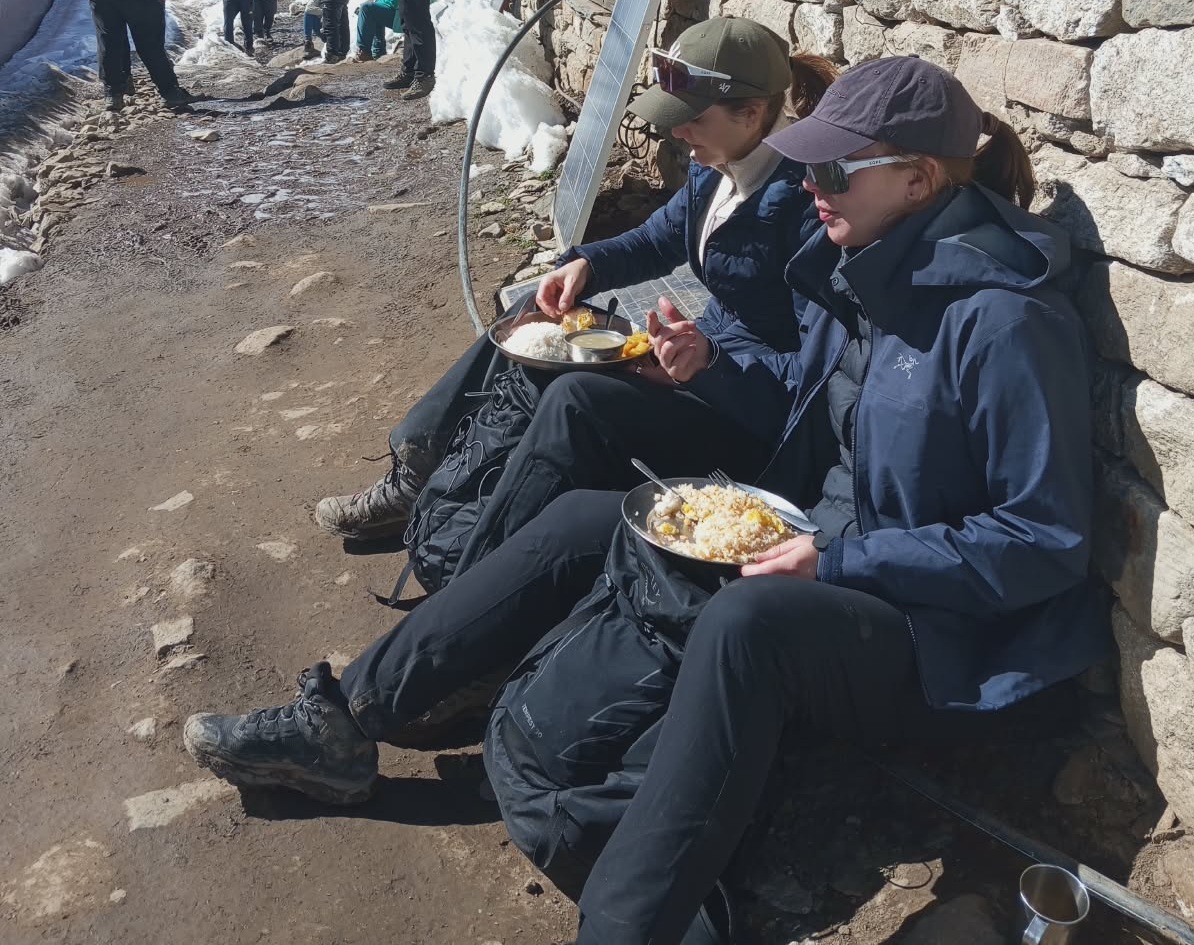
Our clients enjoying Meals ouside Teahouse
Food on the multi-day trek is more vital to you than you may have ever thought, not only for the energy that you need to go through such a long expedition but also for your morale after such a tiring experience. Manaslu’s options are less developed and more rustic than what one may be used to in more touristic trails, but this is part of the point once you get past the initial expectations.
What food is available on the Manaslu Circuit Trek?
Dal bhat, the traditional Nepalese dish of rice, soup, and vegetables, remains the most ubiquitous and reliable source of nutrition on the trek, available in almost every teahouse along the trail. Additionally, the teahouses provide noodle dishes, soups, and potato-based meals in their menus, as well as breakfast staples like porridge, eggs, and pancakes, which are slightly more limited at higher altitudes.
Why do guides recommend eating dal bhat specifically?
Aside from being the most available option on the trail, dal bhat is normally served in generous portions that can be refilled at any time, making it the perfect value for the amount of energy you need to expend during the trek. It is also normally the most trustworthy option at higher altitudes when other dishes may not be available.
Does food get more expensive at higher altitude?
Yes, significantly. Given the fact that the bulk of the supplies can be delivered by either a porter or a mule to higher-located villages, the costs for food and drinks increase sharply from one village to another. So, for instance, the food in such villages as Samagaon and Samdo will cost more than the same dish in Soti Khola or Jagat.
Should I bring my own snacks?
Yes, it is true that most trekkers tend to carry their own supply of energy bars, dried fruits, nuts, and other lightweight snacks that are cheaper to purchase in Kathmandu than on the trek and are a good source of energy while trekking.
Are vegetarian and dietary restriction options available?
Yes, in general, trekkers are accommodated successfully. Dal bhat is vegetarian by its nature. Thus, most teahouses can prepare simple vegetarian noodles and rice dishes. More strict dietary requirements are more difficult to fulfill in the high mountains, so people are obliged to bring extra food from Kathmandu to satisfy all their needs.
Packing List
Packing for Manaslu: there's a wider variety of temperatures and terrain than on most trips, given the journey from subtropical valleys to the roaring alpine passes in one trek. Getting your core gear right before departure will make a much bigger difference to your comfort and safety on the trail than almost any other preparation.
What are the essential items for a Manaslu Circuit Trek packing list?
Core essentials include a four-season sleeping bag, clothing suitable for a wide range of temperatures, well-broken-in trekking boots, a headlamp with spare batteries, trekking poles, a first aid kit including your personal medications, sunglasses or glacier glasses, a water bottle or bladder and a water purification method, and a good quality down jacket for the higher, colder parts of the route.
Do I need to rent or buy gear before the trek?
Both options are open and common - Kathmandu's Thamel district has plenty of stores for either purpose. It's often easier on the budget to buy what you need there rather than bring it from home and risk damage in transit, but well-worn boots are an exception to this rule, being much more comfortable to trek in than rented alternatives.
How heavy should my daypack be?
The perfect daypack must hold your water, daily essentials, snacks, camera, and maybe an extra layer of clothing, but also not exceed 5 to 7 kilograms' weight, which depends on whether you have a porter carrying your full pack or not.
Should I bring my own first aid and medication supplies?
Certainly, you must carry your own first aid supplies, as the guide always has a vast supply of tools for any big emergencies. Important items you must remember to carry include any prescriptions you use regularly, along with your basic pain remedy and anti-diarrhea pills; treatment for blisters should be taken into account, as well as altitude sickness drugs like Diamox (after you consult your doctor on this matter). Don't forget to take enough of your regular medications not only for the trek itself but also for the additional days of your stay in the mountain area in case of unforeseen delays.
Travel insurance is a part that you can't really cheap out on, given how high it goes and the cost of getting evacuated in the Himalayas. Knowing what to look for in a policy before buying it can save you a headache once you're already on the trail.
Is travel insurance required for the Manaslu Circuit Trek?
Yes, basically for good reason. Because of how high it gets, comprehensive insurance with high-altitude emergency evacuation coverage that goes up to 6,000 meters is typically required to do this trek through an authorized agency, and is a must given how much helicopters cost in this part of the world.
What should my insurance policy specifically cover?
At minimum, medical treatment, helicopter evacuation at high altitudes, and trip cancellation or interruption coverage. Make sure it specifically mentions high-altitude trekking and has a coverage limit that goes beyond the roughly 5,100 to 5,160 meters of Larkya La, as some standard travel policies don't include high-altitude activities or only go up to a certain limit.
Do I need proof of insurance before I can start the trek?
Because of safety and evacuation concerns associated with trekking at such high altitudes without sufficient travel insurance, many registered agencies will not make a reservation or start permit processing until you have obtained sufficient coverage.
Money, Cash, and ATMs
Cash management is the single most overlooked aspect of Manaslu trip planning, and it is genuinely limiting in terms of choice in a way few other planning oversights are. Make sure to get it fully sorted before departing from Kathmandu.
Are there ATMs along the Manaslu Circuit Trek route?
No, most of the location during the trek is remote, so the cash that you need for any expenses during the trek (even those fully covered in a trek package) needs to be withdrawn and carried with you from Kathmandu before departing on the trek.
How much cash should I bring for the trek?
The cost is approximately USD 150 – 300 (Nepali Rupees) per person, to be paid for wifi, charging, hot showers, drinks, food and tips. This cost is applicable even for those who have taken a fully arranged and packaged trek. Although most of the expense has been taken care of, there will still be some costs that will be incurred.
Can I pay with a card anywhere on the trail?
Usually not. Past the lower villages, card payment is not consistently available, and almost all establishments from one village to another will require cash payment.
Where should I exchange money before the trek?
Currency exchange facilities exist in Kathmandu, where currency exchange counters and banks can be found, and you also need to be used before you leave if you require a high amount of Nepali rupees, as there are no exchange opportunities along the trekking route.
Safety and Difficulty
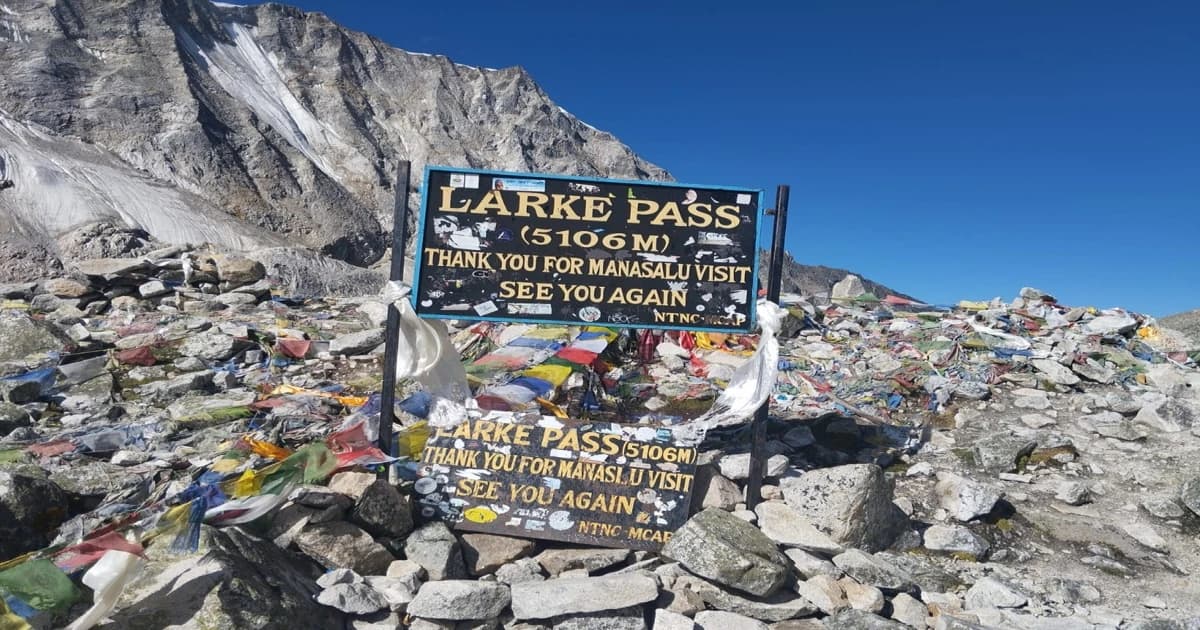
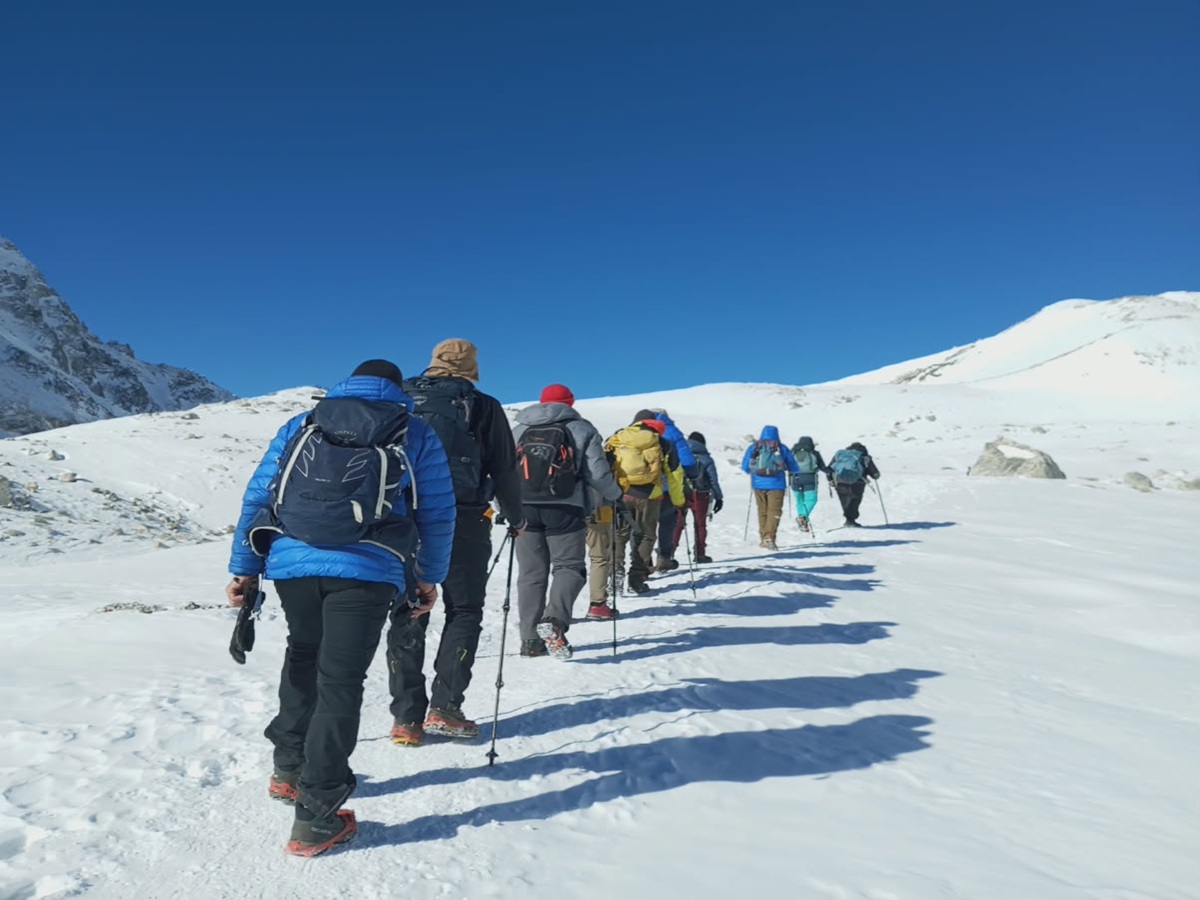
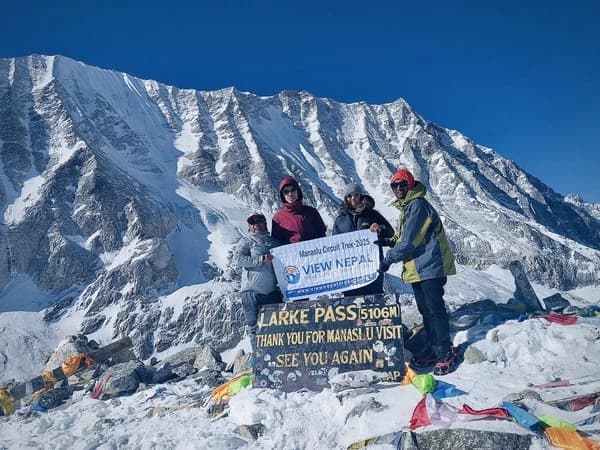
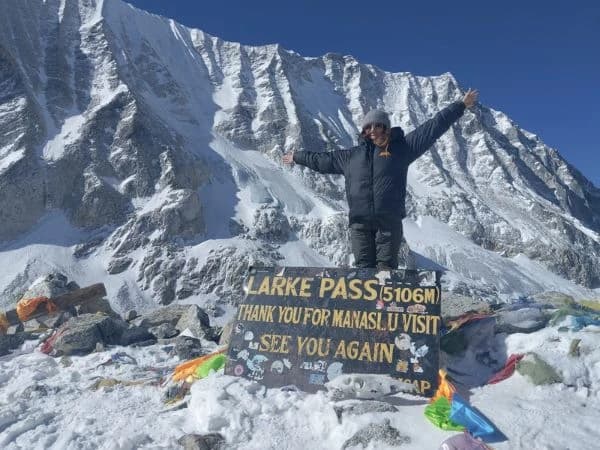
Crossing Larke la pass with our guide from View Nepal Treks
Concerns about safety are often what keep potential travelers from booking a trek, and they deserve clear and specific responses instead of either too reassuring or too alarming answers.
Is the Manaslu Circuit Trek dangerous?
Trekking in this area does not pose any dangers typical of trekking in the Himalayas, such as altitude sickness or bad weather developments around Larkya La Pass. The route still remains safe, however, as long as it is taken with proper acclimatization measures carried out and a licensed local guide hired to accompany the travelers. These obligations are created specifically to lower risks connected with the trek.
What is the biggest safety risk on this trek?
The most worrying thing one can encounter during this journey is altitude sickness. Its effects are likely to occur even before the trekkers recognize the symptoms, particularly if the acclimatization process is not followed.
Are the trails well maintained and safe to walk?
Yes, it's generally the case that even if you are trekking on this trail, it is well maintained. There are permit checkpoints in numerous police and conservation areas along the way, making it well patrolled and monitored, even if it is less busy than some of the higher-profile trails like Everest Base Camp or Annapurna Circuit.
Is emergency rescue available if something goes wrong?
Helicopter evacuations are possible from a number of points along the trail, depending on the weather and your insurance coverage. Guides know when to call for evacuation and can contact rescue services in Kathmandu directly.
Frequently Asked Questions Recap
What is the single most important practical tip for the Manaslu Circuit Trek?
Before departure, plan to bring adequate funds with you, since ATM services will not be available during the trip. Also, keep in mind to budget additional costs to cover personal expenses such as the cost of wifi and charging services that can total from USD 100 to 300 on top of the price of your tour package.
Do prices for wifi, charging, and showers vary significantly by village?
Yes. Prices increase with elevation because of transportation costs associated with the fuel and upkeep of solar equipment, as well as bearing the additional gear to the remote villages. Expect higher costs in Samagaon, Samdo, and Dharamsala compared to the lower prices you may find in the lower villages on the way to the trek.
Is this trek suitable for a first-time high-altitude trekker?
If you prepare properly and plan your trip accordingly, in accordance with the acclimatization needs, you may think of the trek as possible even for not very advanced trekkers.
Final Say
The reason many novice trekkers on the Manaslu Trail face difficulties is not due to planning their timetable or permits, but rather because of their ignorance of the finer aspects of traveling on the trek.
Knowing that there are no cash machines along the trek, realizing how much money will be needed for wifi and hot showers, becoming aware of the fact that dal bhat will be eaten more than anything else, and knowing how to pack properly in order to be ready for the fluctuations of the temperature. Make sure to arrange all the above in advance before heading off on the trek to make your everyday life much easier.
If you have any question which is not addressed, it is better to ask them directly with your trekking agency before you go instead of making any guesses or waiting till you are already trekking.
Agencies which run this trek regularly have encountered nearly every practical question possible, so it would be much faster to send a quick message instead of waiting till you are on the trek and trying to figure things out while out in the field and with limited connectivity.
The Manaslu Circuit, being more remote than other treks, rewards those who are prepared, as those who venture unprepared tend to have a much rougher trip.
Manaslu Circuit Larkey pass Trek start from Barpak (Epicenter of Earthquake 2015), samagaun, monasteries , Tibet boarder and Larkey Pass