Manaslu Circuit Trek Cost at a Glance
|
Trek Style
|
Average Cost Per Person (USD)
|
|
Budget Group Trek
|
$850 - $1,000
|
|
Standard Guided Package
|
$1,000 - $1,350
|
|
Premium Package
|
$1,350 - $1,700
|
|
Private Trek
|
$1,700 - $2,200+
|
What Is the Average Manaslu Circuit Trek Cost in 2026?
The average Manaslu Circuit Trek cost in 2026 is somewhere between USD 900 and USD 1400 per person for a usual 13-15 day supported hike. That’s all for some common package that’ll pay for your necessary trekking-related service needs to cross the entire circuit legally & protected.
Having said that, there is no standard fee for this hike; what you spend is directly dependent on the trekking agency, trip format, group size, and other factors like accommodation, etc.
Two people hiking the same trek, taking a larger group package trip, may spend under USD 900, whilst an individual on a privately guided trip, staying at boutique hotels and hiring private jeeps and more assistants for logistics, will certainly spend upwards of USD 2,000, for an almost tailor-made package.
Several key factors influence the final price:
1. Group Size
This is, without doubt, the most significant factor that will influence your overall cost. When shared costs like transportation, guides and licensed personnel, airport transfers, and overheads are spread among several trekkers, they become considerably more cost-effective.
Alternatively, a group of eight people could potentially each receive a payment of several hundred dollars less per person than that which would be payable to an individual traveling on a tour as part of a group.
2. Trek Duration
A shorter itinerary naturally costs less than a longer one. Every extra trekking day increases expenses for:
The Manaslu Circuit Trek usually takes between 13 and 16 days, and the 13 or 14-day version of this trek will present the most balanced costs, accommodation, and trek!
3. Transportation Choice
The modes of travel that you opt for while travelling will drastically vary the cost.
|
Transportation Option
|
Approximate Cost
|
|
Local Bus
|
Lowest
|
|
Shared Jeep
|
Moderate
|
|
Private Jeep
|
Highest
|
Shared jeeps are very commonly opted by the travellers because they offer the convenience, comfort, less time, better condition of roads, though the public transportation buses are the most economical option.
4. Guide and Porter Services
The trekking route in the Manaslu Restricted Area requires a mandatory guided trip for foreign nationals. As of recent rule updates, solo trekkers can actually trek this route, but they are still legally obliged to obtain a guide from a licensed travel agency that is registered.
Hiring a porter can also be opted for, highly suggested especially when you are carrying a heavy backpack that weighs more than 10-12 kgs. Hiring a single porter to share between two trekkers is also another cost-effective way to make trekking extremely comfortable.
5. Trekking Season
The time of year also affects your budget.
Autumn Season (September to November) is undoubtedly the peak month for demand, both for the guides, porters, travel, and accommodation options in general, but it is also the month where you will be paying more for your RAP as well.
While Spring prices remain in their steady place for package deals, demand has lessened while prices at the trekking agency are reduced during Winter and the Monsoons, although weather conditions can be rough.
6. Services Included in Your Package
All trekking packages don't offer the same services, so inquire about that while booking. Ensure the price quoted for your chosen plan at the time of trekking includes the following:
What at first seems like the cheapest package can cost more by the time those costs have been separately added in.
How Much Does the Manaslu Circuit Trek Cost Per Person?
If you have the Manaslu Circuit Trek in your mind, you may wonder how much this trek costs in the Manaslu trekking package. However, it is completely dependent upon your team size, the length of your trek, mode of transportation, the time of trekking, and the services you’re looking to have.
For the average trekker in 2026, a standard 13 - 14-day guided group trekking tour of the Manaslu Circuit typically runs between $850 and $1,500 USD per person. If you are interested in a cheaper budget group trek, it will be at the lower end of the cost.
In comparison, a private trek tour with private transportation facilities and upgrades may cost 10% to 25% higher than the average 13 - 14 day tour price package.
The Manaslu Circuit is not a fully open trekking region like the Everest Base Camp and Annapurna Circuit. This implies that each foreign trekker has to get restricted permits and trek with a qualified licensed trekker under the services provided by the trekking agencies.
However, with the latest rules updated since the trekking season of 2026, you can still trek solo with the licensed trekker in the Manaslu Circuit without the need to pair with a co-trekker to get your permit.
Manaslu Circuit Trek Cost Per Person by Group Size
|
Group Size
|
Average Package Cost (USD)
|
Best For
|
|
1 Person
|
$1,250 - $1,700
|
Solo travellers wanting flexibility
|
|
2 People
|
$1,000 - $1,350
|
Couples and friends
|
|
3 - 6 People
|
$900 - $1,200
|
Small groups seeking better value
|
|
7 - 12 People
|
$850 - $1,100
|
Large groups and clubs
|
Money-Saving Tip: Naturally, transportation, guide fees, transfers to and from the airport, as well as overall operating costs for trekking, are divided among the group; therefore, as the group size increases, the price per person falls.
Solo Traveller Cost
Traveling solo provides for ultimate freedom and comfort, but it’s by far the most expensive, as fixed operational costs fall onto you alone. A solo traveler would be required to spend from around $1,250 to $1,700 for a 13-14 day package.
Why is solo trekking more expensive?
When you trek alone, you pay the full cost of:
While permits are free no matter group size, as guide and logistics prices can't be split up, it gets expensive.
Typical Solo Trek Budget
|
Expense
|
Estimated Cost
|
|
Permits
|
$160 - 220
|
|
Licensed Guide
|
$350 - 500
|
|
Accommodation
|
$120 - 180
|
|
Meals
|
$250 - 350
|
|
Transportation
|
$80 - 250
|
|
Miscellaneous
|
$100 - 200
|
|
Estimated Total
|
$1,250 - 1,700
|
Solo trekking will really appeal to those who want the freedom and freedom of arranging things themselves, dictating their own pace, and having all the cards for choosing the dates of their trip.
Cost Per Person for Two Trekkers
One of the best value and most commonly taken trekking options is trekking with 1 friend/partner.
By taking along another friend/partner, many of the fixed costs could be shared, and your package price slashed down to around USD 1,000 - USD 1,350 per person.
Shared Costs Include
Accommodation, meals and permit costs are all calculated separately, so you get the biggest value out of sharing logistics and guide prices.
Why Many Couples Choose This Option
-
Lower cost than solo trekking
-
More flexible than joining a large group
-
Easier to customise the itinerary
-
Better value while maintaining a private trekking experience
Cost Per Person for Small Groups (3 - 6 Trekkers)
This option provides good value for your money while still being comfortably flexible.
Prices are generally cheaper as travel arrangements and logistics are shared among a larger group. Tour operators typically offer a good group discount on trekking. The average package price varies anywhere from $900 to $1,200 per person.
Advantages of Small Group Treks
-
Lower cost per person
-
Better guide-to-trekker ratio
-
Easier logistics
-
More enjoyable social experience
-
Faster permit processing
-
Ideal for families and groups of friends
Cost Per Person for Large Groups (7 - 12 Trekkers)
Large groups generally go along with the cheapest rate per-capita; as many operational fees like transport and guide salary are shared by the people.
For standard group packages, look out to part with between US$ 850-1,100 per individual. Operators include assistance guide(s) on the journey.
Why Large Groups Receive Better Prices
-
Shared transportation expenses
-
Lower administrative costs per person
-
Efficient guide allocation
-
Better accommodation booking rates
-
Bulk logistics reduce operational expenses
Large groups are an excellent option for trekking clubs, schools, corporate teams, and organised travel groups.
Example Cost Comparison by Group Size
|
Cost Category
|
Solo
|
2 People
|
4 People
|
8 People
|
|
Permits
|
Same
|
Same
|
Same
|
Same
|
|
Guide Cost
|
Highest
|
Shared
|
Shared
|
Shared
|
|
Transportation
|
Highest
|
Shared
|
Lower
|
Lowest
|
|
Airport Transfers
|
Individual
|
Shared
|
Shared
|
Shared
|
|
Overall Cost Per Person
|
Highest
|
Lower
|
Better Value
|
Lowest
|
The conclusion for this comparison is that it can be noted that while permit fees stay approximately the same for both size groups, shared services like transport and guides lower the total cost of the excursion per person as the group size increases.
Which Group Size Offers the Best Value?
For most trekkers, a group of 3 - 6 people provides the best overall value.
You benefit from:
-
Lower package prices
-
Easier cost sharing
-
Flexible itineraries
-
Comfortable transportation
-
Personal attention from your guide
-
Better availability in teahouses during peak seasons
If budget is your only concern, a 7-12 person group size generally gives the lowest per-person price. That being said, though, if you still want the personal experience of a custom trip without solo surcharges, this is by far your best bet.
How Does Group Size Affect the Manaslu Circuit Trek Cost?
The size of your group significantly impacts the Manaslu Circuit trek price. Although the permit for your group will stay at the same rate per trekker as per govt rules, your transport, airport transfers, operation cost and most importantly, the cost for your guide(s) will be cut by the size of your group.
Usually larger the group price per trekker becomes; this is why trekking agencies give you discounts for bigger groups.
Once you've made up your mind about trekking solo, with a buddy or with a group, learning the ins and outs of these split costs can help you settle for the option with the best balance between cost, convenience and comfort.
Fixed Costs vs Shared Costs
Some costs do not increase based on group size. Expenses can be charged on a per-person, per-couple, or per-booking basis.
Those expenses listed in previous items that are related to a government fee or are connected with providing meals, accommodation, travel to/from home, own equipment, renting out own snacks and drinks not included that must be personal, whether trekking alone or with ten fellow travellers.
Alternatively, some costs like a professional guide service, the private vehicle jeep transfer for logistics purposes, Airport transfer, Entry and Permit procedures, overall coordination, etc. are group costs.
These operational costs get divisible among the trekkers, so as the number of trekkers per group rises, the share price reduces.
Manaslu Circuit Trek Cost by Group Size
|
Group Size
|
Estimated Cost Per Person (USD)
|
Average Savings Compared to Solo
|
|
1 Person
|
$1,250 - 1,700
|
—
|
|
2 People
|
$1,000 - 1,350
|
10 - 20%
|
|
3 - 4 People
|
$900 - 1,250
|
20 - 30%
|
|
5 - 8 People
|
$850 - 1,150
|
25 - 35%
|
|
9 - 12 People
|
$800 - 1,050
|
Up to 40%
|
Note: The figures listed are for the cost of a basic 13-15 day itinerary. Prices may differ according to time of year, route, transportation to and from China, level of accommodation and included services and excursions.
Solo Trekker (1 Person)
Traveling alone provides total freedom regarding when you leave, how fast you go, and what route you will follow. Since you are the one financing all your travel expenses, it is also the costliest way to travel solo.
While new updates in the government policy have allowed foreign trekkers in the Manaslu restricted area to apply for a permit without a companion trekker, you still have to arrange for a registered trekking agent who provides you with a trekking license holder and the required visa.
Due to this, you have to manage the cost of a guide permit, trekking permit, transportation and permit.
The solo journey is for travelling professionals, photographers, and hikers who value their space and need more flexibility than low prices.
Two Trekkers
Trekking as a group with a buddy, partner, or kin. This is many people's favorite choice when it comes to an inexpensive but also custom experience, and for good reason.
Having two people allows you to share costs between both of you for things such as guide fees, airport transfers, and transportation, so that it turns out much less for each one of you.
And still have the benefit of designing our own itinerary with our friends or our loved ones! Many couples or friends find this a great travel value deal without having to travel so uncomfortably.
Small Groups (3 - 6 People)
Most trekkers and hikers feel that a group size of 3 to 6 people provides value. Since the operational cost of the entire operation is divided among the few participants, they get reasonable rates on their treks.
Small groups are also simpler on the trek, with more personalized service, easier to book accommodation in peak season, and allowing for a consistent marching pace for the group.
Also, it is the case that many operators have allocated a guide for every two walkers, which does not considerably increase the tour price and adds comfort to the trekkers.
Large Groups (7 - 12 People)
Large groups (most of which are shared on nearly every cost basis you can conceive) will usually benefit from the lowest cost per person.
Jeep transfers are significantly cheaper on a private basis; the cost of guides is shared between all members of your group, and most trekking operators offer even more discounts for group bookings.
These discounts make trekking groups a practical and often much cheaper option for trekking clubs, work colleagues, student groups, and planned trips, etc.
The only catch is that bigger groups are typically a bit more informal, a bit slower, and can feel like more of a team effort when it comes to moving and settling into teahouses, especially during the shoulder-season during the popular spring.
Example: How Shared Costs Reduce Your Budget
The table below shows how the same operational expenses become much cheaper as more trekkers share them.
|
Shared Expense
|
Total Cost
|
Solo
|
2 People
|
4 People
|
8 People
|
|
Licensed Guide
|
$420
|
$420
|
$210
|
$105
|
$53
|
|
Private Jeep
|
$260
|
$260
|
$130
|
$65
|
$33
|
|
Airport Transfers
|
$60
|
$60
|
$30
|
$15
|
$8
|
|
Permit Processing
|
$80
|
$80
|
$40
|
$20
|
$10
|
|
Total Shared Cost Per Person
|
—
|
$820
|
$410
|
$205
|
$104
|
Does a Bigger Group Reduce Permit Costs?
The simple answer is no.
Contrary to popular belief, trekking in a group doesn’t decrease the official government permit fees. For the Restricted Area Permit (RAP), Manaslu Conservation Area Permit (MCAP), and Annapurna Conservation Area Permit (ACAP), the permit prices remain the same per person regardless of how many individuals are in your group.
It costs the same official price for a solo trekker, or one travelling with a group of 10 people, or a group of even 5 people.
The cost savings with a group membership all go toward group operational costs (the guides, transportation, equipment, and general administration - not discounted permits).
Which Group Size Offers the Best Value?
Your best bet in terms of affordability, flexibility and comfort: a group ranging from 3 to 6 trekkers. This offer allows you to save a great amount of money without compromising the personal experience during a trek.
If money saving is your primary concern, then going in a big group size (more than six people) usually offers the lowest Manaslu Circuit trek price per person.
Conversely, if you are looking for peace of mind along with your personalized travel itinerary small group size then it may be justified, at least for good guides and a faster pace in the Manaslu.
What Is Included in a Typical Manaslu Circuit Trek Package?
When considering trekking in Nepal, it is important to look at the trekking package prices critically. The lowest-priced package in Nepal is likely to omit some extremely important cost elements, which in the end will probably end up costing more in the end.
These can include park fees, transport (by road, foot and maybe a flight), meals (food, not accommodation and usually you expect to eat more when trekking than you'll generally eat in towns).
Usually, all good trekking agencies provide package deals for the Manaslu Circuit that include all facilities you need for trekking the Manaslu Circuit, safely and legally. Be aware of the fact that the inclusions may differ with the trekking agencies.
The 13-14-day standard Manaslu Circuit Trek package usually consists of necessary permits, guide license fee, and teahouse stays. It should also consist of transportation between Kathmandu and the trailhead as well as basic support services.
Other expenses such as personal expenses, travel insurance, drinks, tips for guides, porters, and equipment hire, etc are not included.
Typical Inclusions and Exclusions
|
Included in Most Packages
|
Usually Not Included
|
|
Manaslu Restricted Area Permit (RAP)
|
Nepal visa fees
|
|
Manaslu Conservation Area Permit (MCAP)
|
International flights
|
|
Annapurna Conservation Area Permit (ACAP)
|
Travel insurance
|
|
Licensed English-speaking trekking guide
|
Lunch and dinner in Kathmandu
|
|
Teahouse accommodation during the trek
|
Personal trekking gear
|
|
Transportation to and from the trailhead
|
Porter (unless specified)
|
|
Guide's salary, meals, accommodation and insurance
|
Hot showers and WiFi
|
|
Government taxes and service charges
|
Charging electronic devices
|
|
Basic first aid support
|
Tips for guide and porter
|
|
Permit processing and trip coordination
|
Personal snacks and drinks
|
Tip: Certain luxury packages also include porter services, a hotel stay in Kathmandu, airport transfers, food during the trek, etc. These tend to be slightly costly initially but offer better value due to the absence of supplementary costs during travel.
Why Package Inclusions Matter
Most trekkers focus entirely on the price of the package, but what's included is just as important. One company could price a trek at $850, and the other at $1,100 - $850 is clearly less!
For instance, if that lower-priced package doesn’t include permits, transportation, a porter, or meals, then after these add-ons, it may not actually be so cheap.
Sometimes, it's worth paying extra for a package. That extra can include permit arrangements, certified guides, transportation, accommodation, and support services in case of an emergency, all making your holiday planning much simpler and avoiding some major expenditure along the way.
Questions to Ask Before Booking
Before you commit to booking the tour, clarify with your trekking operator specifically what's included in your tour price - ask if your tour price includes:
-
All required trekking permits
-
Licensed guide fees and insurance
-
Porter service (if needed)
-
Transportation between Kathmandu and the trek starting point
-
Accommodation in Kathmandu before or after the trek
-
Daily meals during the trek
-
Airport transfers
-
Government taxes and service charges
It is advisable to get clarity on such things beforehand for a better trekking company selection based on fair price comparison, as hidden fees and prices generally get revealed when you arrive there.
Which Package Offers the Best Value?
Most trekkers find a standard all-inclusive tour package to be a fair trade between price, convenience and security; it generally covers all your key permits, a certified guide, and the required transport, lodging and logistics so that you are only concerned with the trekking experience itself.
When traveling as a group, you might also be able to purchase package deals from some operators. Most operators have discount rates for groups but otherwise provide the same standard of travel, so group trips are a cost-effective solution on the Manaslu Circuit Trek.
Complete Manaslu Circuit Trek Cost Breakdown (2026)
To get your budget in line when planning the Manaslu Circuit Trek, you need to know where you stand, so the price package your trekking company advertises is essentially a sum of various elements which go into the trek. These are permits, guides, food, accommodation, transportation costs, and incidental expenses.
The cost of the group Manaslu Circuit trek would be between $900-$1400 per person. Depending on the standard or level of your selected service and other things, some other private treks would have higher costs.
Bigger groups always have lower prices per person; shared operational and support team costs help out to make treks more affordable for groups.
The table below provides an estimated breakdown of the major expenses you should expect in 2026.
Estimated Cost Breakdown for a 13 - 14 Day Manaslu Circuit Trek
|
Expense Category
|
Estimated Cost (USD)
|
Mandatory
|
|
Restricted Area Permit (RAP)
|
$115 - 190
|
Yes
|
|
Manaslu Conservation Area Permit (MCAP)
|
$30
|
Yes
|
|
Annapurna Conservation Area Permit (ACAP)
|
$30
|
Yes
|
|
Licensed Guide
|
$390 - 520
|
Yes
|
|
Porter (Optional)
|
$250 - 350
|
No
|
|
Transportation
|
$80 - 250
|
Yes
|
|
Teahouse Accommodation
|
$120 - 180
|
Yes
|
|
Meals During Trek
|
$250 - 350
|
Yes
|
|
Travel Insurance
|
$50 - 150
|
Strongly Recommended
|
|
Personal Expenses
|
$80 - 200
|
No
|
|
Tips for Guide & Porter
|
$70 - 150
|
Expected
|
|
Estimated Total
|
$900 - 1,400+
|
|
Note: The rates above are indicative for a standard Manaslu Circuit trek. The cost varies due to the trek season, length, transportation, group size and services included in packages.
Permit Costs
Government fees are one of your larger expenditures, as every foreign trekker requires permits from the Government of Nepal before being allowed to access the Manaslu Restricted Area. Note: these are not altered due to the size of your trekking group.
For a regular Manaslu Circuit trek, you need a Restricted Area Permit (RAP), Manaslu Conservation Area Permit (MCAP), and Annapurna Conservation Area Permit (ACAP). Your package will certainly have additional permits if you trek the Tsum Valley and include restricted segments in your trek.
Guide Cost
Foreign trekkers need at least one registered guide for trekking in the Manaslu region. Usually the fees range from USD 30-40 /day. This price will mainly include the guide’s salary and accommodation, his meals and insurance.
For a trip of 13-14 days, this will cost USD 390-520. In a group trek, this cost is borne by the group itself.
Porter Cost
Although you have the option to hire a porter, we recommend doing so if possible. This way you can experience the trek while not having to drag a heavy load. They charge on average $20 USD per day for an individual with a pack weighing up to around 20- 25 kg (commonly shared between 2 people), and in a typical 3-week schedule, budget $250 USD - $350 USD.
Transportation Cost
Transportation charges depend on a local bus, shared jeep or private jeep. Local bus is cheaper; shared jeep is not that comfortable and takes time to reach the trekking path from your starting place.
However, a private jeep is the most comfortable and short travelling route. Transportation expenses are divided if people travel in a group. Transportation between Kathmandu and your preferred trekking destination in a round trip costs USD80-250 for many trekkers.
Accommodation Cost
Following a teahouse trekking route, you’ll find comfortable lodgings available in almost all the villages you visit. You’ll find lodging to be very reasonably priced, although at higher altitudes there is a supplement on room prices due to stock shortages.
Accommodation during your trek typically comes in a basic twin-sharing room, and if private rooms exist, this is usually for an added cost in certain villages. During your 13 - 14 day trek, accommodation usually costs USD 120 to USD 180.
Food Cost
As your journey continues, you will notice a considerable spike in your cost of living because all your provisions-including meals-are being hauled up to your alpine campsite by your team and their pack animals or whirring helicopters.
Meals on trek generally range from USD 5 to 8 for breakfast, USD 7 to 12 for lunch and USD 8 to 12 for dinner depending on where you have it. While you are trekking, most will spend between USD 250-350 a person if their trekking package doesn’t include meals.
Travel Insurance
The trekking package price typically doesn’t contain the insurance, and it should be an essential consideration for trekking the Manaslu Circuit. Insurance policies for higher trekking, over 5000m in altitude, must cover all the relevant things, and most critically, Helicopter Rescue should be included.
The price can depend on how old you are, what insurance you use, and even what country you live in, but typical trekking insurance tends to cost between the range of USD 50 and USD 150.
Personal Expenses
In addition to the core trekking budget, factor some extra money for those individual “nice-to-haves” you’ll find yourself buying on the trail.
Your Wi-Fi use, shower usage, gadget recharges, bottles of water, snacks, laundry, and souvenirs (that you definitely want to take home) will start to rack up over two weeks. The vast majority of people budget from USD 80 - 200 a person for additional items.
Tips for Guides and Porters
Whether you should tip for trekking or not isn’t entirely up to you, as it is expected during trekking as part of trekking etiquette in Nepal and an added bonus for the employees who make your travel smoother.
A rough estimate is in the range of USD 70 - USD 150 per trekking person. It varies in relation to how much the expedition costs, the service offered, and how many of us you will travel with in a group.
How Much Should You Budget Overall?
A real budget for the Manaslu Circuit trek in 2026 would range from around $1000-$1300 (USD) per person for a typical assisted group trek. This cost is inclusive of permit for trekking, guide fees, Accommodation, Travel and daily trekking costs.
Opting for personal transport, a dedicated personal porter, superior hotels, longer trekking times and anything you wish for would soon take your bill to well over USD 1,500 each; this makes joining up with a big bunch and opting for the everything is catered for option the ultimate way to cut the expense of your trek.
What Is the Manaslu Circuit Trek Cost Per Day?
Manaslu Circuit Trek per day cost depends on whether you avail the all-inclusive trekking package or arrange your own expenses in a DIY fashion. The majority of Manaslu Circuit trekkers budgets approximately USD 70 to USD 120 a day for a regular guided tour.
This budget estimate covers accommodation, meals, guide assistance, transport expenses, which are distributed throughout the trekking journey, permits, as well as miscellaneous trek-related costs. The higher your group strength, the lower will be your per-day expenditure, as transport and guide costs are distributed to more trekking participants.
If the trek is arranged and the entire package is booked through a registered trek company, usually there would be a certain price fixed per day, so managing the budget of trekking is simpler, as you would not have to think about expenses as well.
On the other hand, if the services were booked separately, there can be expenses per day as per the altitude of trekking, accommodation level and diet, and additional expenses like hiring a porter or a personal jeep vehicle.
Estimated Manaslu Circuit Trek Cost Per Day
|
Expense
|
Estimated Daily Cost (USD)
|
|
Accommodation
|
$8 - 15
|
|
Breakfast, Lunch & Dinner
|
$20 - 35
|
|
Licensed Guide
|
$30 - 40 (shared in groups)
|
|
Porter (Optional)
|
$20 - 25 (often shared by two trekkers)
|
|
Transportation (Average Daily Share)
|
$6 - 15
|
|
Personal Expenses
|
$5 - 15
|
|
Estimated Total Per Day
|
$70 - 120
|
Note: When you buy the all-inclusive trekking tour package, all these costs will be included in the total package. Thus, you might have just enough money to buy drinks, snacks, Wi-Fi, have a hot shower, charge batteries, and Tip a guide.
Daily Cost by Trekking Style
|
Trekking Style
|
Average Daily Cost
|
|
Budget Group Trek
|
$70 - 85
|
|
Standard Guided Trek
|
$85 - 100
|
|
Premium Guided Trek
|
$100 - 120
|
|
Private Trek
|
$120 - 160+
|
In a budget group trekking trip, trip expenses like transportation, guide fee, trekking gear, accommodation and food cost are distributed among a few individuals, thus offering a minimum cost per person.
However, standard package treks offer logistical advantages along with more enhanced services than budget group trekking. In contrast, the cost of private trek packages will be higher, considering a dedicated guide and private transportation.
When managing your expenses, make sure to factor in an extra $10-20 USD daily for your personal spending money, to cover individual purchases of bottled (or boiled) water, snacks, coffees, baked items, as well as recharging devices, internet connectivity and hot water.
These are quite minor but can really start to build up on a two-week trekking experience, especially as the cost of items naturally increases with height due to transport.
How Much Does the Manaslu Circuit Trek Cost for Indian Trekkers?
The price of the Manaslu circuit trek is lower for Indian travelers than for most foreigners, as Indian nationals don’t need to buy a Nepal tour visa and pay subsidized prices for the Nepal conservation area permit (MCAP) and conservation area (ACAP) as a SAARC nationality holder.
But the restricted area permit(RAP) fees are the same for Indian nationals and all other trekkers. In either case, a professional guide provided by a registered trekking company is a must for the trek.
For Indian travelers who plan to take an Indian group tour package to Manaslu, the trip to Nepal will cost somewhere between USD 900 and USD 1,300 (around INR 78,000 to 1,12,000). This package covers the permit costs, the required travel arrangements, a guided tour from a licensed guide, as well as a stay in the trekking lodge/teahouse.
In case one takes the private tour and decides on booking a private Jeep ride along with a personal driver as well, the cost can go up to between USD 1,400 and USD 1,800 (around INR 1,20,000 to 1,55,000).
Estimated Cost for Indian Trekkers
|
Expense
|
Estimated Cost
|
|
Trek Package
|
USD 900 - 1,300
|
|
Flights or Travel to Kathmandu
|
USD 100 - 300
|
|
Travel Insurance
|
USD 50 - 100
|
|
Personal Expenses & Tips
|
USD 100 - 200
|
|
Estimated Total Budget
|
USD 1,150 - 1,700
|
Indian trekkers may be able to reduce the total cost if they travel to Kathmandu via land, as part of an organized departure and share a porter with another trekker, thereby decreasing the transport and operational costs while assuring you a perfectly safe and expertly guided trekking experience.
Manaslu Circuit Trek Cost for Nepali Trekkers
Permit cost for Manaslu Circuit for Nepali trekkers is low since they don’t require a Restricted Area Permit (RAP) for Manaslu. They require a Manaslu Conservation Area Permit (MCAP) and Annapurna Conservation Area Permit (ACAP). These permit costs are NPR 100 each. Total permit for Nepali trekkers will be: MCAP + ACAP + Chumnubri Rural Municipality fee = NPR 100 + NPR 100 + NPR 200= NPR 400.
A standard Manaslu Circuit Trek for Nepali trekkers for 13-14 days usually costs NPR 30,000 to 60,000, based on your chosen itinerary, transport, stay, and hiring of a guide and porter.
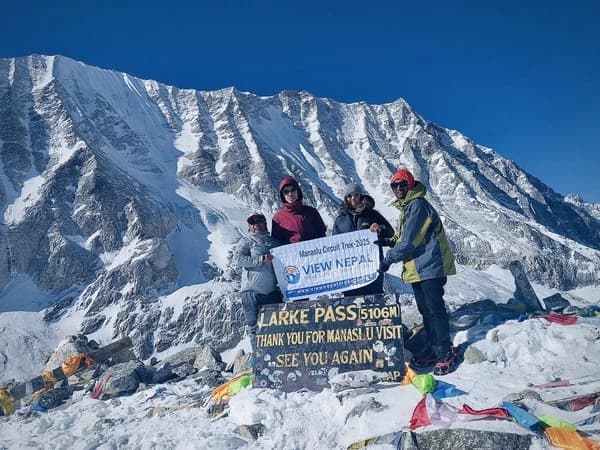
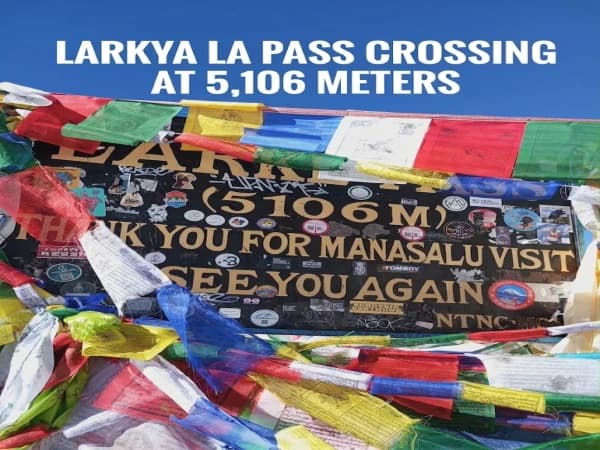
You can book teahouses that provide a comfortable staying environment. You can also take the services of a capable guide, who helps immensely in difficult terrains like crossing the Larke Pass (5,106 m), so it's a valuable addition.
Frequently Asked Questions About Manaslu Circuit Trek Cost
Is USD 1,000 enough for the Manaslu Circuit Trek?
Yes, you can go with USD 1,000 if it’s a shared trip with an inexpensive tour package. Although you’ll need additional money, with no less than you’ll find a way to spend on: traveler’s insurance coverage; personal bills like souvenirs, tips and other gadgets that you would be able to take; equipment rental. USD 1,100 - 1,300 can be the most inexpensive sum for this trip.
Can I reduce the permit cost?
No, government permit prices are government-approved and are set prices and non-negotiable. All foreign trekkers will need to purchase required RAP, MCAP, and ACAP passes, which is a government issued ticket. Try to get a package that is economical, with guide and transport costs covered, if travelling with a group.
Is tipping compulsory?
Although not obligatory, tipping is generally expected (and welcomed) in Nepal; you will likely tip your guide and porter after your trek based on their individual level of performance and your general perception of your trek, group size.
How much cash should I carry?
Carry an adequate amount of Nepali Rupees to cover all expenses during the trek. If your tour package is all-inclusive, then a sum of 150-300 USD is all in. If it excludes meals, then a budget of 400-700 USD will suffice. ATMs and credit card payments are mostly non-functional during the trek.
Can I pay by card?
Most shops, hotels and restaurants take either credit or debit cards when travelling in Kathmandu. However, once trek starts, most of tea house takes only cash payment so make sure to withdraw a sufficient amount of cash while you get to Kathmandu
Why is the Manaslu Circuit Trek more expensive than the Annapurna Circuit?
Manaslu Circuit Trek is costly because it is a restricted trekking area. You will be required to have a Restricted Area Permit (RAP), hire a licensed guide from any registered trekking agency, and arrange other logistics, as it is a trekking destination that you have to cover along with your porter-guide, whereas the Annapurna Circuit trek does not.
Can I trek the Manaslu Circuit without a guide?
No, foreign trekkers must be accompanied by the licensed trek guide provided by a registered trekking agency. The requirement of no less than two foreign trekkers has now been removed; however, any individual must hire a licensed trekking guide to secure the permits.
What is the cheapest way to do the Manaslu Circuit Trek?
The cheapest options here involve joining an organized, small group leaving together - sharing a guide and porter, using shared / public transport as and where available, staying in standard trekking teahouses - and booking through a reputable, registered Nepali trekking outfit to go with. All of these can save a considerable chunk of the expense.
When is the cheapest time to trek the Manaslu Circuit?
The cheapest period to trek is typically Dec-February (winter), and Jun-August (monsoon), as package prices tend to come down in these months from many tour operators. If you want the best time for trekking in terms of weather and track condition, spring (March-May) and fall (Sep-Oct) are the optimal choice.
Does the package include Kathmandu hotels?
It depends. There are specific packages including two nights or more in Kathmandu; some do not. Usually the night(s) before and after the trek can be bought separately as well - please specify what your requirement is for during booking.