Crossing Larkya La Pass at over 5,100 meters is the biggest obstacle on the Manaslu Circuit, and altitude sickness is the number one obstacle preventing trekkers from finishing the trail. This is not an exaggeration. It is simply a physiological fact that your body has to do some extra work to adjust to the decrease in oxygen concentration at elevations over 3,500 meters.
How difficult the trek will be depends not just on your individual response to this decrease, but on how much oxygen you lose during the climb.
This guide details exactly how altitude sickness works, how to prevent it in Manaslu specifically, how the drug Diamox counteracts the symptoms and how it is generally administered. It also describes the physical demands of Larkya La Pass, the dangers posed by snow and the temperatures you should expect month by month, and what emergency rescue operations generally involve.
This is not meant to scare you off. It is meant to inform you about precisely what can go wrong and what to expect, so that by the time you've arrived in Dharamsala at night before your crossing attempt, you know exactly what to be prepared for.
Quick Answer: What You Need to Know About Manaslu Circuit Altitude Sickness
Question
Answer
How high is Larkya La Pass?
Approximately 5,106 to 5,160 meters from different sources and snow depth
What is the maximum altitude on the Manaslu Circuit?
Larkya La Pass is the highest point on the normal route
How many acclimatization days does the itinerary include?
It is usually spent on the two specific days, Samagaon and Samdo
Does Diamox prevent altitude sickness?
It can help to reduce some risks but not to replace careful ascent management
Is altitude sickness fatal?
It can happen in case of severe untreated cases developing into HACE or HAPE, which can be prevented by acclimatization and timely treatment
Is emergency rescue available on Manaslu?
Yes, there is an option of helicopter evacuation from different points on the route, depending on the weather conditions and insurance coverage
What Is Altitude Sickness, and Why Does Manaslu Put You at Risk?
Altitude sickness, also called acute mountain sickness or AMS, is a physiological response to the decrease in oxygen with increases in altitude. Above approximately 2,500 meters, the air pressure is significantly reduced compared to sea level, so the quantity of oxygen in it is below that available at lower altitudes. At the height of Larkya La Pass (5100 meters), the oxygen content is only one-third of that at sea level.
Manaslu Circuit is a truly risky trail in terms of AMS development due to its specific altitude profile. Hikers have to walk from around 700 meters above sea level in Soti Khola up to over 5,100 meters at the Larkya La Pass in just about 10-12 days, which is too fast for their bodies to adapt to the new environment. Hence, they need some extra days of recovery to prevent AMS.
The Three Stages of Altitude Illness
Understanding the progression matters, because catching AMS early is what prevents it from becoming dangerous.
Acute Mountain sickness, which is generally mild and frequent at higher altitudes, is characterized by headaches, nausea, fatigue, dizziness, and loss of sleep that begin six to twelve hours after arrival at a new altitude. Most trekkers suffer from milder forms of AMS while trekking in the Himalaya, and it is usually nothing to worry about.
More serious conditions such as High Altitude Pulmonary Edema (HAPE) and High Altitude Cerebral Edema (HACE) can develop if AMS is ignored. HAPE occurs when fluid accumulates in the lungs, leading to shortness of breath and a productive cough. A trekker may also feel as if there is something wrong with their chest.
HACE usually causes confusion, lack of coordination, and the inability to walk in a straight line. A trekker dealing with HACE or HAPE must be taken down the mountain immediately to seek medical help, if available. What many trekkers do not realize is that HAPE and HACE almost always occur on top of AMS.
This is one of the more searched, and arguably anxiety-inducing, questions trekkers ask that book this route, so I think it's best to address it head-on.
Severe altitude sickness (HACE and HAPE) can be fatal if the event of ignoring the symptoms or delay a descent. It's a genuine risk to be aware of on any high-altitude Himalayan trek, Manaslu included, which is why licensed guides, mandatory on this route, are trained to take swift action for the well-being of their clients.
The important context is, altitude related fatalities on well-guided treks are rare, as signs and symptoms of altitude sickness are known and tend to appear, often, well before something becomes a genuine emergency. The trekkers most likely to suffer from altitude-related sickness are those who hike too fast, ignore the signs, or attempt the trek without a guide experienced enough to know what to do when signs point to danger.
This is part of the reason Nepal has the mandatory guide policy for restricted area treks like Manaslu, and why skipping days of acclimatization to save time on the trek is one of the riskiest decisions a trekker can make.
The general rule of thumb for climbing altitudes within high altitude medicine is to limit your sleeping altitude to no more than 300-500 meters per day above 3000 meters and to take a rest day for every 1000 meters gained. The standard 14-day Manaslu itinerary is constructed exactly on this idea, with the days spent in the Namrung-Samagaon-Samdo circuit intended to allow precisely this kind of gradual acclimatization – more so than the first few days of the trek.
Take Your Acclimatization Days Seriously
The two days built into any standard Manaslu itinerary as acclimatization days should not be canceled or shortened if you want to avoid getting altitude sickness. This is because they serve a specific purpose, which is to give your body time to adjust to the higher altitudes prior to the climb to Dharamsala and the pass.
Stay Hydrated and Avoid Alcohol at Altitude
Drinking fluids can prevent dehydration from escalating AMS symptoms, so hydration is important at high altitudes compared to low altitudes. Furthermore, alcohol must be avoided above 3,000 meters because the depressant properties of alcohol can cause breathing problems and also contribute to AMS symptoms.
Climb High, Sleep Low
If your itinerary permits it, you may find it useful to plan for elevation gain by spending part of a day at a high altitude before returning to a lower altitude to sleep. For instance, some of the acclimatization days in Samdo involve a short day hike.
Know the Early Symptoms and Act on Them Immediately
When you experience a headache, nausea, extreme tiredness, and poor sleep at a new altitude, these are indications of your body reacting to a new environment. The most important action to prevent altitude sickness is to interpret these symptoms as a reason to stop climbing and take a rest, instead of ignoring them and continuing the ascent.
Guides are educated to notice these signs, but self-awareness can be equally useful, as it is you who is feeling the symptoms.
Diamox for the Manaslu Trek: What It Does and How It's Typically Used
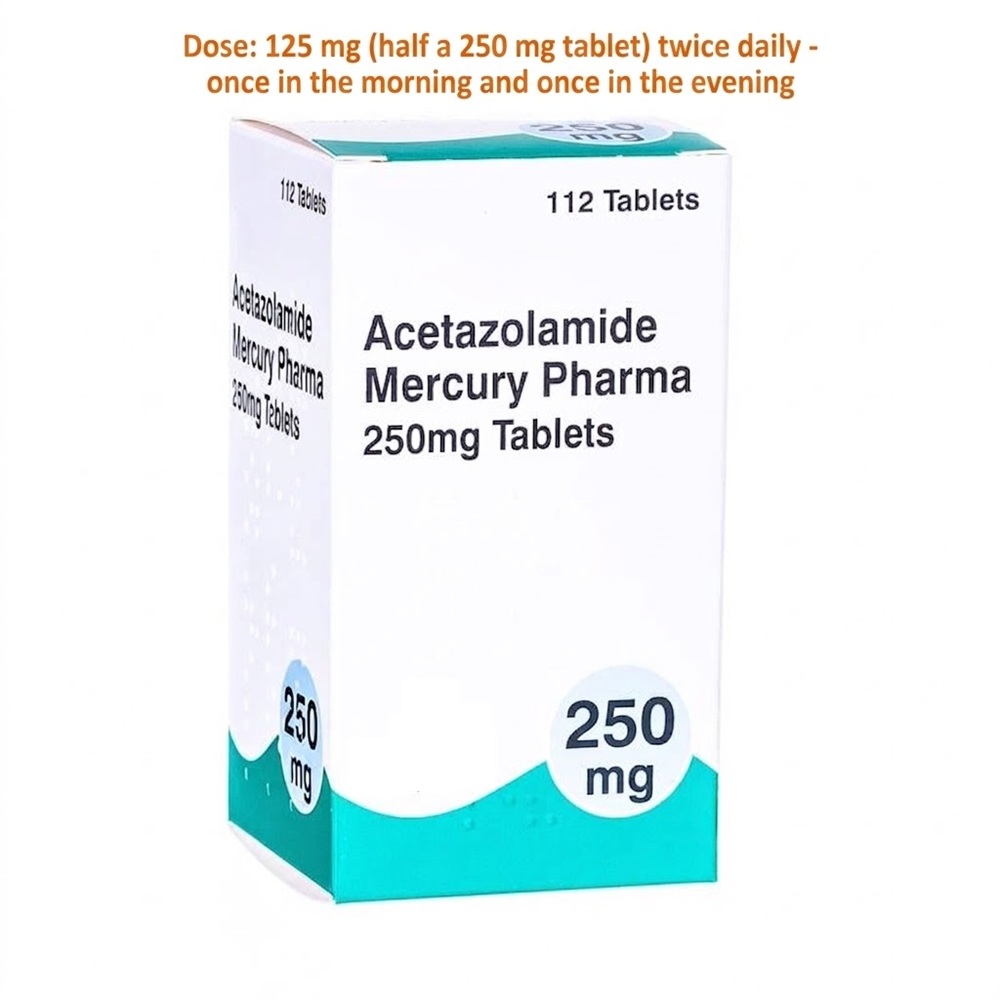
Timing: Start 24 hours before ascending above 3,000 meters, take daily through Larke La Pass, and stop 1–2 days after descending below 3,000 meters.
One of the most popular drugs to prevent altitude sickness among Himalayan trekkers is Diamox. It is often mentioned in every other discussion about how to prepare for Manaslu.
How Diamox Works
Acetazolamide leads the kidneys to remove bicarbonate, leading to the blood acidifying just enough to double and deepen the pace of breathing. This quickens the process in which the body adjusts to an environment of lower oxygen levels, rather than covering up the symptoms – as with Diamox, which helps the body adapt quickly, not hide the warning signs.
Standard Dosing Guidelines
The CDC's Yellow Book and Wilderness Medical Society consensus guidelines for altitude illness use the following prophylactic dose: 125 mg twice daily orally, usually beginning 24 hours before ascent and continued for 48 hours at the new elevation, or until continued ascent. If already there and treating the AMS rather than preventing it, the dose is generally higher, 250mg twice daily, but should be decided with a healthcare provider and not on the trail.
Common Side Effects
Tingling in the fingers, toes, and around the mouth is a common, if unpleasant, side effect of acetazolamide. It also has the happy side effect of being a diuretic, which means you'll be peeing more frequently. This is something to consider on days when you have to leave at an early hour, like during the Larkya La crossing day. Another common side effect is a change in taste, especially for carbonated drinks.
A Few Practical Notes
Diamox is a prescription drug and may not be right for every trekker, especially those with certain allergies (sulfa drugs) or with specific medical conditions. It is also not the magic pill that will completely prevent altitude sickness. As mentioned earlier, it only lowers the chances that you will get it and lessens the effects if you do. You still have to take it easy while trekking and give your body time to adjust to the altitude. Ask your doctor or a travel clinic if it is the right medication for you, and make sure to actually get the prescription rather than trying to find someone who can sell it to you in Nepal.
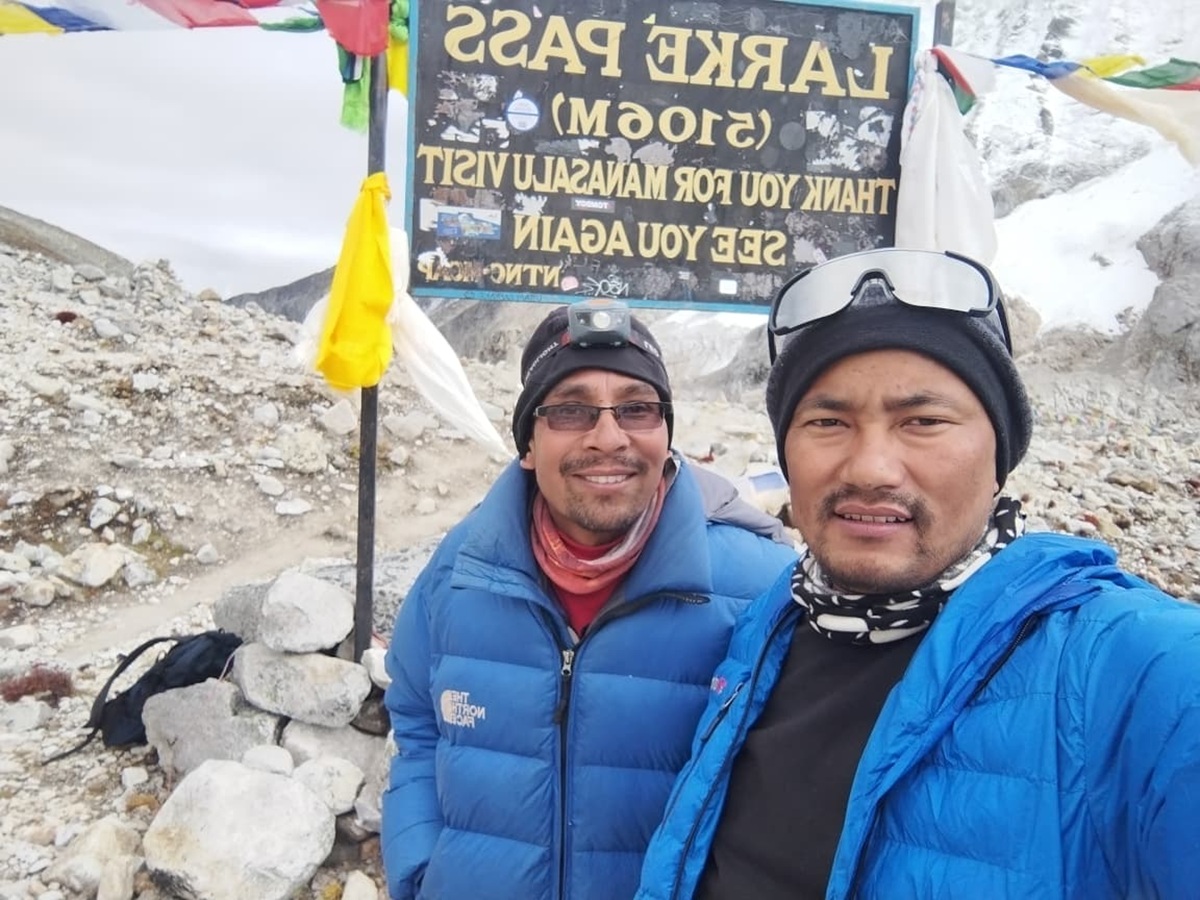
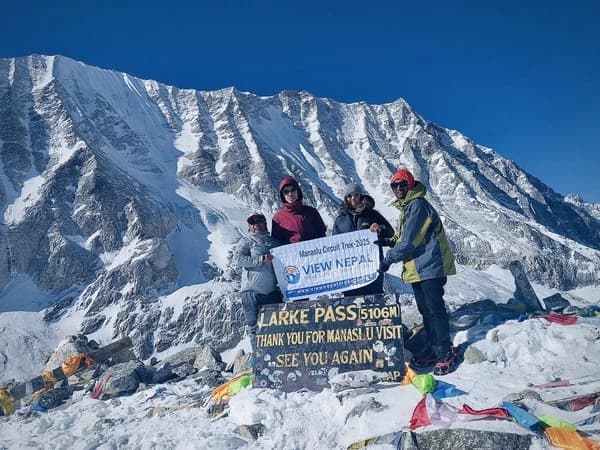
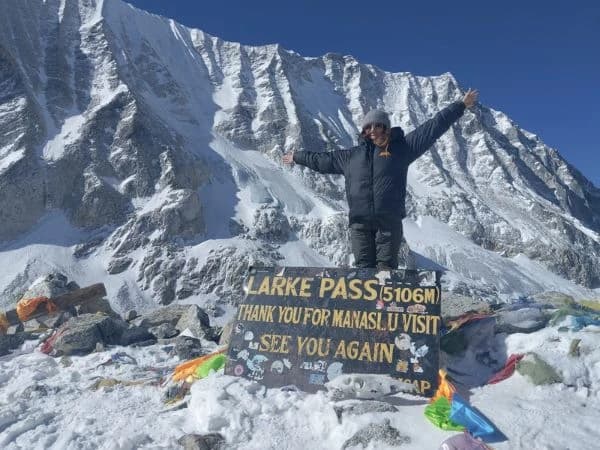
View Nepal Treks team reaching the maximum altitude on the Manaslu Circuit Trek at Larke La Pass (5,106 m / 16,752 ft)
How High Is Larkya La Pass?
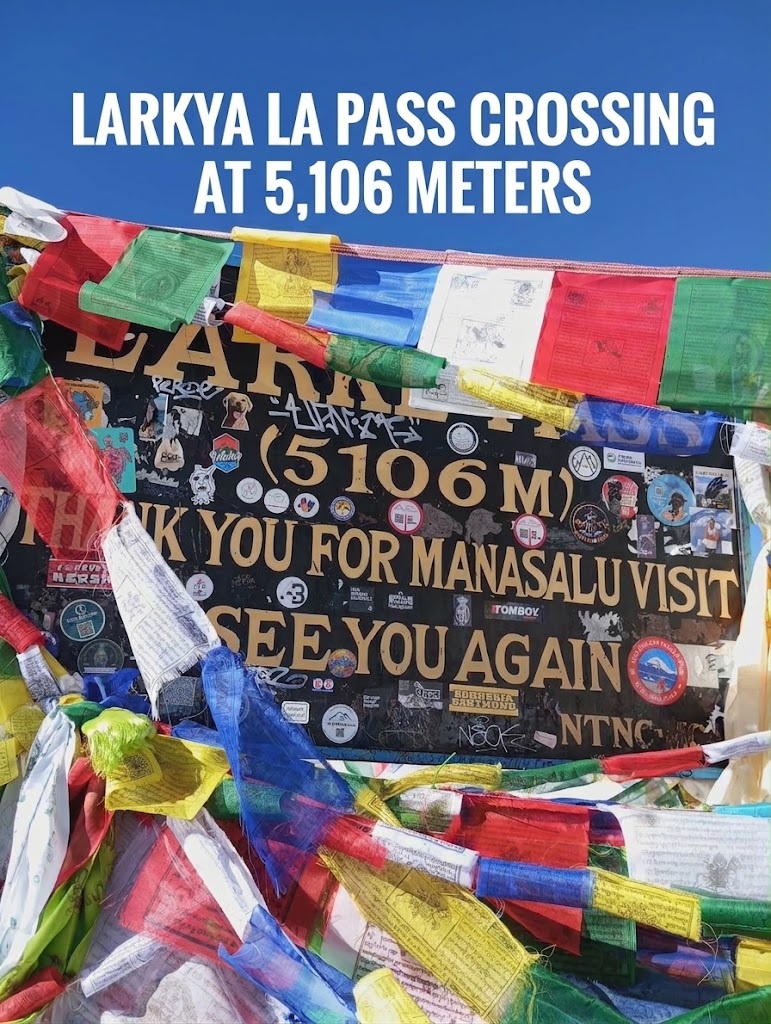
Larkya La Pass is a mountain pass that towers at around 5,106 meters (or 16,752 ft) – or, according to some sources, it can reach as high as 5,160 meters (or 16,929 ft) depending on the GPS reading and the depth of snow at a given time. Either way, it is considerably over 5,000 meters and is the highest point you’ll reach on the Manaslu circuit trek.
What Makes the Crossing Day So Demanding
The Larkya La crossing, connecting Dharamsala to Bimthang, is widely regarded as the hardest single day of the Manaslu Circuit. A few reasons why:
Distance and elevation change. The total trek is usually close to 24 km, with a 700-800 meter climb and a difficult 1,400-meter descent in one shot.
Duration. The day usually takes most trekkers between 8 and 11 hours, starting well before the sun rises.
Sustained high altitude exposure. You will spend hours at elevations above 4800 meters, where oxygen is about 50% less dense than it is at sea level.
Cold and wind. The summits often hover between about minus 10C and minus 20C and with the wind chill, it often feels much cooler.
Terrain. The icy trail, the frozen glacier moraine, and the rough, rocky terrain all require hours of continued exertion beyond a standard trekking day.
Larkya La Sunrise Time and Why the Early Start Matters
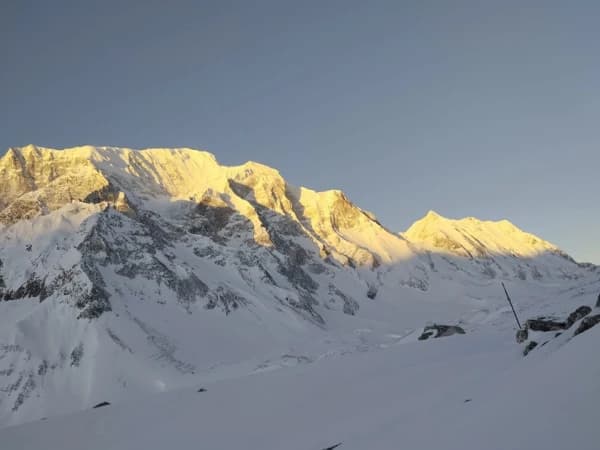
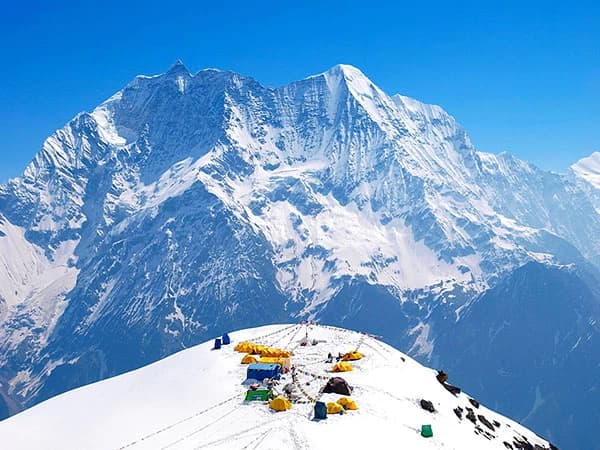
Trekkers usually leave from Dharamsala at about 3:00 or 4:00 AM to arrive at the summit just around sunrise, or just after. This early start is not only about seeing the stunning sunrise over the pass, illuminating Manaslu, Himlung Himal, Cheo Himal, and Kang Guru, but, more importantly, heading out before dawn enhances overall safety.
The weather at Larkya La worsens at noon, with strong winds exceeding speeds of 50 km/h and visibility near zero if clouds appear. If the pass has been reached and crossed not much later than mid-morning, the risks linked to it will be dramatically reduced.
Larkya La Snow Conditions by Month
Month
Typical Conditions
March to May (Spring)
Generally good, with some snow possible early in the season; one of the two best times to cross.
June to August (Monsoon)
Not advisable due to heavy rains at lower elevations, reduced visibility, and increased risk of both avalanches and landslides near the pass.
September to November (Autumn)
Most cloudless days and the most stable weather conditions of the year; the best, safest time to cross.
December to February (Winter)
Heavily snowy conditions; the pass may be completely or partially closed or require winter-specific gear and expertise to navigate, making it only advisable for experienced hikers who have taken a winter climbing course and hired a local guide familiar with the area.
How Cold Does It Get on Larkya La Pass?
In the main trekking periods of autumn and spring, temperatures at the summit typically vary between minus 10 and minus 20 degrees Celsius, with the chill of the wind making things feel a lot colder.
How Cold Is Larkya La in November Specifically?
November, which is at the end of the autumn peak season, has some of the coldest but also the clearest climate conditions for the crossing. Overnight temperatures at Dharamsala before getting up early for the trek may drop below freezing, and those at the summit in November are commonly between minus 15 and minus 20 degrees Celsius before wind chill. Nevertheless, the advantage of November is that it is one of the months with the most stable and dry weather of the year, thus remaining one of the busiest months for the crossing.
Preparing Physically for Larkya La
Beyond acclimatization, general physical preparation makes a meaningful difference on crossing day.
Cardiovascular activities such as hiking, running, or climbing stairs in the months leading up to your trek helps mitigate the physical toll of a long crossing day.
Practicing with a loaded daypack can assist your body’s preparation for prolonged trekking with weight, as opposed to regular hiking.
Gaining experience with layering for cold weather, ideally during a cold training hike before your actual trek, is essential in order to determine your layering needs before facing temperatures of -15 degrees before dawn.
Mental preparation for a long day is just as important as physical fitness. Knowing ahead of time that you will be hiking for 8-11 hours will help you pace yourself and avoid excessive, unnecessary expenditure of energy at the beginning of the trek.
Manaslu Circuit Emergency Rescue: What to Know
Even with proper preparation, altitude sickness or injury can happen, and knowing how to get emergency assistance on the trail is just another aspect of safe trip planning.
How Rescue Works on Manaslu
Helicopter rescue is accessible at different locations along the Manaslu Circuit, such as Samagaon village or other places at higher levels of the trek, if weather permits. The guide is trained to assess the symptoms and whether to order a descent or evacuation, and to communicate with the base rescue service in Kathmandu.
Why Insurance Matters More Here Than on Almost Any Other Trip You'll Take
In order to conduct helicopter rescue at high altitude in remote Himalayan areas, there are high costs incurred, and the process might even cost thousands of dollars for only a single evacuation. Comprehensive travel insurance is required to include specifically high-altitude evacuation coverage for all those travelling on the Manaslu route, which passes the height of Larkya La. Please ensure that your insurance includes the helicopter evacuation policy at the required altitude to avoid any issues, since most insurance companies do not cover high-altitude treks.
What Slows Down Rescue on This Route
Compared to other well-known trekking routes in Nepal, the isolated nature of Manaslu and its helicopter access only if the weather is good imply that, if weather is bad in the Himalayas, rescue might take longer as there's no option of a chopper to come in on a promise of 'good weather in an hour'.
And that's why it's so important to be aware of the symptoms: the further along you get on the trek, the less rescue it involves, and the more it depends on your guide's decision-making and how well prepared you are to recognise and treat symptoms.
Recognizing Symptoms: A Practical Severity Guide
Severity
Symptoms
Recommended Action
Mild AMS
Headache, slight nausea, tiredness, poor night sleeps
Rest, take fluids and avoid ascents until symptoms resolve
Moderate AMS
Progressing headache not helped by rest or painkillers, vomiting, increasing tiredness, reduced coordination
Stop and descend if possible and call your guide immediately
Severe AMS / HAPE / HACE
Shortness of breath at rest, persistent cough, confusion, inability to walk straight, altered consciousness
Call an emergency helicopter service and descend immediately as this is a life-threatening emergency
The number one most important thing to do for yourself before attempting your trek is be honest with how you are feeling. Many trekkers don't report symptoms for fear of holding up the group or because they don't want to 'fail' after months of training but this is the very instinct that makes AMS so treacherous. A good guide will continually inquire about how you are feeling during the days leading to Larkya La, so be truthful and this is the best safety trick you have up your sleeve on this trek.
Who Is Most at Risk of Altitude Sickness on Manaslu?
Altitude sickness does not discriminate according to age or fitness levels, which surprises a lot of trekkers. Here are some things that actually do matter to individual risk:
How quickly you climb is more important than your general fitness, a very fit trekker who climbs too quickly has just as much risk of developing AMS as a trekker who isn't quite so fit but takes it easy.
Previous altitude sickness is one of the strongest indicators for future altitude sickness, meaning if you've had AMS on a previous trek, you should talk to your doctor about preventative medications well in advance of your trek.
Dehydration and poor sleeping patterns can contribute to the severity of your altitude sickness symptoms, which is why it's so important that you are hydrated and get enough sleep in the days leading up your crossing, not just on the day of.
Preexisting heart or lung conditions can contribute to altitude sickness and should be discussed with your doctor before embarking on a high altitude trek like this one.
Your age has less bearing on your risk of altitude sickness than you may think, older trekkers who are in good shape and take it easy usually have no problems at all on Larkya La. In contrast, younger, fitter trekkers who underestimate the trek can often have a harder time than they expect.
Cold Weather Gear for the Larkya La Crossing
Given the minus 10 to minus 20 degree Celsius temperatures common on crossing day, gear choices genuinely affect both comfort and safety.
4-season sleeping bag: Well below-freezing rating, for the nights in Dharamsala and Samdo before the crossing.
A warm down jacket, again rated for extreme cold, to be worn as your outer layer for the early morning start.
Base and mid-layers that you can add or remove in response to changing temperatures as you descend back down through Bimthang to relatively much warmer conditions.
Insulation, waterproof gloves and a wool or warm hat for when you're at the mercy of the cold and blustery winds of the early morning near the summit.
Head torch with spare batteries: You'll need a head torch for the departure from Dharamsala at 3 – 4 am when the crossing is done in complete darkness.
Sunglasses or glacier glasses: The exposure to UV radiation and snow/ice glare at our altitude is so intense that a short crossing day can literally cause eye burns.
Trekking poles: You're going to need "real" stabilization when crossing the icy, often uneven terrain after leaving the pass.
Why Your Guide Is Your Most Important Safety Resource
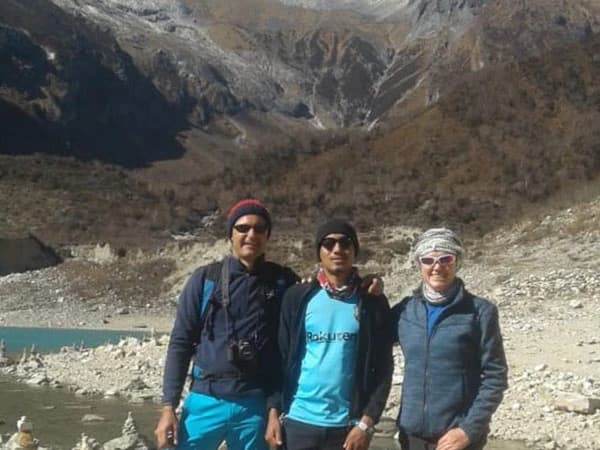
Crossing Larke La Pass with an experienced guide from View Nepal Treks, backed by over 19 years of team expertise on the trail
While the thing often spoken of about Manaslu is that you need a guide by rule or regulation or permit, on the front of altitude sickness, it may be the most critical safety feature to consider on this trek.
A skilled guide keeps an eye on the trekkers every day so as to spot the first signs of acute mountain sickness (AMS).
Most trekkers may either refuse to admit to developing the signs of the illness or not notice them. Thanks to their knowledge of the area, the guides can determine whether the group should wait for better weather conditions or if a certain trekker needs one more day of rest before crossing the pass, or even if the trekker needs to descend, even if they are willing to keep going.
The guides can also connect the trekkers with Kathmandu in case evacuation becomes necessary. In a remote place like Manaslu, a guide's presence is a must because getting medical help is very challenging in case of an emergency.
That's why selecting a knowledgeable and established agency can be just as important as picking the right gear or weighing the dose of your medication. A guide who has summited Larkya La 30 times has experience that can't be replicated by reading about it or referring to a guidebook, especially when it comes to noticing irregularities in your travel companion's health and behavior.
How Larkya La Compares to Other High Himalayan Passes
Pass
Approx. Altitude
Trek
Larkya La
5,106 to 5,160m
Manaslu Circuit
Thorong La
5,416m
Annapurna Circuit
Cho La
5,420m
Everest three-passes route
Renjo La
5,360m
Everest three-passes route
Kongma La
5,535m
Everest three-passes route
On the one hand, Larkya La is relatively low in altitude. On the other hand, both guides and trekkers state that it is at least as challenging as other high passes, if not more so, due to such things as the length of the crossing, the steep nature of the terrain, as well as poor infrastructure and accessibility to rescue, something that doesn’t apply to much more popular Everest or Annapurna treks.
Passes like Larkya La prove once again that height is not a single factor determining how difficult a passage is going to be, even though such views arise often when comparing a trek like Manaslu to others just by elevation statistics.
Nutrition and Energy Management for Crossing Day
Besides acclimatization and gear, nutrition is another factor that will affect your climbing performance on the day of crossing, as well as your risk of altitude sickness.
It is recommended to eat a big breakfast before leaving early in the morning from Dharamsala, even if you feel like you have no appetite at all: during a crossing, which usually takes between 8 and 11 hours, a lack of glucose in the blood due to fasting can lead to poor performance and exacerbate the symptoms of altitude sickness.
It is also better to eat some light snacks (energy bars, dried fruits, nuts) instead of waiting until you feel hungry, and to drink plenty of fluids. Both water and food are even more important on the day of crossing than in the previous days, but tea houses will only be found on the way down, so it is best to come prepared.
This means that it is necessary to bring enough water for the crossing or a water purification system (which you should discuss with your guide in advance).
Altitude-induced hunger suppression can creep up on even experienced trekkers and kick in right when you want to be perky the most-on crossing day. That's why shoving steady, small quantities down throughout the day to cross day - instead of eating when you're hungry- is a good habit to develop long before you arrive in Dharamsala.
Do older or less experienced trekkers regularly complete Larkya La successfully?
Definitely, guides who have taken numerous Larkya La crossings are reporting that trekkers of all experience levels and ages successfully cross the pass if they adhere to proper acclimatization procedures, travel at a reasonable pace, and are open about any discomfort they experience during the trek. Fitness and preparation are more significant than age alone for a successful crossing.
Should I train specifically for high altitude before attempting Manaslu?
Though you will not be able to completely replicate mountain conditions while at sea level, having a good cardiovascular conditioning level, practicing carrying a loaded daypack, and getting used to prolonged hiking will greatly improve your experience and reduce unnecessary stress during the acclimatization process.
Frequently Asked Questions
How high is Larkya La Pass?
Larkya La Pass elevation is around 5,106m (16,753 ft), but depending on sources and measurement method, some GPS devices show it as 5,160m (16,929 ft). Larkya La is the highest elevation point on the standard Manaslu Circuit trekking.
What is the maximum altitude reached on the Manaslu Circuit?
The highest point of the trek is Larkya La Pass (5,106m/5,160m). The highest point we achieve on a standard trek circuit itinerary is Larkya La Pass.
How many acclimatization days should I have on a Manaslu Circuit itinerary?
Most effective 14-day standard itineraries have two acclimatization days, normally at Samagaon (3530m/11,591ft) and Samdo (3860m/12,660ft) before the strenuous ascent to reach the Larkya La Pass(5160m/16928ft). Missing either of those days will increase the altitude sickness risk enormously.
Does Diamox prevent altitude sickness completely?
Not with the consultation. Diamox (acetazolamide) can help decrease risk and make the body's normal acclimatization process more rapid, but won't replace your need for slow and steady ramps, rest days, and symptom awareness.
What time do trekkers usually reach Larkya La Pass for sunrise?
Most trekkers depart Dharamsala around 3:00 am to 4:00 am and arrive at the pass around the time of sunrise or slightly thereafter (in the mid-morning), both to take advantage of the morning weather as well as to beat the persistent winds and reduced visibility often found by mid-afternoon.
Can altitude sickness on Manaslu be fatal?
Altitude sickness that is severe and not treated, in particular HACE and HAPE, can lead to death, but this is rare on well-organized treks, as it is at times caught early. The mandatory guide requirement on Manaslu is in place for the very purpose of addressing this concern.
What is the best month to cross Larkya La Pass for safer conditions?
September to November and March to May are usually considered comparatively safe and stable months where clear skies and reasonable snow levels can be expected. The monsoon months (June to August) and deep winter months (December to February) are considered to involve a much higher risk and are not recommended for visiting trekkers.
Is emergency helicopter rescue available on the Manaslu Circuit?
Yes, helicopter evacuation can be reached from several areas along the trek but may depend greatly on weather conditions near the high altitude regions of Larkya La. That is, it is essential to have good travel insurance with evacuation from high altitudes before starting this trek.
How cold does it get on Larkya La Pass?
During the two main trekking seasons, summit temperatures generally hover around –10 to –20°C and are typically much colder when wind chill is factored in. Crossings in November tend to have the coldest temperatures of the season but generally come with the most settled and clear weather.
The Bottom Line
It is more likely for altitude sickness to occur when trekking in the Manaslu Circuit than because of the difficulty of the trek, its distance from civilization, or the cost of visiting it.
However, this common risk can easily be avoided if trekkers just keep in mind some basic rules – to make the ascent gradually, to take acclimatization days properly, to know the symptoms of altitude sickness, and to travel with a qualified guide. The Larkya La Pass, which is over 5,100m high, is hard and challenging. Still, thousands of trekkers from various backgrounds go through it every season because they adhere to the indicated recommendations and do not forget about acclimatization.
If you're considering this trek: Consult your doctor about taking Diamox; select an itinerary with sufficient acclimatization days, not just the least expensive plan; make sure your travel insurance covers high-altitude rescue; and anticipate that you'll need to follow your guide and your body when signs of altitude sickness develop rather than sticking to the itinerary. That mix of things - not a new bag or a new drug - is what truly keeps trekkers safe on the way up and across the Larkya La.
This information is not intended to discourage you. In fact, thousands of trekkers cross Larkya La during every trekking season, many of whom are just regular trekkers with decent physical fitness. The difference between a safe and rewarding crossing and a hazardous one usually comes down to fundamentals that are discussed in this guide, such as a slow ascent, honest reporting of symptoms, a comfortable acclimatization plan, and trust in your guide at the right moments.
If you get ready properly and respect the altitude, Larkya La becomes exactly what most trekkers call it afterward, which is the toughest but also most rewarding day of the entire Manaslu Circuit.
Manaslu Circuit Larkey pass Trek start from Barpak (Epicenter of Earthquake 2015), samagaun, monasteries , Tibet boarder and Larkey Pass