Each week, on a Nepal trekking forum, someone asks the same question: "Can I now trek Manaslu Circuit solo?" Both sides give 50% of the answer - half say the rules have changed and solo trekking is open, half say no rules changed and solo is still not possible. As both are 50% correct, the confusion will not resolve itself automatically.
Here is the blunt answer, right up front: Nepal's Department of Immigration abolished the rule that required foreign trekkers to trek in pairs when getting a Manaslu Restricted Area Permit, and on 22 March 2026 all restrictions in this regard were lifted. An individual trekker may now be issued with a permit on their own. What has not changed: every trekker doing the Manaslu trek, irrespective of solo or group, must still hire a licensed guide from a registered company.
Quick Answer: The Manaslu Solo Trekking Rule 2026 at a Glance
Question
Answer
Can you trek Manaslu Circuit solo in 2026?
Yes. Effective from 22 March 2026, solo foreign trekkers can apply individually for a Manaslu Restricted Area Permit.
Do you still need a partner to get a permit?
No. The previous two-person minimum requirement has been removed from all 15 of Nepal’s restricted trekking districts, including Manaslu.
Do you need a guide to trek Manaslu solo?
Yes, unquestionably. One trekking guide is compulsory for every trekker, regardless of group size. The guide must be from a government-registered trekking agency.
Can you trek Manaslu without a guide?
No. Unsupported and ungoverned trekking remains illegal in the restricted areas.
Is a Restricted Area Permit required for Manaslu?
Yes. The Restricted Area permit for Manaslu will remain valid, and the TIMS Card will not be applicable to this region instead.
What changed exactly?
The "Group application" process and the need for minimum two applicants are waived. A guide for each trekker will continue to be the norm according to the control rule.
What Is the Manaslu Solo Trekking Rule 2026?
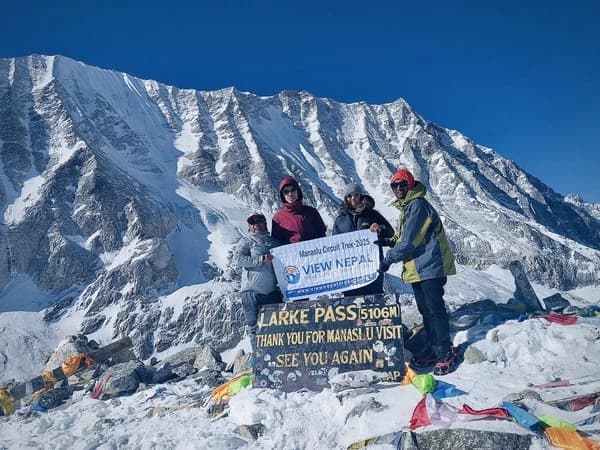
Solo Manaslu Circuit Trekking With View Nepal Treks
Basically, the Manaslu solo trekking rule 2026 is about one policy change from 2026 and forward; Nepal's Department of immigration removes the minimum required group size for Manaslu Restricted Area Permit (RAP) application. Before this change, a solo foreign tourist was legally unable to apply for this permit on their own. Now, they can.
It pays off to be clear about what this new regulation is not. It comes as a change in the definition of who can take the trek without supervision. It is not a backward step of the guide-mandate requirement of the Nepalese government. It only concerns the method of application for the applicable documents. The reason why people have been confused by this adjustment is that it is precisely because this change is very important for independent travelers.
Why This Distinction Matters for Search and Planning
In 2026, trekkers exploring this topic are primarily concerned with one of two important inquiries:
“Is it still possible to get a permit even if I do not find a travel companion?” Yes, this is the main theme of the changes.
“Is walking this trail possible without hiring anyone?” No, this has always been impossible.
To confuse these two issues has long been the source of the majority of the outdated or false information available on the internet. Instead of mixing up these two questions, doing it separately will greatly simplify the remaining process of travel permit in Manaslu area in 2026.
The Two-Person Permit Rule Explained (Before March 2026)
How the Old Rule Worked
Throughout history, the Restricted Area Permit for Manaslu was meant to be requested by two or more trekkers, thus excluding the sole request of individuals searching for permits. However, this was not an optional recommendation but rather a mandatory condition. In order for an individual to get a permit, there were two possible ways in which it could be achieved, but neither was ideal by any standards.
The first way involved finding someone who would request a permit regardless of whether they intended to share their trip with these persons or not. The second way dealt with the need for requesting one additional permit for a ghost traveler. This way, the permits were issued in the name of a real traveler and the name of another traveler, which was of no importance at all and was submitted only to satisfy the requirement of two persons. While both of these options were capable of working, they were neither cheap nor comfortable.
Why the Two-Person Rule Existed in the First Place
The reason for the existence of the Two-Person Rule has to do with Manaslu being within a sensitive area because of its location near the Nepal-Tibet border and the fragile environment of the area, which includes Nubri and Tsum valleys. The rule was part of a system whose intention was to control who enters and leaves that sensitive area, and whether the number of people in an application would be of any help or not has been a subject of heated debates among people involved in the industry.
What Changed After March 2026
The Official Update
The Department of Immigration in Nepal announced on March 22, 2026, that the two-person rule no longer exists for restricted area permits for all 15 restricted trekking districts in Nepal, including Manaslu and Tsum Valley. Now, a single foreign trekker can apply for a Manaslu RAP and obtain it independently and without a partner, fully paying the per-person government fee.
Trekking officials have connected the changes in regulations with the pressure presented by the agencies and tourism stakeholders, who pointed out that the old rules do not add any significant safety benefits for tourists. Moreover, the actual safety measure remains the same - the required guide remains unchanged too.
The change was referred to as simplifying access to restricted areas rather than diminishing control over the areas, and it was applied uniformly at once, not in separate stages.
Timeline: How the Rule Evolved
Period
Permit Rule
Guide Requirement
Before 2023
Two-person minimum for RAP
Guide practices varied by route
2023
Two-person minimum for RAP
NTB: Guides to be compulsorily used in restricted trekking areas
Before March 22, 2026
Two-person minimum still in force
Mandatory guide in force
March 22, 2026 onward
Two-person minimum removed - solo applicants accepted
Mandatory guide unchanged
What This Means in Practice
For any individuals getting ready to set off on a solo journey in 2026 or 2027, the recent changes mean the elimination of two major hurdles that needed overcoming:
No longer does one have to go hunting for a possible applicant partner just so the paperwork can be sorted out.
No longer does one have to pay for a completely redundant second permit that is only required for administrative purposes.
However, it does not abolish the necessity of booking a package through a registered agency and hiring a guide, for these two conditions are still the essential requirements for getting a permit in the first place.
Can You Do the Manaslu Circuit Trek Solo?
Yes. Since 22 March 2026, you can legally apply for and receive a Manaslu Restricted Area Permit as an individual traveler with zero requirement for a second person. This is a real and sensible change (unlike other recent changes) for solo trekkers to Manaslu.
Solo vs. Independent: The Difference That Actually Matters
Term
What It Means on Manaslu
Legal After March 2026?
Solo trekking
The fact that you are the sole customer means that you booked your own permissions and guide on your own, while not being forced to share your experience with anyone else.
Yes - the changes implemented in 2026 do make this legal.
Independent trekking
No guide nor agency is needed when walking through restricted areas freely, without supervision.
No - it has been illegal to do so in Manaslu before, and it still is
"Solo" signifies that you are accompanied by your guide while the two of you go at your own pace and schedule, without a stranger linked to your permit documents. It does not refer to a situation where you are alone with a map. If there is only one sentence that you should remember after reading this piece, this is it.
Do You Need a Guide for the Manaslu Circuit Trek?
Yes - there is no way around this rule, no time of the year when this is not enforced, and no update from March 2026 has any relevance to it whatsoever. All travelers on the Manaslu Circuit, whether walking alone or as part of an organized group, are required to have a government-registered guide from a Nepali trekking company during the restricted area of the journey, starting from Jagat to the other side of the Larkya La.
To clarify some details:
It is checked at actual checkpoints and not just assumed. For example, at Jagat and Philim, officers check the credentials of the guides.
It became mandatory back in 2023, when the Nepal Tourism Board introduced the rule for all the restricted areas of Nepal three years before the solo permit became available, so they were not connected.
Moreover, obtaining the permit itself involves cooperation with a trekking company.
Why the Guide Requirement Isn't Going Anywhere
There are good reasons behind this mandate, as this rule is different from the recently relaxed system of permits for two persons:
Border protection. The route is very close to the border of Nepal and Tibet, passing through an area considered restricted due to its closeness to the border.
Difficult and challenging geographical conditions. Parts of the route, like that from Samdo to Larkya La, can go to a height of more than 5100 meters, with very limited mobile phone coverage and a lack of resources for rescue action.
Checkpoints. Your guide will accompany you to each checkpoint to help you with all procedures there, since a foreign traveler is not authorized to carry out such procedures independently.
To safeguard culture and environment. The Nubri and Tsum valleys have cultures which are unique and ecosystems that are very sensitive and hence the protected areas system is implemented.
Can You Trek Manaslu Without a Guide?
There are no shortcuts for trekking in the Manaslu restricted area– not unless you’re with an officially permitted guide - no matter if you’re a veteran mountaineer or trekking newbie. Checkpoints still do exist, though, and if you fail to be stopped, then it's either a costly trip home or a huge fined; either way, which wouldn't be on the trip’s conditions either.
Manaslu Permits in 2026: What Solo Trekkers Still Need
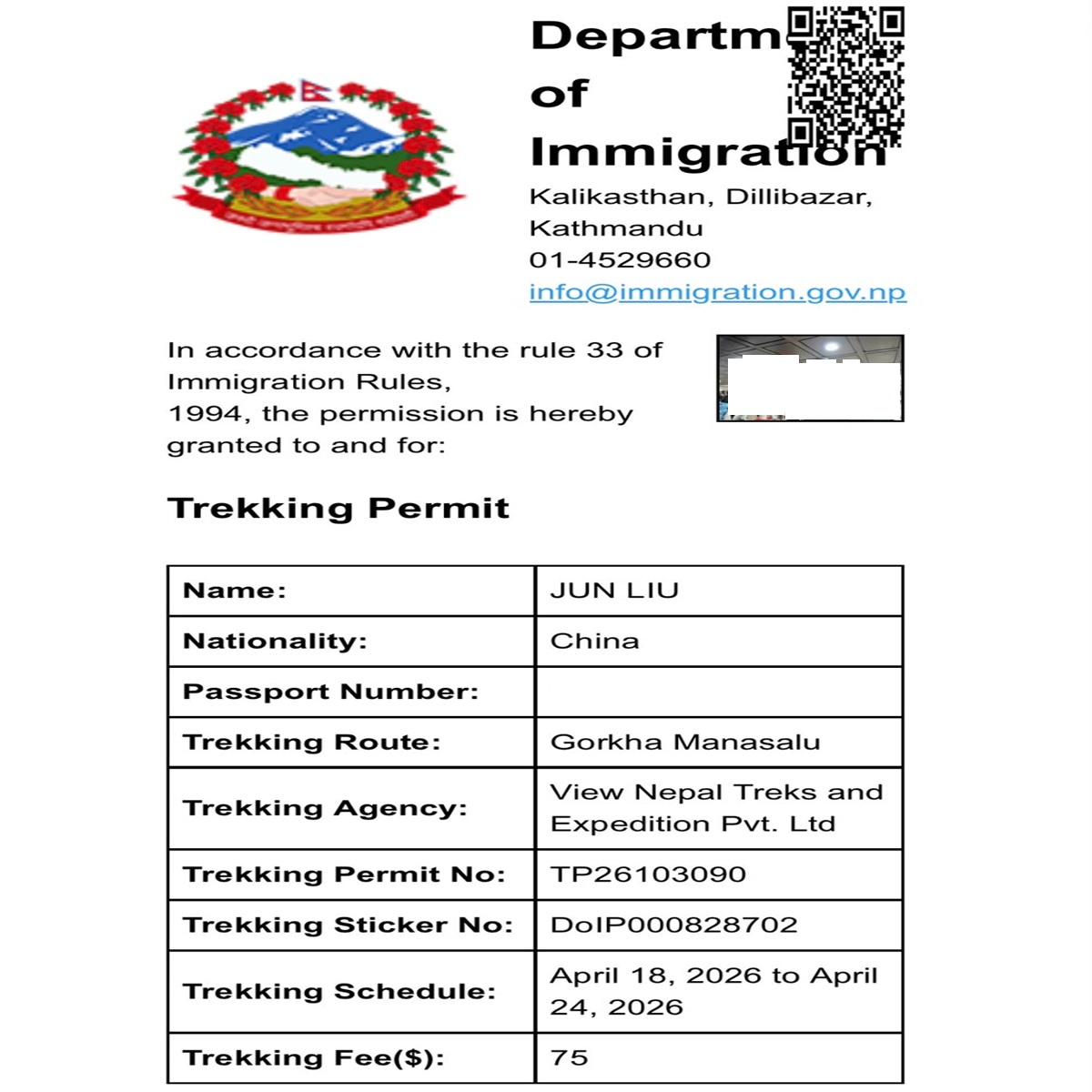
Restricted Area Permit Obtained by View Nepal Treks
Even though there is a new solo permit, you still need the three permits that all other trekkers also need to travel up the same route.
Permit
What It Covers
Who Issues It
Approx. Cost (Autumn)
Approx. Cost (Off-Season)
Manaslu Restricted Area Permit (RAP)
Controlled zone between Jagat and Dharapani
Department of Immigration, via registered agency
~USD 100 (first 7 days) + ~USD 15/extra day
~USD 75 (first 7 days) + ~USD 10/extra day
Manaslu Conservation Area Permit (MCAP)
Protected land around the Manaslu massif
Nepal Tourism Board
~NPR 3,000 (~USD 23-30)
Same, flat fee
Annapurna Conservation Area Permit (ACAP)
Route's exit through Annapurna Conservation Area near Dharapani
Nepal Tourism Board
~NPR 3,000 (~USD 23-30)
Same, flat fee
Local development fee: There is another small, one-off development fee (approximately 1000 NPR) required by the Chum-Nubri Rural Municipality in towns such as Jagat or Philim. (This is on top of the three permits already listed).
Do You Need a TIMS Card for Manaslu?
The Restricted Area Permit serves as a TIMS card for the Manaslu-specific region. Therefore, in terms of the route, it is not necessary to obtain TIMS separately like in other parts of Nepal.
Estimated Total Permit Cost for a 14-Day Solo Trek
Season
Approximate Permit Total (per person)
Autumn (Sept-Nov)
~USD 155-230
Off-season (Dec-Aug)
~USD 130-190
This amount pertains solely to permits and the local council fee, not the guide’s daily rate, teahouse accommodation, food, or travel to and from the trailhead. The old “ghost permit” workaround is no longer workable, and this is pretty close to the amount that a member of a group would pay to be dealt with in terms of real costs, as there is a great drop in the costs for traveling before 2026.
Solo Trek vs. Joining a Group: Which One Is Better for You?
Now that the permit issue is resolved, the more pertinent question to ask is not whether one can travel solo but whether it is better to travel that way or whether it is preferable to have a guaranteed departure.
Factor
Solo Trek (You plus Private Guide)
Guaranteed Departure Group
Permit process
Solo application, no co-applicant needed
Group application, same permits
Guide
One-on-one, full attention
Shared across group members
Pace and schedule
Fully your own
Set by group consensus
Cost per person
Generally higher (guide fee not split)
Generally lower (guide/porter costs shared)
Social experience
Solitary, quiet
Built-in company for two weeks
Booking flexibility
Book almost any start date
Fixed departure dates
Best for
Independent travelers, flexible schedules, those wanting full control
Travelers who want cost savings, company, or a first high-altitude trek with peer support
What Is a Guaranteed Departure?
A guaranteed departure is a pre-arranged expedition in which an agency agrees to proceed with a trek regardless of the size of the group, so long as the number of travellers in the group reaches a minimum of one or two people. For those who are eager to go trekking but want to make sure that their trip is not going to be delayed by a lack of travellers, guaranteed departures take this problem away since it means simply that you set the date and trek.
The benefits of a guaranteed departure include a decrease in the amount of money that each hiker has to pay since the cost of hiring a guide in addition to the cost of hiring the porters becomes divided among the group members. Travelers who do not want to hire a private guide but still want to trek at high altitudes often find guaranteed departures useful even now that independent trekking has become legal.
Choosing Between the Two
Here’s a simplified mental checklist:
Want full control over your itinerary and do not mind paying a little more? Go on your own.
Want to save some money, socialize with other trekkers, and do not need a flexible start date? Join a group with a set departure.
Still uncertain? Most operators will be able to provide you with prices for both options on the same dates, making comparing numbers much simpler.
Neither option will be more “valid” after the 2026 amendments because you will need to obtain three identical permits and hire the same guide for either. Your choice now depends exclusively on your preferences and budget.
Myths About the 2026 Solo Rule (And the Actual Answer)
Myth
Reality
"In March 2026, it became somewhat feasible to trek Manaslu without a guide."
Untrue. The rule change only addressed the minimum number of people required to apply for the permit. The need for the guide is still the same and checked at various points by gate.
"Solo trekking on Manaslu is, for the most part, impossible."
Wrong. This was indeed true before the rule was changed on March 22, 2026. Now, one applicant can apply for a Manaslu Restricted Area Permit (RAP) on their own, without needing a second applicant.
"The new rule states Manaslu is now open to everyone as any unrestricted trail."
Not true. Manaslu remains a restricted area. The only other applicable change, is the cancellation of the previously-required pair applicants, needed to purchase the RAP.
"TIMS now needs to be applied for due to changes in permit requirements."
False. TIMS is still not required for the Manaslu restricted-area section.
"Nowadays, solo trekkers get to pay less than group trekkers."
Partially untrue. Solo trekkers no longer have to pay for a second or "ghost" permit, but their overall costs can still be higher than those of group trekkers because guide and other trip costs cannot be divided among several people.
All of these myths stem from one fundamental misunderstanding: that the "solo permit rule" and "guide requirement" are the same and can be treated as such. They never were, and the March 2026 change only referred to one of them.
How Checkpoints Enforce the Guide Rule in Practice
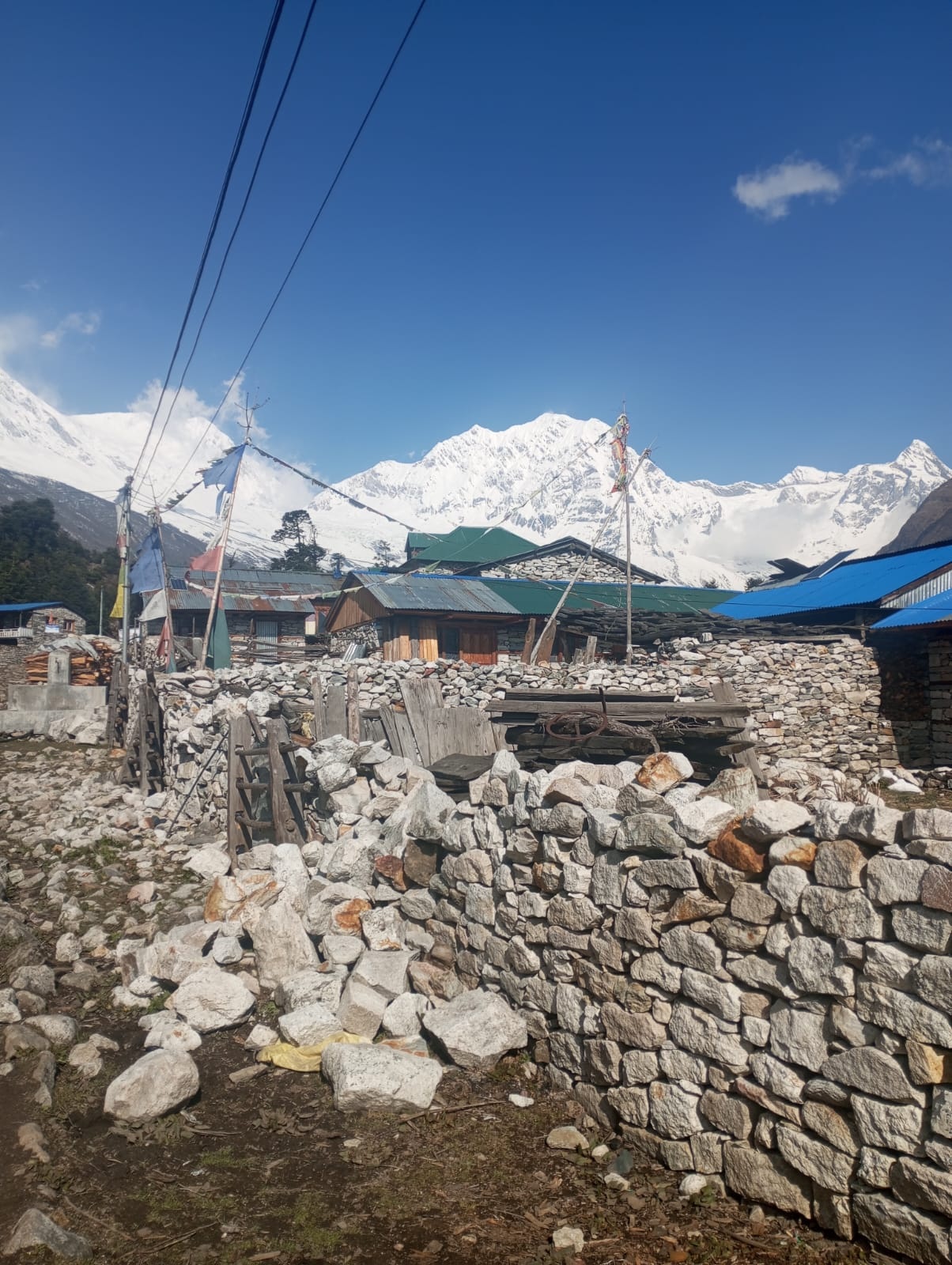
Manaslu Region
Understanding the practicalities of the rules will help explain why “going without a guide” was never a feasible solution even before 2026.
As you arrive at the first major checkpoint within the restricted zone, Jagat, the authorities will check your Restricted Area Permit as well as your guide's credentials before allowing you to move further into Checkpoint Philim.
As you move through the course, there are several further checkpoints making sure that your documents are in order as you pass through these designated posts.
Your guide will take care of any documentation required in these posts, making the process much more streamlined. This is what makes the permitting process dependent on an agency as well as a guide.
While on the trek, you will need to retain your documentation, including copies of your permit as well as your passport, since the officials are known to make checks at various points in the trek.
That is why the solo-permit system had no loopholes that allowed it to bypass the guide regulations; both checking systems are implemented at the same physical checkpoints, which would utilize the same staff to check documents. Thus, eliminating the two-person rule has not removed any of the tools designed to check for guides in a tourist’s party.
How Manaslu Compares to Everest and Annapurna's Rules
One aspect where the lack of clarity arises is because trekkers might try to apply what they know about trekking to Everest Base Camp or the Annapurna Circuit, for example and expect it to work for Manaslu as well. It doesn't, and has its own complexities for the traveler to be able to properly plan.
Feature
Manaslu Circuit
Everest Base Camp
Annapurna Circuit
Restricted-area classification
Yes
No
No
Requires Restricted Area Permit
Yes
No
No
Requires TIMS card
No (RAP replaces it)
Varies
Varies
Mandatory licensed guide
Yes
Yes (since 2023 policy)
Yes (since 2023 policy)
Solo permit application allowed
Yes, since March 2026
Generally yes
Generally yes
The official trails of Everest and Annapurna have not been designated as forbidden regions, which means that they do not need a two-person permit, unlike Manaslu; rather, they could now be subject to the 2023 law regarding trekking guides applicable to all conservation regions. The regulation restricting Manaslu is essential when it comes to explaining the 2026 revision, and that is why gathering information on one route does not automatically provide you with similar details regarding another one.
Why Nepal Made This Change Now
This is the reason why we were able to derive benefits from March 2026 without discussing it with the guide rule initially.
Trekking companies and tourism bodies had been lobbying for years against the requirement of a minimum of two clients, stating that it was affecting tourism in Nepal negatively instead of helping anyone. Solo trekkers had to either skip Manaslu and follow a normal route (such as Annapurna or Everest) or pay huge sums for trekking and make it feel much more expensive. From a tourism revenue perspective, these two-person minimum requirements could be called an issue that had more potential for discouraging visitors than contributing to their safety, since the true safety mechanism - the requirement for a guide - was independent of the two-client minimum rule.
This is how it becomes possible to remove two clients minimum rule without affecting safety - two clients minimum rule was not the mechanism responsible for keeping trekkers safe in the first place. This requirement is what really works in assuring safety, and understanding it helps explain why many trekking operators talk about the March 2026 changes in terms of ‘solving an access issue and not relaxing safety standards, which is a correct description of what took place.
The advantages of the old system's changes won't be felt by every trekker alike. Therefore, let us analyze in detail the particular categories of people it will help.
Previously, individuals traveling alone were subject to lengthy wait times to form a group or search for an individual to take part in the trek with them. Thanks to the new regulations governing trekking permits, such individuals will now be able to apply for trekking permits individually.
Trekkers with a tight budget do not have to apply for permits that will only serve as confirmation of their right to take part in the trek. Thus, they will now get permits at a lesser cost.
Individuals who have been trekking for many years now do not have to make negotiations with the person they have been paired with due to the new solo arrangement of treks.
Finally, trekkers who were previously restricted by group availability can now plan their expedition at their earliest convenience.
On the other hand, the tourists who were anticipating participating in a group tour because of either the fun and social nature of group travel or cost benefits should see very little overall change from this news - all of the guaranteed departure regulations operated properly prior to March 2026, and they do the same today. This specific rule change was made to improve opportunities for those who wished to hike alone but were unable to do so as such on paper, rather than change the group trek practices.
Documents You Need to Apply as a Solo Trekker
As the RAP still needs to be completed through a registered company, here are some of the things that the person intending to travel individually has to prepare:
Document
Notes
Passport scan
The information given below is valid for the period taken for your trekking plus padding.
Passport-sized photo
Usually, a digital copy is accepted; however, it is advisable to clarify with the agency.
Confirmed trekking dates
This document is necessary to calculate RAP fees, which depend on the number of days spent in the restricted area.
Agency booking confirmation
Your agency will send the application on your behalf when you are a solo trekker.
Travel insurance details
The permit may not be needed, but it is a common practice to use it for trekking at high-altitude locations, and many guides will request it before you depart.
Booking Tips for Solo Trekkers in 2026
Here are some concrete steps to follow now that the process of solo booking is relatively easy, in addition to just making your choice of agency:
Check to see exactly how the assignment of the guide will happen. Find out if you will have a personal guide for the full journey or will join other people taking the same trek at some point after your arrival. Both options are perfectly fine, but they will result in different tours.
When booking for the fall season, allow time for permit processing. September to November is Manaslu's peak season. Although applications for individual RAPs are processed much quicker these days than before, when there was a requirement of two people filling in an application, there are still queues in the government offices that slow the progress, which means it is a good idea to submit documents at least a week before you actually need them.
When requesting a price quotation from agencies, ensure that they break down their quotes per items such as permits, guides’ fees, porters’ fees if applicable, accommodations, service charges, etc. This helps to see whether the quoted amount includes current 2026 permit prices or pre March ones.
It is essential to know whether the agency you plan to use has the capability to routinely process Restricted Area Permits. Not all licensed agencies in Kathmandu have experience with the Manaslu RAP. Clarifying this issue with the agency beforehand is preferable to simply assuming that any licensed agency in the area is able to process the permits without a hitch.
It is wise to compare a quote from a private solo trek with a guaranteed departure trek to Manaslu. This is possible because both types of treks utilize the same set of permits and guides. Hence, the only difference between the two options lies in the prices and schedule flexibility.
Frequently Asked Questions
Can you do the Manaslu Circuit Trek solo?
Yes, since March 22, 2026, a foreign solo trekker can get a restricted area permit to Manaslu without any co-applicant. However, a licensed guide from a registered agency is required for the entire restricted area segment.
What is the new Manaslu solo permit rule for 2026?
On March 22, 2026, the Department of Immigration of Nepal removed the two-person rule for applying for the Manaslu Restricted Area Permit. This is applicable in all of the 15 restricted trekking regions of Nepal.
Do you need a guide for the Manaslu Circuit Trek?
A guide is a mandatory requirement for every trekker, irrespective of whether you are going alone or with your group. The Guide should be a member of a Registered Agency Of Nepal having Government License to work in Trekking Sector (which has nothing to do with the 2026 Permit Rule).
Do I really need a guide for the Manaslu trek, or is it just a formality?
Yes - as well as being mandatory according to the rules (and enforced by physical checks at points such as Jagat and Philim), it can help provide added levels of security in certain parts of the trek.
The main part of the journey sees you walk through some very remote and high-altitude terrain, which means dealing with the weather conditions and the impact of altitude is crucial, in areas like when you’re approaching Larkya La pass, having someone who’s familiar with these conditions can be invaluable.
What was the two-person permit rule that used to apply to Manaslu?
There were previously specific restrictions placed around solo trekkers on the Manaslu trail, including a limit of 2 persons per trekking permit, but we now see much more relaxed rules for trekkers from outside of Nepal.
Prior to March 22, 2026, when you applied for the Restricted Area Permit on Manaslu, your application needed to include at least two other foreigners who were planning on joining you as part of a trekking group.
You could look up an international travel buddy to join your trek along with you or apply for another “ghost” restricted area permit that would be used solely by the park rangers. In either case, you’d have to pay significantly more if you decided to go it solo rather than group
How much does it cost to trek Manaslu solo after the 2026 rule change?
Permits generally amount to around USD 130-230 total for a standard 14-day trek, depending on the time of year (excluding costs such as guides, food, shelter & transport). Since the days of the ghost-permit are over, solo trekkers will pay pretty much the same cost per person on permits as those trekking with a group.
Does the 2026 rule change apply to Tsum Valley too?
Yes. Effective 22 March 2026, the two-person minimum was lifted in all 15 of Nepal's Restricted trekking districts, meaning that Tsum Valley along with Manaslu. Be aware Tsum Valley necessitates its own Restricted Area Permit in addition to the typical Manaslu Circuit permits. Take this into consideration with your planning as well as your finances if you wish to add it as a side trek.
Can a solo trekker still join a guaranteed departure if they change their mind mid-planning?
It should be possible for almost all agencies to move your booking between a private/solo trek and a guaranteed/guided group trek pre-finalization of permits, as they use the same set of guides and permits for either scenario. Ask your agency about that when planning your trip, though, because it will get difficult to change after you have applied for the permits via your RA/P application.
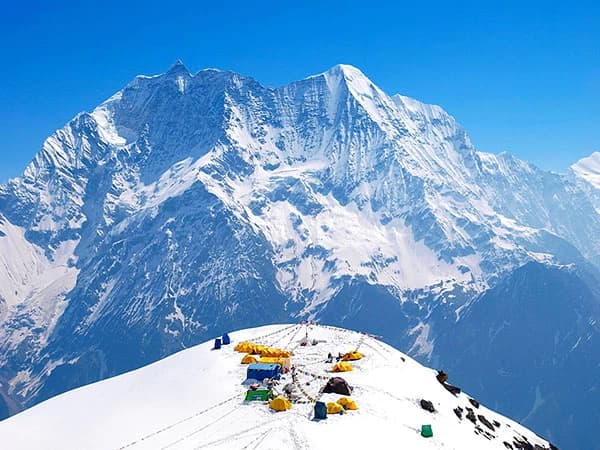
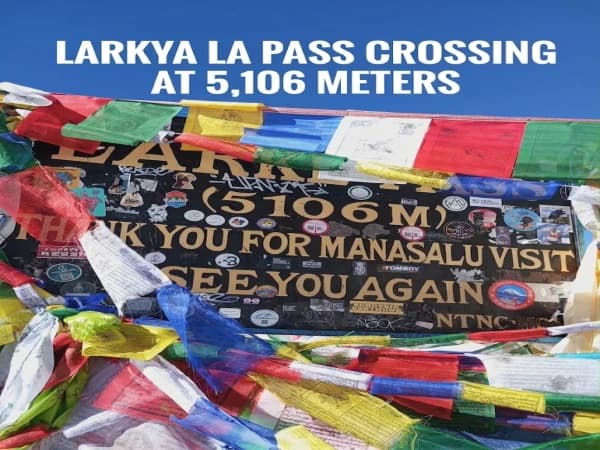
Manaslu Circuit Larkey pass Trek start from Barpak (Epicenter of Earthquake 2015), samagaun, monasteries , Tibet boarder and Larkey Pass