Every year, a significant proportion of the people who embark on the Manaslu Circuit trekking adventure give up well before getting to the summit of the Larkya La Pass. Not because the mountain was too much, but because they were never provided with the correct information about the demands of the trek. The online marketing might call it moderate while the forums will label it brutal. All your fitness tracker knows is that there is no way it will survive an altitude of 5,106 meters.
In this guide, we will give you the difficulty scale of the Manaslu Circuit Trek, as well as the exact fitness level that you need to complete the circuit comfortably. We will also go over what realistic training will look like, whether you are a complete amateur or if you have years of professional hiking and mountaineering under your belt. We will discuss whether it is a worthwhile pursuit and who it is suitable for in general. You should read the fitness section first to understand if this trek is right for you for this year or if it would make a great bucket list addition in the future.
How Difficult Is the Manaslu Circuit Trek?
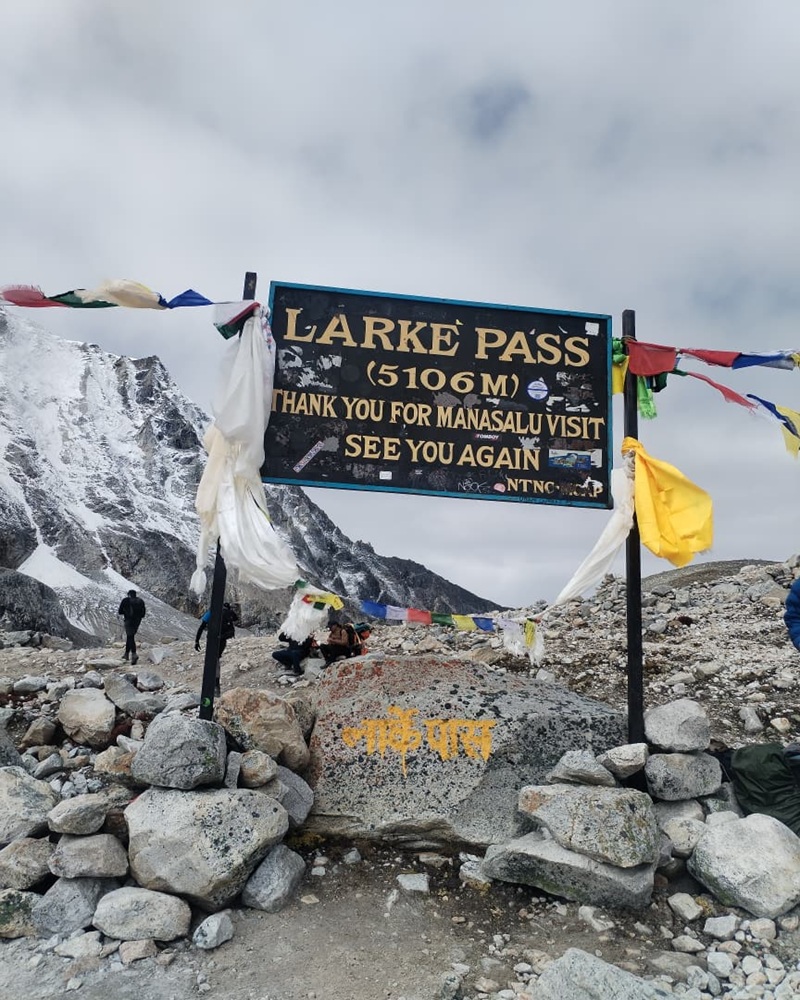
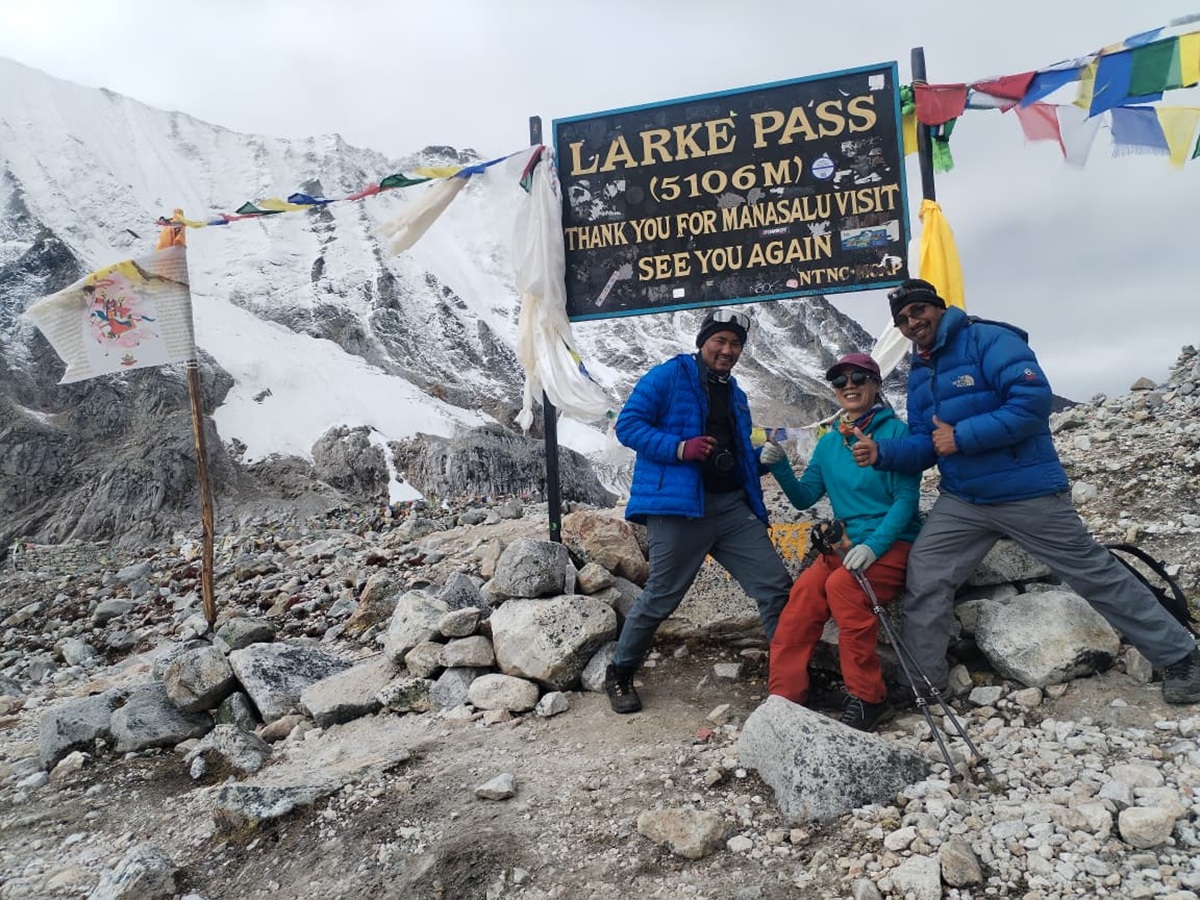
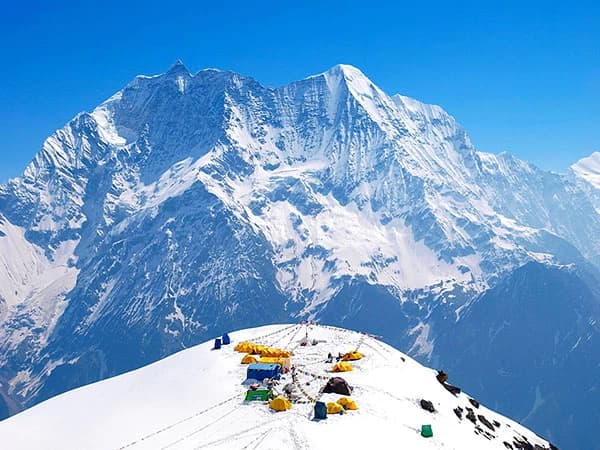
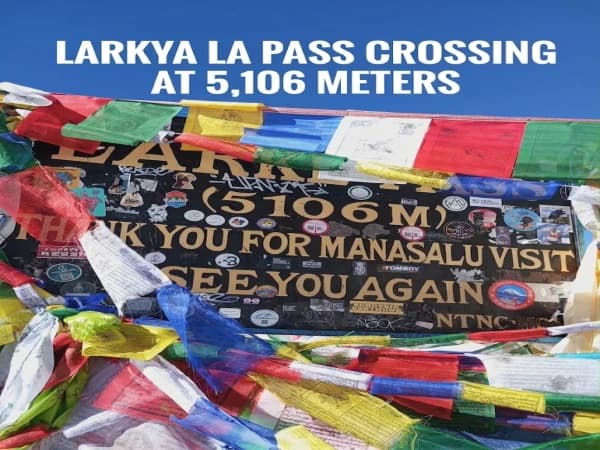
CaptionLarke la Pass (the highest point of the trek)
Manaslu Circuit is generally considered to be a moderate/hard trek. It is more difficult than Poon Hill or Ghorepani hikes, and about the same as Everest Base Camp and the Annapurna Circuit, but less challenging than a technical climb requiring ropes, crevasses, and special mountaineering equipment.
What makes Manaslu Circuit challenging is that:
It requires a daily walk of 5-7 hours for 12-18 consecutive days with a minimum of rest days in between.
You have to walk over a high mountain pass of 5,106 meters (Larkya La) with only half the oxygen at sea level.
It involves rough and sometimes dangerous parts along the narrow and slippery path in the Budhi Gandaki gorge.
There are fewer tea houses and less infrastructure.
It is more isolated with fewer rescue options and requires a longer hike back out if you decide to quit.
And a permit is required from a government agency that only issues it with a licensed guide, restricting your options along the trail.
None of these on their own are particularly challenging or even impossible. Still, altogether they make for a very difficult trek that will test your ability to hike over many days. It is not an easy trek suitable for anyone just looking to get some exercise and fresh air in the wilderness. Still, it should be considerably less taxing than climbing an actual mountain.
Manaslu Circuit Difficulty Compared to Other Treks
Trek
Max Altitude
Typical Duration
Difficulty Rating
Poon Hill
3,210 m
4 - 5 days
Easy
Ghorepani-Ghandruk
3,210 m
5 - 7 days
Easy to moderate
Langtang Valley
4,984 m
7 - 10 days
Moderate
Annapurna Circuit
5,416 m
12 - 18 days
Moderate
Everest Base Camp
5,364 m (5,545 m at Kala Patthar)
12 - 14 days
Moderate to challenging
Manaslu Circuit
5,106 m
12–18 days
Moderate to challenging
Upper Mustang
3,840 m
10–14 days
Moderate (lower altitude, but long daily distances)
Kanchenjunga Circuit
5,143 m
20 - 24 days
Challenging
The peak altitude of Manaslu is actually less than that of Everest Base Camp and is much lower than that of Thorong La in the Annapurna Circuit. Because of this, many people get confused about Manaslu being a tougher trekking destination. However, despite all this, the reputation remains valid and here's why altitude figures are insufficient in revealing the whole truth.
Why Manaslu Feels Harder Than the Numbers Suggest
1. The trail itself is rougher
Where Annapurna Circuit and Everest trails have been beaten into relatively smooth paths by years of tourism, Manaslu’s trail through the Budhi Gandaki gorge had far fewer visitors before the recent boom in popularity. The track is more narrow in places, and while large landslides are cleared for the main trail, it can take local porters weeks to clear the smaller side trails between camps. Also, crossing the gorge requires more careful footwork and more primitive bridges – and you’ll encounter more short, steep ascents /descents on the Manaslu trail than you would on a similarly rated trail elsewhere.
2. Acclimatization is tighter
A common 12-14 day Manaslu trek packs altitude gains into a more concentrated schedule than a similarly paced trip to Everest Base Camp or Annapurna Circuit might. Normally there’s a single full rest day for acclimatization, usually at Sama Gaon, and then you progress to Samdo and up toward the pass. This is generally achievable but offers limited buffer for slower acclimatization response – exactly why we recommend the 16-day option later in this guide for anyone lacking prior high-altitude experience.
3. The pass-crossing day is long and unforgiving
As mentioned earlier, crossing Larkya La involves more time spent on the mountain than crossing Thorong La. You’ll spend at least 5-8 hours hiking up the pass, and another long leg hiking down, with no particular ‘turning point’ where you can decide to call it a day and descend. By contrast, most day-hikes on the Annapurna Circuit are much shorter, and if you find yourself struggling on the pass, you can always descend before reaching the summit and staying overnight somewhere on the way down. Additionally, while both passes offer spectacular views, Thorong La is far busier – with teahouses and lodges on both sides, and more people passing through daily – meaning more snow has been compacted down on the trail. This can provide both cushion and confidence for hikers not used to high altitude trekking.
4. There's no vehicle escape route
Annapurna Circuit- you’re usually no more than a day’s walk to a road connection on either side should you need to bail. Manaslu- beyond Jagat, you leave the road system and don’t reconnect until you pass through the valley on the other side, around Dharapani. If you’re overcome with altitude sickness, injury or exhaustion halfway around the trail, you are looking at recuperation and reassessment, self-rescue downhill, or a very expensive helicopter evacuation. That alone adds a dose of reality to how serious your fitness needs to be before you go.
How Fit Do You Need to Be for the Manaslu Circuit?
This is what everyone is really trying to find out, so here’s the truth.
You don’t need to be an athlete, but you do need to have a fairly good level of cardiovascular fitness and real experience walking a lot over several consecutive hours. As a good benchmark to reach before traveling to Kathmandu, you should do the following:
Walk for 5 - 6 hours on varied terrain with a backpack weighing between 5-8 kg and feel good the next day.
Climb between 800-1,000 meters of ascent in one day of hiking without needing to take breaks all the time.
Do it for two consecutive days at least twice - Saturday-Sunday double hikes work well as a preparation for fatigue.
Maintain 30 - 45 minutes of moderate cardio workout (running, cycling, swimming or stair machine) at least three times a week in the two or three months leading up to your trip.
Practice carrying your pack (10 - 12 kg) with you during several training hikes, since even though porters will be with you to carry your large luggage, you need to carry a small pack every day with essential items (water, clothes, etc.)
If you can tick off those 5 points honestly, you will be fine on the Manaslu circuit. It's ok to fall short on 2 of them; however, that suggests either doing some structured training before heading over, or booking the longer 16-18 day trip to allow more time for adaptation.
Your age becomes less relevant. People 60+ complete the circuit on a weekly basis on each occasion- age is less of a factor than your body. The health of your joints, heart, and ability to move all seem more relevant.
A Realistic Manaslu Trek Training Plan
Give yourself a minimum of 8-12 weeks, preferably 3-4 months if you're starting from a fairly sedentary position. Here's a training plan that doesn't require a personal trainer.
Weeks 1 - 4: Build the base
Cardio: 3x per week, 30-40 minutes of moderate, conversational-but-breathy pace. Choose a brisk walk, jog, swim or cycle.
Cardio: 3-4x per week for 30-40 minutes. Brisk walk, jog, cycle or swim all work well
Strength: 2x per week focusing on lower body and core; bodyweight squats, lunges, step-ups, planks, calf raises (there is no need for heavy weights- muscular endurance is more important than maximal strength).
Hike: 1x per weekend, 2-3 hour hike using what hills, stairs, etc. Available with a lightweight daypack(i.e a few extra water bottles, snacks, and a spare jumper).
Weeks 5 - 8: Add altitude simulation and load
Cardio:40-50minutesperweek (x 3-4) and add on intervaltraining(alternatinghard-and-easyeffort)1xperweek
Strength: 2x per week, adding weight to step-ups and squats/lunges to simulate the increased effort required to hike uphill with a pack
Hiking: 4-5 hour hikes with significant elevation gain (600+ meters), carrying an 8-10 kg pack. Stair climbing with a loaded pack is one of the best specific training exercises available if you have access to a stair machine or equivalent (a tall building with stairs).
Weeks 9 - 12: Simulate the real thing
Cardio: Keep it up, 3-4 times a week, but you're just staying in shape. Don't expect to add new mileage unless you want to take your fitness to a whole new level.
Hiking: Two big weekends of consecutive hiking (5-6 hours a day), to simulate the accumulated effect of a dozen days' worth of trekking. That's the single most important workout in terms of preparing your body for the actual challenge.
Taper: Light it up during the week leading up to your departure. You want to arrive in Kathmandu fit and rested, not wiped out from a final surge of training.
The cardio training question, specifically
If there's only one thing you don't neglect in a training plan, it's cardiovascular consistency. Your cardio level - not the strength of your legs - will predict what your greatest predictor of walking success for hours at a time will be. Your legs may allow you to charge short, steep climbs, but it is your heart and lungs that will keep you moving for six hours per day, for two weeks straight, while dealing with conditions where your cardiovascular system is not getting as much oxygen as it normally receives. Any form of running, cycling, swimming, rowing, or stair-climbing is legitimate; do whichever one you are able to perform consistently.
Is the Manaslu Circuit Trek Possible for Beginners?
Manalsu Circuit Trek For beginners with View Nepal Treks
Yes - although under fairly significant caveats. "Beginner" does a huge amount of work in that sentence. We need to split the question into two slightly different scenarios.
If you're a fitness beginner (i.e., don't currently take regular exercise), the Manaslu circuit is not for you. Go and train up for a few seasons on treks like Poon Hill, Ghorepani-Ghandruk, or a week-long valley trek such as Langtang valley and with a training plan like the one above, next season attempt the Manaslu circuit.
For beginners and a solid level of physical fitness (regular runner, cycler or gym goer, but has never mountain trekked before), Manaslu is possible, but do it with a few things in your favor:
Choose a 14 day itinerary, not a shortened 12-day route for your acclimatisation buffer.
Have a small trekking team or private guide so you're not trying to keep up with other quicker or more seasoned hikers.
Prepare seriously for altitude sickness (hydration is key, go slow uphill, and don't be a hero if you feel symptomatic at the start of symptoms).
A short warm-up trek before you leave may be worthwhile if your timeline allows.
Manaslu is not generally forgiving for a first-time trekker who is not fit and rushing a shortened trek - these cases result in the hardest days and the majority of turnarounds before the pass.
Is the Manaslu Circuit Safe for a First-Time Trekker?
There are three things that contribute to safety and comfort on Manaslu: length of the itinerary, the experience and guidance of the trek leader, and the honesty of the trekker about their symptoms.
The length of the itinerary is something you can influence even at the planning stage – and it might be the greatest single factor in determining your safety. A 14-18 day itinerary including a full acclimatization day near Sama Gaun is significantly more conservative and potentially safer than a 12-day itinerary, especially considering that you're on a first-time trek and your ability to deal with high altitude is unknown.
The experience of your guide is another critical factor, especially on a trek as remote as Manaslu. An experienced guide is necessary for navigating the dangers of the Manaslu circuit, both because one is required by Nepal law, and because the area is remote enough that there's not much in the way of alternatives. When hiring a guide, make sure they're certified and that they have recent experience leading treks on the Manaslu circuit. If you're not certain, ask them directly about their procedures for dealing with altitude sickness and for evacuating a sick trekker.
Perhaps most critically, your own honesty will play a major part in the safety of the trek. Altitude sickness is common on hikes above 3,000m; the symptoms are headaches, nausea, poor sleep, and loss of appetite, but they can be effectively treated if dealt with quickly. This is the reason why an honest answer to your guide's daily questions is so important – far too many trekkers continue hiking despite severe symptoms out of a desire not to disappoint their guide and the other people on the trek.
Though the Manaslu Circuit is a safe trek for first-timers willing to put in the time and effort, it is not a walk in the park. It has a reputation as one of the most difficult and dangerous trails in Nepal – and while this isn't entirely accurate, the dangers are considerable. Due to the remoteness of the area, an emergency cannot be dealt with as easily as one could on a trekker-friendly, well-trodden path – and that is why it's so important to prevent one from occurring in the first place.
Given the above cost, the training required, the tighter margins- the generally rougher trail- is it really worth it?
What you're really trading the extra difficulty and expense for is:
Close, beautiful views of Manaslu, the eighth-highest mountain in the world, from village points and passes that see a tiny fraction of the traffic of comparable Everest or Annapurna viewpoints
Untouched Tibetan Buddhist culture in the villages of Sama Gaon and Samdo,
A genuine sense of remoteness and isolation compared to other popular trekking areas in Nepal (many of which have been significantly commercialized and disrupted by the arrival of roads and motorbikes)
A true test of physical and mental endurance; crowning your trek with the crossing of Larkya La Pass is a real achievement, not a bonus. And you can always extend your trek into the culturally isolated Tsum Valley as well, without backtracking or making any major changes to your itinerary.
If you're looking for comfort, economy, and an easy intro to Himalayan trekking, this isn't the trip for you; the Annapurna Circuit or Langtang Valley itineraries are much more appropriate. But if you're looking for a sense of true isolation and cultural insight, something genuinely removed from the usual tourist thoroughfares, then the extra difficulty is part of the reward, and most trekkers who've made the effort would say it was worth it.
Difficulty Day-by-Day: Where the Hard Parts Actually Are
Not every day along the Manaslu Circuit trek is the same. Knowing the differences helps you know where you will actually face the challenges so you are not underestimating the other days.
Days 1-4 on the Manaslu Circuit (Machha Khola to Namrung): not very hard, but tiring. You’ll be hiking up and down the river Budhi Gandaki for most of these days. Many of the trails are narrow and flanked by sheer rock faces, and there are numerous bridges to cross. It can be exhausting, and many hikers underestimate how tiring it can be on a day when you spend most of your time walking up and down.
Days 5-6 (Namrung to Sama Gaon): you’ll start noticing the altitude as you hike up and down the valley, crossing the 3,500m threshold and getting used to the thin air. It is also a great place to get an overall impression of the mountain since the trail is much more open than in the lower valleys. This is also the acclimatization day for hikers following the standard itinerary.
Days 7-8 (Sama Gaon to Samdo to Larkya Phedi): The trail becomes significantly harder as you get to higher altitudes. Hiking above 4,000m for several consecutive days will be physically taxing, although the distances aren’t that long. Nights are also becoming colder at higher altitudes, which might affect your sleep.
Pass-crossing day (Larkya Phedi to Bimthang via Larkya La): By far the hardest day on the trek. You mustn’t try to hike it without proper training. You’ll have to wake up very early in the morning, as you’ll be hiking for 7-9 hours, including a climb to the pass at 5,106m and a knee-bending descent on the other side.
Days after the pass (Bimthang to Dharapani): Hiking these days is much easier in terms of altitude, but your legs and knees will be sore from the previous day. You’ll also be walking downwards for much of the day, which can be taxing on the legs. The trail itself is also becoming much better compared to the lower parts of the trek.
Physical fitness is undoubtedly extremely important on the Manaslu Circuit, but there is also a mental barrier that proves to be unexpectedly taxing for even well-prepared climbers.
The combination of monotonous and fatiguing trekking for many consecutive days takes a psychological toll that is felt much more than most people would initially admit.
Whereas a single day of moderately difficult or even strenuous trekking is not likely to overwhelm the best-conditioned adventurer, the gradual accumulation of such exertion over a period of 12-18 days with only minimal luxury and amenities becomes extremely fatiguing.
Mental endurance, including the ability to pace oneself over a large number of days as opposed to individual treks, is something even the most well-prepared mountain climbers need to consider when trekking on Manaslu seriously.
The gradual onset of discomfort from sleeping in cold rooms, camping without comforts, and eating largely unadorned food without the ability to eat whenever or wherever one desires, while not insurmountable, affects every trekker much more than one would think.
The difference between those expecting or even wishing for more luxuries and those prepared for rustic conditions is noticeable and fairly significant.
Summit day anxiety is a very real and tangible threat facing every trekker. Almost universally, trekkers report feeling some degree of anxiety in the days leading up to crossing the Larkya La pass, where most believe the true test begins. Anxiety is perfectly normal and is generally a sign of a well-prepared adventurer, but severe anxiety should be tempered, as it can be more detrimental than helpful.
A competent trekking guide will help ease some of that anxiety by discussing the plan and pacing for the next day as well as the weather forecast for the following days.
Gear and Its Role in Making (or Breaking) the Difficulty
Although fitness and acclimatization are the factors that people usually discuss in the context of this trek, improper gear can turn the trek into an ordeal, and proper gear can lower the difficulty of the trek significantly.
Footwear: Well-worn but properly fitting trekking boots that provide good support for the ankle are a must due to the more difficult terrain. Something similar in less technical conditions would suffice for other, easier parts of the trek.
Sleeping bag: Given that temperatures at night at altitudes over 4 000m frequently fall below freezing, you may want a bag with a temperature rating of at least -15C (ideally -20C if you plan on departing in the late autumn or during the winter). If you do not have such equipment, you will find yourself exhausted and unable to properly rest or even face the prospect of having to hike the route faster to avoid spending a night at 5 000m or higher.
Layering system: The combination of daytime heat and cold evenings at the higher altitudes is severe, although the trek itself sees mostly warm weather throughout the year due to being in the tropics. A good layering system will let you adjust to the changing conditions without risking hypothermia or heatstroke. It is generally better to have a good set of base-mid-outer layers than one very warm jacket.
Trekking poles: As mentioned in #Reason 4, trekking poles will significantly reduce the stress on the knees during the long descent from Larkya La, which is where most of the injuries and accidents happen.
A more extended personal medical kit than you might be used to: Due to the lack of easily accessible medical help, it is a good idea to bring along any medication you might find yourself needing (diarrhea, blisters, pain, etc.) and any personal prescriptions you may be taking. One bad day can turn into a few bad days or even a premature ending to the trek if you do not have the medication you need available when you need it, especially in the isolated mountainous regions.
Obviously, none of this is a substitute for acclimatization or fitness, but a poorly prepared hiker can find themselves with a much more stressful situation than they expected.
In addition to the challenges faced while on the trail itself, overnight recovery is also an important factor that contributes to the overall difficulty, and diet has a larger impact on that than many people expect.
Water is something that you will have to consume in ample amounts on the trail and not just to drink, but to rehydrate yourself. Higher altitudes lead to higher rates of dehydration due to extra water lost during breathing, which can be a major factor in altitude sickness. Aim for 3 - 4 liters of water per day, and more on the day of crossing a pass, and it should be a serious consideration in your difficult calculations.
Carbohydrates are an essential part of any diet on the trail, and the local menu does have those in the form of dal bhat, potatoes, rice, and noodles. This is a serious challenge that people underestimate when attempting to tackle the Circuit not just the altitude, but the sheer physical exertion involved in hiking such a trail. Moderate to hard physical activity requires extra energy, and that energy has to come from somewhere. Not just fruits and vegetables but complex carbohydrates are necessary to keep you fueled and to maintain electrolyte balance in the body. Do not try to cut down on carbs in an effort to go "healthier". In this particular environment, this would be a huge mistake.
Appetite reduction on the mountain is normal and common (and is rarely severe). Many people simply find that they are not hungry at all above 3,500-4,000m, and that it's a good idea to eat regularly anyway (even if it means forcing yourself to eat slightly smaller than usual portions) to maintain the energy reserves needed for the day of crossing passes.
While it is normal for everyone to sleep less well at altitude due to a natural adaptation-related breathing pattern, it is also a sign that your body is not recovering as well at night as it would at sea level. In itself, this is not a problem, but it is another reason why a longer trek with more gradual progression offers a lower overall difficulty than a condensed itinerary.
Frequently Asked Questions
How many hours do we walk per day on the Manaslu Circuit?
Most days are 5-7 hours on the trail, plus one day of 3-4 hour walk around Sama Gaon for acclimatization and one day crossing Larkya La pass is 8-10 hours.
Is prior high-altitude trekking experience necessary for Manaslu Circuit?
It is not mandatory, but you should consider it if you have no experience at all or if you are going to attempt it in spring. In that case, choose the 16-18 day version of the trek and do not skip the acclimatization day that is built into it.
Why do many trekkers give up before reaching the Larkya La pass?
Because of altitude sickness, most commonly, and not necessarily because they are physically unfit. A too-tight schedule is another reason, which often goes hand in hand with skipping the acclimatization day. The most frequent cause of altitude sickness is underestimating the challenge of high-altitude trekking.
Is it possible to prepare for the Manaslu Circuit without mountain climbing experience?
Yes, there are many ways to do it if you do not have any mountain climbing equipment at your disposal. Most of them involve a stair climber or a long staircase and a backpack filled with weights. Even better, you can replace these two with a trip to the local mall that has a sports center with a slope.
Are trekking poles necessary for the Manaslu Circuit trekking?
Not mandatory, but strongly recommended. The most common reason for using trekking poles is to reduce the strain on your knees, especially when going down after crossing the Larkya La pass. They are also useful when the trail is slippery.
How does Manaslu Circuit difficulty compare to a marathon?
Both are significantly more strenuous than a regular run. However, you can assume that if you can run a half-marathon without struggling, you will have enough stamina for the Manaslu Circuit. The reason for this analogy is that both activities have a substantial impact on your cardiovascular system, although the circuit trek is not as intense as a race.
What should I do if I start feeling altitude symptoms?
First of all, you should inform your guide and tell him how you feel. Then, until the symptoms disappear, refrain from climbing. In addition, avoid drinking alcohol at high altitudes and, if possible, do not take sleeping pills when you have problems with altitude. These factors can interfere with your body’s ability to adapt to a lack of oxygen. Headaches and a decrease in appetite are typical symptoms of altitude sickness that should disappear on their own after some time. If your condition worsens, if you feel weak and confused, or if you feel short of breath even when sitting, you should immediately contact your guide or the nearest hospital.
Should I take altitude sickness medication preventatively?
Some trekkers take Diamox, which is a drug that prevents and fights altitude sickness, as a prophylactic measure; however, this is a highly individual decision that should be coordinated with a physician who knows your health history.
Do porters carry my personal daypack too?
Usually, the guides carry an 8-12 kg bag, while you carry a daypack with a camera, an extra layer of clothing, snacks, and water. This is why it is so important to prepare your muscles for hikes with a daypack. It may seem like a minor detail, but in reality, it is very important.
Is it harder to do the Manaslu Circuit solo or with a group?
Because a licensed guide is required anyway, we think that when the question says "solo," they mean just you, your guide, and nobody else. This could be harder or easier depending on what you're used to. Still, it's probably going to be a little bit easier than trekking with a group because you can move at your own pace. But it's also going to be harder because you don't have the camaraderie of a group to help you get through the tough parts.
What time of year is the Manaslu Circuit least physically demanding?
The least difficult season for a trekker is believed to be autumn, from September to November. This is because it has a stable climate, the snowfall on the mountain pass that needs to be crossed is already stable, and the teahouses are open the most, which reduces the load on the trekker's back.
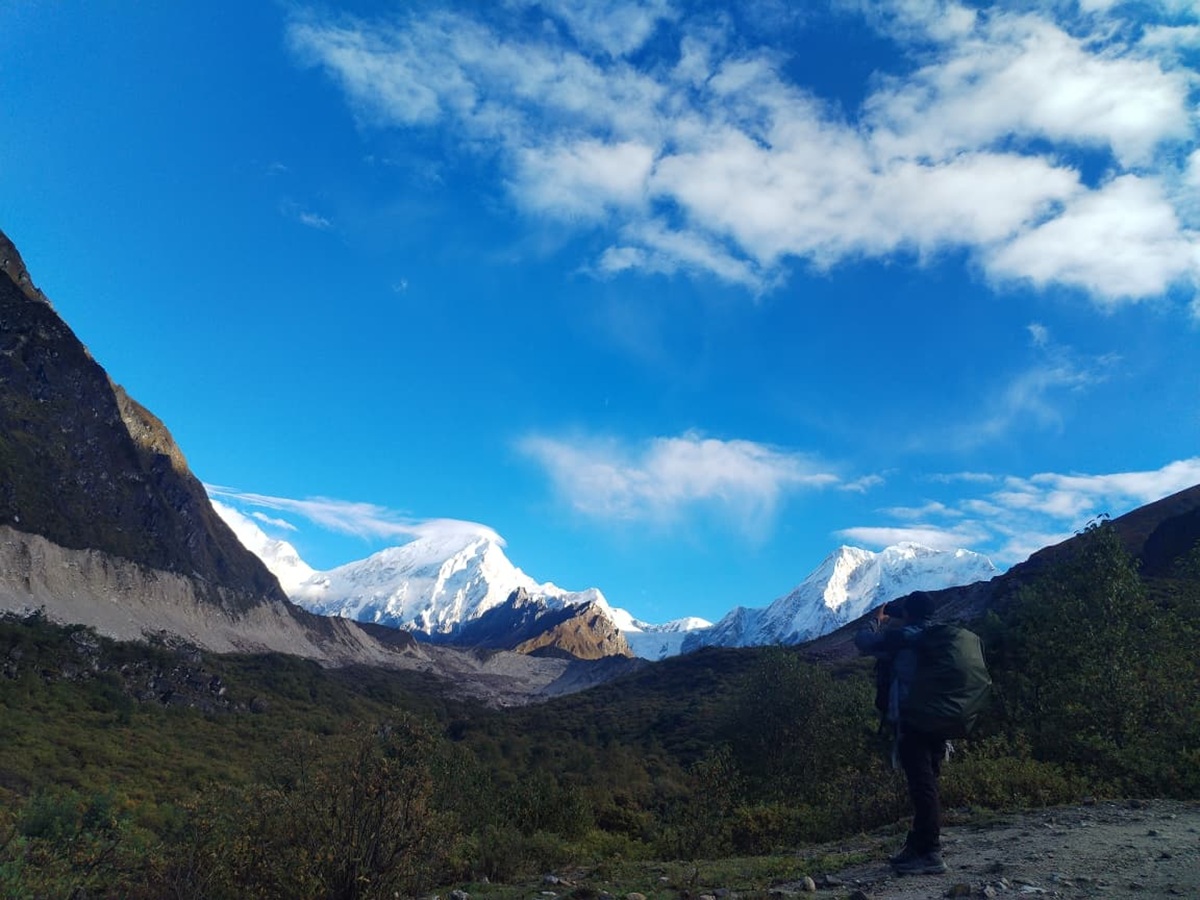
Manaslu Circuit Larkey pass Trek start from Barpak (Epicenter of Earthquake 2015), samagaun, monasteries , Tibet boarder and Larkey Pass