If you've done any research on Himalayan treks, you know there is an overwhelming choice between the Manaslu Circuit and the Annapurna Circuit. Which is the best trek in the Himalayas? The Manaslu vs Annapurna trekking routes are the most popular 2-week hikes in Nepal. They both provide a loop around an 8000-meter peak, both require crossing a high pass over 5000 meters, and both offer the same spectacular landscapes of terraced farms, dense pine forests, and alpine desert within the same time period. They even recommend both treks as one of the top ten hiking trails in Nepal.
If you need a short answer, it is this: the Annapurna Circuit is more complete and easier, with more services and options at a lower price. The Manaslu Circuit is a more rustic hike with cultural authenticity and fewer people, but at a higher cost and difficulty. In this article, you will get the details to answer, ‘Manaslu vs. Annapurna Circuit - Which trekking trail should you select?’ If you're looking for the most popular trek in Nepal, you might be interested in comparing this classic Himalayan hike with the Everest Base Camp trail.
If that last paragraph answered your question, feel free to stop here. If you want some more elaboration on why there is such a dilemma between trails in the Himalayas, and why one trek is more preferred over the other, it is this: there is not as much difference in trail conditions and scenery. The trails range in difficulty from easy to hard and in price from cheap to expensive. This article will give you information on everything from costs to difficulty to cultural differences between the Manaslu Circuit and Annapurna Circuit trekking routes.
Quick Comparison: Manaslu Circuit vs Annapurna Circuit at a Glance
Feature
Manaslu Circuit
Annapurna Circuit
Duration
1 - 18 days
12 - 20 days
Max altitude
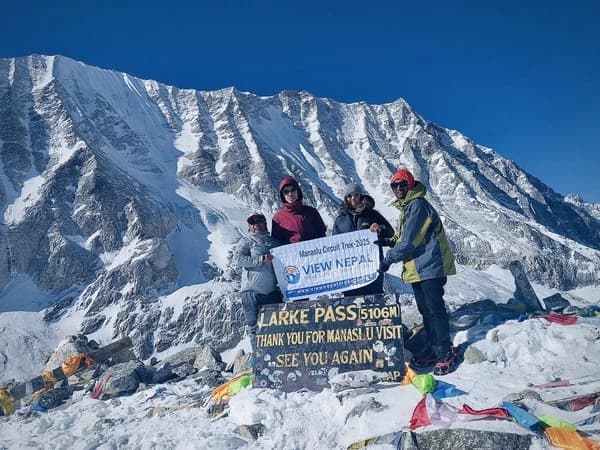
Larkya La Pass, 5,106 m
Thorong La Pass, 5,416 m
Difficulty
Moderate to tough
Moderate
Guide requirement
Mandatory (restricted area)
Mandatory
Permits needed
RAP + MCAP (possibly also ACAP)
ACAP
Approx. permit cost
$125 - $190, depending on season
$25 - $40
Guided trek cost
$1,200 - $2,800
$700 - $1,600
Crowd level
Low - a few hundred trekkers per day
Moderate to high
Trail condition
Primitive to good
Generally quite good
Road access
Limited, with the route retaining a remote feel
Roads have been built along some sections
Cultural experience
Home to the Tibetan-Buddhist communities of the Nubri and Tsum valleys
Mixed Gurung, Thakali, and Manang cultures
Best for
Trekkers who have completed a similar hike in Nepal and want a quieter, more remote experience
First-time hikers looking for a moderately challenging trek with more developed facilities
Manaslu Circuit vs Annapurna Circuit: The Real Trekking Experience
The Annapurna Circuit Experience
Annapurna Circuit Trek Experience
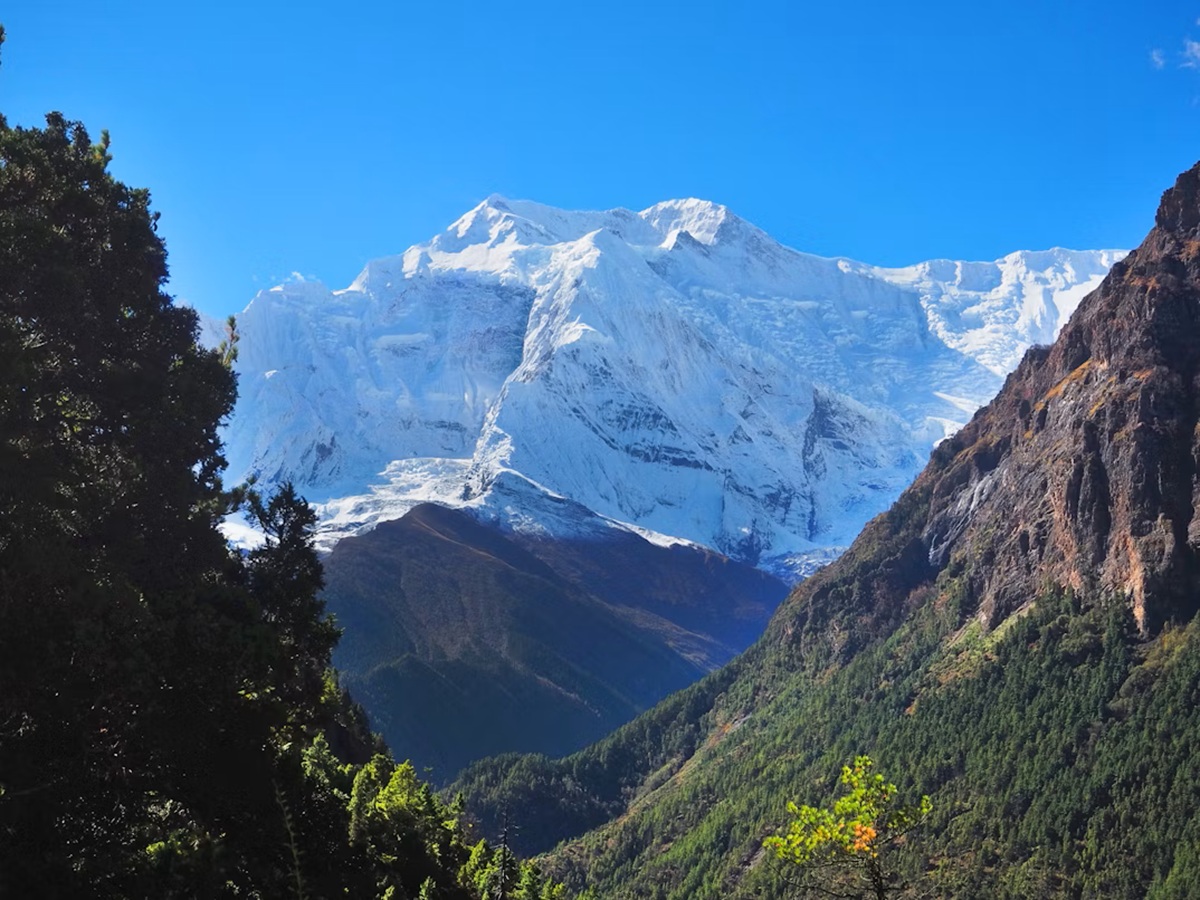
The Annapurna Circuit had its peak popularity in the 80s and 90s as the ultimate Himalayan trekking experience – the one that appeared in guidebooks as 'the best long-distance trek in the world'. It starts in the lowlands of Besisahar, gradually climbs up the Marsyangdi valley through rice paddies and the village of Manangi, follows it up towards the Tibetan Plateau-like landscape of Manang, then on to the pass of Thorong La and finally down in the holy town of Muktinath and around the deepest gorge in the world, the Kali Gandaki.
The price to pay for the fame and popularity of the Annapurna Circuit was its development. Both sides of the circuit have seen road construction in the last decade, meaning that parts of the trail were either washed away or turned into dirt tracks to accommodate jeeps and motorbikes. Most trekkers nowadays do not walk the lower parts of the trail, usually taking a bus or a jeep from the beginning, hence cutting a significant part of the circuit. But they also miss the authentic Himalayan wilderness experience, being able to rely on hot water showers, bakeries, internet cafes, pool-table bars and other comforts at every second village on the trail and being able to follow the well-developed trail, virtually avoiding getting lost.
The Manaslu Circuit Experience
Manaslu Circuit Trek Experience
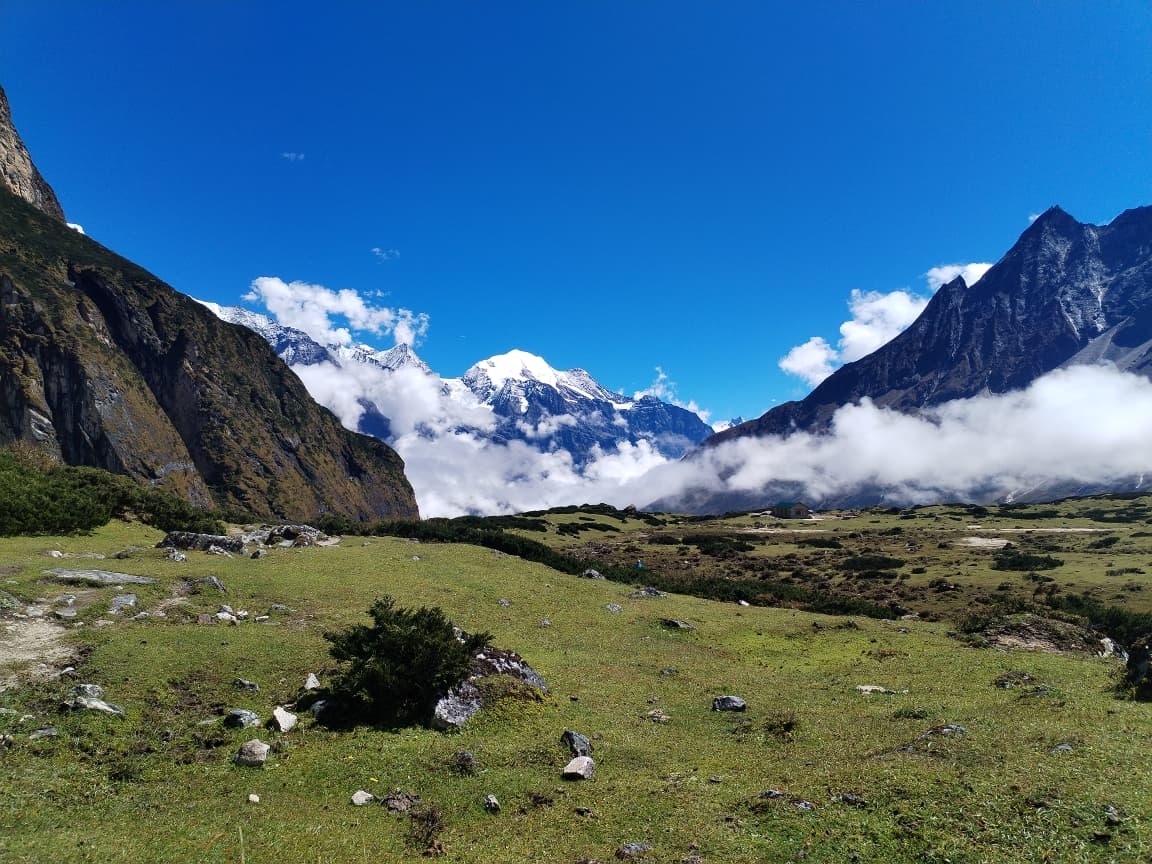
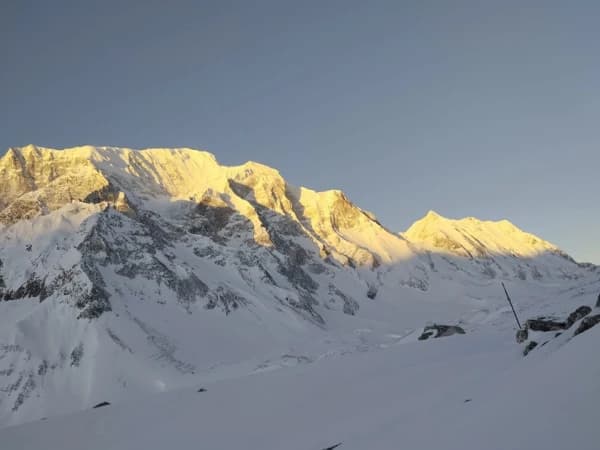
"The Manaslu Circuit is the Annapurna Circuit of twenty-five years ago," says Peter Hounslow, the British High Commissioner to Nepal, who hiked it this summer. "It is still a restricted area, which means that commercialism has been kept out, as is only right." On the trail one gets an exhilarating view of a spectacular Himalayan valley, the chance to see ancient Buddhist monasteries and to hike up narrow, arduous switchbacks alongside the Budhi Gandaki River, one of the most beautiful sights in Nepal. The trail also offers a side benefit: an alternative to the heavily commercialized trek to Annapurna.
There are no spectacular hotels along the Manaslu trail; no rival tea shops are vying for your business. This trail is less traveled, allowing hikers to stop at remote villages to marvel at local handicrafts or taste the regional food. It's also possible to get close enough to Manaslu for a stunning view of the world's eighth-highest mountain peak.
Cost Comparison: Why Manaslu Costs More Than Annapurna in 2026
Annapurna Circuit 2026 costs:
ACAP permit: NPR 3000 (~$23–25)
TIMS card: TIMS is now mostly canceled on the Annapurna Circuit; however, some agencies still put aside ~NPR 2000 for it, depending on your route
Guide: mandatory from 2023, already included in the guided tour
Teahouse + food: $20–30 per person per day
Estimated guided tour price: roughly $700–$1600, depending on the company, group size, and tour duration
Manaslu Circuit 2026 costs:
Restricted Area Permit (RAP): $100/week in autumn (Sept - Nov), $75/week in other seasons, with additional days charged beyond the first week
Manaslu Conservation Area Permit (MCAP): NPR 3,000 ($25-$30)
Annapurna Conservation Area Permit (ACAP): NPR 3,000 ($25-$30) - yes, you’ll need this permit as well for the ‘standard’ Manaslu trek which passes through the Annapurna Conservation Area near Dharapani
A licensed guide, booked via an official agency (as of the 2026 permit changes, independent trekking is no longer allowed - only one ‘porter’ is necessary for the RAP, but you will need a licensed guide anyway)
Teahouse + meals: $25-$45/day – more expensive than the Annapurna region as most supplies are hauled up the mountain by mule or porter
Guided tours: Roughly $1,200-$2,800, with luxury options costing up to $4,500
Thus, it is usually true that the cost of the Manaslu trek is between 60% and 100% more than a trip of the same length to Annapurna. Thus, this higher price includes permits needed to visit a restricted area. Still, it is also justified by extra expenses: everything from Dal Bhat to solar-charged batteries has to come from a much farther place than in Annapurna.
If low prices are the only thing you care about, then choose to go to Annapurna Circuit. If price does not matter and you care mostly about the crowds as well as the uniqueness of the trip, then you should pay a lot of money for your hike on Manaslu.
Difficulty Comparison: Which Trek Is Actually Harder?
Both treks involve crossing a high mountain pass over 5,000 meters, and thus are similar. However, most trek guides and enthusiasts will tell you that the Manaslu Circuit is slightly more challenging than the Annapurna Circuit for several reasons:
The trails are more difficult.
There is less flexibility for acclimatization.
There is less redundancy in the support network.
The Manaslu trek has some very exposed sections on the narrow ridge along the Budhi Gandaki gorge, some trail sections through landslides, and some wobbly suspension bridges, none of which are used to any great extent on the Annapurna Circuit. These challenges are not insurmountable but require more care than one might expect.
The Manaslu Circuit covers a shorter distance over a greater altitude gain than the Annapurna Circuit, meaning that there is less leeway for acclimatization, unless extra days are built into the itinerary around Sama Gaun.
Finally, the Manaslu Circuit has fewer resources (teahouses, people, vehicles) along the trail, meaning that a serious emergency (illness, injury, severe altitude reaction) is much harder to deal with. By contrast, the Annapurna Circuit has had several decades to develop a robust support network of teahouse owners and staff willing to assist and look after foreign guests, as well as being closer to a major road, meaning that there are other options if things go wrong.
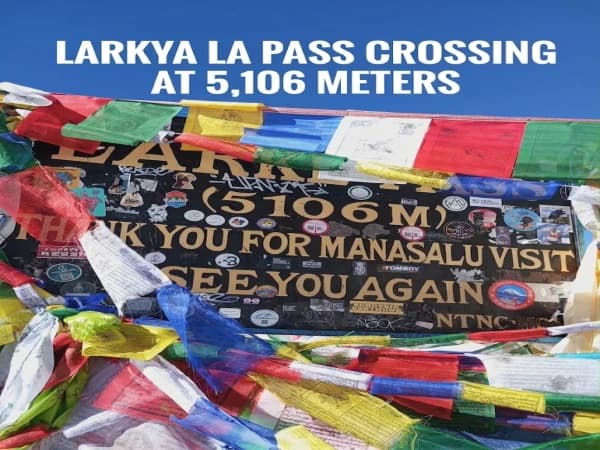
The climb up Thorong La, the highest point on the Annapurna Circuit at 5,416 meters, is technically more challenging than the Larkya La crossing on the Manaslu Circuit at 5,106 meters. However, the established Annapurna Circuit trekking routes are much more widely used, and therefore have more predictable weather, better trail conditions, and more available support.
In short, while both trails are moderate climbs and do not require advanced mountaineering equipment or skills, Annapurna Circuit can be described as a moderate trek, whereas Manaslu Circuit is a moderate-to-difficult trek.
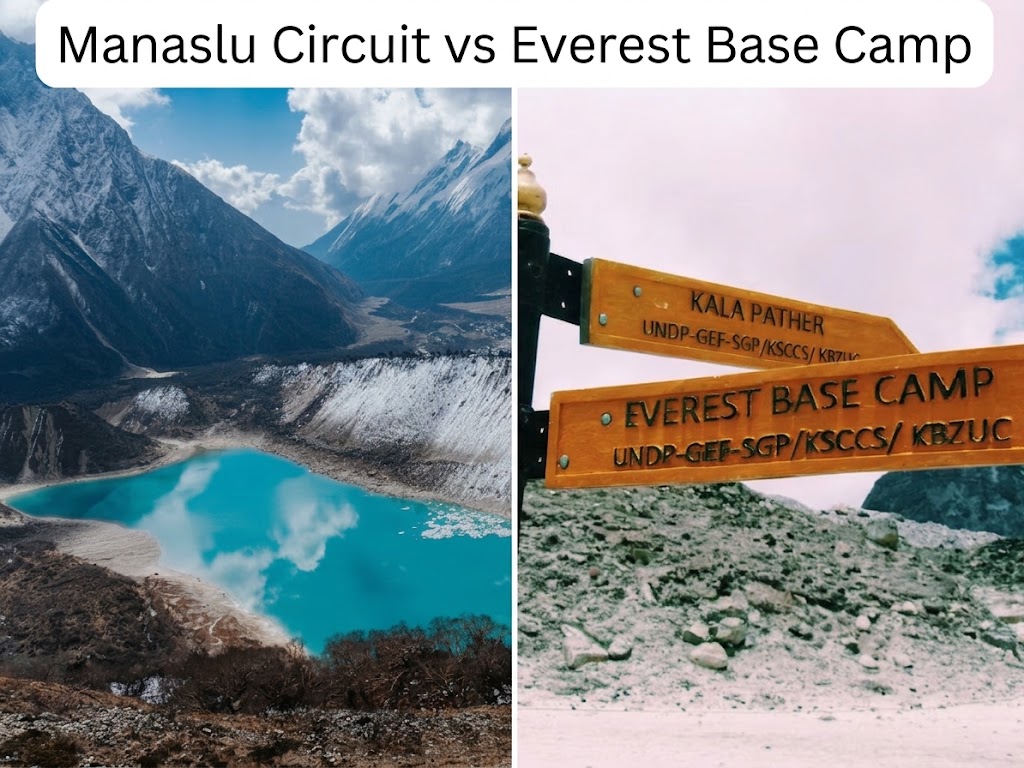
Given that a great many trekkers compare Manaslu with Everest Base Camp (EBC) as opposed to Annapurna, it is worth a direct comparison also:
Manaslu Circuit
Everest Base Camp
Max altitude
5,106 m (Larkya La)
5,364 m (EBC) / 5,545 m (Kala Patthar)
Trek style
Circuit (point A to B, over a pass)
Out-and-back
Crowds
Low
Very high, especially peak season
Flights required
No - road access from Kathmandu
Yes, flight to Lukla, weather-dependent
Cultural flavor
Tibetan Buddhist Nubri/Tsum, less commercialized
Sherpa culture, but heavily touristed after decades of trekking traffic
Cost
$1,200 - $2,800
$1,300 - $2,500
Iconic payoff
Close mountain views without the summit-selfie crowds
Standing at the base of the world's highest peak
Is the Manaslu Circuit Harder Than Everest Base Camp?
Manaslu Circuit is slightly harder on your legs due to the trails, but the Everest Base Camp is more stressful due to the altitude and the flights there, so both trips are on about the same level of difficulty, just in different areas.
The altitude for both trails is very similar, but the highest point on Everest Base Camp (Kala Patthar) peaks slightly higher than the highest point on Manaslu. Most who have hiked both trails agree that Manaslu is harder on your body due to the amount of steep trail climbing and the pass crossing. At the same time, Everest Base Camp is harder on your head due to the flight to Lukla, more people hiking there causing more crowded teahouses, and spending more days at an altitude above 4000m.
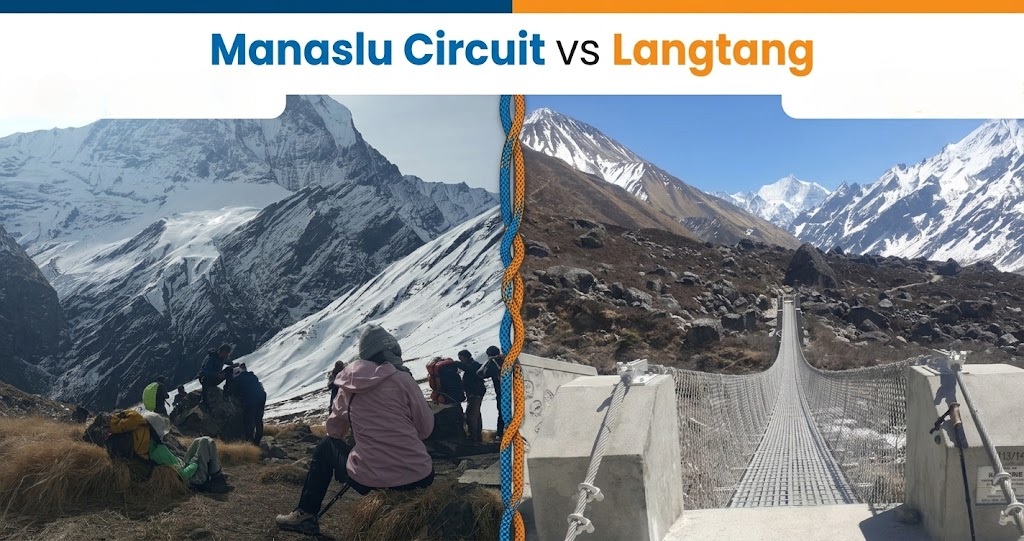
Manaslu Circuit vs Langtang: The Other “Under the Radar” Trekking Destination
Manaslu Circuit vs Langtang
When looking for more “under the radar” options as an alternative to Annapurna trekking, the Langtang Valley is the third choice on many travelers’ lists. Here’s how it compares to Manaslu:
Accessibility: Langtang is the closest option to Kathmandu. It is possible to start the Langtang trek the same day as your arrival in Kathmandu, whereas with Manaslu, you need to drive to either Machha Khola or Soti Khola to start the Manaslu Circuit trek.
Time: Langtang is shorter than Manaslu, about 7-10 days, as opposed to 12-18 days for Manaslu’s circuit.
Difficulty: Easier. If you are short on time or want to do a trek with minimal requirements to your fitness level while still getting a high-altitude experience, Langtang is a better option.
Permits: For Langtang, only the permit for the national park is necessary (in some cases, you may also need a TIMS - Trekker’s Information Management System card). There is no restricted area permit and no requirement for a guide, as there is for Manaslu. This makes Langtang less expensive and more flexible.
Scenery/Experience: Langtang is picturesque. It has been rebuilt after the devastating earthquake of 2015, and it is heartwarming to see how the Tamang people, indigenous to the Langtang Valley, pulled together to restore their homes and villages. However, it cannot compete with the grandiosity of Manaslu, both in terms of high-altitude scenery and the challenge of crossing one of the highest mountain passes in the world.
Conclusion: If you have a week to spend on a trek, rather than two, and you want to get a Himalayan high without breaking your bank and fitness budget, go for Langtang. If you have the time and the will to do a true circuit trek, with a view of a glaciated massif and a chance to cross one of the highest mountain passes in the world, choose Manaslu.
Manaslu Circuit vs Tsum Valley: Should You Combine Them?
Tsum Valley is neither a rival option to the Manaslu Circuit trek nor an independent circuit. Rather, it is a side route, with many hikers making the detour from the main trail and opting for this unique regional circuit on either the inward or return journey.
The Tsum Valley trek emerges from the broader Manaslu Circuit trail at the village of Lokpa, 3-4 days into the Circuit, giving you ample time to complete a detour to the Buddhist valley that was once closed to all outsiders. You can choose to explore the valley of gompas (ancient monasteries), including Mu Gompa and Rachen Gompa, before returning to the Manaslu trail and eventually exiting at Larkya La pass.
Manaslu Circuit: 12-14 Days, 1 Pass: A focused trekking route that circles the Saramati peak and is relatively short in distance but challenging, involving crossing of one high mountain pass.
Manaslu + Tsum Valley: 18-22 Days, 0 Extra Pass: An extended circuit with an enriching cultural detour into the heart of the isolated Buddhist region while circumventing the mountain without any additional passes to clear. An additional trekking permit will be needed to explore the valley, which costs around USD 30-40 (shoulder season) or USD 40 (autumn season) for the first week.
If the cultural experience is more important than speed to a pass and you'd be happier in a Tsum Valley detour like this, you could incorporate it into your trek. But if your interest really lies with the trek challenge and with conquering the Larkya La pass alone, then this circuit will leave you feeling that you missed absolutely nothing out.
12 vs 14 vs 16 Day Manaslu Circuit: Which Itinerary Should You Book?
Manaslu Circuit treks are typically sold in a few standard lengths, which differ mainly in how much walking you do at low elevations to acclimatize before attempting the pass at Larkya La. Compared to other Nepalese circuits like Everest or Annapurna, Manaslu usually requires more time to adjust due to its higher altitude, and a shorter trek can mean less buffer in case of delays due to rain or altitude sickness.
12-Day Manaslu Circuit
A tighter schedule, often involving doing two days’ worth of trekking in one day on the lower part of the route (below Jagat), and driving up the valley further before trekking commences. This is generally advised only for people who are already accustomed to high-altitude trekking and know that they have sufficient acclimatization buffer. Leaves the least amount of leeway at the pass in case of inclement weather.
14-Day Manaslu Circuit
The most common option, and the default for most agencies. Includes an acclimatization day in Sama Gaon (3,530 m) before proceeding to higher grounds around Samdo and the pass. Recommended for most types of trekkers, with moderate requirements for previous high-altitude experience.
16-Day (or longer) Manaslu Circuit
Either includes an extra day in Tsum Valley, or makes the trekking schedule looser and/or includes an extra day of acclimatization. Necessary for first-time high-altitude trekkers, elderly tourists, or anyone wishing to have more leeway at the pass in case of altitude sickness or bad weather. Might be necessary for some guides to suggest if you have the time, as the 14-day itinerary is generally the default option advertised by trekking companies.
As a rule of thumb, it’s better to have a longer trek with more freedom and higher safety margins, rather than a shorter one. The extra day(s) will most likely be spent resting or low-altitude trekking anyway, and it can spare you from altitude sickness or rainstorms at a crucial point of the trek. It’s generally not recommended for first-time high-altitude trekkers to attempt a 12-day Manaslu Circuit, due to the dangers of rapid ascent.
Should I do the Manaslu Circuit or the Annapurna Circuit?
Choose the Annapurna Circuit if:
It's your first trek in Nepal.
You want to save money.
You want comforts (hot water, internet, variety of food) on the trail.
You want to avoid the hassle of restricted area permits.
You want flexibility in your itinerary (e.g. to cut the trek short, or combine it with Poon Hill or Annapurna Base Camp).
You are traveling solo and want the flexibility to hitchhike or join an organized group along the way.
Choose the Manaslu Circuit if:
You've already done a few Himalayan treks and want something more challenging.
You want solitude on the trail, and authentic mountain villages that aren't overrun with tourists.
You want to splurge on a nice trek with comforts of home (hot water, Wi-Fi, etc.).
You want to see an 8000-meter peak up close without the crowds of EBC.
You want to challenge yourself with more difficult trail conditions and a stricter acclimatization schedule.
You want the flexibility to extend the trek into the Tsum Valley for a more comprehensive cultural immersion.
Do Both
Many companies now offer a combined Manaslu to Annapurna or Nar Phu to Annapurna trek, which takes 3+ weeks if you have the time.
Is the Manaslu Circuit Right for Me? A Quick Self-Check
Ask yourself these five questions:
Have you already hiked at elevations higher than 3,500 meters? If not, think about taking a 16-day long trek or exploring Annapurna or Langtang.
Are you prepared to spend two weeks in less-developed teahouses without Wi-Fi? Manaslu’s infrastructure is gradually improving, although it still lags behind the Annapurna region.
Are you willing to hire an official guide from a local trekking agency? Independent exploration of Manaslu is not permitted, but only solo with a guide is permitted.
Do you have a flexible budget? The average expense of trekking the Manaslu Circuit can vary from $1,200 to $2,800. If you are planning a tight $1,000 trip, the less expensive Annapurna Circuit could be a good choice instead.
Are you open to enjoying the wilderness without fellow tourists, albeit with some comfort sacrifices? If remote mountain trails appeal to you more than popular hiking trails do, you have chosen the right trekking destination.
Follow this advice: if you answered “yes” to most of these questions and are enthusiastic about completing the Manaslu Circuit, book your adventure now. Otherwise, if you responded “no” to two or more of these questions, think about embarking on a shorter and cheaper Annapurna Circuit trek or Langtang Valley hike.
Treks Like the Manaslu Circuit: Alternatives Worth Knowing About
If you're looking to do Manaslu but want to consider some other more off-the-beaten-path trekking options in Nepal, here are a few comparable options:
Nar Phu Valley
Another restricted area trek in the Annapurna region that's comparable to Manaslu in terms of distance and difficulty, but offers a similar kind of isolated, Tibetan feel to it (often done in combination with the Annapurna Circuit trek).
Upper Mustang
A more isolated restricted area beyond Annapurna that has a somewhat Tibetan feel to it (vs. the more Nepalese one of the lower Mustang region), and a much more expensive permit ($500 for a 10-day permit).
Kanchenjunga Circuit
The more easterly restricted area trek in Nepal, which is even more isolated than Manaslu. This one is longer, too, and should be considered if you're looking for something truly solo and willing to spend a couple extra weeks on the trail.
Makalu Base Camp Trek
Another isolated trek in an even more remote region of Nepal near the world's fifth tallest peak. It's much more difficult than Manaslu, and has even less in the way of infrastructure, so it's a worthy challenge only for the most serious hikers.
Tsum Valley (Standalone)
If you want the feel of a restricted area trek and its relative isolation without having to do the Manaslu Circuit and cross the passes, this shorter trail in a lesser-known region offers a similar insight into local culture without quite the same degree of challenge.
All of these have their own appeal, but have a similar isolation and permit system to Manaslu that makes them stand out from the more popular Annapurna Circuit trek, which has much more development and traffic around it.
The Best Less-Crowded Alternative to the Annapurna Circuit
If your sole motivation to read this article is "I want to do the Circuit trek but without all the hassle of crowds," then we understand you, and the correct answer to your question is the Manaslu Circuit. It is a similar route with all the same components of the Annapurna Circuit - a circuit hike, a high pass, a transition from terraced lowlands to alpine desert - but with dramatically fewer crowds due to the restricted area permit policy.
If the money and effort of the Manaslu trek still seem too much, you can always consider other alternatives for lower investment both in time and money, such as Nar Phu Valley or Tsum Valley expeditions.
Best Season for Manaslu Circuit vs Annapurna Circuit
Timing is much more critical for Manaslu than Annapurna due to the lower degree of infrastructure.
The best season for both is Autumn (September – November), which offers the most favorable weather conditions and maximum visibility on both passes (Larkya La and Thorong La). This is also the peak season, so the Annapurna Circuit teahouses in Manang and Muktinath will be busy, while Manaslu is relatively less crowded even at its busiest.
The second best season is Spring (March – May). Both trails offer beautiful views of blooming Rhododendrons on the lower parts. Temperatures are generally warmer than in Autumn, but on the Annapurna Circuit, afternoon hazes may reduce visibility on distant mountains while crossing the lower parts of the trail (compared to Manaslu, which is much drier at similar altitudes). The Annapurna Circuit also goes through more populated areas in the lower elevations during this period, offering glimpses of Nepalese agricultural life.
For the Annapurna Circuit, Winter (December – February) is still a viable option for serious trekkers although Thorong La can occasionally be closed due to heavy snowfall. The Manaslu Circuit is much more challenging to trek during this season, with Larkya La being sparsely visited and most teahouses in higher elevations closed. Most trekking agencies do not organize Manaslu Circuit treks during the peak of Winter.
Finally, Monsoon season (June – August) is the official off-season for both trails, although the Annapurna Circuit has a lesser impact from monsoon rains. The western part of the Annapurna Circuit (Manang and above) is actually drier than the rest of Nepal due to the rain shadow effect.
Therefore, it can be considered as an option for trekking during this period. The Manaslu Circuit, however, does not have this advantage as the Nubri Valley is exposed to monsoon rains, causing landslides, leech infestations on the narrow gorge trail, and other obstacles disrupting the trek schedule. If you want to trek during the wet season, Annapurna Circuit (the Manang side) will be your best choice.
Sample Itinerary Comparison: Day-by-Day Structure
It becomes quite apparent when looking at them side by side.
Annapurna Circuit: Sample
Besisahar/Chame Drive from Kathmandu
Chame to Pisang
Pisang to Manang, taking the higher trail for acclimatization
Acclimatization day in Manang
Manang to Yak Kharka
Yak Kharka to Thorong Phedi/High Camp
Cross Thorong La Pass to Muktinath
Muktinath to Jomsom
Jomsom to Tatopani drive/walk
Descent through Ghorepani/Poon Hill or return to Pokhara from Jomsom with a few days’ leeway
Acclimatization day in Sama Gaon (option to side hike Manaslu BC or Birendra Lake)
Sama Gaon to Samdo
Samdo to Dharamsala/Larkya Phedi (short day at high altitude)
Larkya La Pass to Bimthang
Bimthang to Dharapani
Return to Kathmandu or continue to the Annapurna Circuit region with some leeway built in, due to the lack of alternatives along this route.
It should be noted that the Annapurna trek has more built-in flexibility in its itineraries, allowing for easier adjustments if one wishes to shorten the trek on a particular day. There are also more options to take vehicles on the Annapurna Circuit, should a hiker decide they are not enjoying trekking on a certain day, or wish to take a break on the journey. By contrast, the Manaslu Circuit has fewer alternatives once one has passed Jagat and is committed to the trek. This could be a significant difference for some hikers, depending on their preferences.
Frequently Asked Questions
Is the Manaslu Circuit more expensive than the Annapurna Circuit?
Yes. You should expect to pay 60-100% more for a Manaslu Circuit than an Annapurna Circuit, due to the restricted area permit, the mandatory guide, and less developed accommodation and food options along the trail.
Which trek has better mountain views: Manaslu or Annapurna?
They're both brilliant. The Manaslu circuit offers you more "time with" one specific 8000er (Manaslu itself, obviously). In contrast, on the Annapurna Circuit you get to see a different range of 8000m giants from varied vistas: Annapurna I to IV, Gangapurna, and Dhaulagiri.
Can beginners do the Manaslu Circuit?
You can attempt the Manaslu Circuit with less trekking experience, but many companies will advise against attempting the 16-day+ loop without a trek above 3,000 meters before. Due to the condensed acclimatization schedule and more rugged trail than the Annapurna Circuit.
Do I need a guide for the Annapurna Circuit in 2026?
Yes. You must trek with a licensed guide in Nepal for the Annapurna Conservation Area (valid from April 2023 onwards) or through an authorized trekking agency for the Annapurna Circuit in 2026. Solo independent trekking is no longer allowed.
Is the Larkya La Pass more challenging than the Thorong La Pass?
The Larkya La Pass (5,106 meters) is actually lower than Thorong La (5,416 meters). Still, many people tell me that the Larkya La trekking day is longer and colder and the trail is much less developed (due to fewer people attempting it), which makes it a bit harder.
Can I do the Manaslu Circuit and Annapurna Circuit in one trip?
Yes. Some companies offer a combined Manaslu Circuit and Annapurna Circuit trekking tour, as the trails connect at Dharapani (the end of the Manaslu Circuit). From Dharapani, you continue to Manang and the rest of the Annapurna Circuit towards Pokhara. If you have the time and fitness, this is a great way to see both regions. This combined trek takes around 3-4 weeks, depending on your acclimatization schedule, with extra days for rest.
Is travel insurance mandatory for both treks?
While not mandatory by law, any good trekking company will ask you to present proof of travel insurance that includes coverage for high altitude trekking, emergency helicopter rescues over 5,000 meters, and any other trekking-specific concerns before departure. It is highly advisable not to go without it, especially on the Manaslu Circuit, where the nearest hospital is a 6-hour drive away, and you may need emergency assistance.
Which trek is more likely to cause altitude sickness?
It mainly depends on your itinerary. Manaslu Circuit altitude sickness is more severe because of the reduced emergency infrastructure, so we would advise going with the 14-day Manaslu itinerary as opposed to the 12-day or less itinerary if you are going for a longer trek and to acclimatize properly. The 12-day or less Manaslu Circuit, similarly to the Annapurna Circuit, has a condensed schedule, which raises the risks.
Do I need any specific gear that is not required for the other trek?
Not necessarily, as both treks require similar types of clothing in layers, good quality warm sleeping bags (-15C +), and durable, comfortable shoes. The main difference is that Manaslu Circuit teahouses are less developed and provide fewer amenities, so you may want to bring more personal snacks, medical supplies, and a good water filter rather than relying on the local stores.
Is the Annapurna Circuit worth it now that there are roads?
Yes, for most people. While the construction of roads interferes with part of the Annapurna Circuit trail, most tours are designed to minimize driving and maximize walking. However, the environment near Manang, Thorung-La and Muktinath is just as beautiful.
Manaslu Circuit Larkey pass Trek start from Barpak (Epicenter of Earthquake 2015), samagaun, monasteries , Tibet boarder and Larkey Pass